

Carved Box Made Of Indian Sandalwood, 19th Century
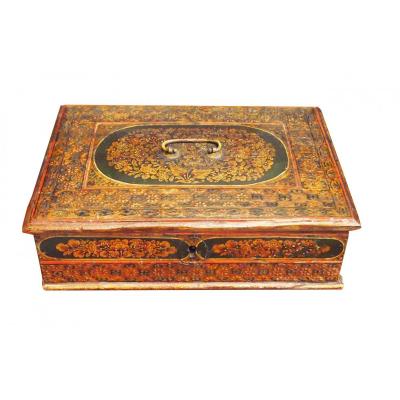
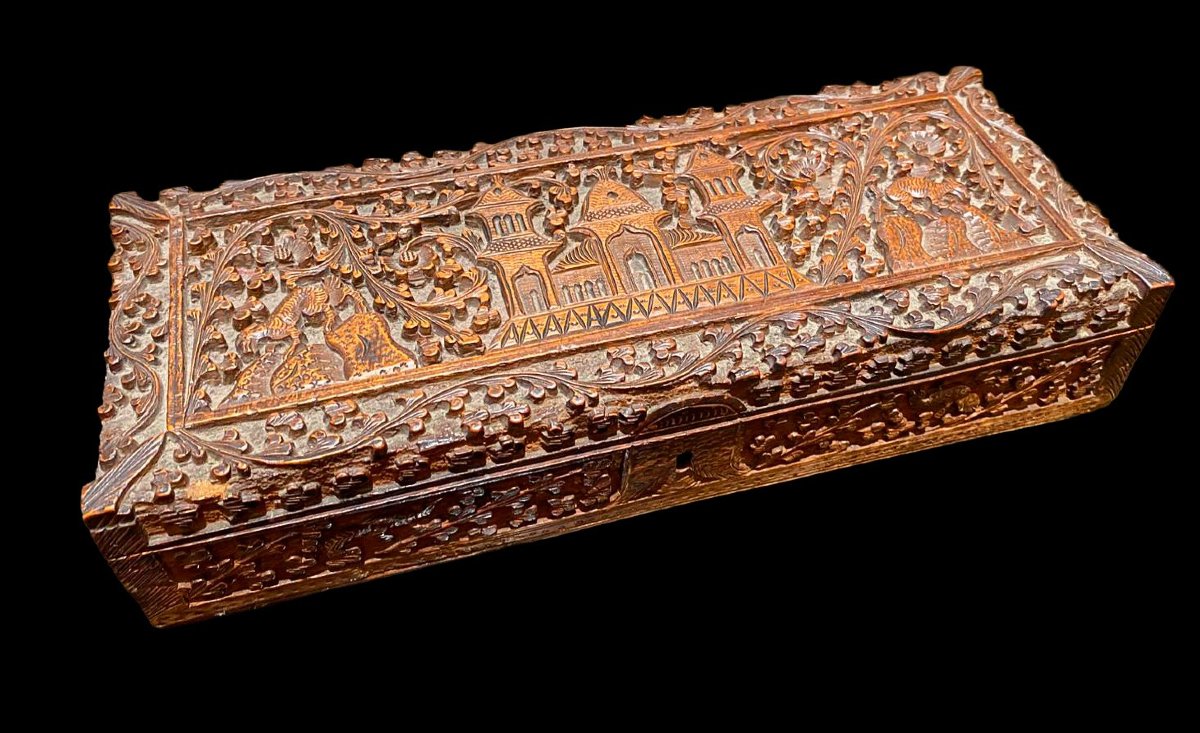
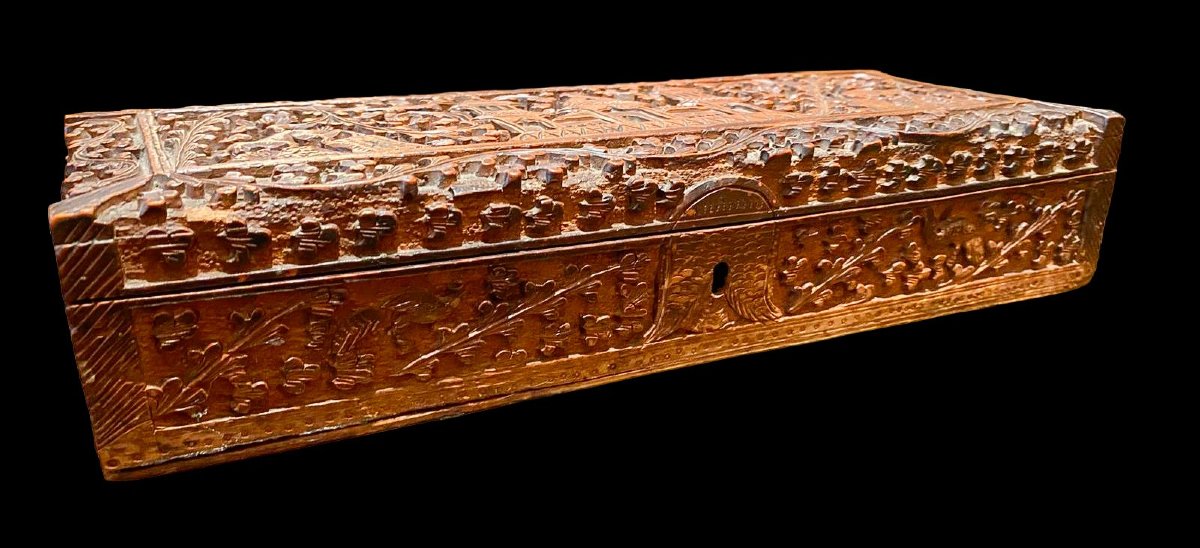
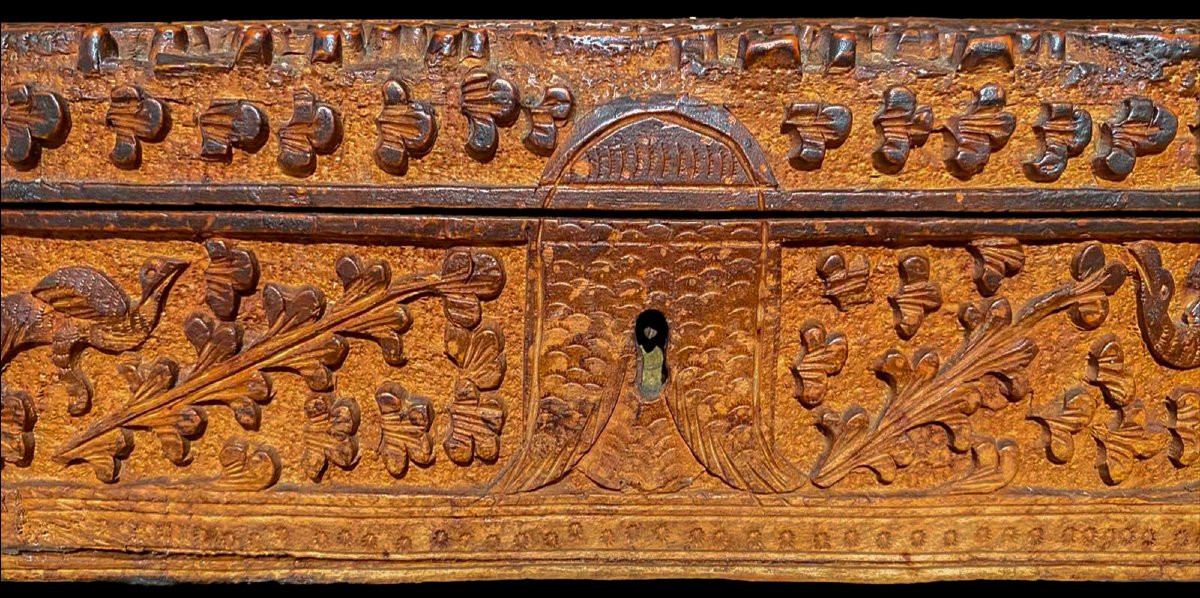
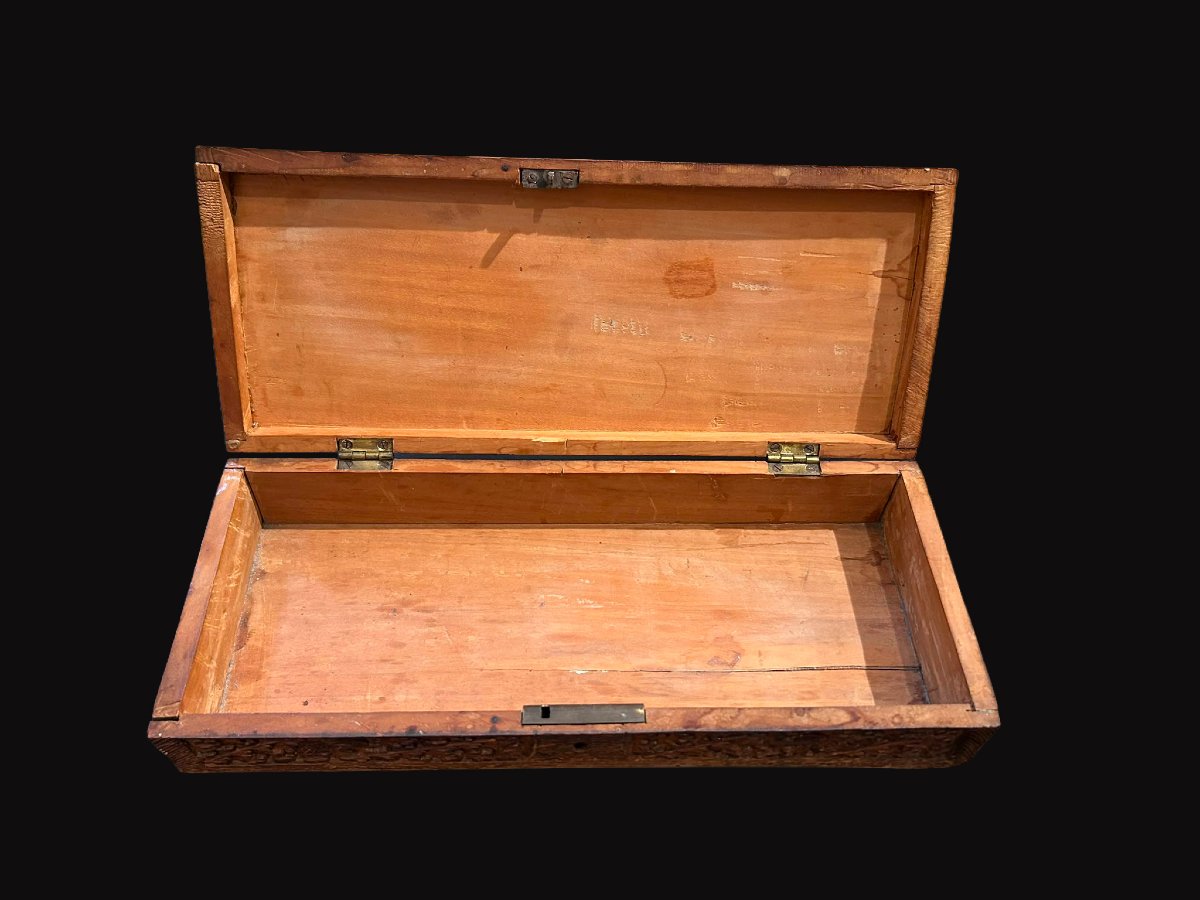
A rectangular sandalwood box hand-carved in bas-relief, featuring a decor inspired by Indo-Islamic or Mughal styles characterized by rich ornamentation, and still fitted with its original lock (key lost).
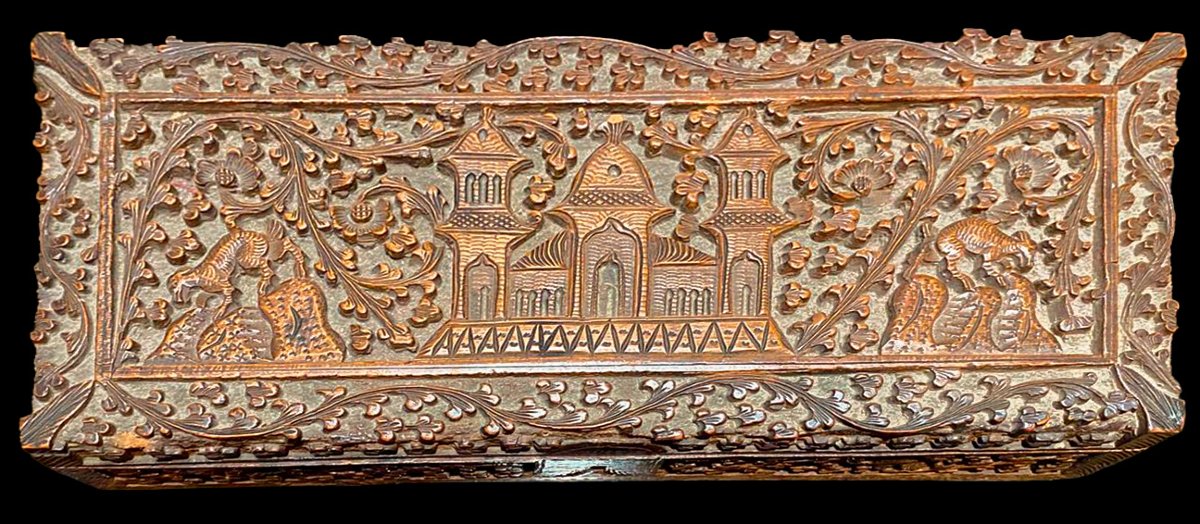
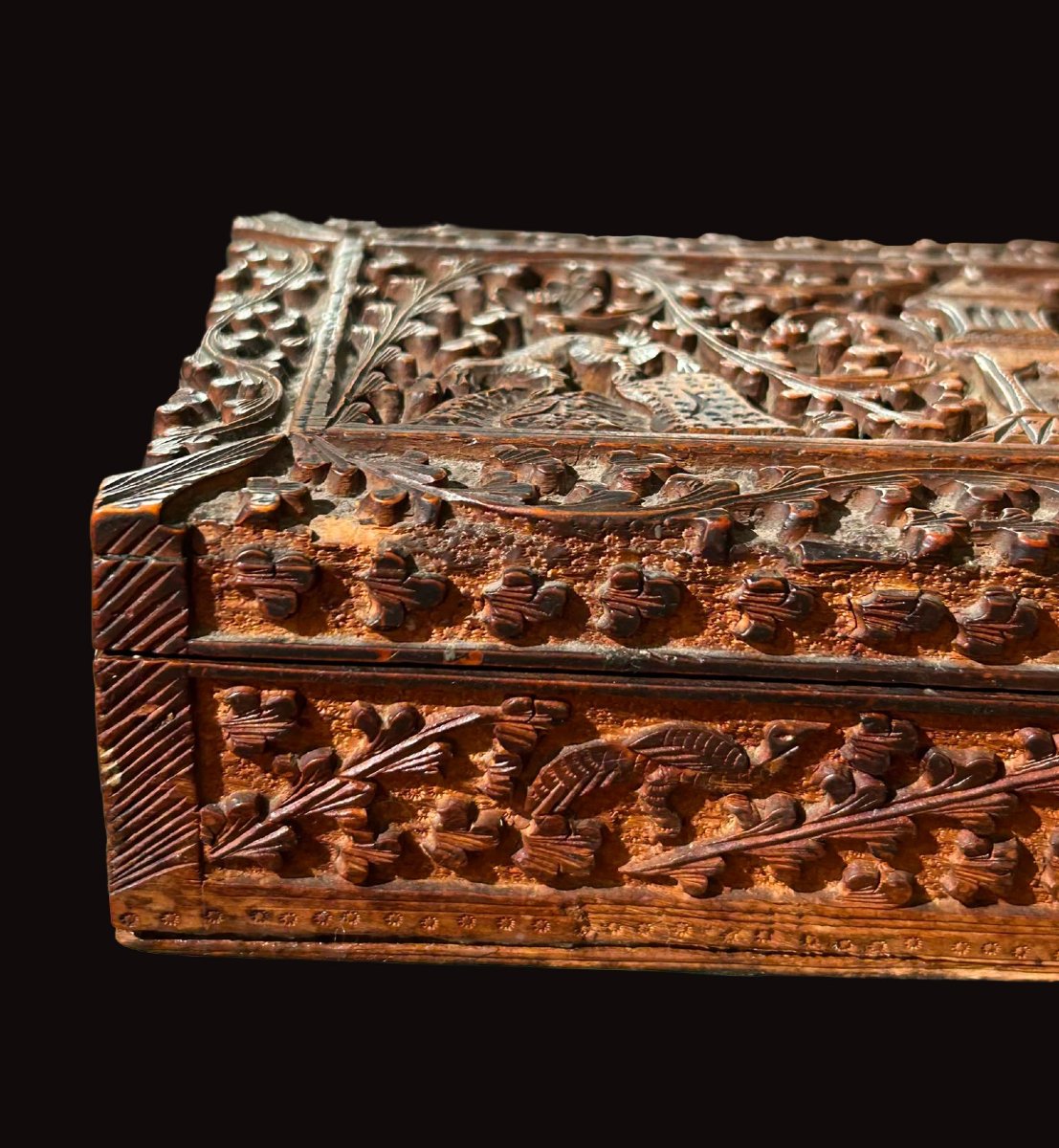
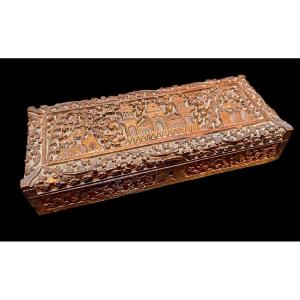
The lid features a central scene framed in relief, dominated by a building with a large bulbous dome flanked by two towers topped with small pavilions (chhatris), a design reminiscent of Mughal architecture, particularly monuments such as the Taj Mahal or certain mausoleums and mosques in India. The openings are formed by pointed arches in the Persian tradition, characteristic of Islamic architecture. The structure is flanked by exuberant plant motifs in the form of scrolls, trilobed leaves, and flowers.
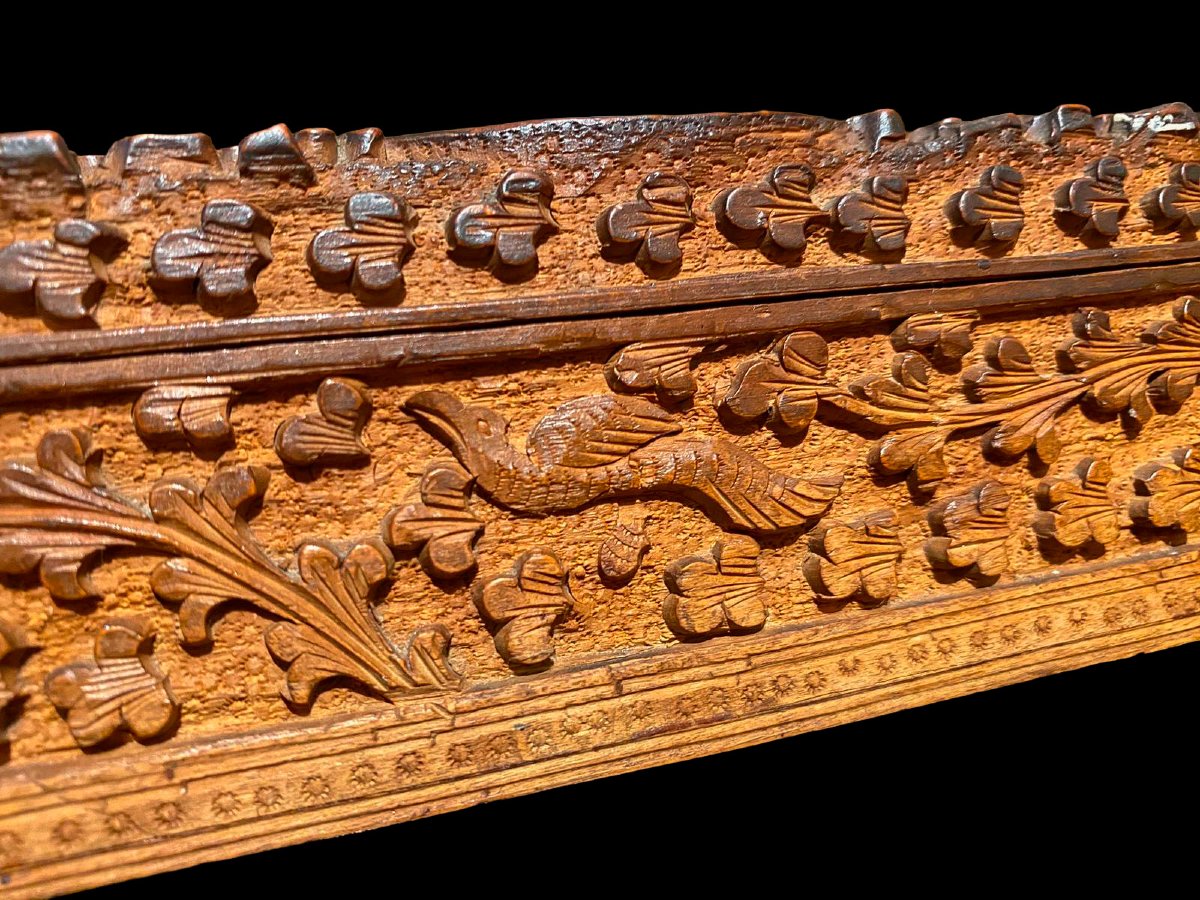
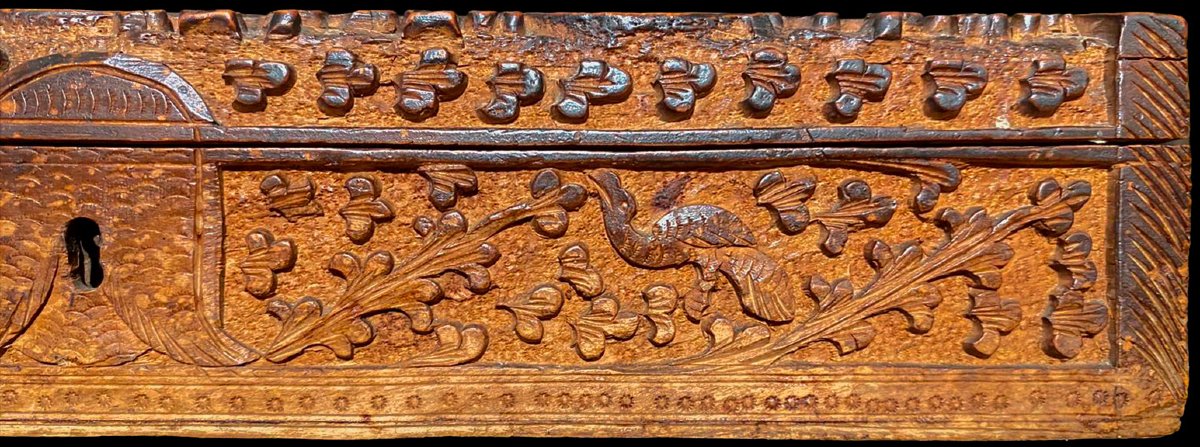
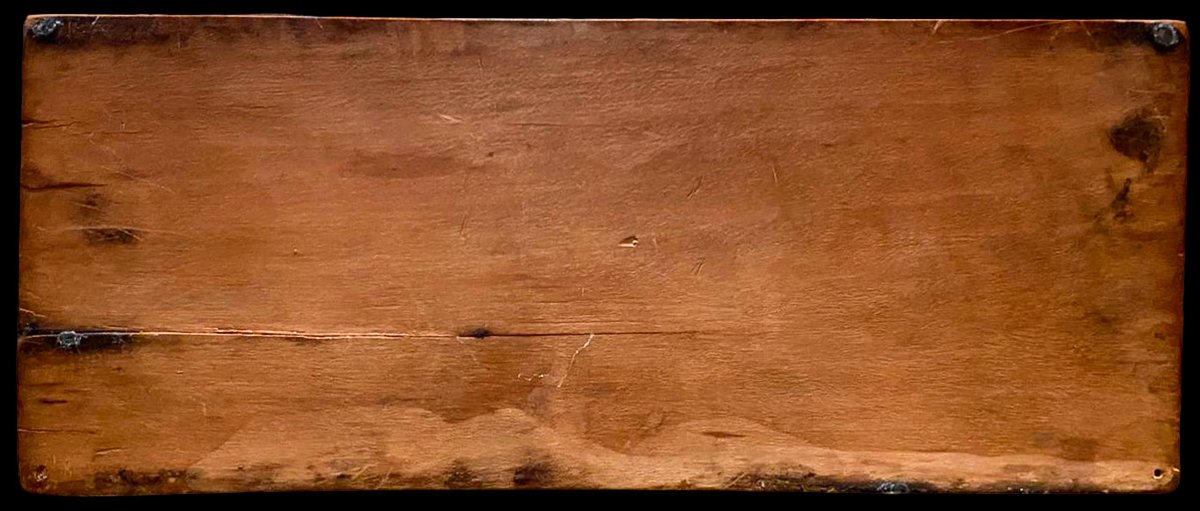
On either side, two exotic animals can be seen leaning against rocks and surrounded by lush vegetation. The side panels feature several exotic birds—likely stylized peacocks or birds of paradise—amidst trilobed plant motifs arranged in scrolls, traditional symbols of prosperity and beauty in Indian decorative art. The base of the piece is smooth, with no carved decoration.
The use of sandalwood, renowned for its fragrance, is characteristic of these pieces; this wood is highly prized for both its beauty and its natural scent. This box was most likely intended to hold jewelry, documents, perfumes, or small valuables.
The extraordinary precision of the carving highlights the piece’s high quality and serves as a magnificent example of 19th-century Indian craftsmanship, produced for both the local market and export.
The wood has a uniform patina of age, darker in the areas with the most relief.
In good overall condition considering its age. It has a small loss in the upper left section, slight peeling of the base in the lower left corner, and a crack at the base of the box (see photos).
The lid features a central scene framed in relief, dominated by a building with a large bulbous dome flanked by two towers topped with small pavilions (chhatris), a design reminiscent of Mughal architecture, particularly monuments such as the Taj Mahal or certain mausoleums and mosques in India. The openings are formed by pointed arches in the Persian tradition, characteristic of Islamic architecture. The structure is flanked by exuberant plant motifs in the form of scrolls, trilobed leaves, and flowers.
On either side, two exotic animals can be seen leaning against rocks and surrounded by lush vegetation. The side panels feature several exotic birds—likely stylized peacocks or birds of paradise—amidst trilobed plant motifs arranged in scrolls, traditional symbols of prosperity and beauty in Indian decorative art. The base of the piece is smooth, with no carved decoration.
The use of sandalwood, renowned for its fragrance, is characteristic of these pieces; this wood is highly prized for both its beauty and its natural scent. This box was most likely intended to hold jewelry, documents, perfumes, or small valuables.
The extraordinary precision of the carving highlights the piece’s high quality and serves as a magnificent example of 19th-century Indian craftsmanship, produced for both the local market and export.
The wood has a uniform patina of age, darker in the areas with the most relief.
In good overall condition considering its age. It has a small loss in the upper left section, slight peeling of the base in the lower left corner, and a crack at the base of the box (see photos).
380 €
Period: 19th century
Style: Other Style
Condition: Good condition
Material: Wood marquetry
Width: 29,5 cm
Height: 6 cm
Depth: 12
Reference (ID): 1795494
Availability: In stock
Print