

Sacred Sculpture Carved From Wood, Gilded And Polychromed, Spanish School, 17th Century.
Dimensions: 90 cm high x 32 cm wide x 14 cm deep
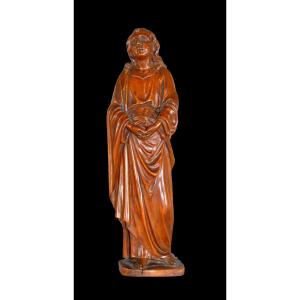
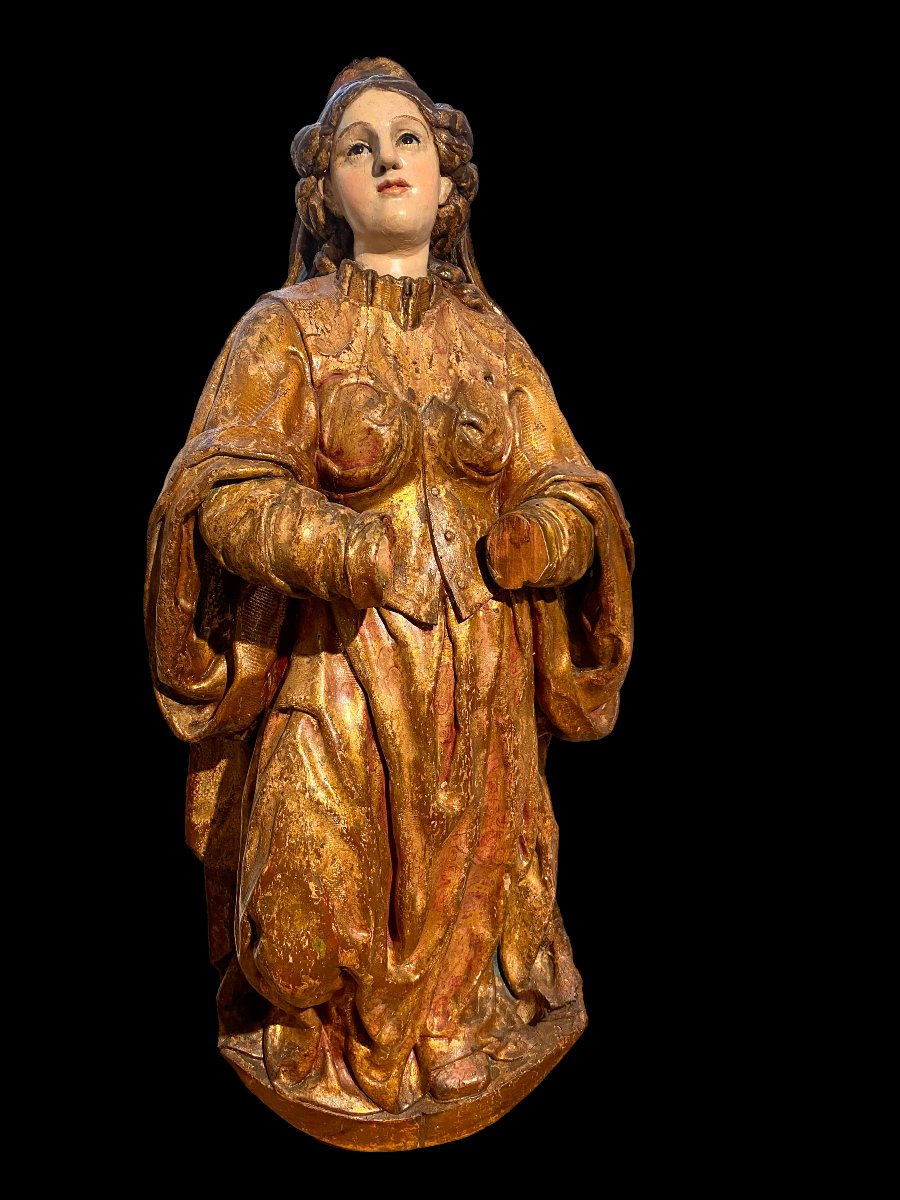
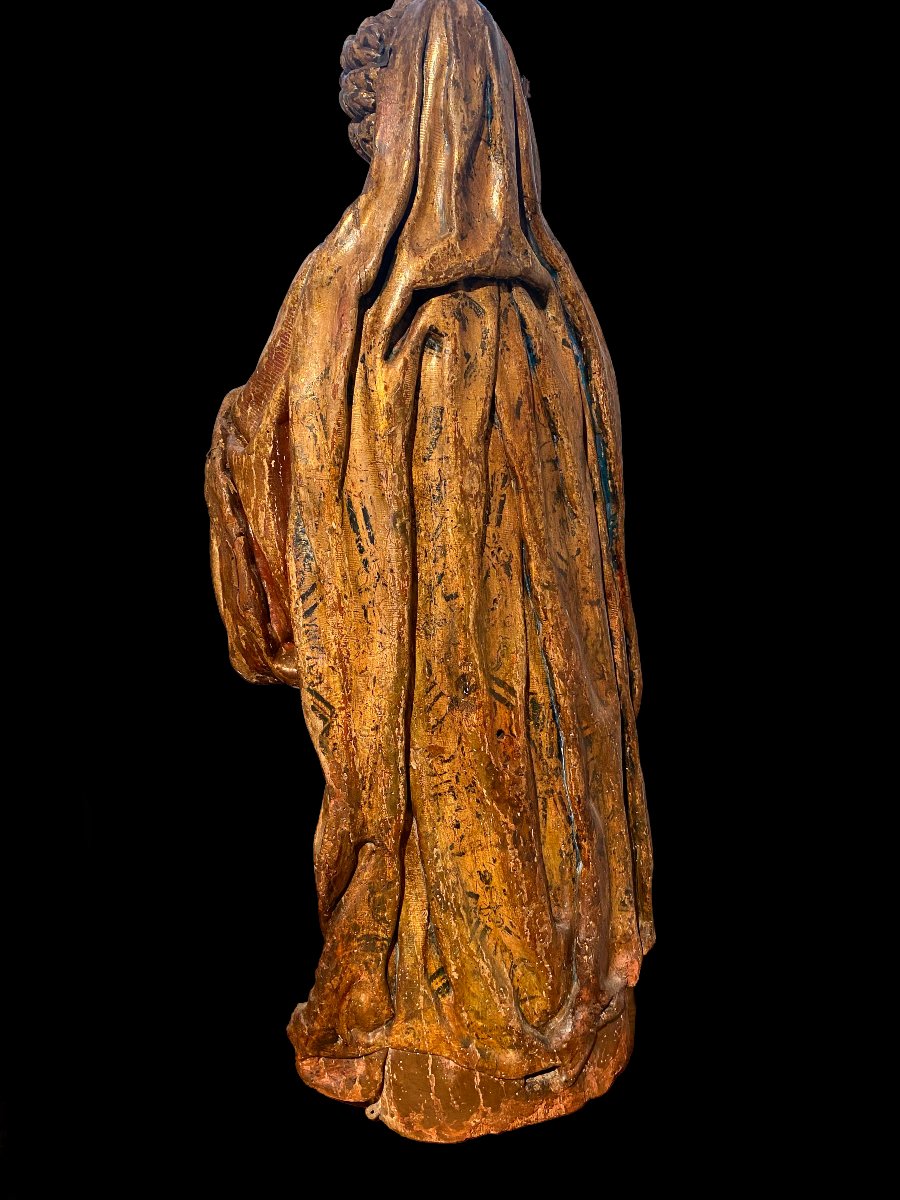
This wooden sculpture, identified as depicting a saint, lacks her usual attributes, such as the palm frond or the instrument of her martyrdom. She does, however, wear a crown holding a large veil in place; the veil falls over her shoulders and spreads out behind her figure. Because of this carved crown, the figure could represent Saint Eulalia of Mérida—a young Christian woman from a noble family who was martyred after publicly professing her faith—or perhaps Saint Elizabeth of Hungary or Saint Elizabeth of Portugal, both of whom are invariably depicted wearing a crown.
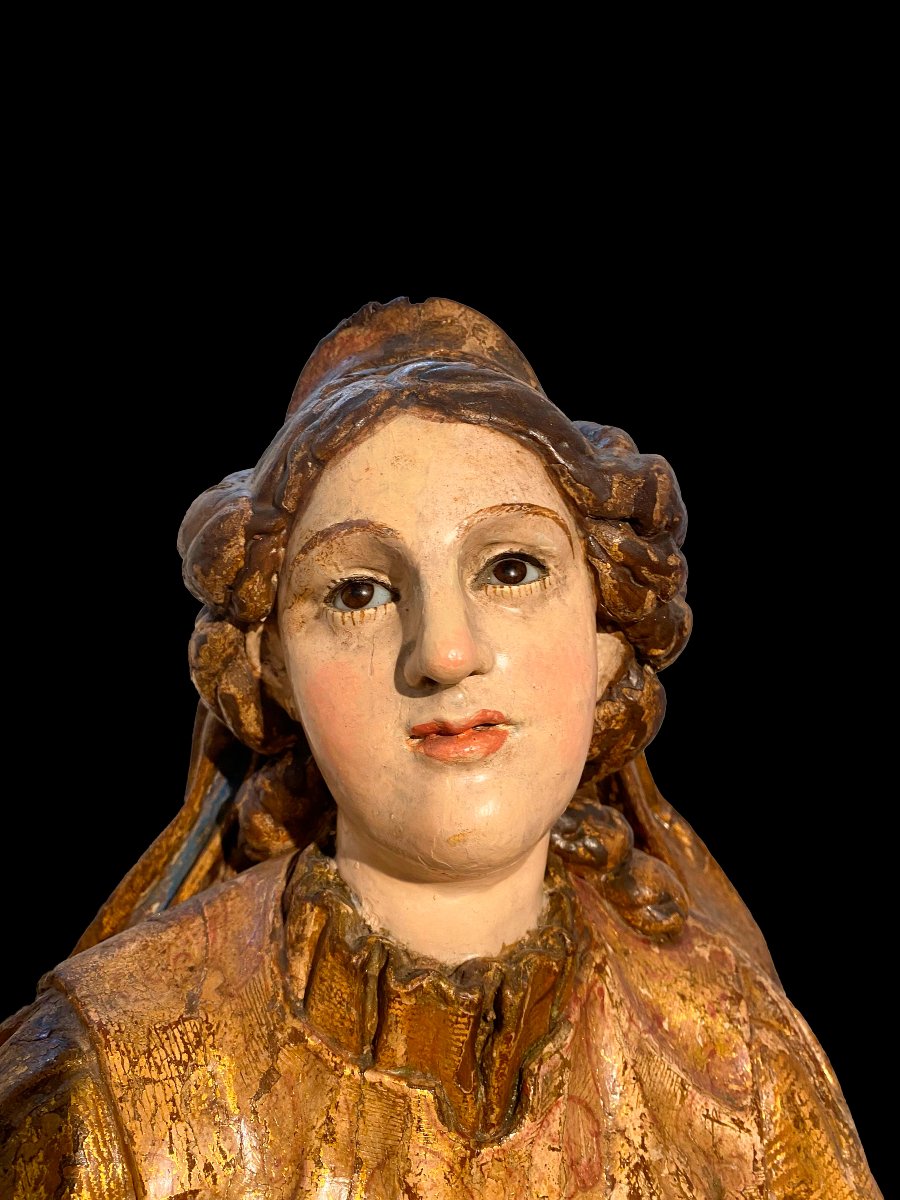
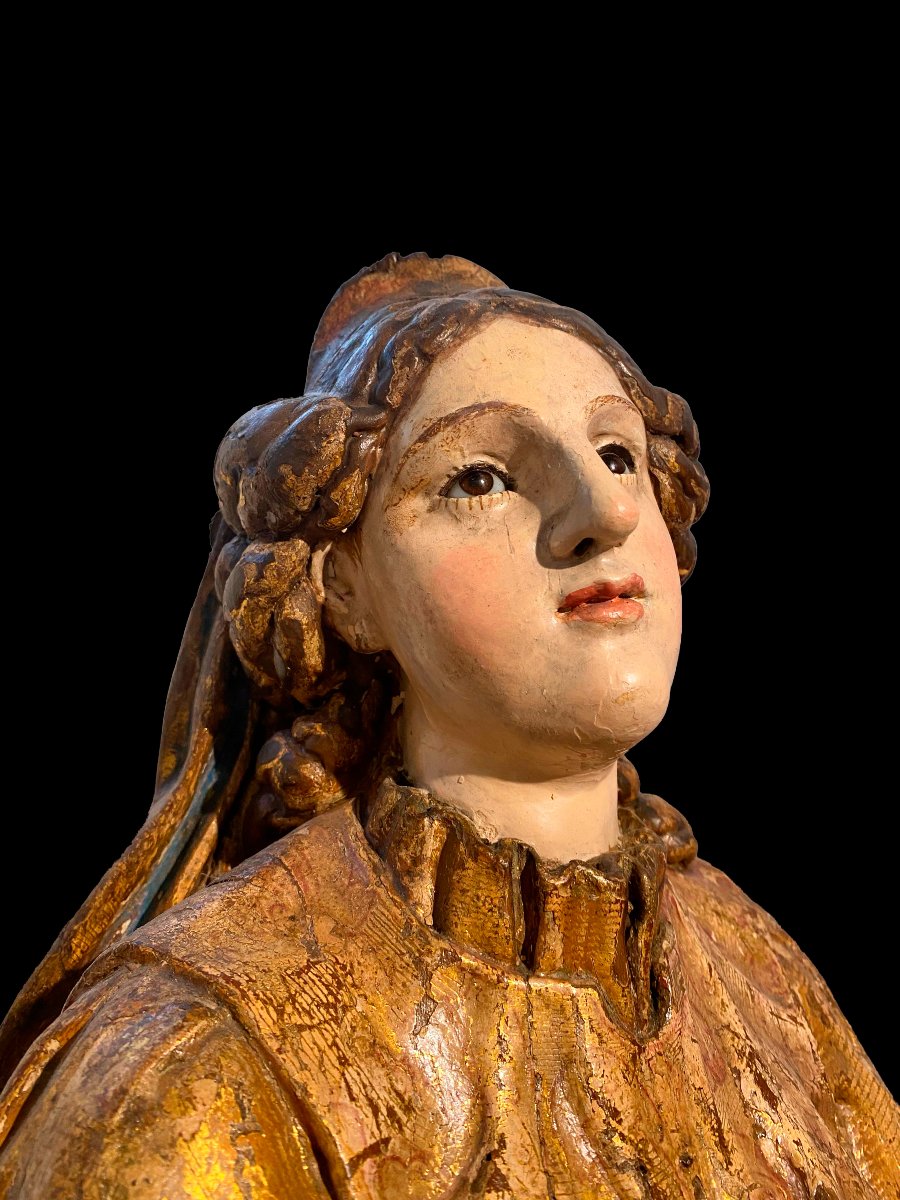
Seventeenth-century Spanish polychrome sculpture aimed to achieve as realistic an appearance as possible. Compared to works in bronze or marble, carved and painted wooden figures—often featuring glass eyes and wigs—achieved a remarkable degree of realism. This is certainly true of this statue of a saint: the artist sought to create a lifelike effect by adding glass eyes, thereby giving the face greater expressiveness. Furthermore, the long painted eyelashes further enhance the work’s vivid and immediate quality.
Another striking detail lies in the unusual way the shirt is tied around the neck, forming small, wavy folds. The carved hair is also elegantly pulled back to support the crown and enhanced with touches of polychromy.
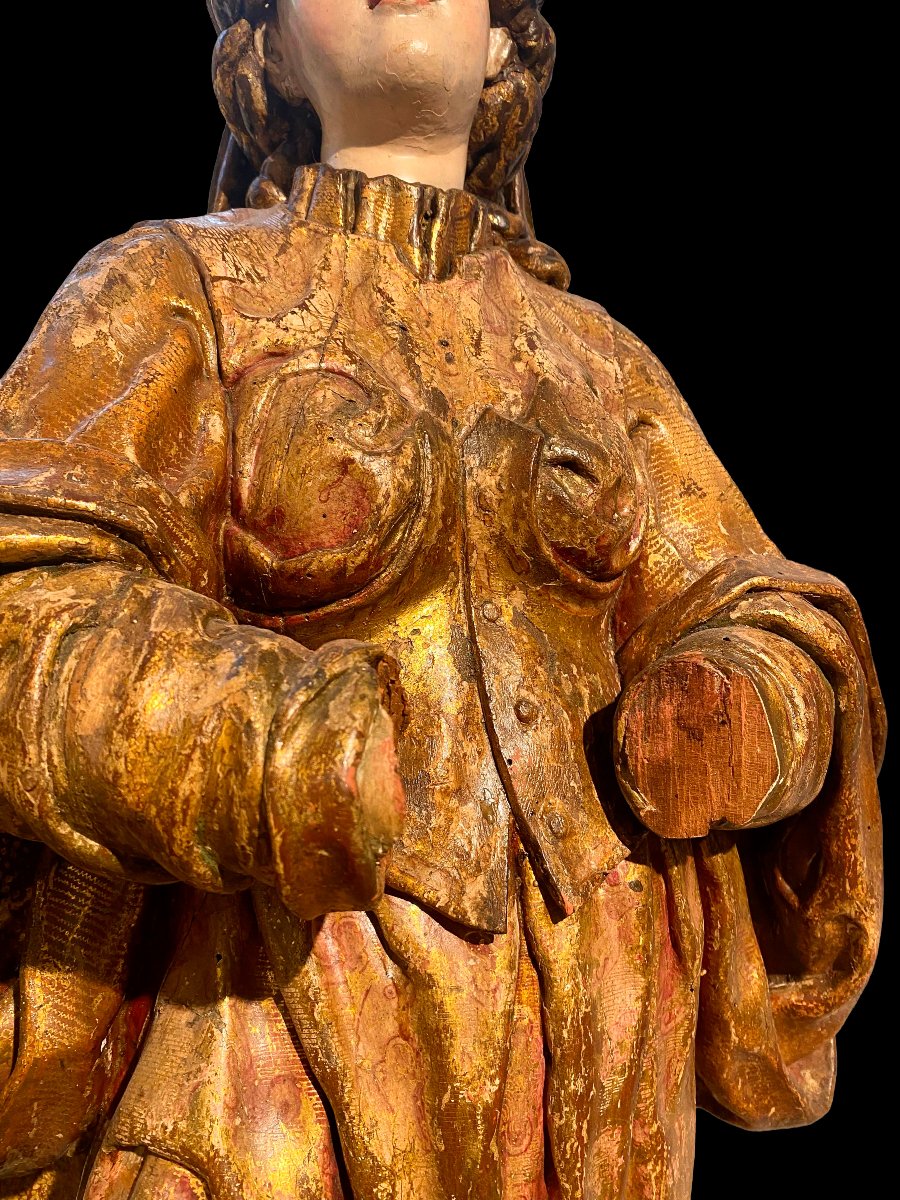
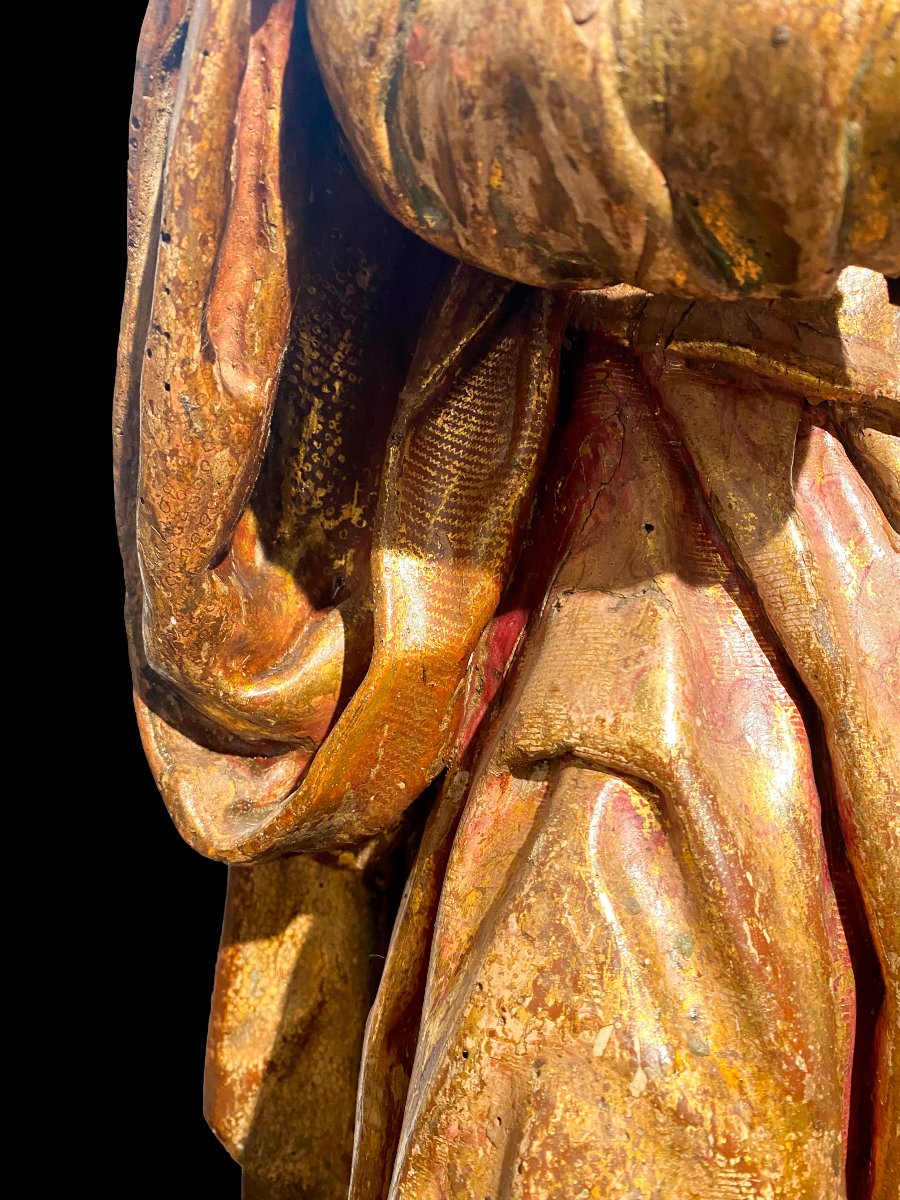
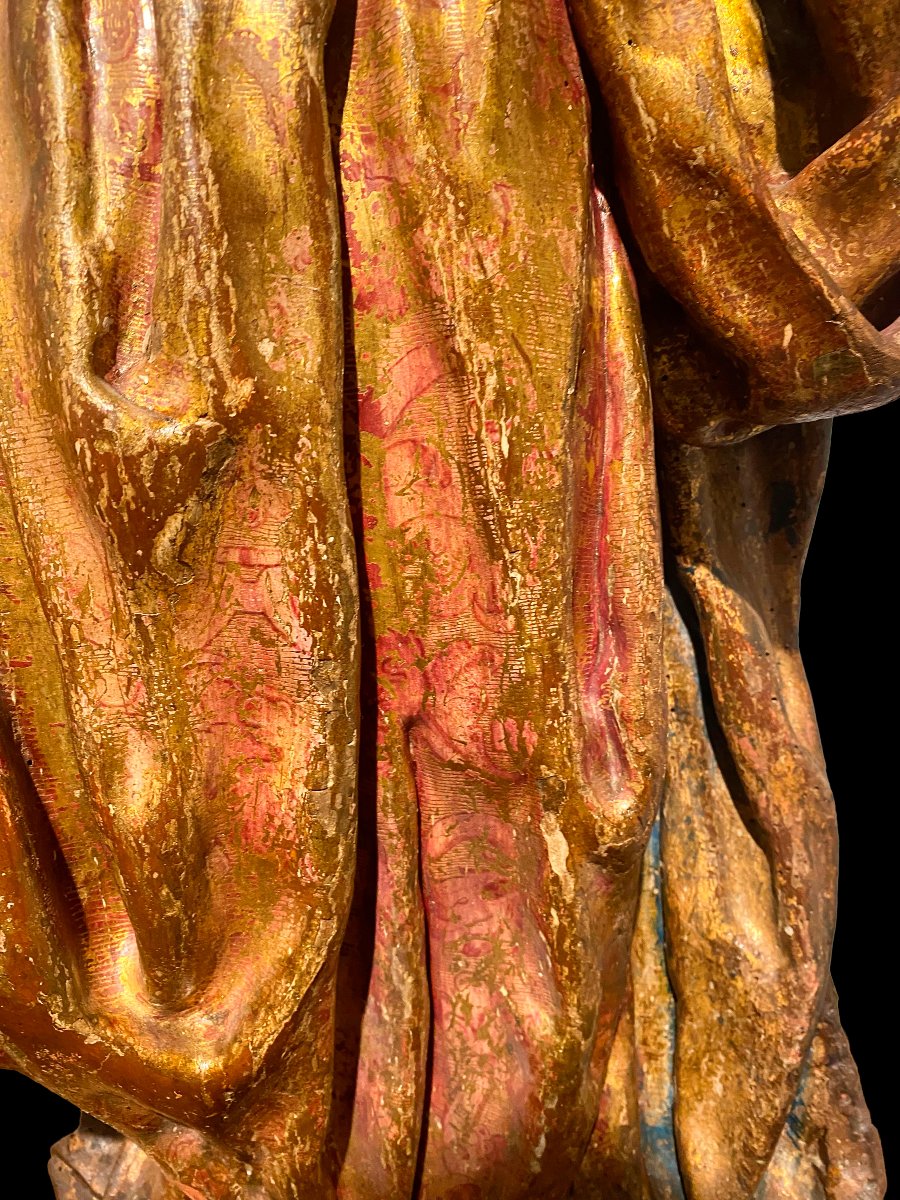
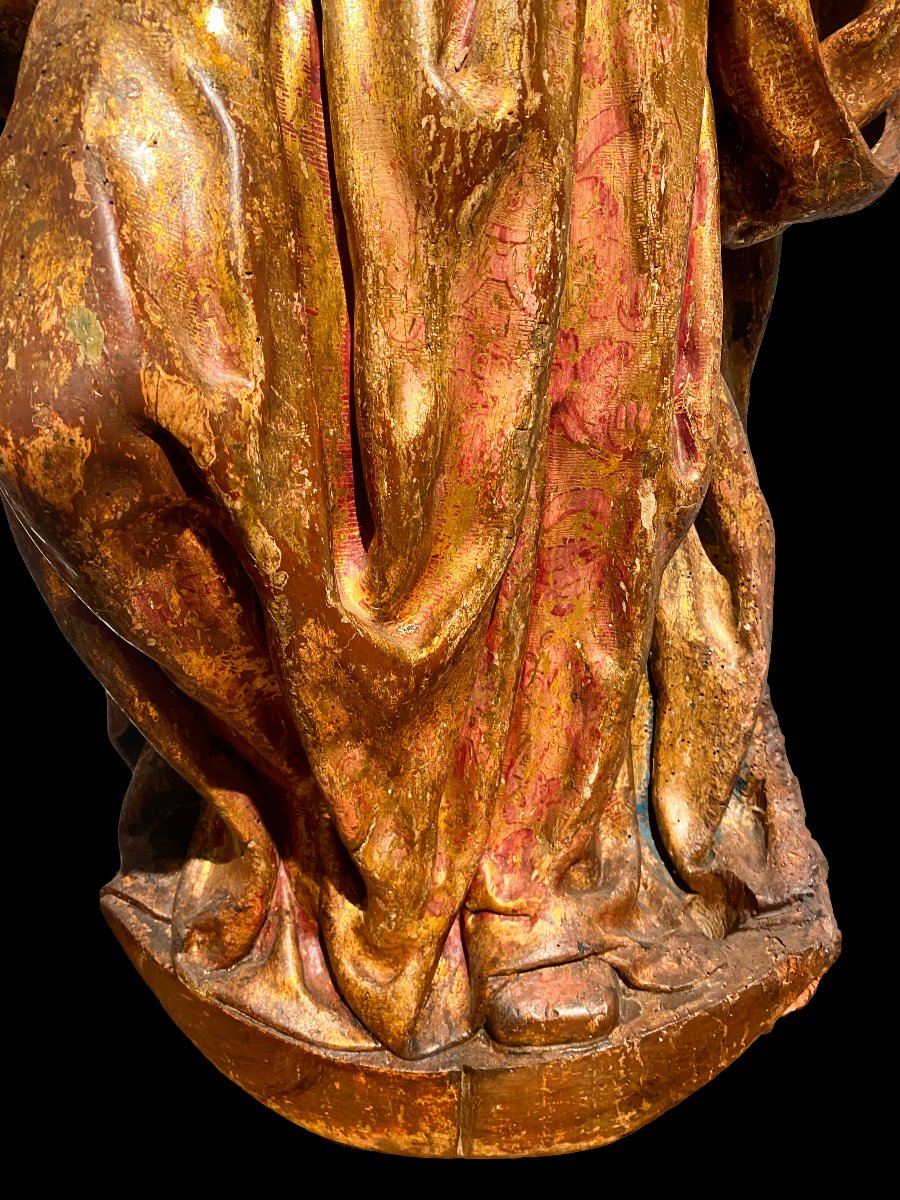
The creation of such sculptures often involved two distinct artisans: the “estofador” (a specialist in the decorative technique known as “estofado”) and the woodcarver. Each mastered specific techniques of Spanish polychromy: “estofado” (a decorative method involving the application of a base of gold leaf followed by tempera painting over it to imitate richly patterned silk fabrics) and “carnaciones” (the application of oil paint to the hands, feet, and face, as well as to the lips, hair, and skin tones). The sculpture features “estofado” decoration (gilded and painted) and polychrome on the saint’s garments, while the face displays pearlescent tones and traces of pink pigments on the lips. Gold dominates the color palette of the dress, particularly on the sleeves, where the drapery is beautifully rendered with broad folds.
The body’s anatomy is concealed by a fitted, buttoned bodice—also gilded—which emphasizes her femininity.
The piece is in good condition and shows only normal wear and tear from age, with the exception of the hands, which are missing (see photographs).
This wooden sculpture, identified as depicting a saint, lacks her usual attributes, such as the palm frond or the instrument of her martyrdom. She does, however, wear a crown holding a large veil in place; the veil falls over her shoulders and spreads out behind her figure. Because of this carved crown, the figure could represent Saint Eulalia of Mérida—a young Christian woman from a noble family who was martyred after publicly professing her faith—or perhaps Saint Elizabeth of Hungary or Saint Elizabeth of Portugal, both of whom are invariably depicted wearing a crown.
Seventeenth-century Spanish polychrome sculpture aimed to achieve as realistic an appearance as possible. Compared to works in bronze or marble, carved and painted wooden figures—often featuring glass eyes and wigs—achieved a remarkable degree of realism. This is certainly true of this statue of a saint: the artist sought to create a lifelike effect by adding glass eyes, thereby giving the face greater expressiveness. Furthermore, the long painted eyelashes further enhance the work’s vivid and immediate quality.
Another striking detail lies in the unusual way the shirt is tied around the neck, forming small, wavy folds. The carved hair is also elegantly pulled back to support the crown and enhanced with touches of polychromy.
The creation of such sculptures often involved two distinct artisans: the “estofador” (a specialist in the decorative technique known as “estofado”) and the woodcarver. Each mastered specific techniques of Spanish polychromy: “estofado” (a decorative method involving the application of a base of gold leaf followed by tempera painting over it to imitate richly patterned silk fabrics) and “carnaciones” (the application of oil paint to the hands, feet, and face, as well as to the lips, hair, and skin tones). The sculpture features “estofado” decoration (gilded and painted) and polychrome on the saint’s garments, while the face displays pearlescent tones and traces of pink pigments on the lips. Gold dominates the color palette of the dress, particularly on the sleeves, where the drapery is beautifully rendered with broad folds.
The body’s anatomy is concealed by a fitted, buttoned bodice—also gilded—which emphasizes her femininity.
The piece is in good condition and shows only normal wear and tear from age, with the exception of the hands, which are missing (see photographs).
2 000 €
Period: 17th century
Style: Other Style
Condition: Condition of use
Material: Gilted wood
Width: 32
Height: 90
Depth: 14
Reference (ID): 1788106
Availability: In stock
Print