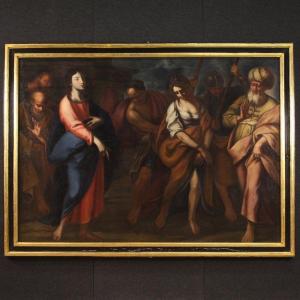





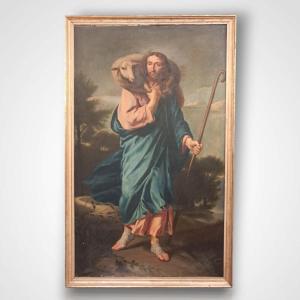


After Philippe De Champaigne, The Good Shepherd, Oil On Canvas, Early 19th Century
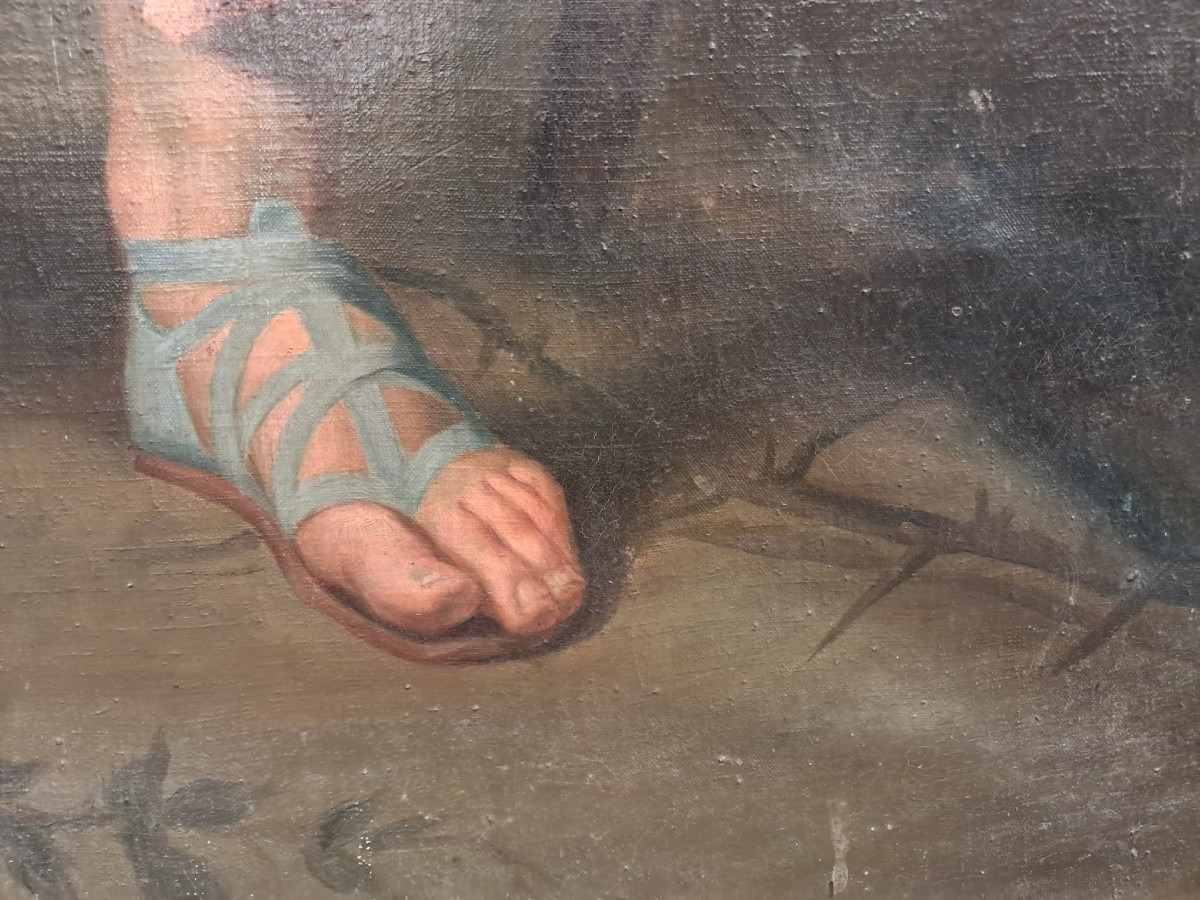
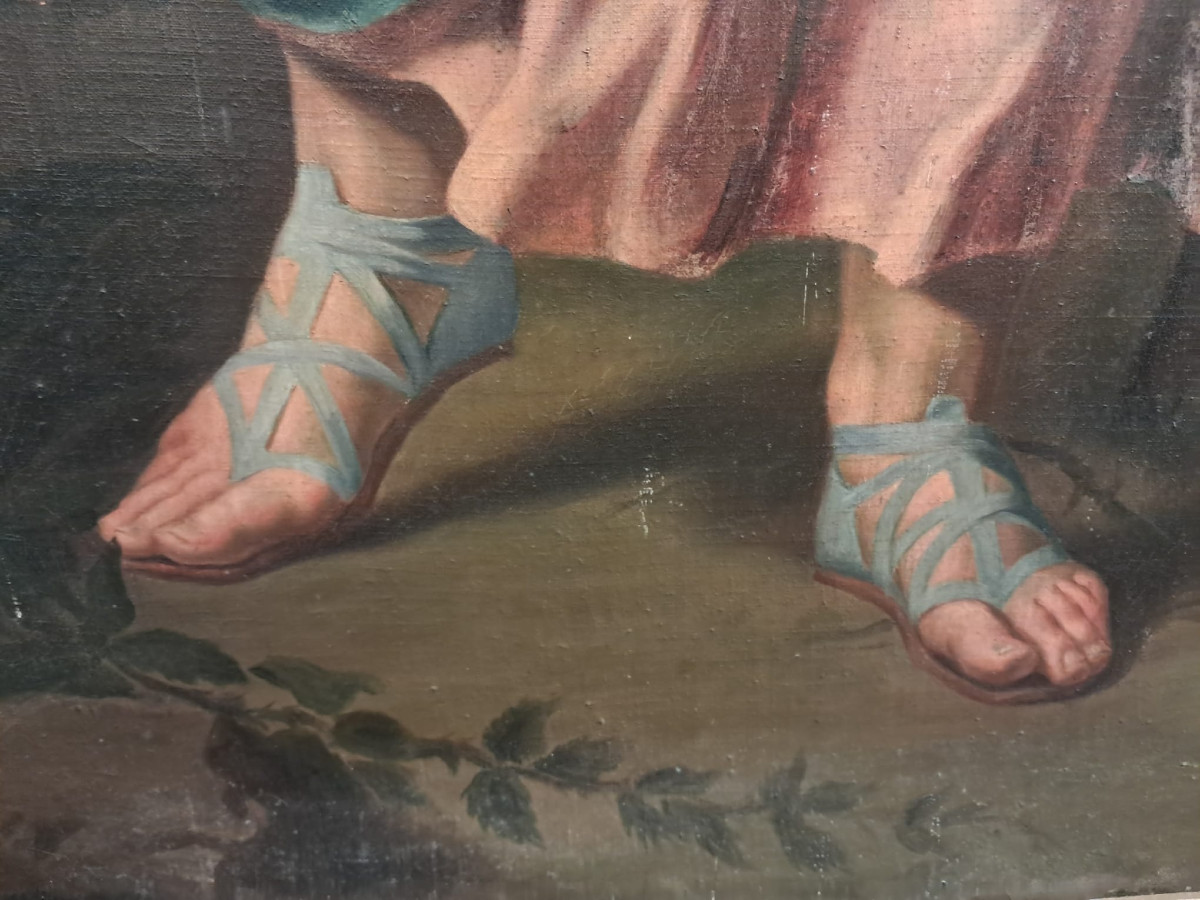
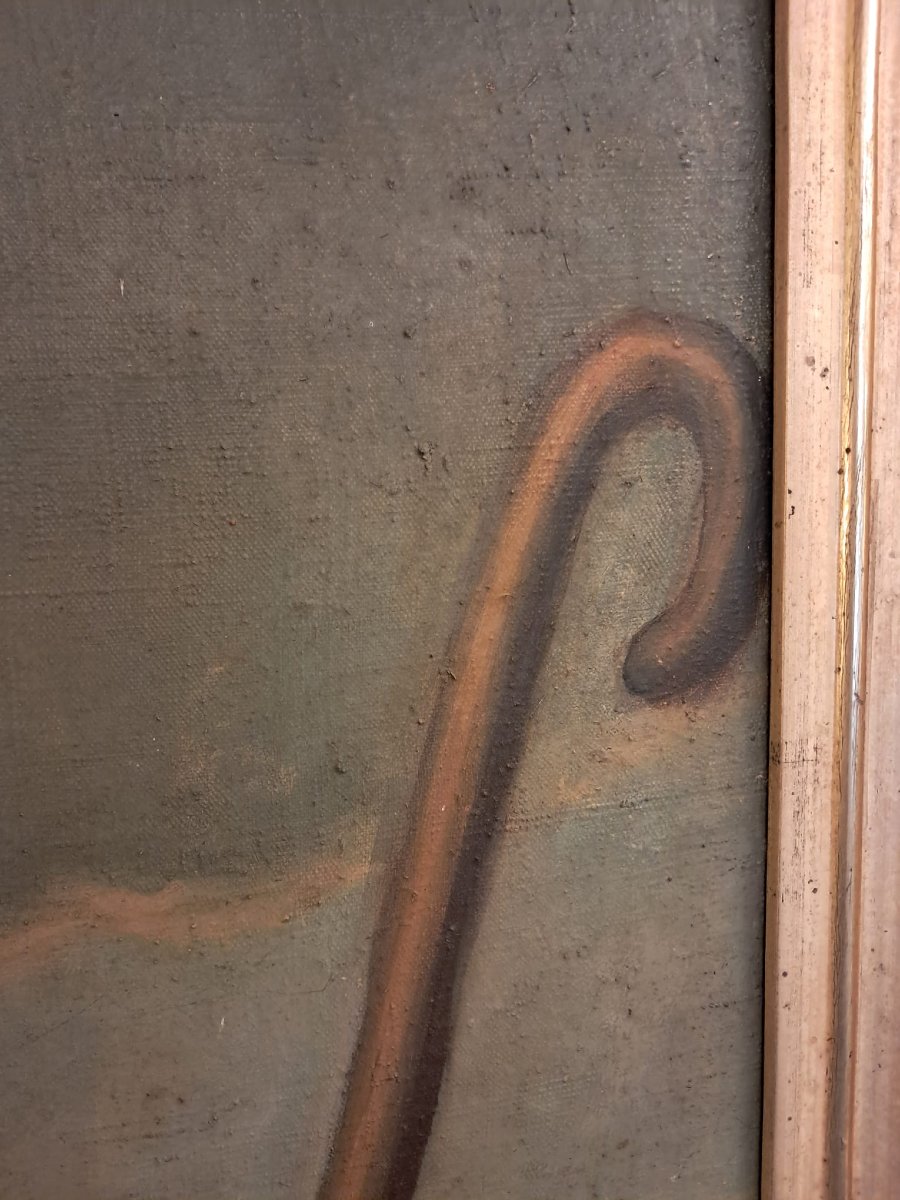
An important painting depicting Christ as the Good Shepherd, holding a shepherd's crook, carrying a sheep on his shoulders, and trampling a thorn branch underfoot—a symbolic evocation of the crown of thorns associated with his martyrdom. This iconography reflects his role as a guide, bringing the lost sheep back to the flock. It originates from representations of criophoroi (“ram-bearers”), associated with ram-sacrificing rituals in ancient Greece and later adopted in Roman art. The theme of the Good Shepherd is also found in the Old Testament.
The theme of the Good Shepherd is evoked in the Old Testament:
In the Gospel according to John (John 10:11-16),
“I am the good shepherd. The true shepherd lays down his life for the sheep. The hired hand is not the shepherd and does not own the sheep. When he sees the wolf coming, he abandons the sheep and runs away. Then the wolf attacks the flock and scatters it. The hired hand is not a hired hand and does not care about the sheep. I am the good shepherd; I know my sheep and my sheep know me—just as the Father knows me and I know the Father—and I lay down my life for the sheep. I have other sheep that are not of this fold. I must bring them also. They too will listen to my voice, and there shall be one flock and one shepherd.”
In the Parable of the Lost Sheep in the Gospel according to Saint Luke (Lk 15:3-7): Then Jesus told them this parable: “Suppose one of you has a hundred sheep and loses one of them. Doesn’t he leave the ninety-nine in the open country and go after the lost sheep until he finds it? And when he finds it, he joyfully puts it on his shoulders and goes home. Then he calls his friends and neighbors together and says, ‘Rejoice with me, for I have found my lost sheep.’ I tell you, in the same way there will be more joy in heaven over one sinner who repents than over ninety-nine righteous persons who need no repentance.”
The work is inspired by a painting by Philippe de Champaigne (1602-1674), official painter to Marie de Medici, now in the collection of the Musée des Beaux-Arts in Tours.
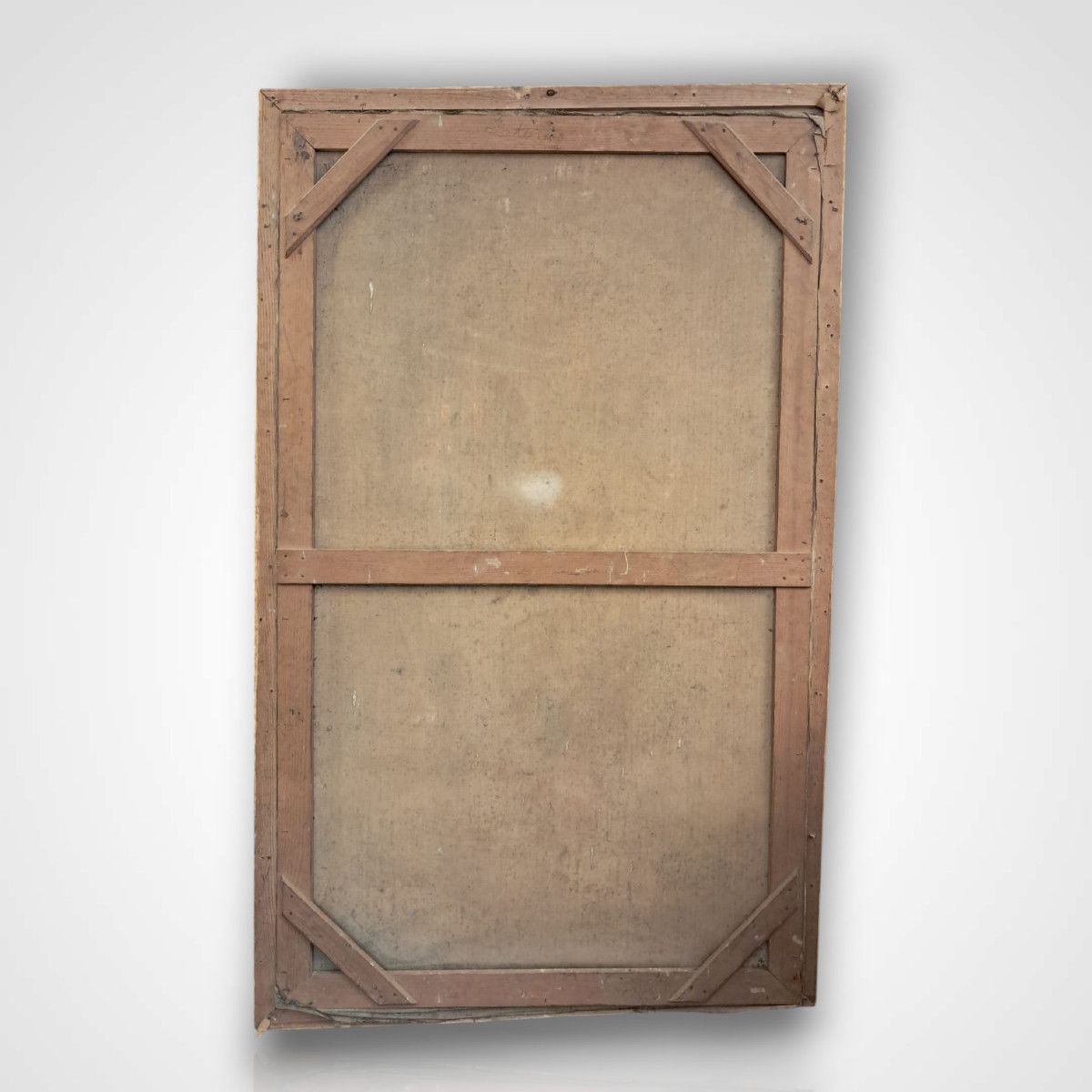
There are holes left by wood-boring insects in the frame.
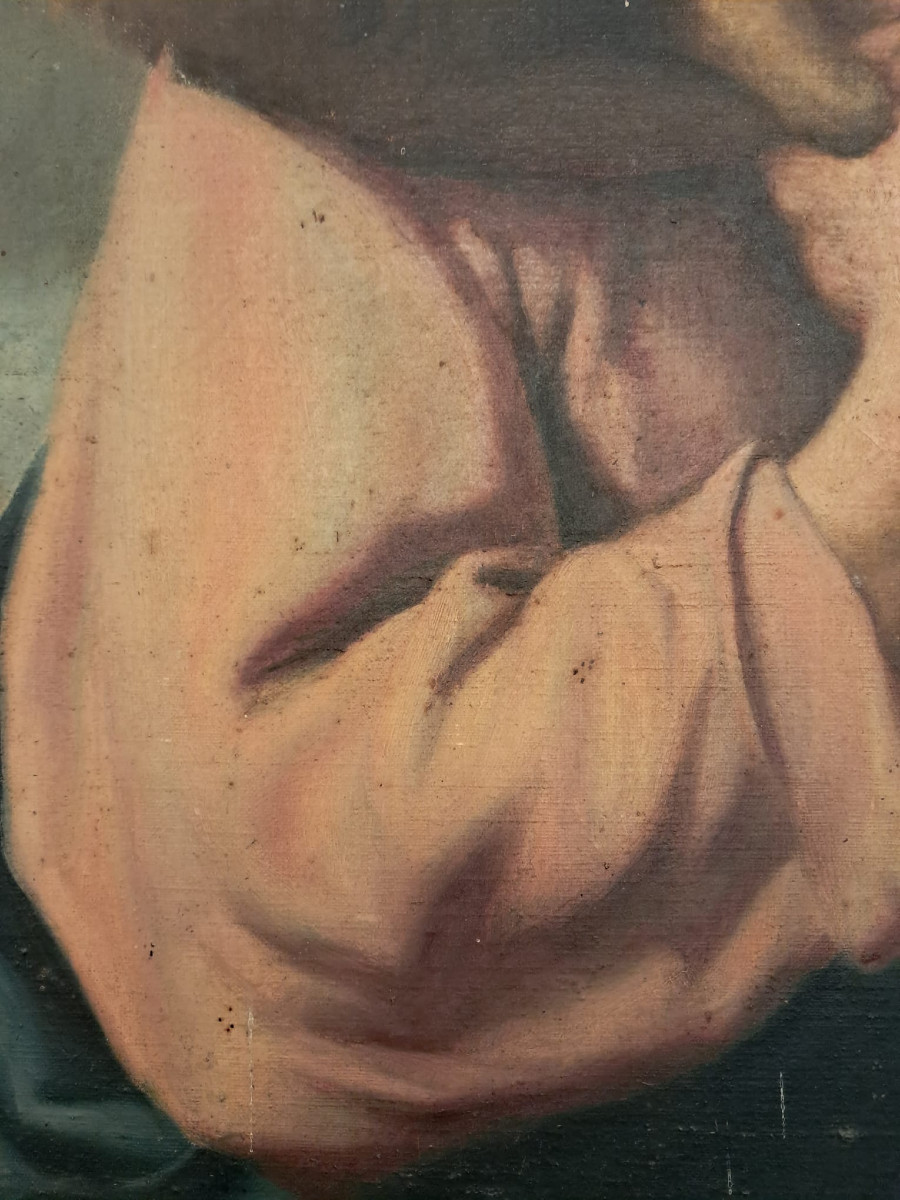
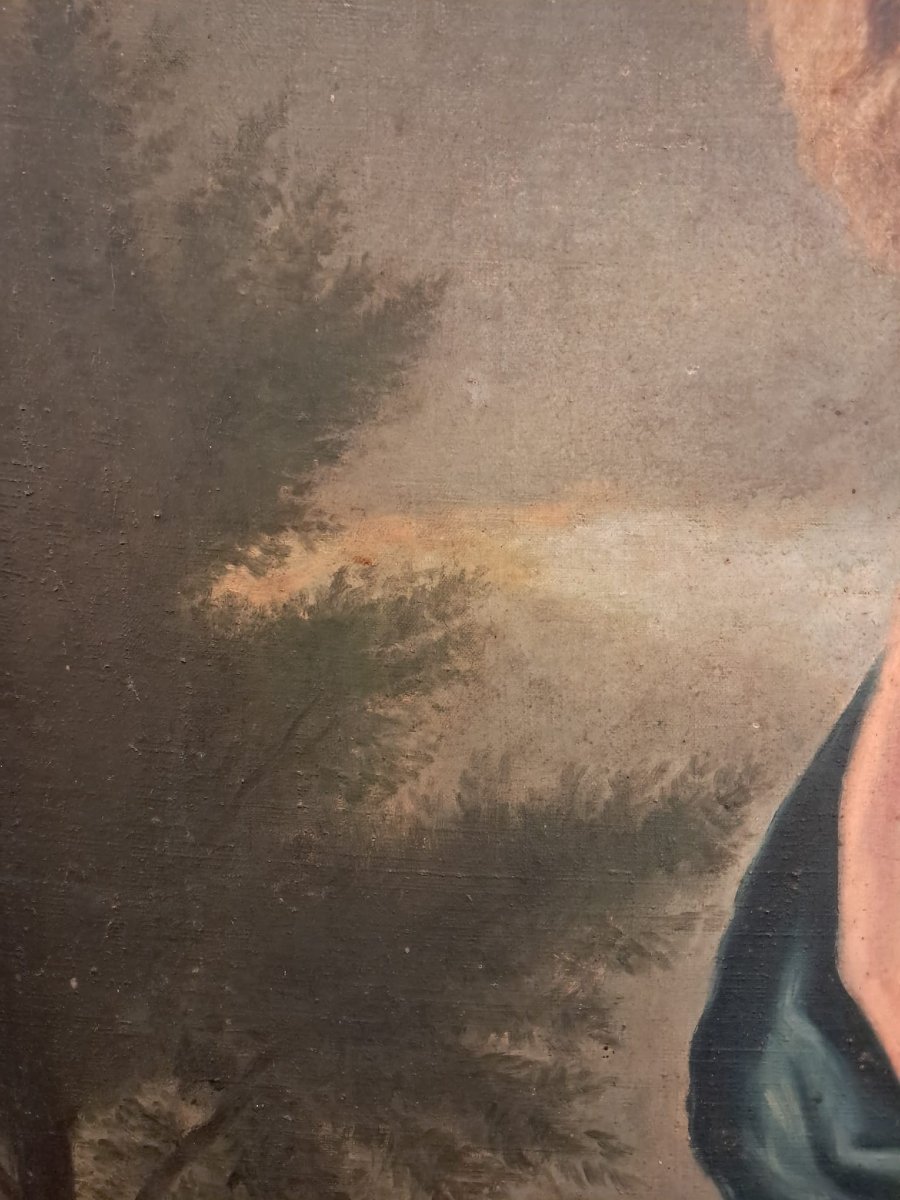
The varnish is yellowed.
There are visible marks in the paint layer.
The canvas needs to be reattached to the stretcher in places.
As is.
Dimensions:
Image size: 153 x 90 cm
Framed: 163,5 x 100,5 cm
The theme of the Good Shepherd is evoked in the Old Testament:
In the Gospel according to John (John 10:11-16),
“I am the good shepherd. The true shepherd lays down his life for the sheep. The hired hand is not the shepherd and does not own the sheep. When he sees the wolf coming, he abandons the sheep and runs away. Then the wolf attacks the flock and scatters it. The hired hand is not a hired hand and does not care about the sheep. I am the good shepherd; I know my sheep and my sheep know me—just as the Father knows me and I know the Father—and I lay down my life for the sheep. I have other sheep that are not of this fold. I must bring them also. They too will listen to my voice, and there shall be one flock and one shepherd.”
In the Parable of the Lost Sheep in the Gospel according to Saint Luke (Lk 15:3-7): Then Jesus told them this parable: “Suppose one of you has a hundred sheep and loses one of them. Doesn’t he leave the ninety-nine in the open country and go after the lost sheep until he finds it? And when he finds it, he joyfully puts it on his shoulders and goes home. Then he calls his friends and neighbors together and says, ‘Rejoice with me, for I have found my lost sheep.’ I tell you, in the same way there will be more joy in heaven over one sinner who repents than over ninety-nine righteous persons who need no repentance.”
The work is inspired by a painting by Philippe de Champaigne (1602-1674), official painter to Marie de Medici, now in the collection of the Musée des Beaux-Arts in Tours.
There are holes left by wood-boring insects in the frame.
The varnish is yellowed.
There are visible marks in the paint layer.
The canvas needs to be reattached to the stretcher in places.
As is.
Dimensions:
Image size: 153 x 90 cm
Framed: 163,5 x 100,5 cm
1 800 €
Period: 19th century
Style: Other Style
Condition: En l'etat
Material: Oil painting
Width: 100.5
Height: 163.5
Reference (ID): 1712700
Availability: In stock
Print