

Trajan Ric 59 — Certificate Of Authenticity
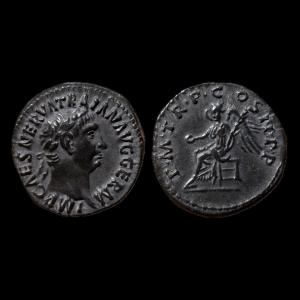
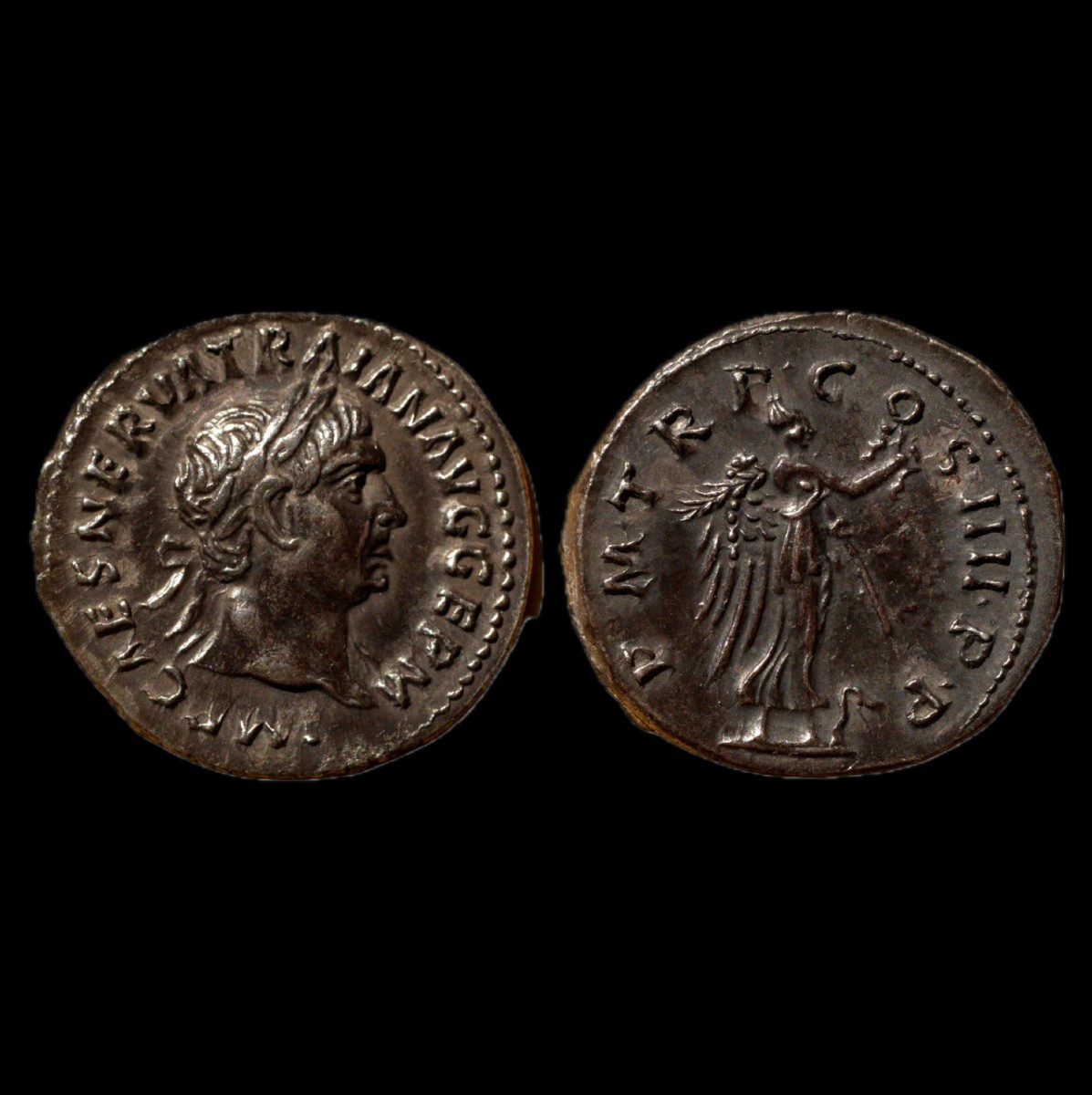
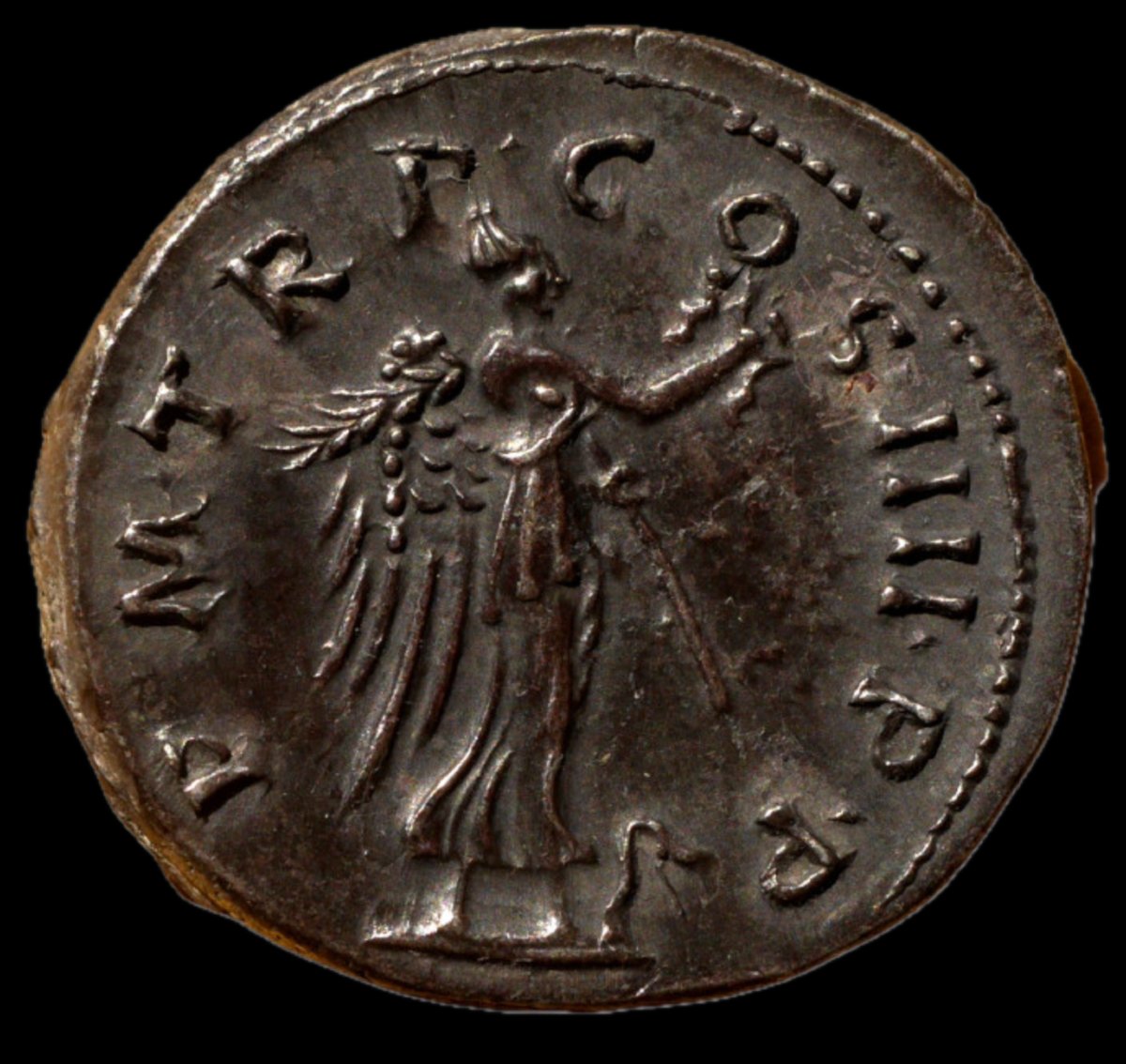
This silver denarius of Trajan, struck at Rome in AD 101–102, belongs to the type RIC II 59 / OCRE ric.2.tr.59 / Woytek 123a, with on the obverse IMP CAES NERVA TRAIAN AVG GERM and, on the reverse, P M TR P COS IIII P P, Victory standing right on a prow, holding wreath and palm; specialist catalogues further describe the prow as ending in a serpent, a detail that belongs precisely to the iconographic interest of this issue. The reference metrics published by Numista are 3.2 g for 18.5 mm, with an observed range of about 2.42 to 3.57 g and 17 to 20 mm; the specimen presented here, at 3.57 g for 18 mm, therefore sits at the top of the documented weight range for the type, a point appreciated by knowledgeable collectors. Each specimen is examined, described, and accompanied by a certificate of authenticity in accordance with the standards of the art and heritage market.
Analysis & Expertise
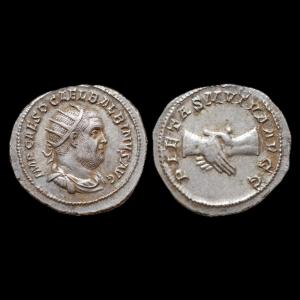
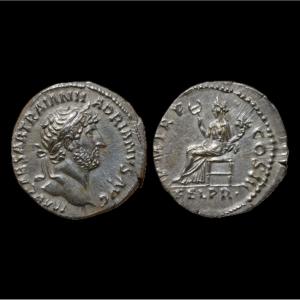
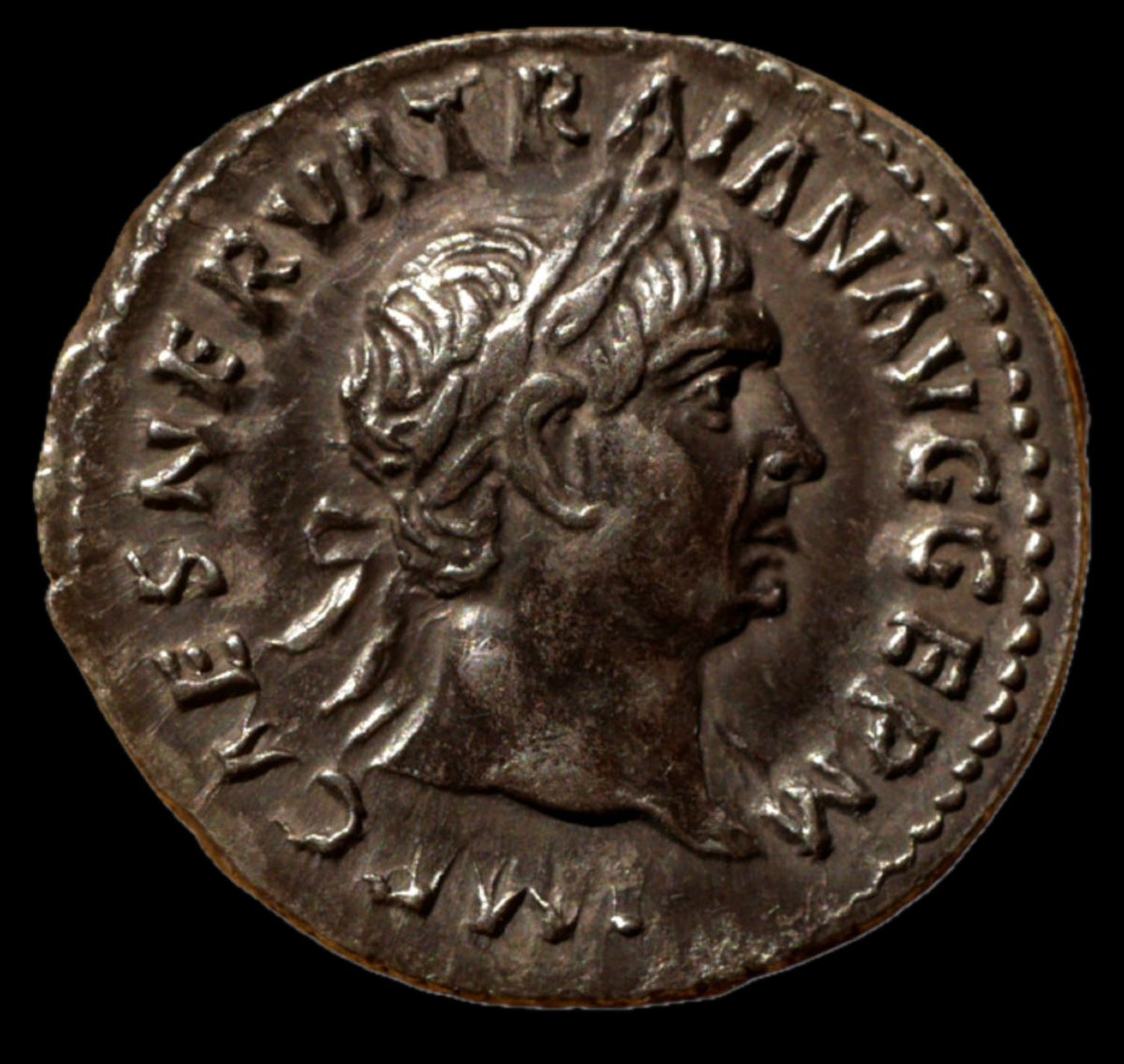
Close observation under ×10 magnification and raking light. The obverse presents a laureate head of Trajan turned right, in a crisp and very homogeneous Roman style, with hair rendered in thick, orderly locks, a well-structured laurel wreath, a high forehead, a widely open eye, a firm nasal line, a tight mouth, and a powerfully modeled chin; the peripheral titulature remains very largely legible, with regular letter relief and a beaded border followed around most of the circumference, giving the obverse a particularly satisfying visual steadiness. The type description published by Numista and by the British Museum corresponds exactly to this scheme of a laureate portrait right.
The reverse retains immediately intelligible iconographic readability, as Victory, draped, stands right on a prow, holding a wreath in the right hand and a palm in the left; the goddess’ silhouette remains clear, the prow stays well structured in its principal line, and the layout of the legend P M TR P COS IIII P P remains sufficiently ample to fully support identification. The descriptions published by Numista, the British Museum, NumisBids, and CNG agree on this composition, with several specialist catalogues further specifying that the prow ends in a serpent, a detail directly tied to the type’s visual personality.
Material examination shows a slightly irregular round flan, consistent with hammer striking, with relief remaining firm on the high points of both the portrait and Victory, fields showing fine old marks of circulation and handling, and an edge locally softer yet well stabilized; these features fully accord with the expected morphology of a Rome denarius from the early second century. The coherence of weight, diameter, technique, and style, set against the RIC 59 type entry, supports a particularly secure numismatic reading here.
The specific interest of this specimen lies in the conjunction of a very legible early Trajanic portrait, a Victory-on-prow reverse complete in its concept, a broadly preserved beaded border, and metrology situated in the upper portion of the published range; Numista assigns the type a rarity index of 87, allowing it to be presented, with full justification, as a sought-after issue while remaining within a rigorously documented framework.
Characteristics
The attribution may be stated as follows, with full documentary security: Trajan, Rome mint, silver denarius, struck in AD 101–102, recorded weight 3.57 g, diameter 18 mm, obverse IMP CAES NERVA TRAIAN AVG GERM, laureate head right, reverse P M TR P COS IIII P P, Victory standing right on a prow, holding wreath and palm. Convergent references are RIC II 59, OCRE ric.2.tr.59, Woytek 123a, BMCRE 102, and RSC 241. Specialist comparanda published under these same references include 2.88 g / 18 mm, 3.05 g / 18.5 mm, 3.10 g / 19 mm, 3.14 g / 18.5 mm, and 3.40 g / 19 mm, confirming the specimen’s very good metrological placement within the group.
Historical context
This issue belongs to the firmly established beginning of Trajan’s reign, in a sequence Numista dates to AD 101–102, and which CNG explicitly classifies among the issues of the First Dacian War; the reverse titulature COS IIII and the Victory iconography thus situate the coin in a moment when the imperial image highlights military success through a language of great monumental sobriety. The type does not juxtapose a portrait and an arbitrary allegory: it articulates a victorious princeps with a naval or martial Victory set upon a prow, giving the issue strong political density.
The prow ending in a serpent, as described by specialist catalogues, is a particularly important distinguishing detail for identifying this number within early Trajanic series; it sets the reverse apart from other, more common issues of standing Victory and strengthens the coin’s iconographic interest within the AD 101–102 coinage.
Cultural value
The cultural interest of this denarius is high, because it brings together, within a small silver module, a high-quality imperial portrait, an early titulature formula of the reign, and a Victory-on-prow reverse whose visual personality is immediately apparent; it belongs to that category of coins where clarity of political message goes hand in hand with strong engraving quality. The British Museum records the type as a Trajan denarius dated AD 101–102, and Numista classifies it among standard circulating issues of the reign with a meaningful rarity index, confirming its solid place in a high-level denarius collection.
For a cabinet oriented toward Trajan’s early issues, Victory series, or denarii connected with the Dacian campaigns, this specimen has very clear appeal precisely because it combines a classic reference, a reverse type of strong personality, and favorable metrology; it stands as much by the clarity of its attribution as by the concrete quality of its material presence.
Traceability & Guarantees
From a European provenance, from an established numismatic dealer, this specimen was acquired through a specialized international transaction conducted within a recognized numismatic network and validated by reference experts, according to the highest standards of the art and heritage market; examination retains only the stylistic, technical, epigraphic, and metrological characteristics effectively observable on the coin, set within the framework of the Trajan / Victory on prow / RIC 59 group, and compared against available public references and specialist comparanda.
Each specimen is examined, described, and accompanied by a certificate of authenticity in accordance with the standards of the art and heritage market; in the present case, the concordance between the obverse IMP CAES NERVA TRAIAN AVG GERM, the reverse P M TR P COS IIII P P with Victory standing on a prow, the observed metrology, the Rome mint, and the references RIC II 59 / OCRE ric.2.tr.59 / Woytek 123a / BMCRE 102 / RSC 241 establishes a particularly solid numismatic attribution, formulated for a knowledgeable collecting audience within a framework of strict descriptive exactitude.
Period: Before 16th century
Style: Rome and Antic Greece
Condition: Good condition
Reference (ID): 1730278
Availability: In stock