

Trajan Ric 291 / Woytek 394b — Certificate Of Authenticity
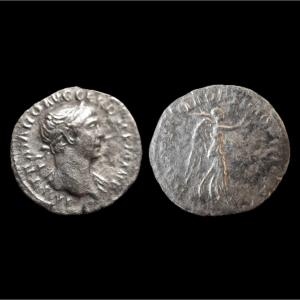
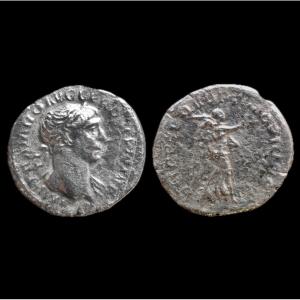
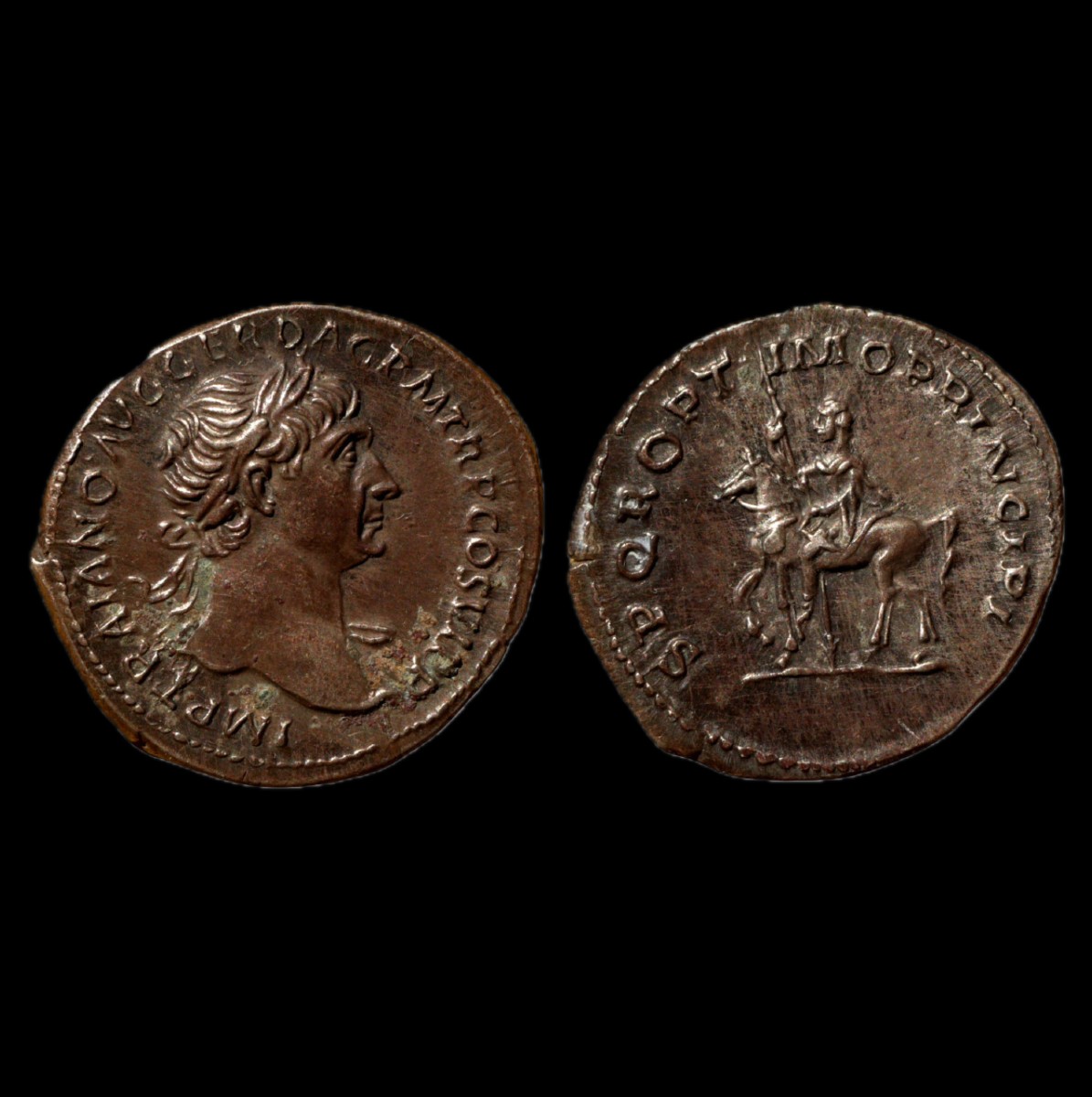
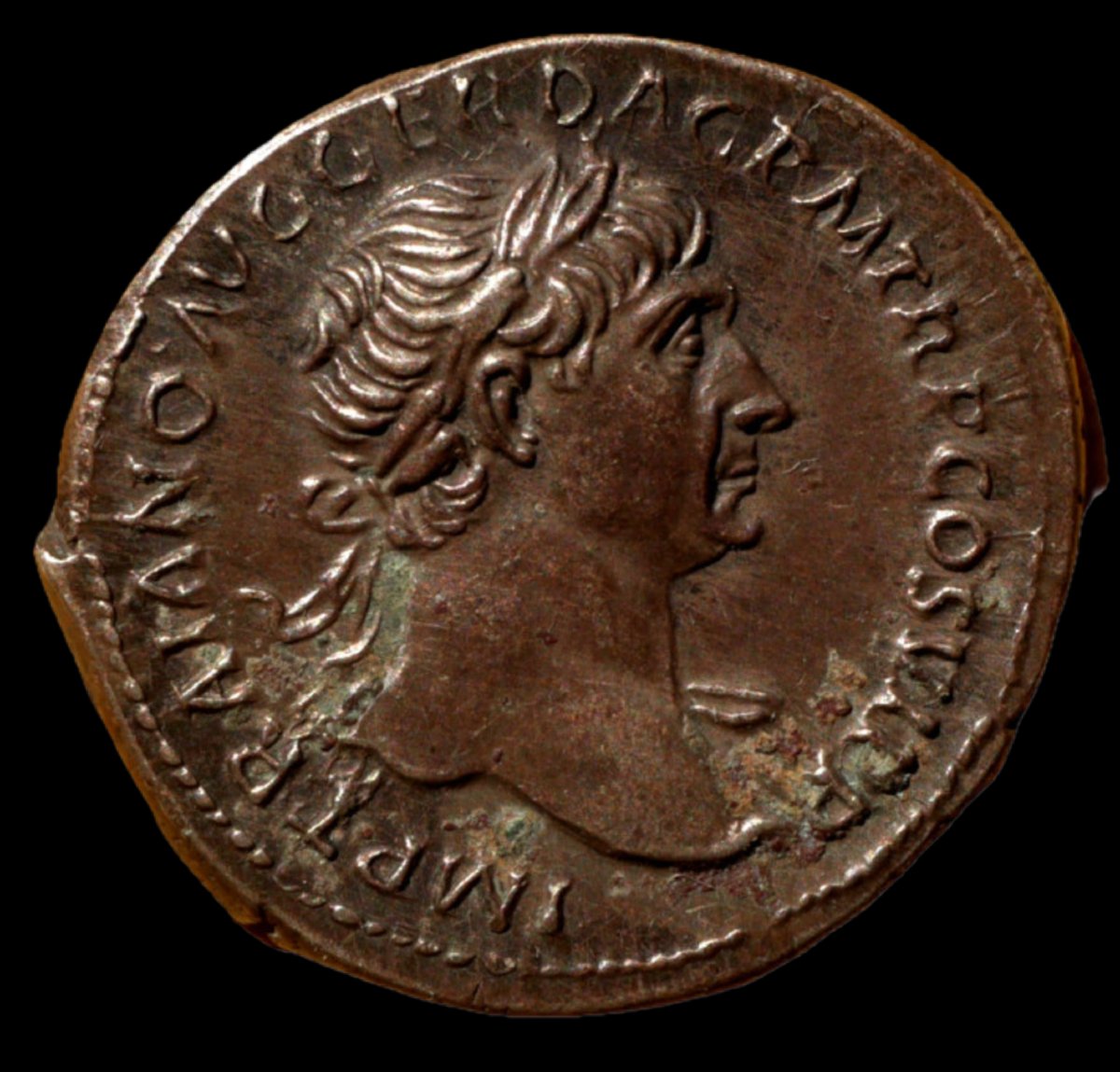
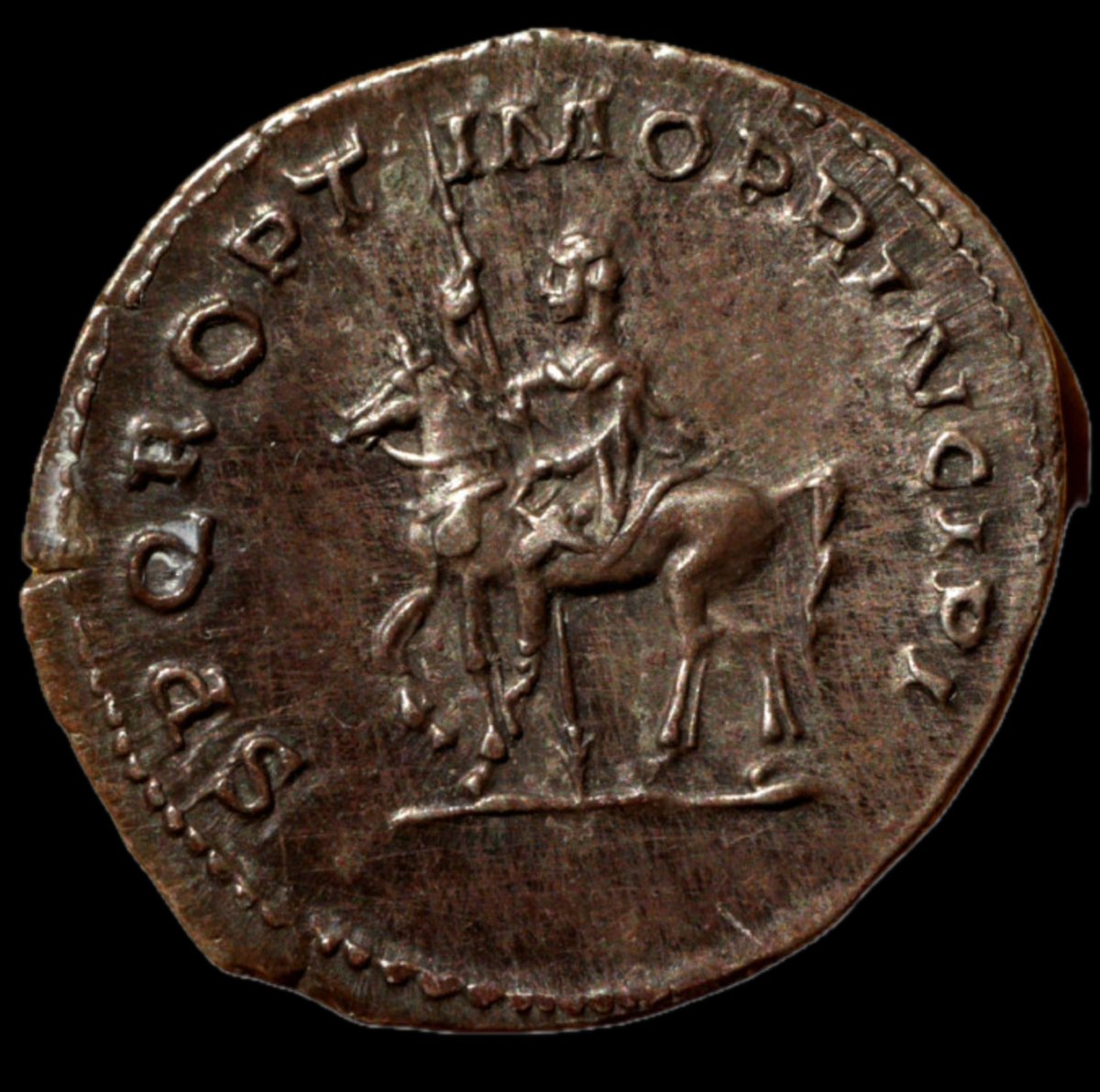
This silver denarius of Trajan, struck at Rome within the generally accepted horizon of AD 112–113, belongs to an equestrian type of great distinction, particularly prized by high-level collectors, in which the obverse IMP TRAIANO AVG GER DAC P M TR P COS VI P P accompanies a laureate bust right with slight drapery over the left shoulder, while the reverse S P Q R OPTIMO PRINCIPI shows the emperor on horseback left, holding a long spear and a small Victory; specialized commercial literature and recent comparanda relate it to Woytek 394b and to RIC II 291 var., with references to BMCRE 445 note and Cohen 497a, placing the specimen within a closely monitored, technically secure, and distinctly sought-after typological family—especially when it preserves, as here, broad legibility of both the portrait and the statuary reverse.
Analysis & Expertise
Close observation under ×10 magnification and raking light. The obverse presents a laureate head of Trajan right whose stylistic quality remains highly satisfactory, with hair rendered in lively, clearly layered locks, a laurel wreath well readable in its structure, a high forehead, a firmly open eye, a continuous nasal line, a concise mouth, and a very well-built chin, while the slight drapery on the left shoulder remains perceptible and contributes to the clear definition of the bust type; the beaded border retains remarkable continuity around a large part of the circumference, the legend reads cleanly over most of the perimeter, and the flan—though slightly irregular at the margins—remains very favorable to the coin’s overall presentation.
The reverse immediately draws attention by the strength of its composition, since Trajan on horseback left remains readable with real authority: the mass of the horse is well set, the imperial figure preserves its verticality, and the two essential attributes of the type—the long spear and the small Victory—remain sufficiently distinct to support expert identification without hesitation; the whole belongs to the group that specialist catalogues describe precisely as a reverse with Trajan on horseback left, holding spear and small Victory, under Woytek 394b and RIC 291 var. (bust type), with a dating centered on AD 112–113.
The silver surface presents a coherent ancient physiognomy, with relief remaining crisp on both the portrait and the equestrian group, a light-gray patina with subtle nuances, and discreet old handling marks—normal for a denarius that truly circulated—which in no way compromise either type legibility or the specimen’s aesthetic balance; minor marginal irregularities and very slight flan tensions, visible at several points around the edge, fit naturally within the logic of hammer striking on an irregular flan, in accordance with the published characteristics for the type.
The numismatic interest of this specimen lies in the conjunction—rarely so well maintained on this group—of a firm portrait, a broadly preserved obverse titulature, a fully intelligible equestrian reverse, and metrology very well aligned with the observed standard, as specialized documentation publishes examples for this type around 3.12 to 3.50 g and 19 to 21 mm, placing the described specimen, at 3.40 g for 19 mm, in a particularly satisfactory zone for the informed collector.
Characteristics
The typological attribution may be stated precisely as follows: Trajan, Rome mint, silver denarius, struck circa AD 112–113, recorded weight 3.40 g, diameter 19 mm, obverse IMP TRAIANO AVG GER DAC P M TR P COS VI P P, laureate bust right with slight drapery on the left shoulder, reverse S P Q R OPTIMO PRINCIPI, Trajan on horseback left holding a long spear and a small Victory; recent specialist bibliography publishes it under Woytek 394b, with comparison to RIC II 291 var. (bust type), BMCRE 445 note, and Cohen 497a. The related type listed by Numista under RIC II 291 denarius is given as silver, 18.5 mm, 3.1 g, hammered technique, and with the same obverse titulature and the same reverse legend, confirming the full material and weight coherence of the present specimen within the group.
Historical context
This denarius belongs to the high phase of Trajan’s principate, when the titulature COS VI and the formula OPTIMO PRINCIPI are already stabilized within Rome’s coinage, at a moment when the imperial image seeks less to experiment than to monumentalize the figure of the prince; it is precisely within this framework that the equestrian reverse gains its full resonance, since it is not reduced to a generic military scene but refers to a monumental formulation of triumphant power. Documentation related to the monumental reconstruction of the Plan of Rome (University of Caen) recalls that an equestrian statue of Trajan stood at the center of his forum, and that restitution hypotheses draw in part on coin representations showing the emperor holding a Victory and a spear directed downward—an account closely matching the iconographic family to which the present denarius belongs.
In this perspective, the legend S P Q R OPTIMO PRINCIPI adds a decisive institutional depth, for it articulates the official praise of the prince by the Senate and People of Rome, and gives the imperial rider the value of a fully constituted political image; the reverse therefore celebrates not merely a ruler in motion, but a model of public, civic, and monumental principate, made visible through one of the strongest compositions of Trajanic denarii from this sequence.
Cultural value
The cultural interest of this coin is high, because it unites, within a small silver module, three elements that major collectors immediately recognize: an excellent-style portrait of Trajan, a major institutional legend, and an equestrian reverse that clearly dialogues with honorific statuary of the forum; it is thus a piece that surpasses strict catalogue description to enter the category of representational coinage—those in which monetary iconography condenses a monumental program of power.
For a cabinet specializing in Trajan’s denarii, in issues bearing OPTIMO PRINCIPI, or in series iconographically linked to Trajan’s forum, this specimen possesses particular strength, because it combines a firmly identified reference, a reverse of high visual personality, and a state of preservation that still allows full appreciation of the engraver’s design; specialist documentation readily describes it as a scarce issue or a beautiful statuary reverse, which corresponds exactly to how a connoisseur values this type when it appears, as here, in such coherent fabric.
Traceability & Guarantees
From a European provenance, from an established numismatic dealer, this specimen was acquired through a specialized international transaction conducted within a recognized numismatic network and validated by reference experts, according to the highest standards of the art and heritage market; examination retains only the stylistic, technical, epigraphic, and metrological characteristics effectively observable on the coin, set within the framework of the Trajan / S P Q R OPTIMO PRINCIPI / equestrian reverse group, and compared against the typological documentation and specialized comparanda published under Woytek 394b and RIC 291 var..
Each specimen is examined, described, and accompanied by a certificate of authenticity in accordance with the standards of the art and heritage market; in the present case, the concordance between the obverse titulature, the bust type, the reverse with Trajan on horseback holding a Victory and a spear, the observed metrology, the Rome mint, and the references Woytek 394b / RIC II 291 var. / BMCRE 445 note / Cohen 497a establishes a particularly solid numismatic attribution, written for a knowledgeable collecting audience within a framework of strict descriptive exactitude.
Period: Before 16th century
Style: Rome and Antic Greece
Condition: Good condition
Reference (ID): 1730272
Availability: In stock