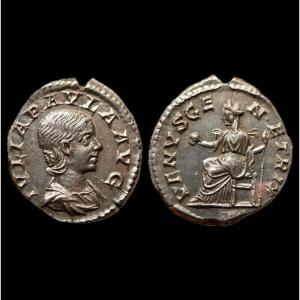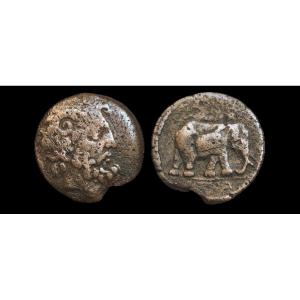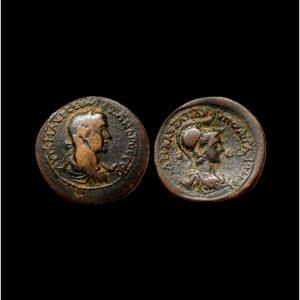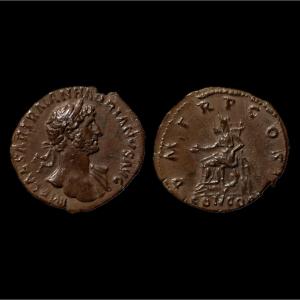


Maximin I Ric 16 Victoria Avg — Certificate Of Authenticity
Analysis & Expertise
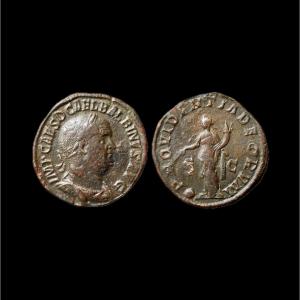
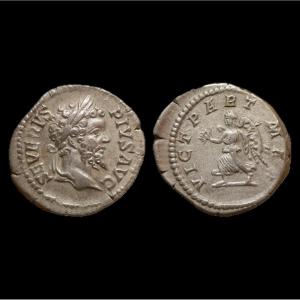
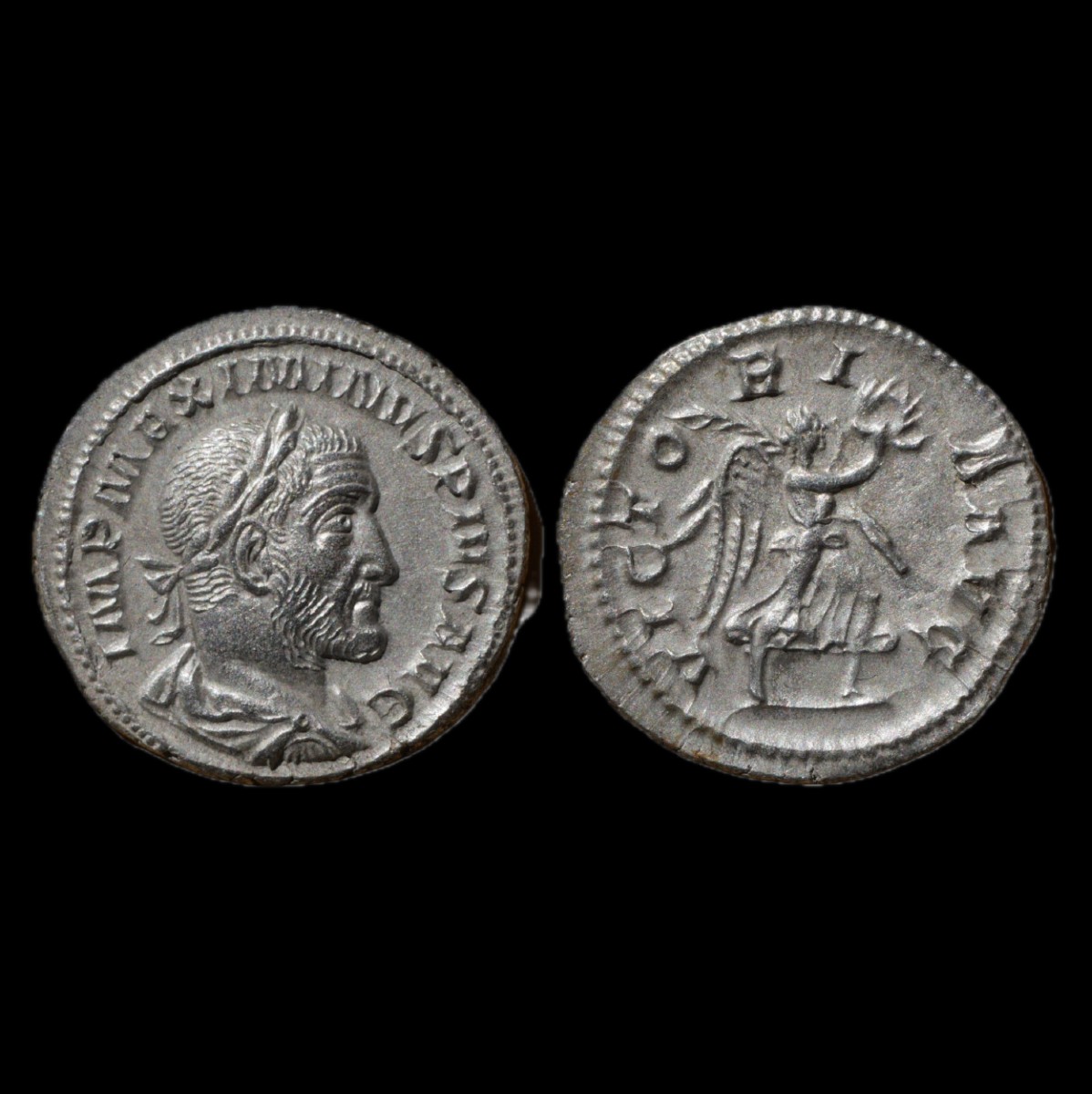
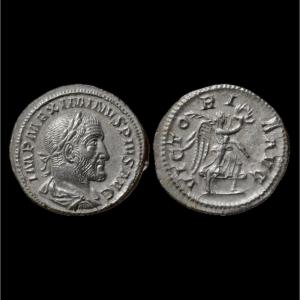
This silver issue of Maximinus I “the Thracian,” struck at Rome in the first phase of the reign, aligns with remarkable clarity to the denarius RIC IV.2, 16, also published as BMC 25–6 and RSC 99a, with on the obverse IMP MAXIMINVS PIVS AVG and on the reverse VICTORIA AVG; the type is documented for AD 235–236, on a struck silver flan, with a diameter generally close to 20 mm, and a recorded weight range of about 2.15 to 3.65 g, placing the specimen considered here within a typological and metrological framework fully consistent with the series. Each specimen is examined, described, and accompanied by a certificate of authenticity in accordance with the standards of the art and heritage market.
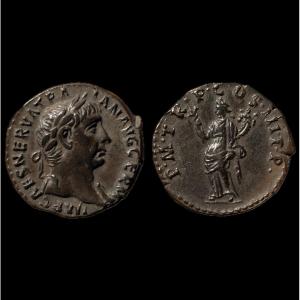
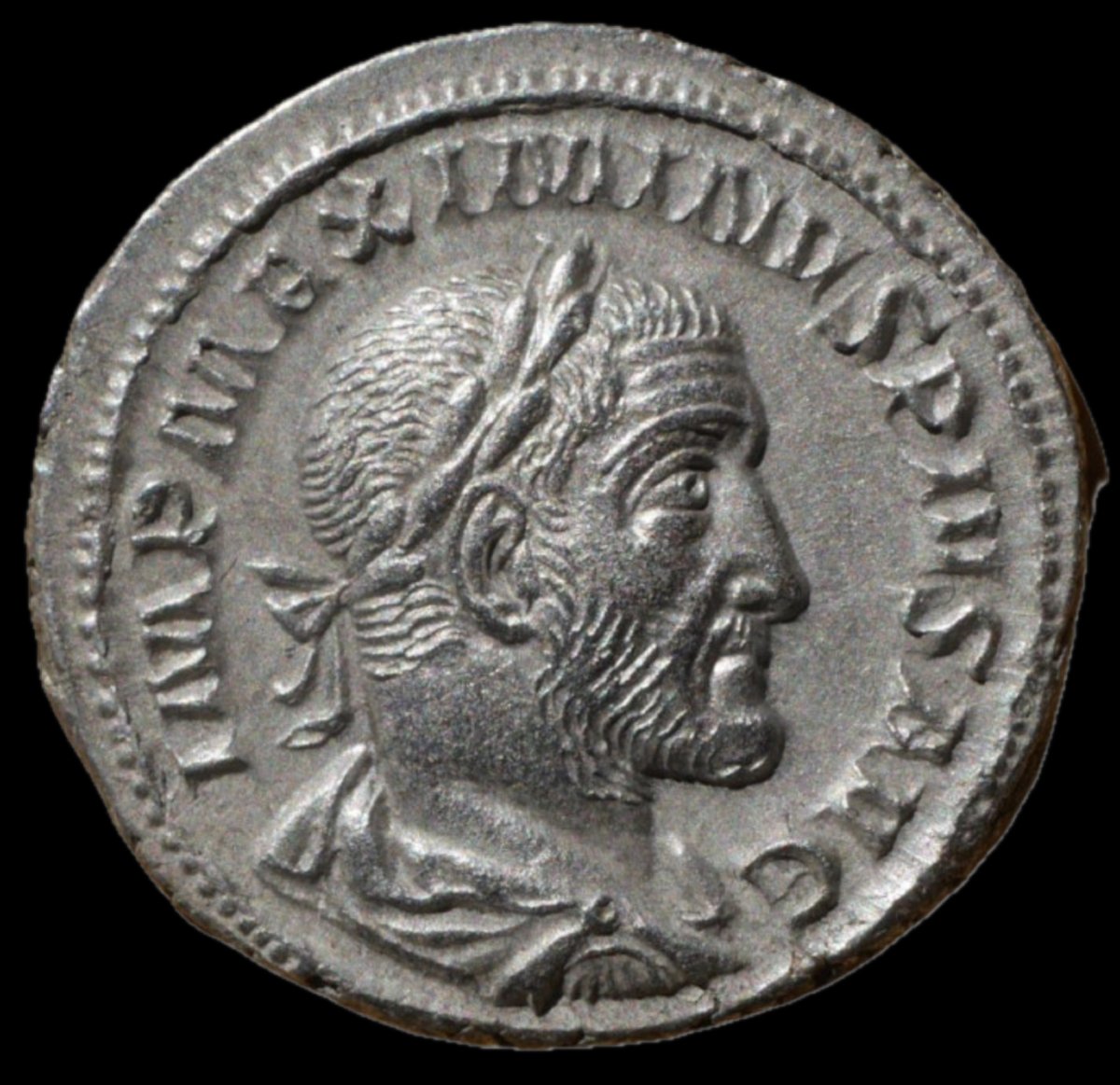
Close observation under ×10 magnification and raking light. The obverse presents a laureate, draped, and cuirassed portrait facing right, in an energetic, vigorous style, with hair rendered in short, tight locks, a clearly individualized laurel wreath, a broad forehead, a very distinctly open eye, a strong nasal line, a firm mouth, and a short yet powerfully modeled beard whose cut contributes strongly to the prince’s visual identity; the bust retains very good steadiness in the shoulder drapery and in the general reading of the chest, while the peripheral titulature remains largely intelligible, giving the obverse a particularly satisfying presence for an early third-century denarius. The published obverse type for this number corresponds exactly to this formula: bust of Maximinus I, laureate, draped, and cuirassed, right.
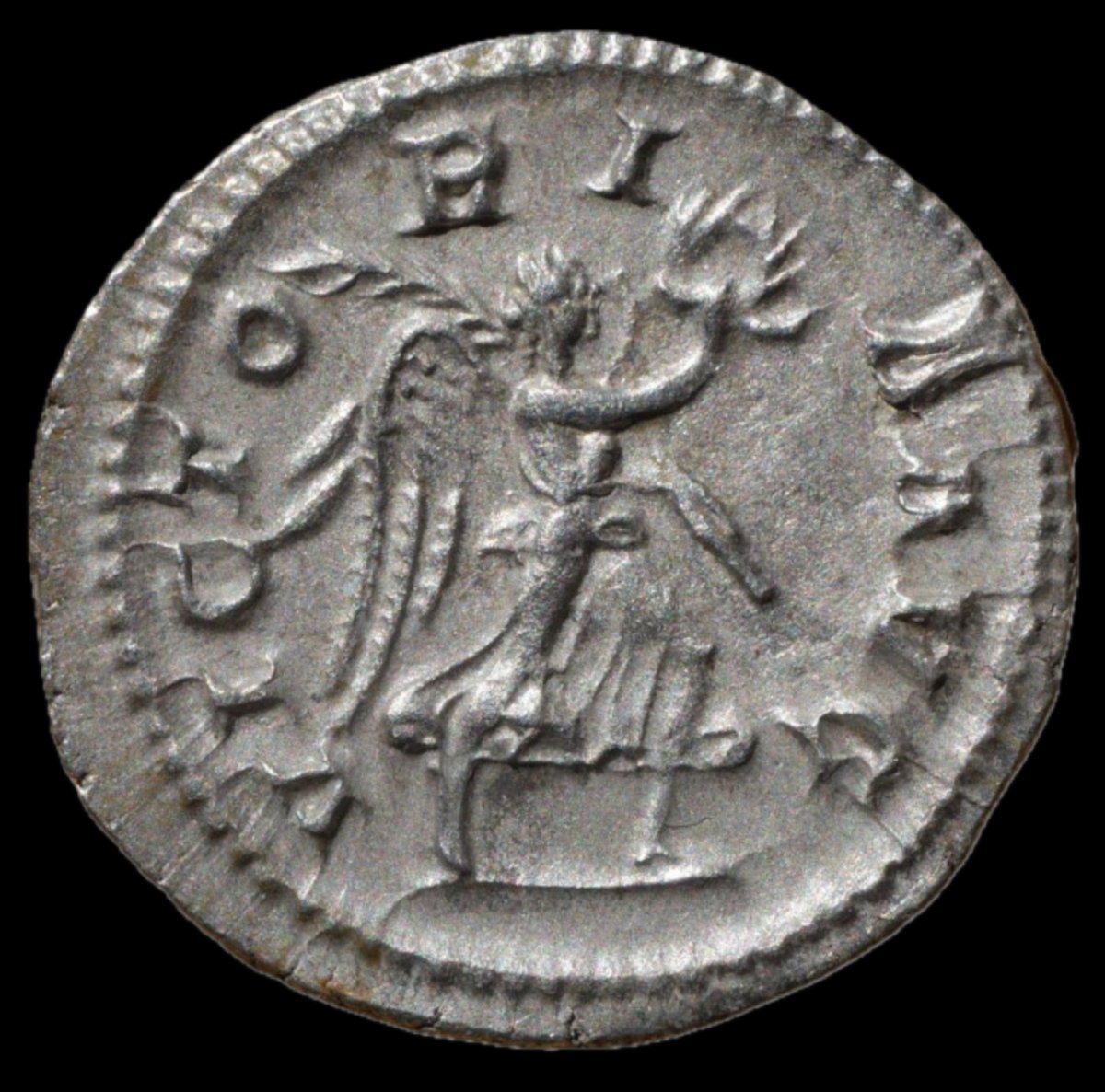
The reverse retains very convincing iconographic legibility, with a winged, draped Victory advancing right, holding in the extended right hand a wreath and in the left a palm, in an immediately recognizable composition perfectly consistent with the VICTORIA AVG group; the winged silhouette remains intelligible, the tension of movement to the right remains perceptible, the wreath stands out clearly in front, and the palm retains its graphic role as a rear axis, so that the reverse preserves all its doctrinal force and typological clarity. The legend VICTORIA AVG can be followed with very satisfactory readability around the edge, reinforcing the coin’s overall identification quality.
The metal shows a coherent ancient appearance, with an irregular round flan fully compatible with hammer striking, relief still firm on the high points of both portrait and Victory, and a regularly toned silver surface, without any break in reading of the types; the edge, slightly soft in places, remains fully consistent with the denomination’s ancient manufacture, and the preservation of the beaded border over broad segments contributes to the impression of the whole’s visual integrity. Within the type’s economy, the specimen thus gathers what the attentive collector seeks first: a well-centered obverse, a legible legend, a fully intelligible reverse, and material coherence without uncertainty.
Characteristics
This is a denarius of Maximinus I “the Thracian,” emperor from AD 235 to 238, struck at Rome within AD 235–236; the metal is silver, the type’s reference diameter lies around 20 mm, and the reference weight around 3 g, with documented series variability. The obverse reads IMP MAXIMINVS PIVS AVG, with laureate, draped, and cuirassed bust right; the reverse reads VICTORIA AVG, with winged, draped Victory advancing right, holding wreath and palm. The principal references are RIC IV.2, 16, BMC 25–6, and RSC 99a. Published comparison specimens for this same number include, notably, 3.03 g at 21.06 mm and 3.13 g at 20 mm, confirming the type’s solid metrological footing in specialized documentation.
Historical context
This issue belongs to the very first years of Maximinus I’s reign, proclaimed emperor in 235 and killed in 238, a reign identified by historical tradition as a major turning point in the Roman third century; standard syntheses recall that he was the first emperor to rise directly through military ranks and that his principate opened a sequence of profound political tensions. In this context, the reverse VICTORIA AVG takes on particularly clear meaning: it is not an ornamental motif, but a monetary formulation of imperial legitimacy through victory, a fundamental theme for a sovereign whose authority is rooted in military force and command effectiveness.
Cultural value
The cultural interest of this coin lies in the meeting of three qualities an informed collector immediately recognizes: an early, strongly individualized portrait of Maximinus, a Victory reverse of exemplary doctrinal legibility, and a classic reference from the reign’s first imperial coinage; it is thus less a simple circulating silver piece than a condensed document of the way mid-third-century Roman power presents itself, justifies itself, and makes itself visible through imagery. The RIC 16 type is well established in the literature and regularly attested on the specialized market, making it both a very secure working coin and a particularly coherent choice within a collection devoted to the beginnings of the third-century crisis or to imperial portraits of strong personality.
Traceability & Guarantees
From a European provenance, from an established numismatic dealer, this specimen was acquired through a specialized international transaction conducted within a recognized numismatic network and validated by reference experts, according to the highest standards of the art and heritage market; examination of the present object retains exclusively the stylistic, technical, epigraphic, and metrological characteristics effectively observable, set within the framework of the type Maximinus I / VICTORIA AVG / RIC 16. The concordance between the obverse IMP MAXIMINVS PIVS AVG, the reverse VICTORIA AVG, the Rome mint, the AD 235–236 dating, the reference RIC IV.2, 16, and the published series parameters establishes here a particularly solid numismatic attribution; each specimen is examined, described, and accompanied by a certificate of authenticity in accordance with the standards of the art and heritage market, so as to provide the collector with a serious, stable, and fully credible descriptive basis.
Period: Before 16th century
Style: Rome and Antic Greece
Condition: Good condition
Reference (ID): 1730305
Availability: In stock