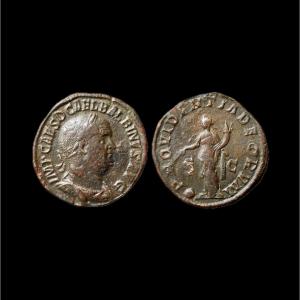


Rare Balbinus Sestertius “providentia Deorvm” — Certificate Of Authenticity
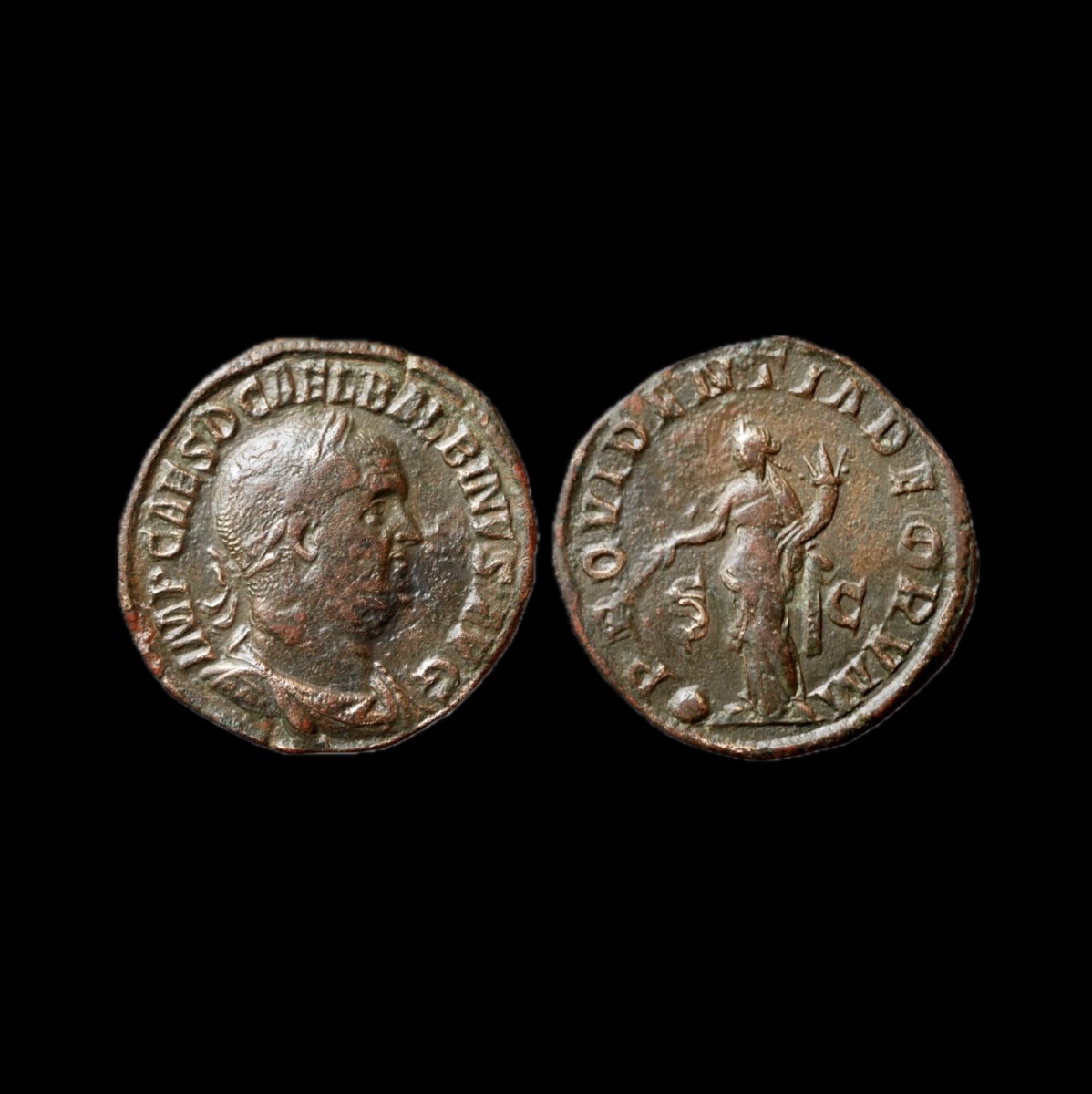
COIN AVAILABLE — Sestertius of Balbinus (22 April – 29 July 238), a large bronze coin struck at Rome (generally April–June 238), type PROVIDENTIA DEORVM / S–C, particularly sought after for its explicit political message at the heart of the “Year of the Six Emperors” and for the typological quality of its engraving.
Analysis & expertiseClose examination with a ×10 loupe and raking light: the coin presents as a large bronze with a dark brown patina showing warm highlights, with localized reddish speckling (stable superficial oxidations of the cuprite type, frequently observed on ancient bronzes), and a regular granulation consistent with long-term evolution in an old environment. The flan shows an edge irregularity (characteristic for this module) and even wear, with no obvious visual break in style or surface within the strict limits of what can be established through observation of the coin.
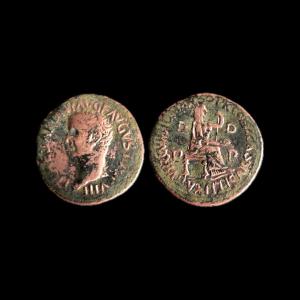
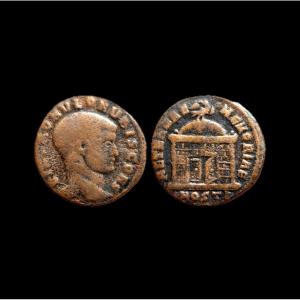
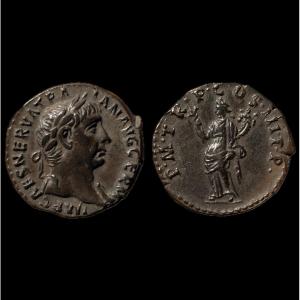
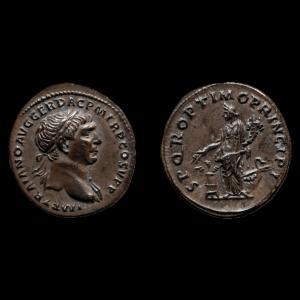
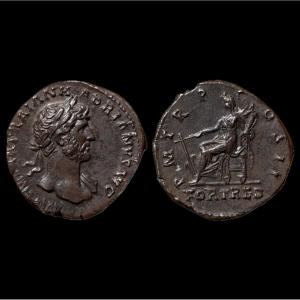
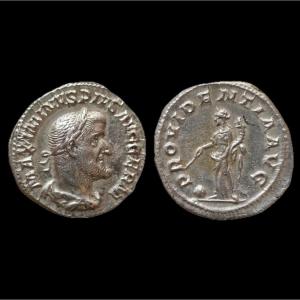
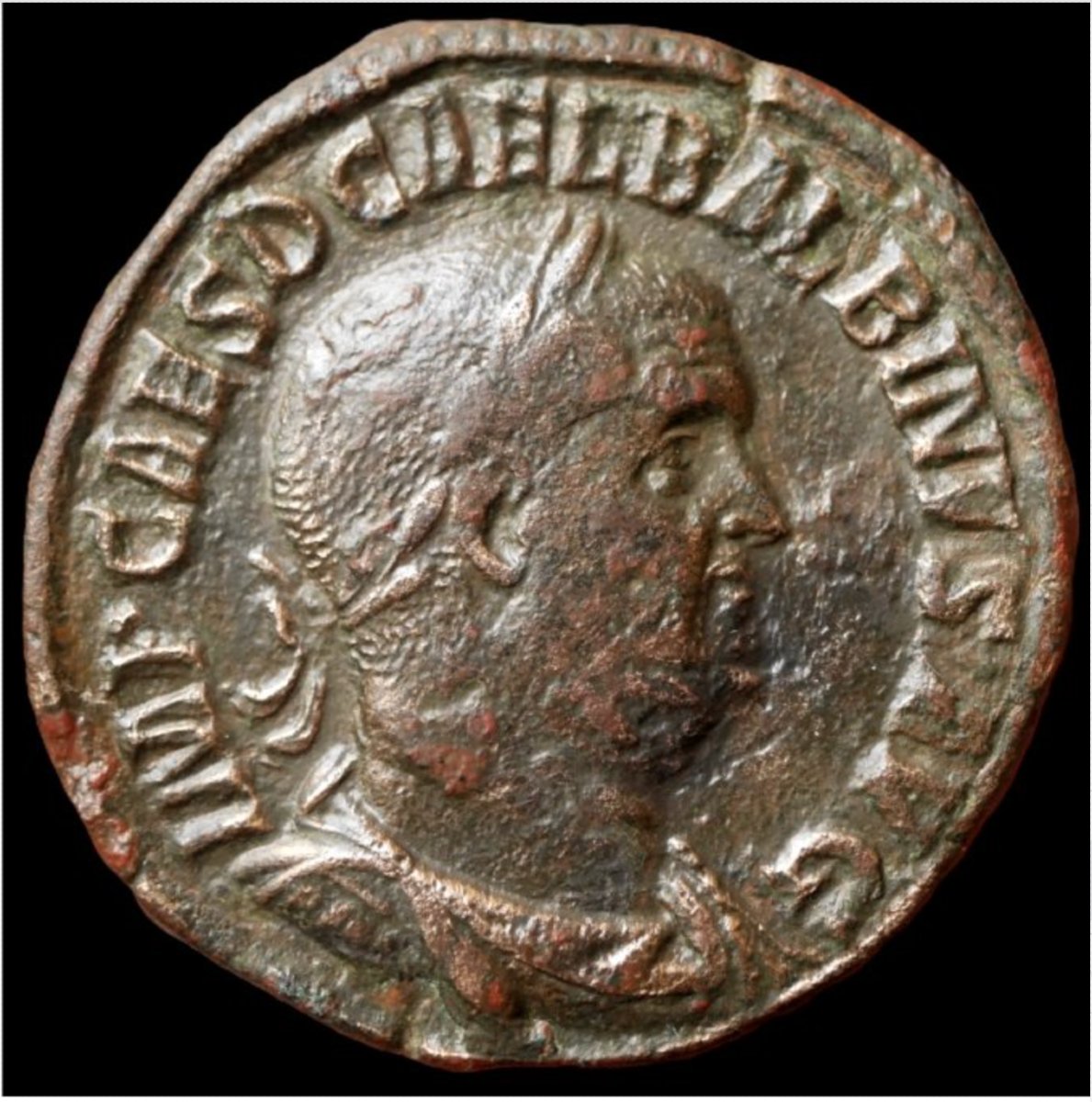
ObverseThe portrait matches the expected Balbinus type: laureate, draped, and cuirassed bust right, with a realistic rendering of the main volumes (forehead, cheekbones, chin) and a dense beard expressed through a short, tight texture.
The peripheral legend is readable in sequences and follows the known formula: IMP CAES D CAEL BALBINVS AVG, with reading partly conditioned by wear and centering—a common phenomenon on 3rd-century sestertii.
Under raking light, the laurel wreath, the line of the drapery, and the planes of the cuirass remain clearly distinguishable, all key structural elements for typological coherence.
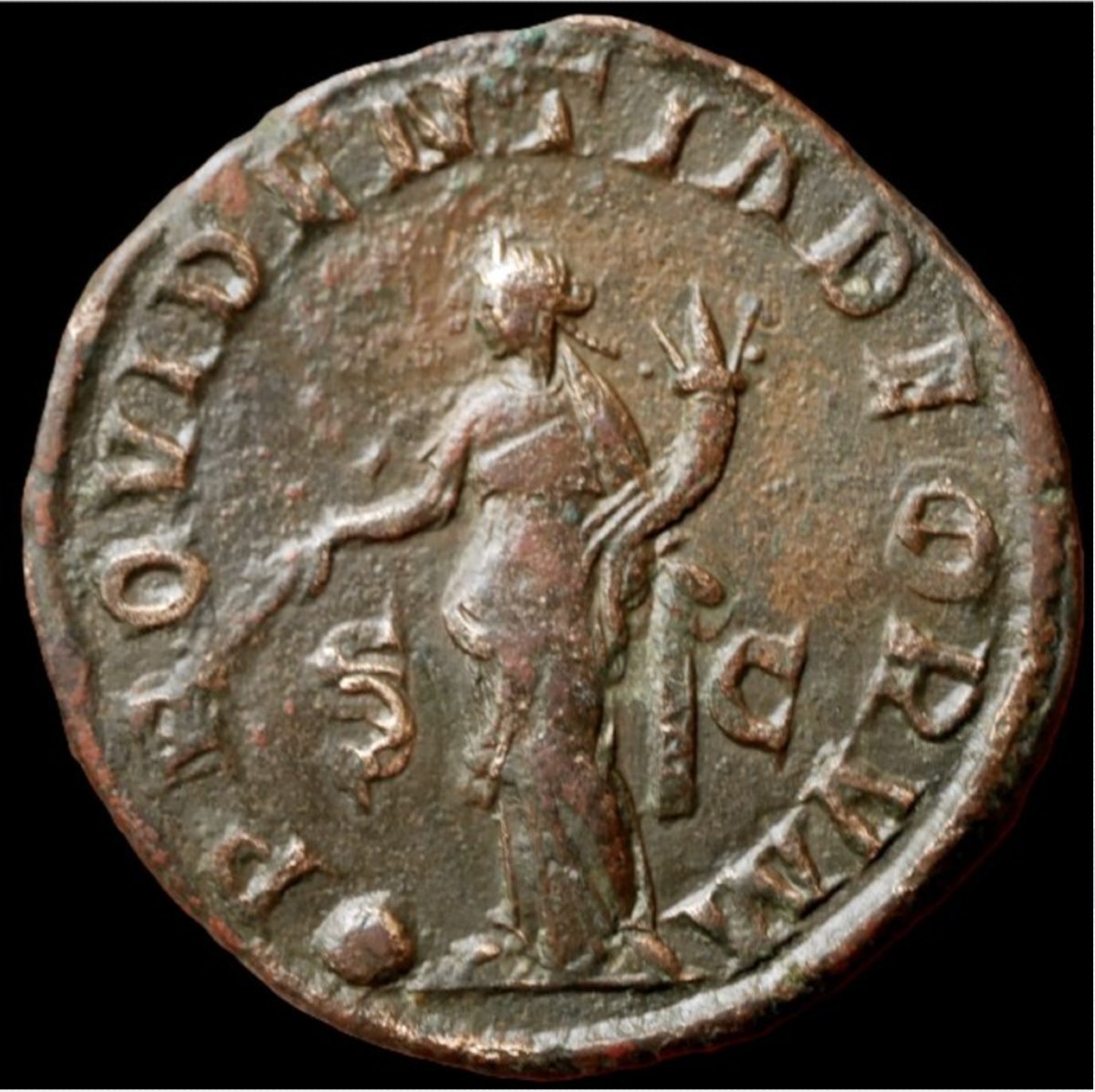
ReverseThe reverse conforms to the standard reference scheme: PROVIDENTIA DEORVM, with Providentia shown standing facing, head left, holding a wand/staff directed toward a globe set on the ground, and a cornucopia.
The presence of S – C in the fields (left and right of the figure) is fully consistent with senatorial issues of the large bronzes.
The scene retains clear readability of the attributes (globe, cornucopia, the gesture of the wand), a strong point for identification and comparison with published specimens.
SpecificationsAuthority: Balbinus (co-emperor), reign 22 April – 29 July 238
Mint: Rome (issue generally placed April–June 238 for this type)
Denomination: Sestertius (Æ)
Metal: bronze (Æ)
Obverse: IMP CAES D CAEL BALBINVS AVG, laureate, draped, and cuirassed bust right
Reverse: PROVIDENTIA DEORVM, Providentia standing, wand toward a globe, cornucopia; S – C in the fields
Weight: 18.34 g (as stated)
References (cross bibliography): RIC IV (Balbinus) 19; Cohen 24; BMC 34
Rarity: type commonly noted as rare in the specialist trade and in catalogues
This issue belongs to the extreme crisis of AD 238, the so-called “Year of the Six Emperors,” when the Senate attempted to reassert control after the fall of Maximinus Thrax by placing Balbinus and Pupienus at the head of the Empire.
The reverse legend PROVIDENTIA DEORVM is not neutral decoration: it articulates a program—“the Providence of the gods”—intended to present the new regime as guided, legitimized, and protected in a moment of danger. The S–C reinforces the message by recalling the senatorial sphere of the great bronzes, at the very center of a political struggle with the Praetorian Guard and urban instability.
Cultural valueFor collectors, this sestertius brings together several enduring qualities:
An expressive imperial portrait from an exceptionally brief reign, therefore “rare by nature” in historical terms.
A highly legible civic and ideological iconography (Providentia, globe, cornucopia), firmly documented in the standard corpora.
A large bronze module: presence, weight, and the “museum readability” typical of sestertii, especially appreciated in Roman collections.
In accordance with our practice, each specimen is examined, described, and accompanied by a certificate of authenticity consistent with the standards of the art and heritage market, with the study conducted through close observation under a ×10 loupe and raking light.
The coin comes from professional European provenance, acquired via a specialized international transaction within an established numismatic network, following standard practices involving typological control, stylistic coherence, and reference checks—while noting that authentication remains an expert assessment based on a set of material and comparative indicators.
Secure shippingCareful, secure, and traceable shipping, with protective packaging, insurance, and signature on delivery depending on destination (France / international). Exact arrangements (carrier, cost, indicative timeframe) are confirmed at the time of order according to the delivery address.
Period: Before 16th century
Style: Rome and Antic Greece
Condition: Good condition
Reference (ID): 1709996
Availability: In stock