

Rare Volusian Sestertius “ivnoni Martiali” — Certificate Of Authenticity
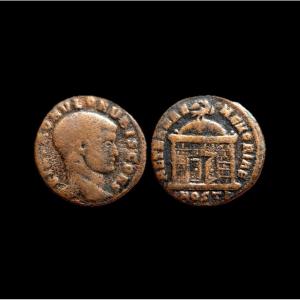
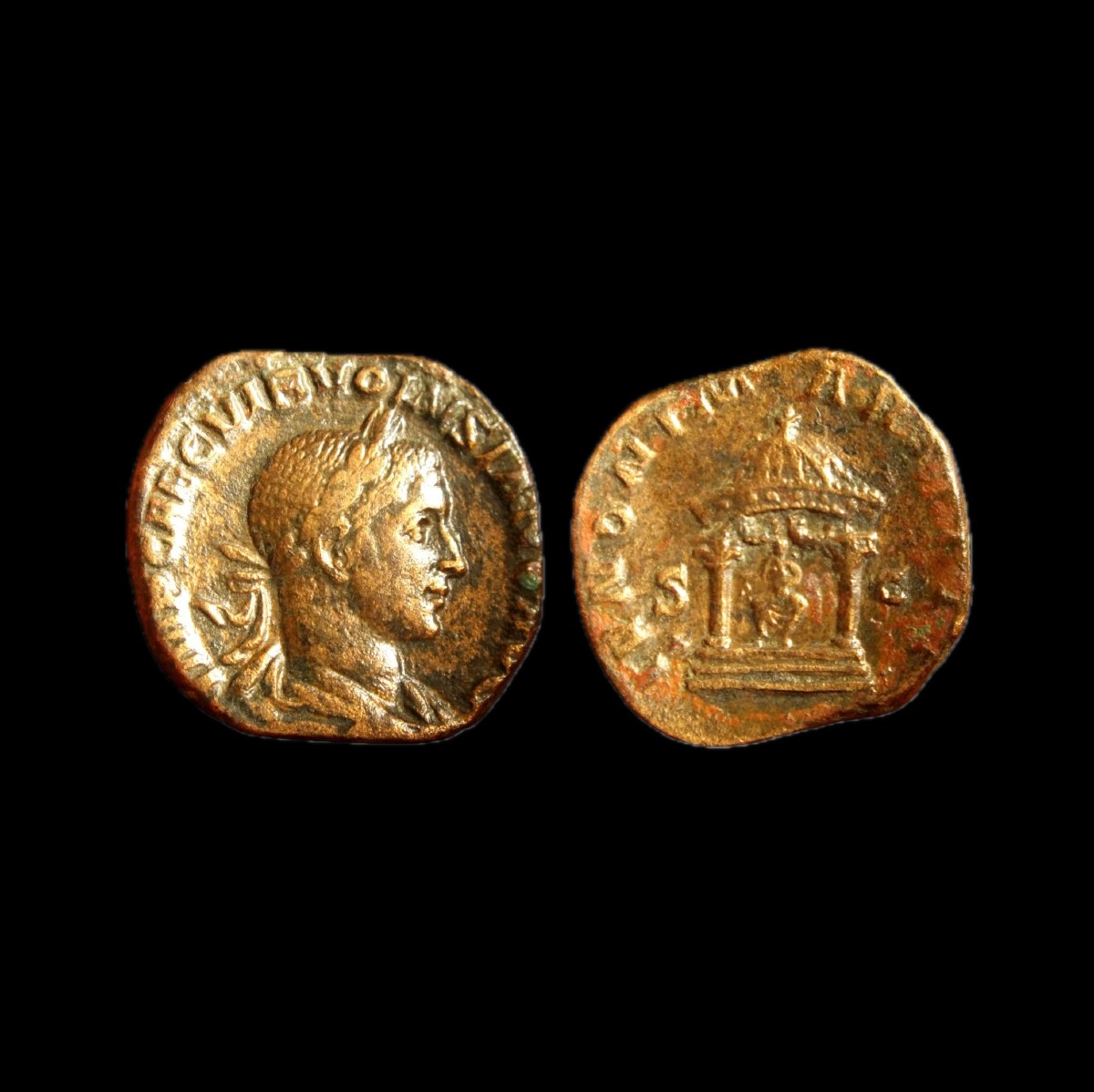
This sestertius of Volusian (mint of Rome, AD 251–253) belongs to a highly sought-after architectural type: an official imperial portrait on the obverse and, on the reverse, a domed, two-column (distyle) temple housing Juno “Martialis,” with S–C placed to either side. The overall typological combination—distinctive and immediately recognizable—is firmly supported by standard reference corpora (RIC) and specialist comparanda.
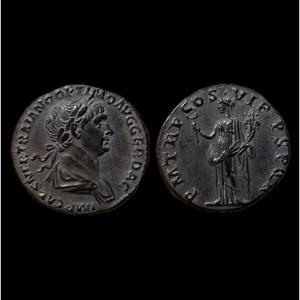
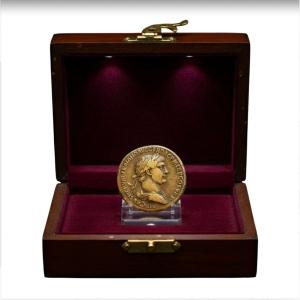
Close observation under ×10 magnification and raking light (based on the photographs): the coin shows a copper-alloy surface with a brassy / golden-brown tone (orichalcum-like appearance), nuanced by reddish-orange areas (old oxidation/deposits) and small localized verdigris spots, especially in recesses and around parts of the legends. The surface reads as coherent for a large Roman bronze that has circulated: fine contact traces and regular high-point rub, without an artificially uniform finish.
The flan appears generally regular but “alive,” with minor peripheral weaknesses and an edge that is not perfectly uniform—features commonly encountered on sestertii. Within the strict limits of non-destructive visual assessment, the relief continuity (portrait, temple architecture, lettering) remains natural and typologically consistent with the stated issue; there is no decisive visual indicator compelling a modern-manufacture hypothesis (no uniformly “soft” cast look, no continuous peripheral seam, and relief-to-field transitions appear organic).
ObverseType: laureate, draped and cuirassed bust right; the bust structure and shoulder suggest the often-noted variant seen slightly from behind, perceptible in the way the drapery returns over the shoulder.
Legend: IMP CAE C VIB VOLVSIANO AVG appears in segments around the rim; several letters remain clearly formed, while other areas fade where wear is strongest—an expected pattern on circulated large bronzes.
Style / reading: the portrait retains strong presence: a readable profile (forehead, nose, mouth, chin) and a laurel wreath still clearly indicated, despite normal smoothing on the highest points.
ReverseLegend: IVNONI MARTIALI is visible around the type, with readability varying according to centering and surface condition.
Type: Juno seated frontally within a distyle domed temple on a stepped podium; S–C in the field in the standard senatorial bronze arrangement.
Under raking light, the architecture remains intelligible: stepped base, columns, entablature, and dome; the central seated figure is still distinguishable by mass and position, supporting identification even where finer details (drapery/attributes) are softened by wear.
SpecificationsAuthority: Volusian (Gaius Vibius Volusianus), Augustus, 251–253
Mint: Rome
Denomination: Æ Sestertius (copper alloy; “brassy” appearance compatible with sestertius orichalcum, without prejudging metallurgical testing)
Obverse: IMP CAE C VIB VOLVSIANO AVG, laureate, draped and cuirassed bust right (variant “seen from behind”)
Reverse: IVNONI MARTIALI, Juno seated frontally in a domed distyle temple; S–C in the field
Primary reference: RIC IV.3, 253a (variant a)
Cross references: Cohen 46; Banti 11
Diameter: 27 mm
Weight: 16.88 g
Rarity: commonly described as scarce / sought-after in the specialist market
The joint reign of Trebonianus Gallus and Volusian unfolded amid the broader 3rd-century crisis—military pressure, internal tensions, and general instability—culminating in the upheaval of AD 253 with the elevation of Aemilian and the elimination of the co-emperors.
Within this brief period, the legend IVNONI MARTIALI stands out as a particularly characteristic marker: the pairing of Juno with a “martial” epithet gives the type strong iconographic personality and heightened historical interest.
Cultural valueFor collectors, this sestertius offers three enduring strengths:
a large bronze with an expressive portrait of a short-reigned emperor, naturally sought within 3rd-century “crisis” series;
a highly “museum-like” architectural reverse (domed temple), immediately recognizable and visually powerful;
an attribution securely framed by standard references (RIC) and readily reinforced by comparanda, ideal for building a rigorous numismatic dossier.
In accordance with our practices, each specimen is examined, described, and accompanied by a certificate of authenticity consistent with the standards of the art and heritage market. The study is conducted under ×10 magnification and raking light, and includes checks of typological, stylistic, and metrological coherence against reference corpora (RIC) and recognized numismatic comparison resources.
The coin derives from professional European provenance, acquired through a specialized international transaction within an established numismatic network, with coherence controls carried out according to standard market practice.
Secure shippingShipment is carried out with tracking, signature, and insurance, using protective packaging (shock protection and discreet outer packing). Exact parameters (carrier, insurance level) are confirmed according to destination country and delivery address.
Period: Before 16th century
Style: Rome and Antic Greece
Condition: Good condition
Reference (ID): 1716334
Availability: In stock