


Trajan Ric 343 — Certificate Of Authenticity
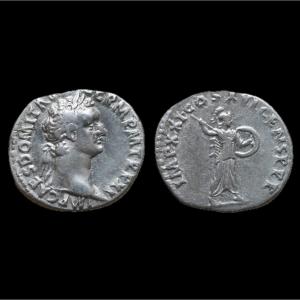
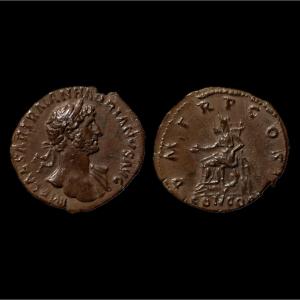
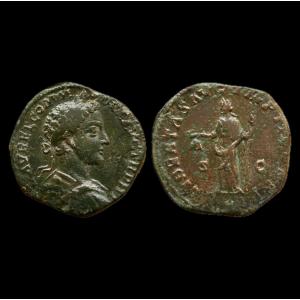
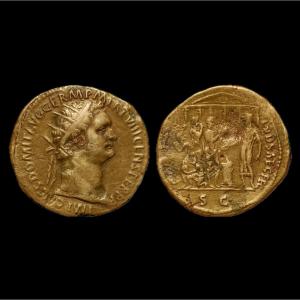
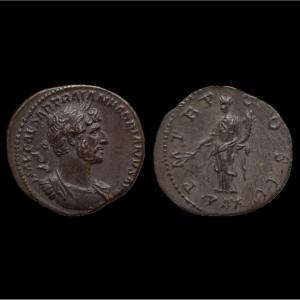
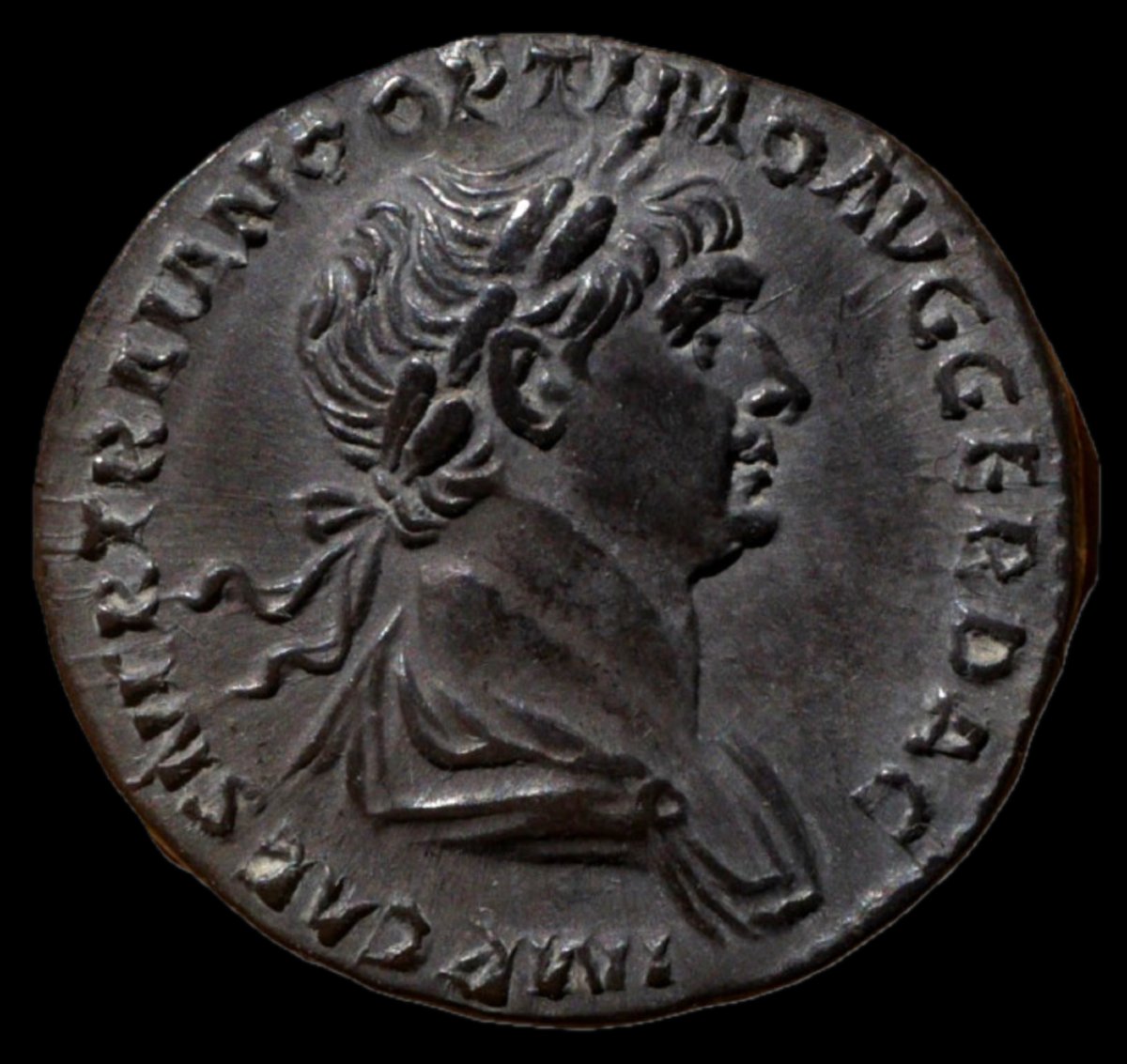
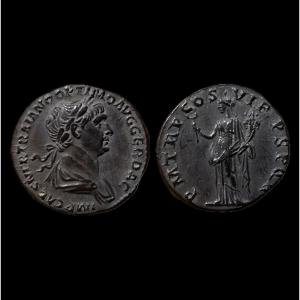
This silver denarius of Trajan, struck at Rome in AD 116, corresponds with great clarity to the RIC 343 type, characterized by the obverse IMP CAES NER TRAIAN OPTIM AVG GERM DAC and the reverse P M TR P COS VI P P SPQR, with Felicitas standing left, holding a caduceus and a cornucopia; the specimen examined, at 3.55 g, 19 mm, and with an axis of 6 h, presents a particularly satisfying physical configuration for this late issue of the reign, with favorable centering, broadly legible titulature, and an immediately intelligible reverse iconography—qualities that give the coin a very convincing cabinet presence for the knowledgeable collector.
Analysis & Expertise
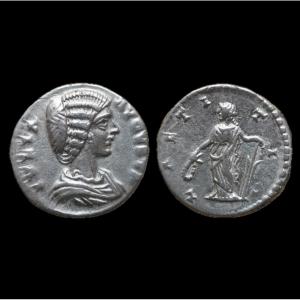
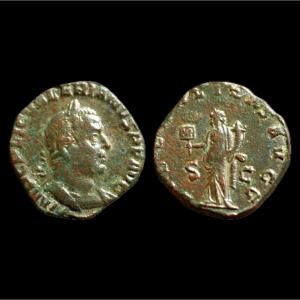
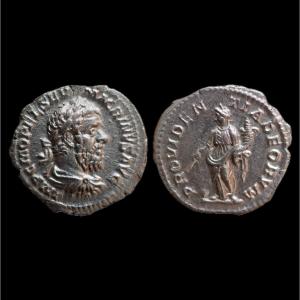
Close observation under ×10 magnification and raking light. The obverse presents a laureate and draped portrait of Trajan right of very solid stylistic quality, with hair rendered in tight, supple locks, a clearly structured laurel wreath, a broad forehead, a well-opened eye, a firm nasal line, a soberly drawn mouth, and a powerfully modeled chin, while the drapery over the far shoulder remains perceptible and contributes to the typological precision of the bust; the peripheral legend, broadly developed around the edge, remains very satisfactorily readable, and the beaded border, well followed around most of the circumference, reinforces the impression of a specimen well struck.
The reverse retains particularly pleasing legibility, since one readily recognizes Felicitas standing left, holding in the right hand a raised caduceus and in the left a cornucopia, in a composition highly characteristic of Trajan’s late issues; the allegorical figure’s silhouette remains clear, the attributes remain well individualized, and the legend P M TR P COS VI P P SPQR can be followed with very favorable continuity around the field, ensuring a complete doctrinal reading that is immediately convincing.
Material examination shows a silver flan of slightly irregular round shape, consistent with ancient hammer striking, with relief remaining crisp on the high points of both portrait and reverse figure, fields showing slight old circulation marks without any loss of readability, and an edge that remains well held despite a few marginal soft areas compatible with manufacture; the whole conveys a particularly sound impression of technical and stylistic homogeneity, all the more appreciable as both faces preserve a very satisfactory visual balance between relief quality, legend sharpness, and metal presence.
What favorably distinguishes this specimen lies in the combination of a Trajan portrait of fine authority, a late titulature complete in its essential economy, a fully legible Felicitas reverse, and metrology very well placed within the expected order of Trajanic denarii—elements that ground a high-level numismatic appreciation and correspond exactly to what a demanding collector seeks in this segment of imperial coinage.
Characteristics
This is a denarius of Trajan, struck at Rome, in silver, in AD 116.
Obverse legend: IMP CAES NER TRAIAN OPTIM AVG GERM DAC.
Obverse type: Laureate and draped bust of Trajan right.
Reverse legend: P M TR P COS VI P P SPQR.
Reverse type: Felicitas standing left, holding a raised caduceus in the right hand and a cornucopia in the left.
Primary reference: RIC 343.
Observed metrics for the specimen: 3.55 g; 19 mm; axis 6 h.
Historical context
This issue belongs to the late phase of Trajan’s principate, at a moment when imperial titulature already associates the epithet OPTIM AVG with the Germanic and Dacian victories recalled by GERM DAC, while the presence of COS VI places the coin within one of the most fully developed ensembles of the reign’s Roman coinage; we are here in a sequence where the imperial image no longer seeks to form itself, but to stabilize into a fully accomplished, monumental, and politically assured expression.
The choice of Felicitas on the reverse fits perfectly within this language of power, for the goddess does not express a vague prosperity but an ordered public felicity, closely linked to the good steering of the Roman world—precisely what the caduceus (a sign of harmony and favorable circulation) and the cornucopia (a sign of prosperity and fullness) convey; the coin thus condenses, in an image of great sobriety, a strong idea of the reign: the alliance between military authority, institutional stability, and legitimate abundance.
Cultural value
The cultural interest of this piece is high, because it combines a high-quality imperial portrait, a highly significant late titulature, and a perfectly legible allegorical reverse, within a silver module in which engraving quality remains very perceptible; it is a denarius in which the ideological density of the message meets the plastic quality of the medium, giving it enduring appeal for any cabinet devoted to the Roman High Empire.
For the knowledgeable collector, this type holds particular interest not through artificial emphasis but because it lies within a highly esteemed zone of Trajanic coinage: late issues with developed titulature, where portrait quality and reverse clarity are especially decisive; when, as here, a specimen brings together fine centering, broad legend legibility, and reverse iconography complete in concept, it acquires real distinction within a high-level set of imperial denarii.
Traceability & Guarantees
From a European provenance, from an established numismatic dealer, this specimen was acquired through a specialized international transaction conducted within a recognized numismatic network and validated by reference experts, according to the highest standards of the art and heritage market; examination of the present object retains exclusively the stylistic, technical, epigraphic, and metrological characteristics effectively observable, set within the framework of the Rome type Trajan / Felicitas / RIC 343, with particular attention to portrait coherence, titulature reading, reverse structure, and the flan’s overall conformity.
The concordance between the obverse IMP CAES NER TRAIAN OPTIM AVG GERM DAC, the reverse P M TR P COS VI P P SPQR with Felicitas standing left, the Rome mint, the AD 116 dating, the observed metrology, and the attribution to RIC 343 establishes here a particularly solid numismatic identification; each specimen is examined, described, and accompanied by a certificate of authenticity in accordance with the standards of the art and heritage market, so as to provide the collector with a serious, stable, and fully credible descriptive basis.
Period: Before 16th century
Style: Rome and Antic Greece
Condition: Good condition
Reference (ID): 1730296
Availability: In stock