

Gordian III Sestertius “laetitia” — Certificate Of Authenticity
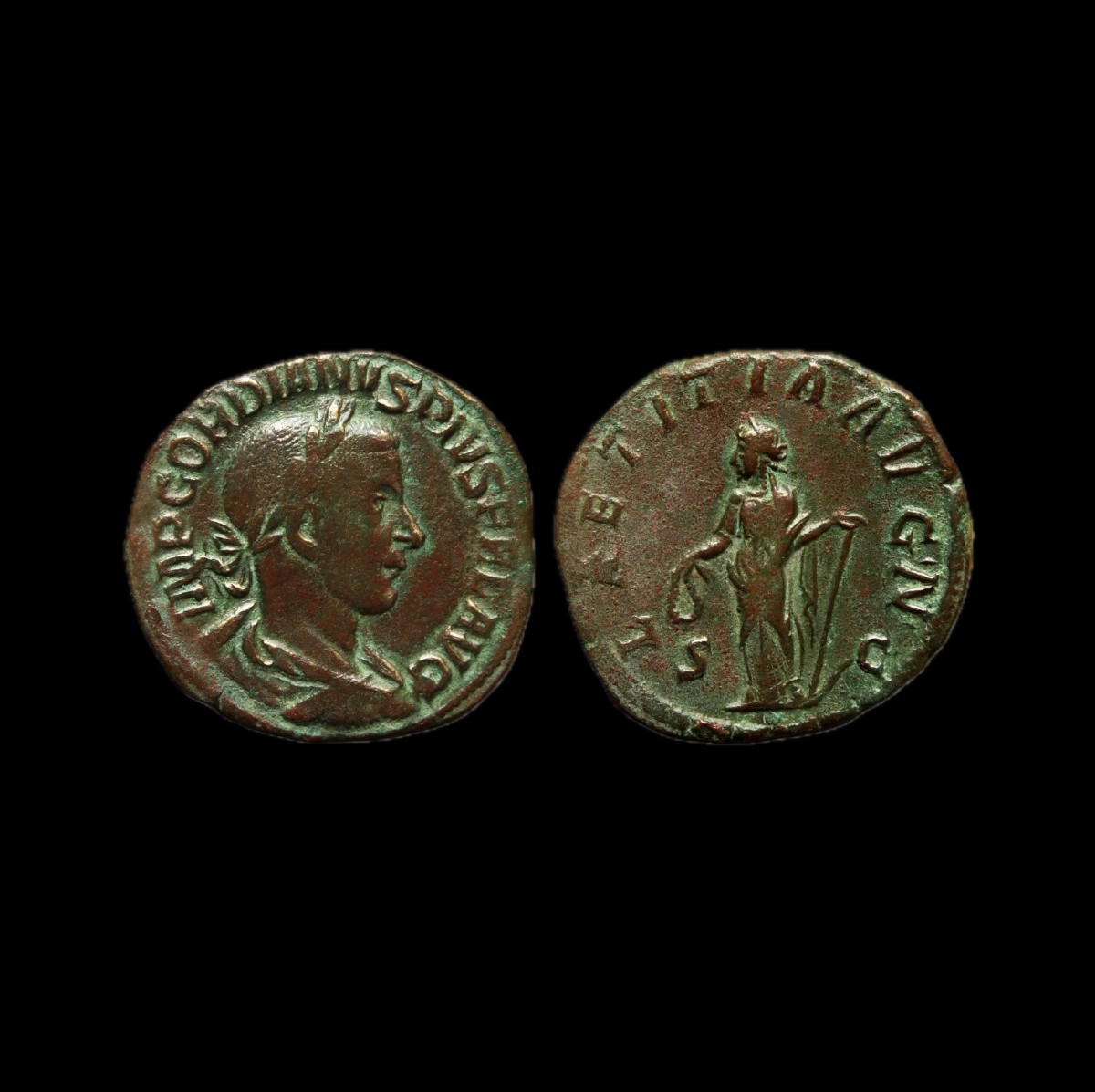
Large bronze struck at Rome (AD 241–243), prized for the pairing of a clearly youthful Gordian III portrait with a LAETITIA AVG N reverse whose iconography is immediately readable (wreath + anchor), a type recorded as RIC 300a / Cohen 122.
Analysis & expertiseCareful observation under ×10 magnification and raking light (based on the photographs): the specimen is struck on a broad sestertius flan, broadly circular in appearance, with a “living” edge (minor irregularities and small peripheral weaknesses) consistent with ancient hammer striking on large bronzes.
The surface carries an old patina dominated by warm brown tones, enriched by established green (verdigris) patches, especially in recessed areas and locally along the legends. High points (portrait, projecting letters, reverse attributes) show localized rub-lightening consistent with long circulation. The fields also display a fine micro-texture and contact traces; there is no “cast” look or abrupt break in surface character. Within the strict limits of non-destructive visual examination from images, the whole (metal appearance, style, relief logic, and legend layout) remains fully compatible with an ancient strike of this type.
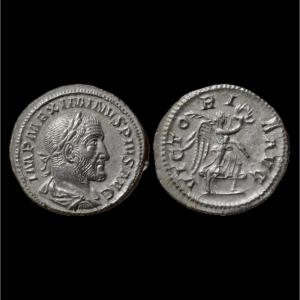
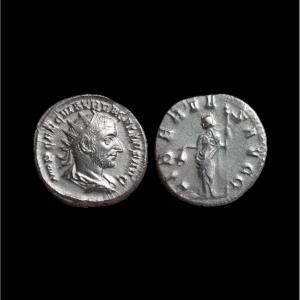
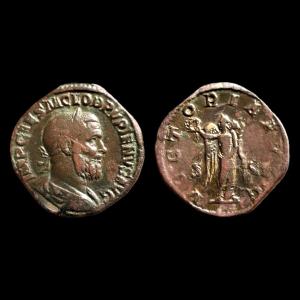
ObverseThe obverse shows Gordian III’s bust right, laurelled, draped, and cuirassed. The portrait retains solid structure (forehead, nose, jawline), and the laurel wreath remains readable in segments, with individual leaves still catching the light despite even wear. Drapery and cuirass planes remain distinguishable at the shoulder, supporting a confident iconographic reading.
The peripheral legend appears in sections depending on centering and surface condition, matching the expected form: IMP GORDIANVS PIVS FEL AVG, with broad, regular lettering typical of Rome sestertii of this period.
ReverseThe reverse is strongly characteristic: LAETITIA AVG N, with S – C in the field, and Laetitia standing left, holding out a wreath and an anchor (symbol of stability). In the photograph, the figure remains clearly separated from the field:
the wreath reads as a well-defined circular element in relief;
the anchor is identifiable through its shaft and terminal forms, even though finer details are naturally softened by wear.
The combined set “LAETITIA + wreath + anchor + S–C” provides a fully concordant typological match to RIC 300a / Cohen 122, with the legend readable in segments depending on patina and centering.
SpecificationsAuthority: Gordian III (238–244)
Denomination: Sestertius (Æ)
Mint: Rome
Date: AD 241–243
Obverse: IMP GORDIANVS PIVS FEL AVG — laurelled, draped and cuirassed bust right
Reverse: LAETITIA AVG N — Laetitia standing left, wreath and anchor; S – C
References: RIC 300a; Cohen 122
Weight: 20.79 g
Diameter: ≈ 31 mm
Between AD 241 and 243, Gordian III’s regime sought to reinforce the perception of restored order after the instability of the late 230s. Laetitia embodies public optimism and confidence, while the anchor amplifies the message through its connotation of steadiness and security. On a sestertius—an issue of high visibility—this is a deliberately direct, easily understood statement.
Cultural valueFor collectors, this sestertius combines highly desirable strengths:
a readily recognizable youthful portrait of Gordian III;
a LAETITIA reverse with clear, attractive symbolism (wreath + anchor);
a type securely framed by standard references, facilitating comparison, documentation, and value within a 3rd-century bronze series.
In accordance with our practices, each specimen is examined, described, and accompanied by a certificate of authenticity consistent with the standards of the art and heritage market. The assessment is carried out under ×10 magnification and raking light, relying on non-destructive criteria: typological coherence, style, strike structure, legend logic, and observable surface character within the limits of examination.
The provenance is professional European, and the acquisition forms part of a specialized international transaction conducted within a recognized numismatic network and validated by expertise.
Secure shippingFrance: Colissimo, with signature and insurance (€20).
Abroad: UPS, with signature and insurance (€35).
Reinforced packing, shock protection, systematic tracking.
Period: Before 16th century
Style: Rome and Antic Greece
Condition: Good condition
Reference (ID): 1716325
Availability: In stock