
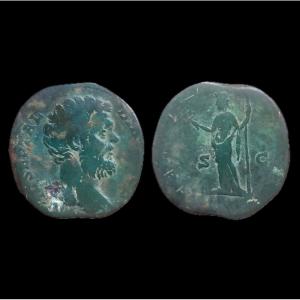


Extremely Rare Sestertius Of Clodius Albinus As Caesar — Felicitas — Certificate Of Authenticit
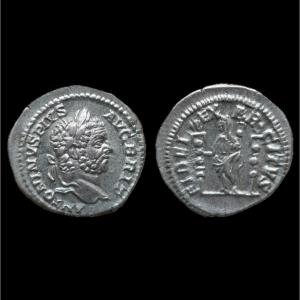
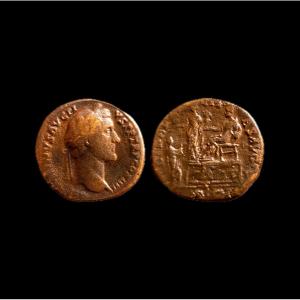
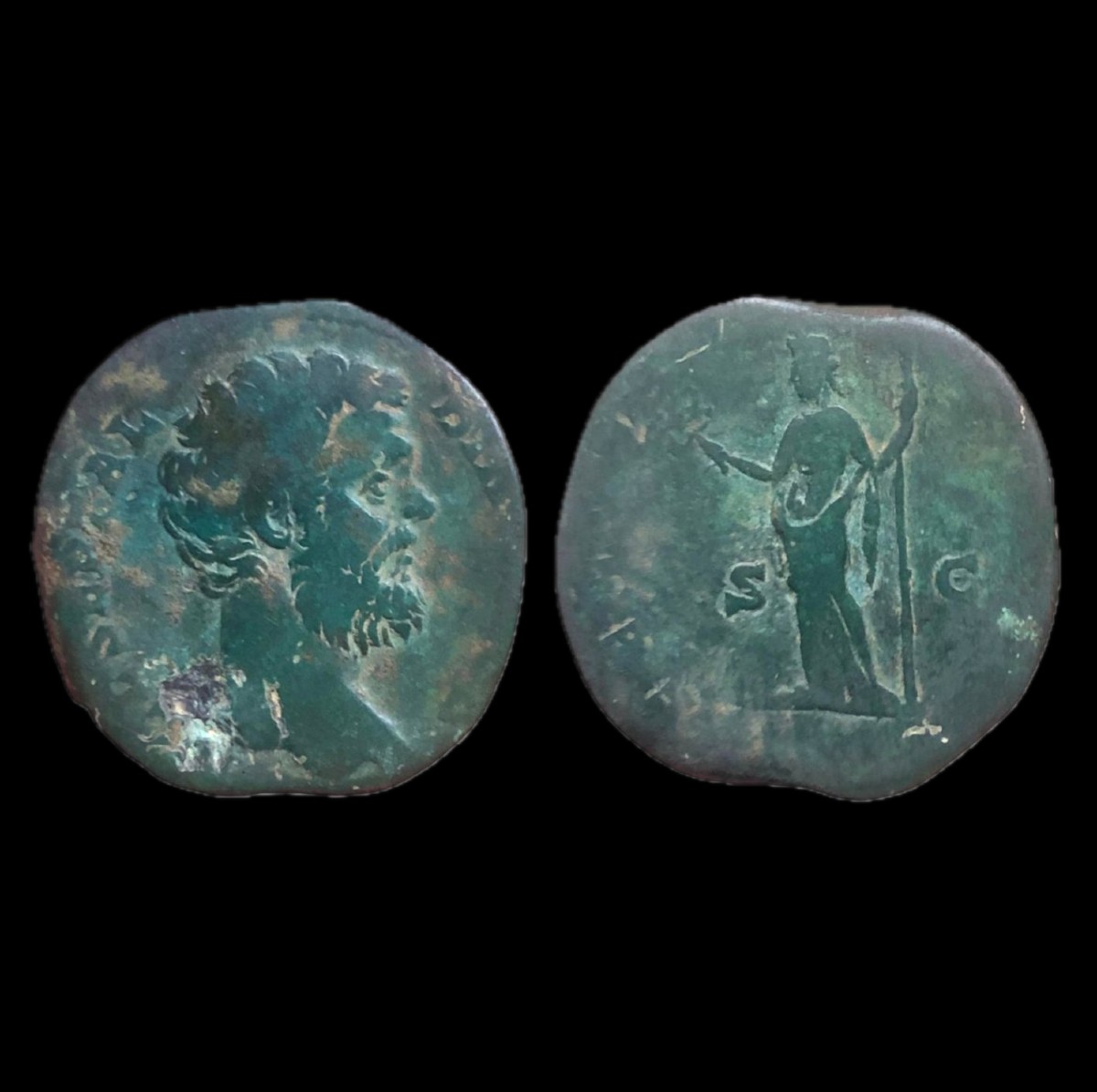
Sestertius of Clodius Albinus struck while he held the title of Caesar, within the short AD 194–195 sequence commonly assigned to this Rome issue, a specimen sought after by collectors for the historical density of a coinage produced at the hinge-point of the Severan civil wars, and immediately identifiable by the combination of the obverse D CLOD SEPT ALBIN CAES (bare head right) and the reverse FELICITAS COS II / S-C, where Felicitas stands left holding caduceus and long scepter, a typology published and concordant in specialized sale comparanda and in reference collections.
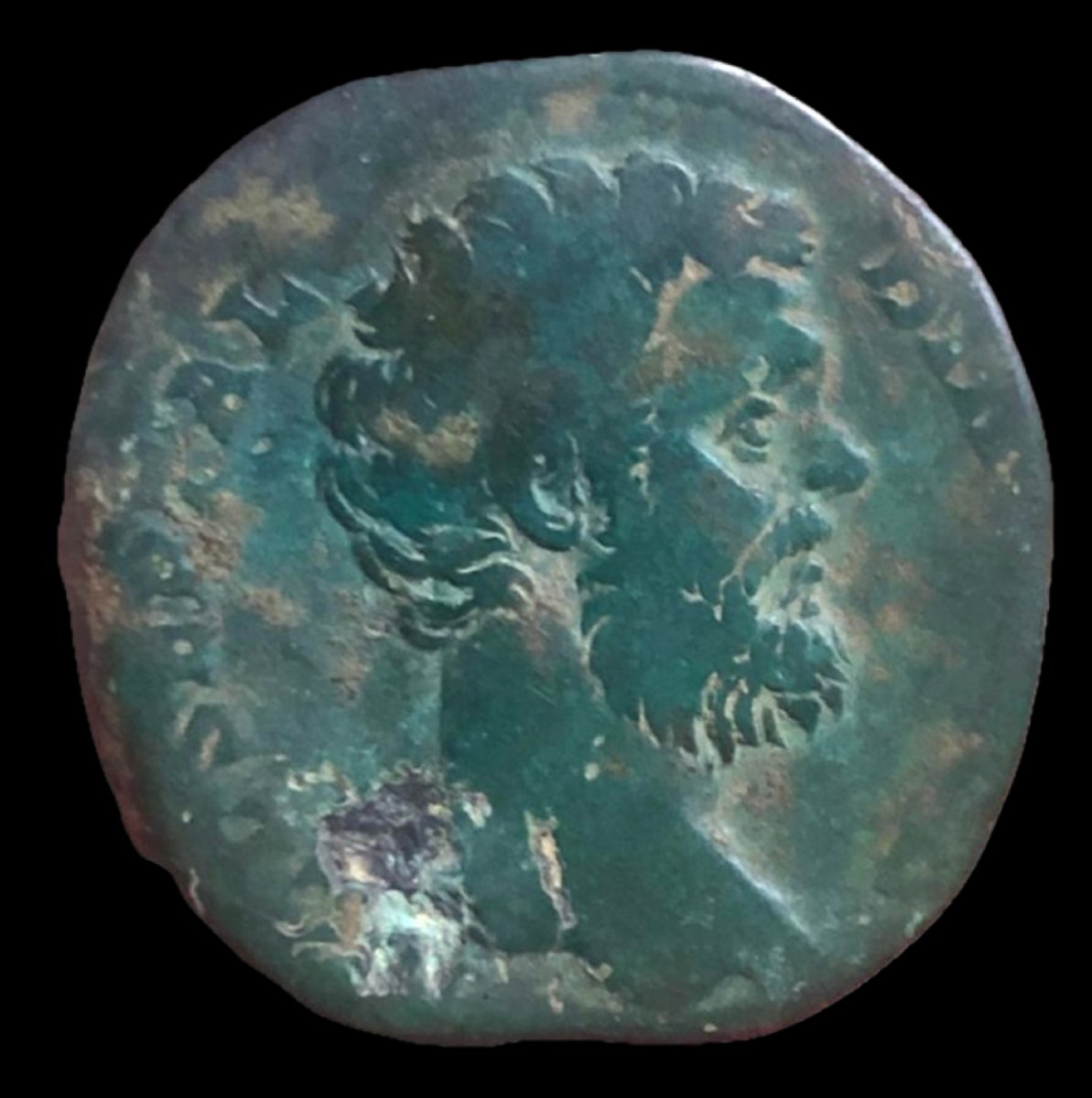
Careful observation under ×10 magnification and raking light: direct examination highlights a large-module bronze (about 30 mm per specimen data) whose surface shows a nuanced dark-green patina, with denser and more open areas typical of ancient circulation and a long stay in a natural environment, while the portrait retains real presence through the construction of the profile—curled hair, articulation of the forehead and brow, outline of nose and chin—and the reverse remains perfectly “readable” in its logic, the Felicitas figure organized around its principal attributes, namely the caduceus held forward and the vertical scepter, with the letters S and C occupying their expected positions to either side of the field, in accordance with published descriptions for the RIC 52b type.
From a patrimonial description standpoint, it is also useful to note, without dramatization but with precision, that the flan shows peripheral irregularity and localized striking fissures, mechanical phenomena frequently observed on large Roman bronzes, which neither affect typological attribution nor the intelligibility of the motifs, and which even contribute, for the informed collector, to the object’s material truth, insofar as the reading of the legends and distinctive signs remains coherent with reference comparanda.
CharacteristicsAuthority / period: Clodius Albinus, Caesar, Rome issue dated AD 194–195 in reference notices and collection comparanda;
Denomination / metal: Sestertius in copper alloy, large-module denomination bearing the senatorial mark S-C, as expected for this coinage;
Diameter / weight: 30 mm; 20 g (specimen data), values fully consistent with published examples of the type, commonly around 29–32 mm and a weight on the order of twenty grams;
Obverse: D CLOD SEPT ALBIN CAES, bare head right, portrait of sober, institutional Roman style;
Reverse: FELICITAS COS II / S-C, Felicitas standing left, holding caduceus and long scepter;
References: RIC 52b; BMCRE 529 (with usual cross-references toward Cohen depending on corpora), concordances explicitly given in sale and collection catalogues;
Rarity: type commonly reported as rare / scarce in specialized numismatic trade, which aligns with the brevity of Albinus’ Caesar status and the sustained demand for large bronzes of this sequence;
Historical contextClodius Albinus, first associated with Severan power as a subordinate Caesar after the convulsions of 193, stands at the heart of a period in which imperial legitimacy is built as much by force as by signs; within this framework, the pertinence of a reverse such as FELICITAS is clear, as it formulates in monetary language a promise of order, prosperity, and “public good fortune,” at the very moment when the Empire seeks to stabilize the adherence of elites and troops around a fragile political compromise.
Cultural valueFor the collector, this sestertius has a singular power of attraction, because it brings together, in one object, the majestic materiality of large Roman bronze, the structural rarity of a Caesar coinage destined to become a rival, and an immediately “positive” iconography—Felicitas with caduceus and scepter—whose symbolic clarity crosses the centuries, so that the specimen naturally stands as a choice piece in a Severan collection, in a series on the civil wars of AD 193–197, or in a thematic ensemble devoted to the virtues and personifications of Roman power.
Traceability & guaranteesThe provenance is European, from an established numismatic dealer, and the acquisition was carried out through a specialized international transaction within a recognized numismatic network, validated according to the highest standards of the art and heritage market; the attribution rests on the verifiable concordance of the structuring elements—legends D CLOD SEPT ALBIN CAES and FELICITAS COS II, presence of S-C, posture and attributes of Felicitas—with specimens referenced and described under RIC 52b and BMCRE 529.
Each specimen is examined, described, and accompanied by a certificate of authenticity consistent with the standards of the art and heritage market, this notice favoring—within a perspective of security and transparency—strictly observable descriptive elements and explicitly documented bibliographic parallels.
Period: Before 16th century
Style: Rome and Antic Greece
Condition: Good condition
Reference (ID): 1722541
Availability: In stock