

Commemorative Denarius “consecratio” — Certificate Of Authenticity
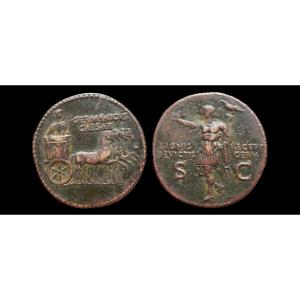
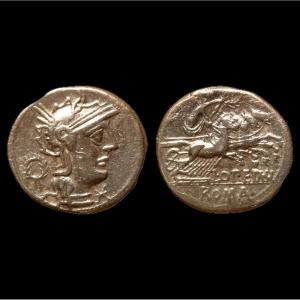
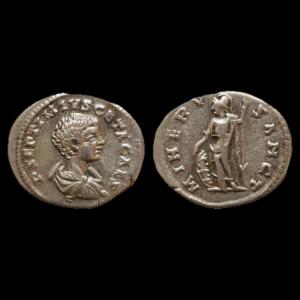
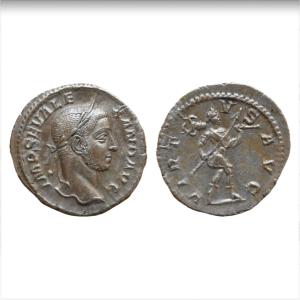
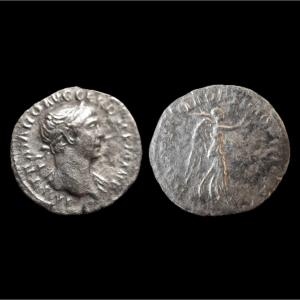
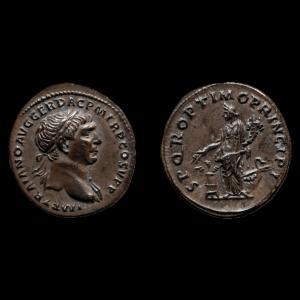
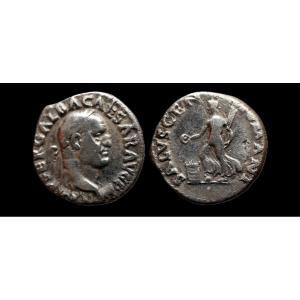
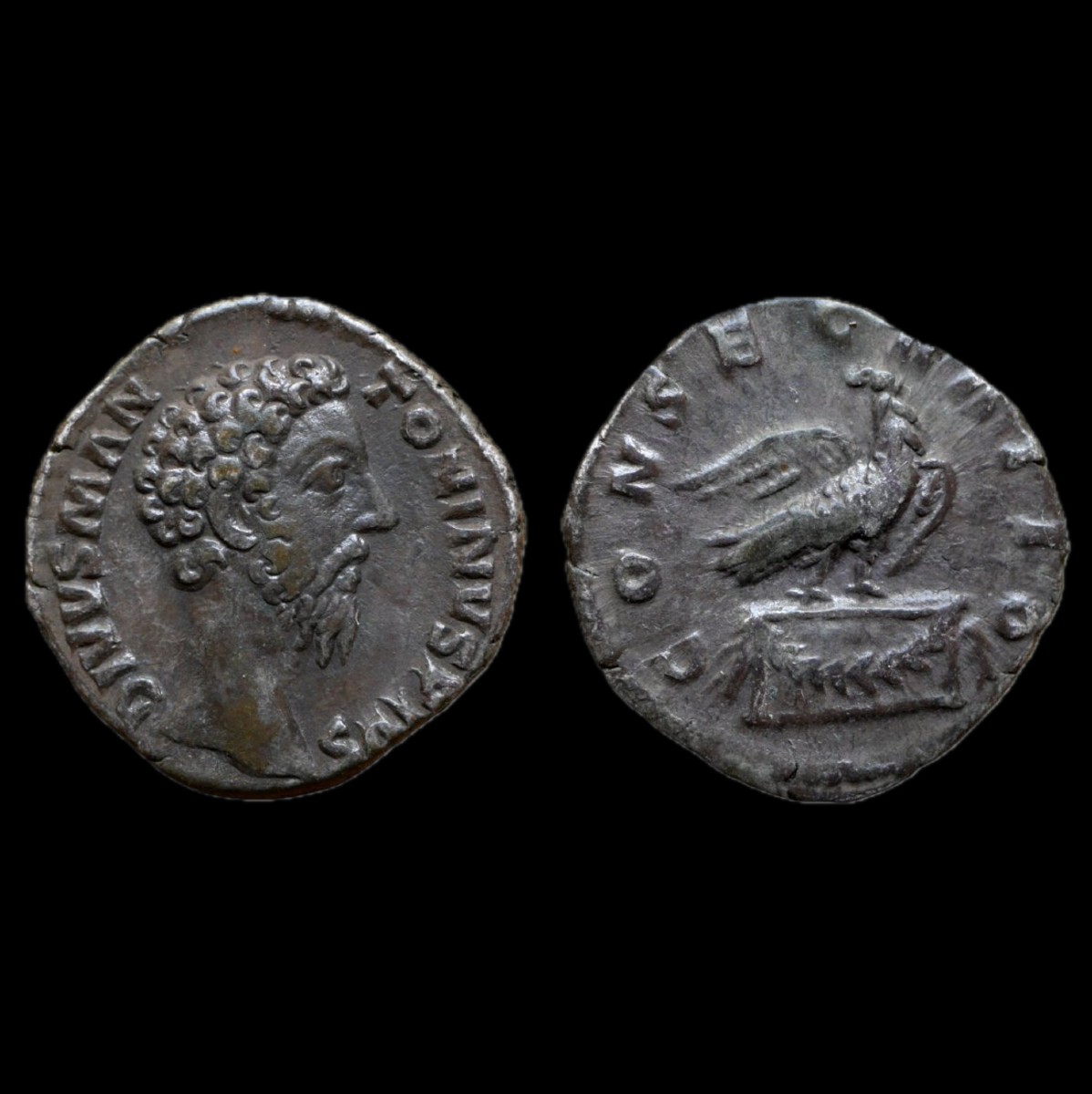
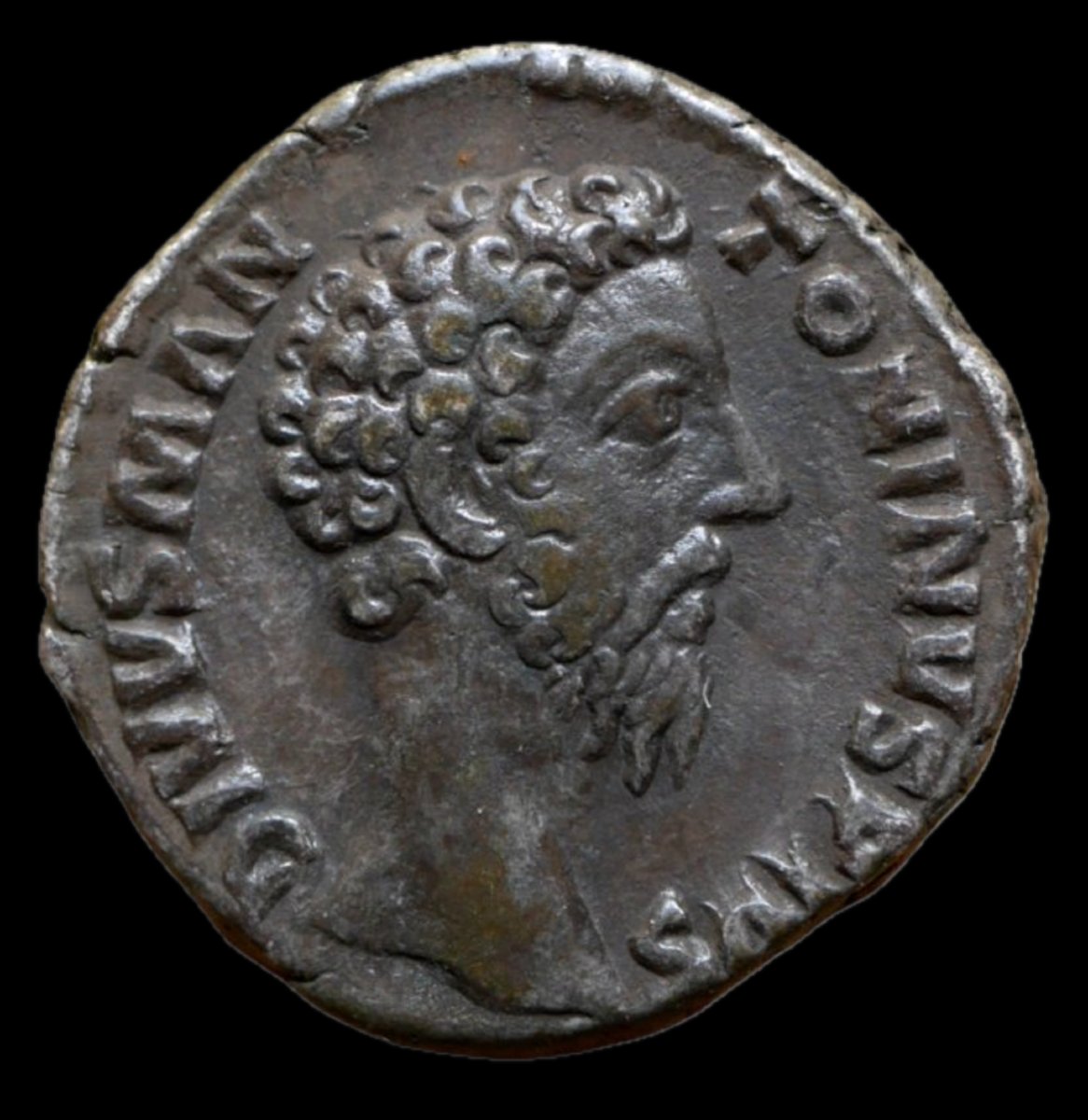
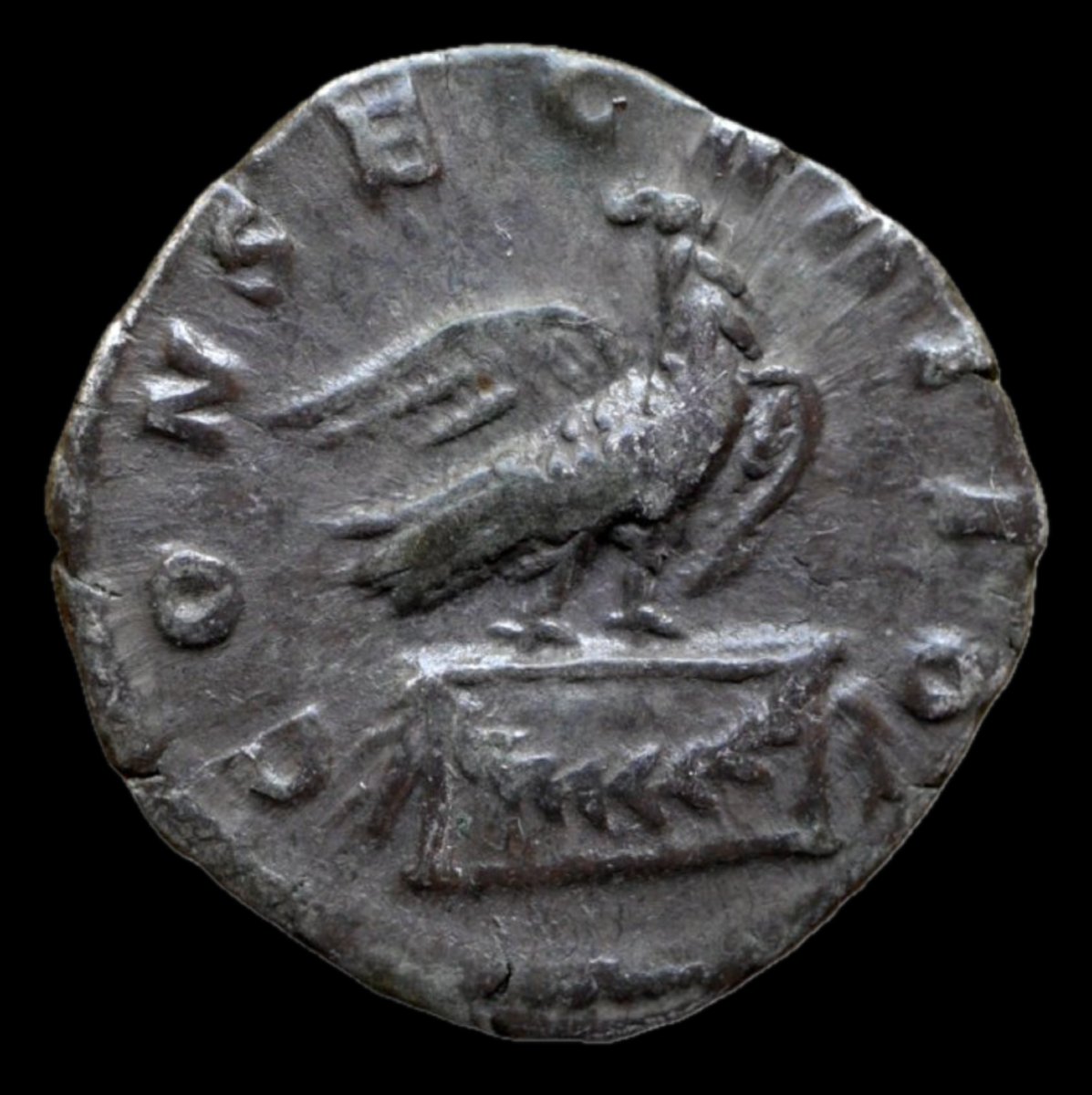
A silver denarius issued for Divus Marcus Aurelius (died AD 180), struck at Rome under Commodus in the same year, a particularly evocative specimen for the collector, as it pairs an obverse with a bare-headed portrait (deified effigy) with one of the most emblematic consecration reverses of imperial coinage, namely an eagle spreading its wings upon a garlanded altar; a typological composition firmly documented and verifiable in the repertories under RIC 272 / BMC 17 / Cohen 84, the direct concordance of legends and depicted attributes grounding the attribution.
Careful observation under ×10 magnification and raking light: the examination highlights a coherent-module silver flan, encircled by well-present peripheral beading, with stable, nuanced grey toning and a crisp iconographic reading; the obverse retains the expressive structure of the portrait (volumes of the forehead, eye, nose, and a finely rendered beard), while the reverse clearly presents the standing eagle, wings widely spread, head turned left, set upon an altar whose garland remains perceptible—markers that correspond precisely to the consecration type described in the standard reference documentation.
SpecificationsAuthority / issue: Divus Marcus Aurelius, commemorative issue struck under Commodus, Rome, AD 180.
Denomination / metal: Denarius, silver (AR).
Diameter / weight: 18 mm; 3.34 g (as stated).
Obverse (legend and type): DIVVS M ANTONINVS PIVS, bare head of Divus Marcus Aurelius right, formula and portrait consistent with the canonical description.
Reverse (legend and type): CONSECRATIO, eagle standing right on a garlanded altar, wings spread, head turned left, typology exactly reported for this number.
References: RIC 272; BMC 17; Cohen 84.
Historical contextThis denarius belongs to the funerary and political language of the Empire, in which the death of a prince could be immediately followed by a divinization (consecratio) staged through coinage: the eagle signifies the elevation of the imperial soul toward the divine sphere, while the altar and its garland refer to public ritual and civic religion, so that the coin, through an iconographic vocabulary of great clarity, documents the passage of the ruler from history into the state’s sacred memory.
Cultural valueFor the collector, the interest is twofold: on the one hand, the specimen offers direct testimony to Antonine memory at the precise moment Commodus organizes dynastic continuity; on the other, it presents a consecration reverse of strong visual presence, immediately “readable” in display, and often described as scarce in specialized sale literature, which reinforces its select appeal without diminishing typological clarity.
Traceability & guaranteesThe provenance is European, from an established numismatic dealer, and the acquisition was made through a specialized international transaction, conducted within a recognized numismatic network and validated to the highest standards of the art and heritage market; the attribution rests on concordance of legends and iconographic arrangement with RIC 272 / BMC 17 / Cohen 84, as consistently repeated in reference works and published sale comparanda.
Each specimen is examined, described, and accompanied by a certificate of authenticity consistent with the standards of the art and heritage market, this notice being deliberately anchored in observable and documentable elements so that the collector’s confidence rests on a verifiable numismatic basis.
Period: Before 16th century
Style: Rome and Antic Greece
Condition: Good condition
Reference (ID): 1722048
Availability: In stock