

Antoninien Of Gordian III From Antioch — Aeqvitas Avg — Certificate Of Authenticity
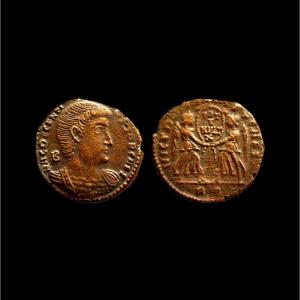
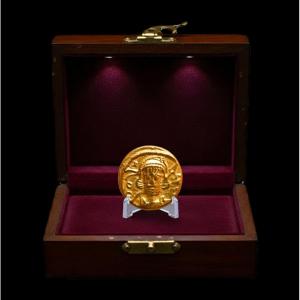
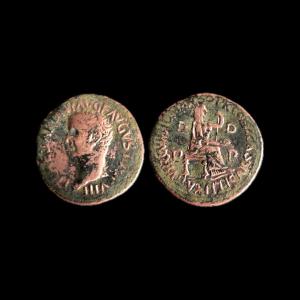
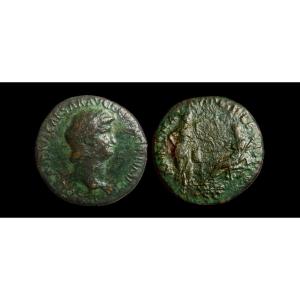
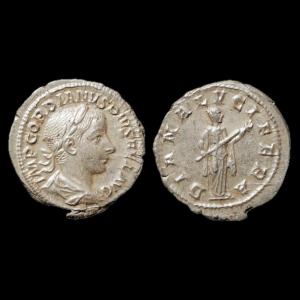
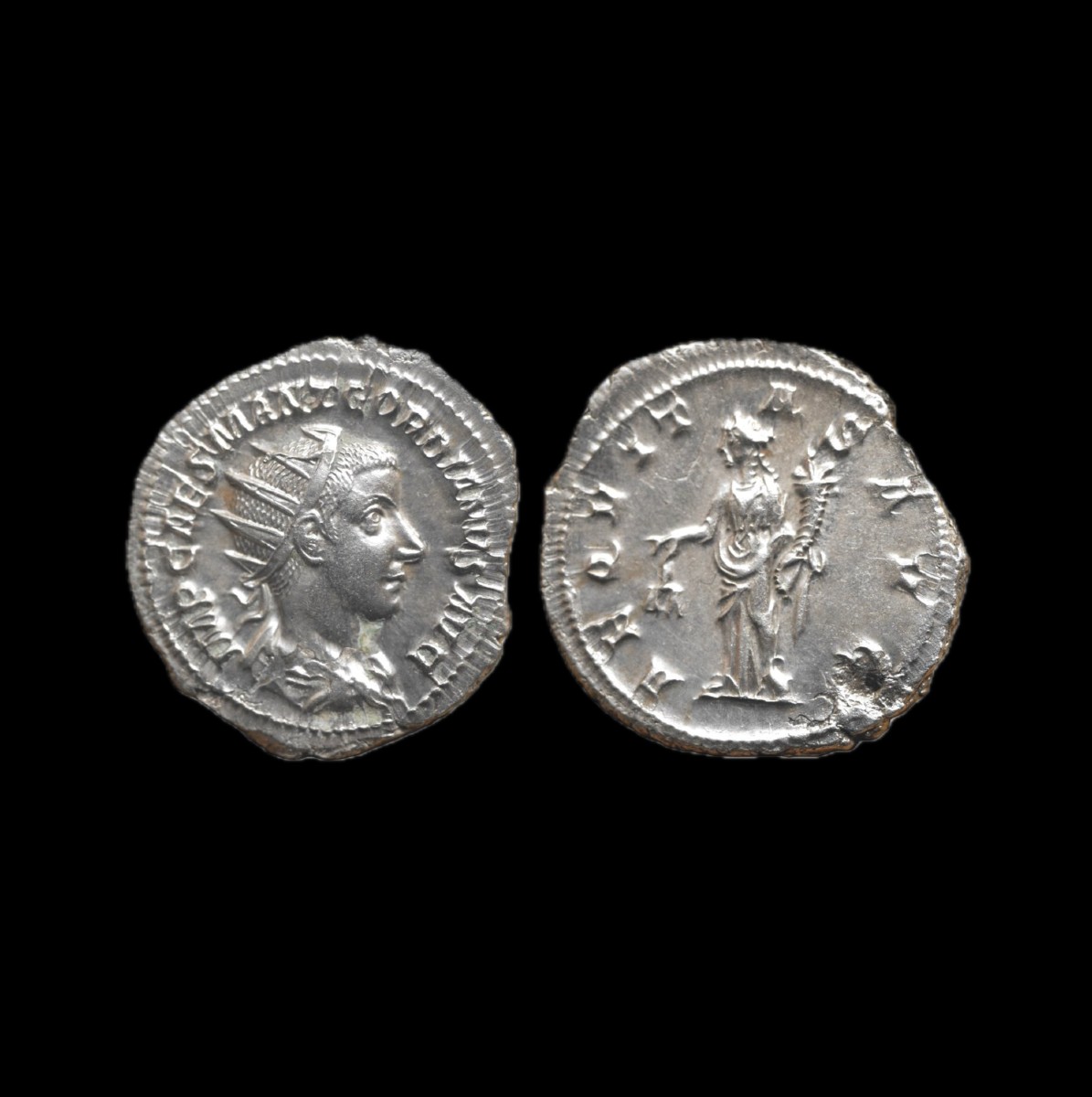
This antoninianus of Gordian III, attributed to Antioch and bearing on the reverse AEQVITAS AVG with Aequitas standing left holding scales and scepter, corresponds to the type classified as RIC 177, as described in the literature and in the standard numismatic reference catalogues.
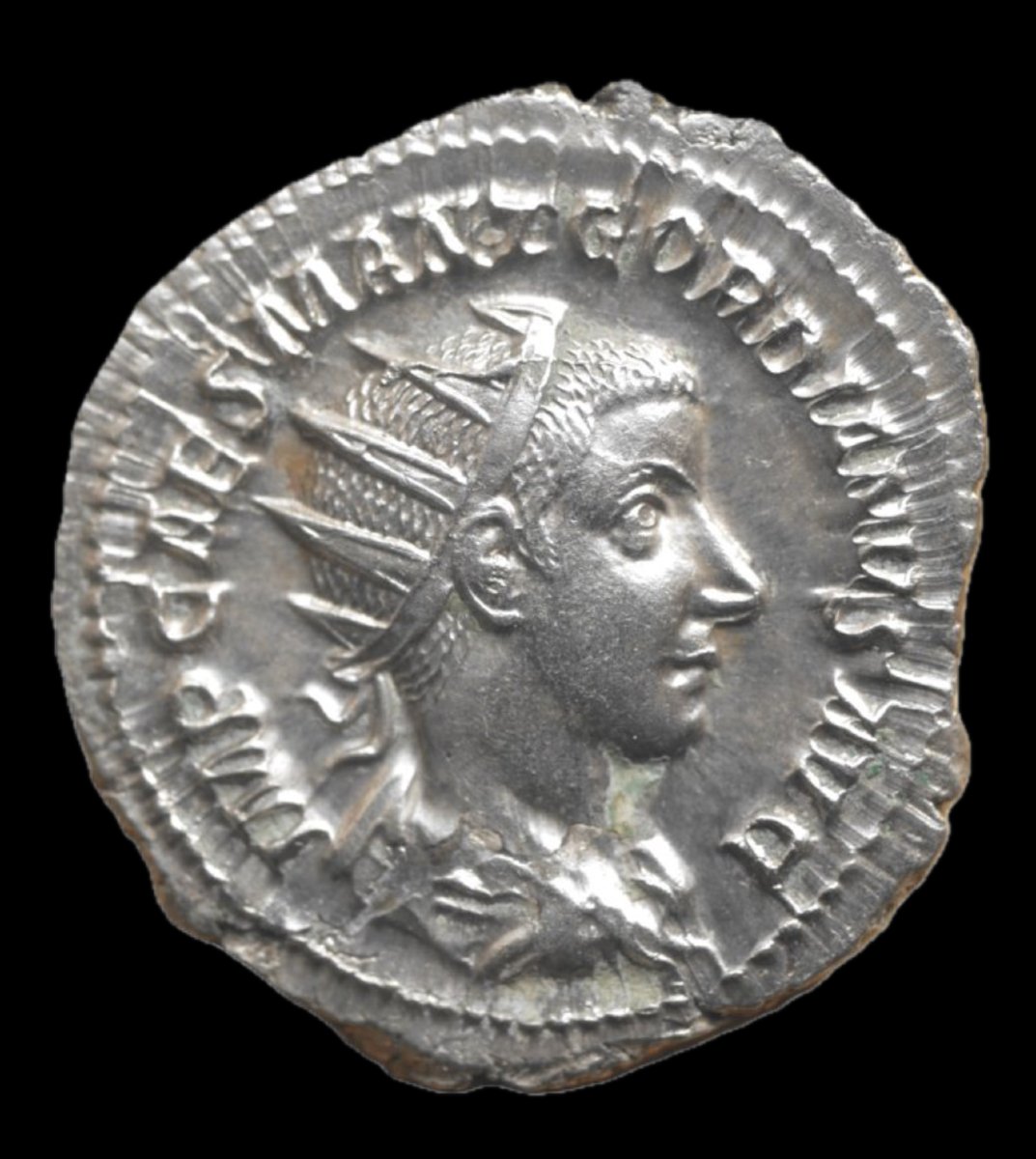
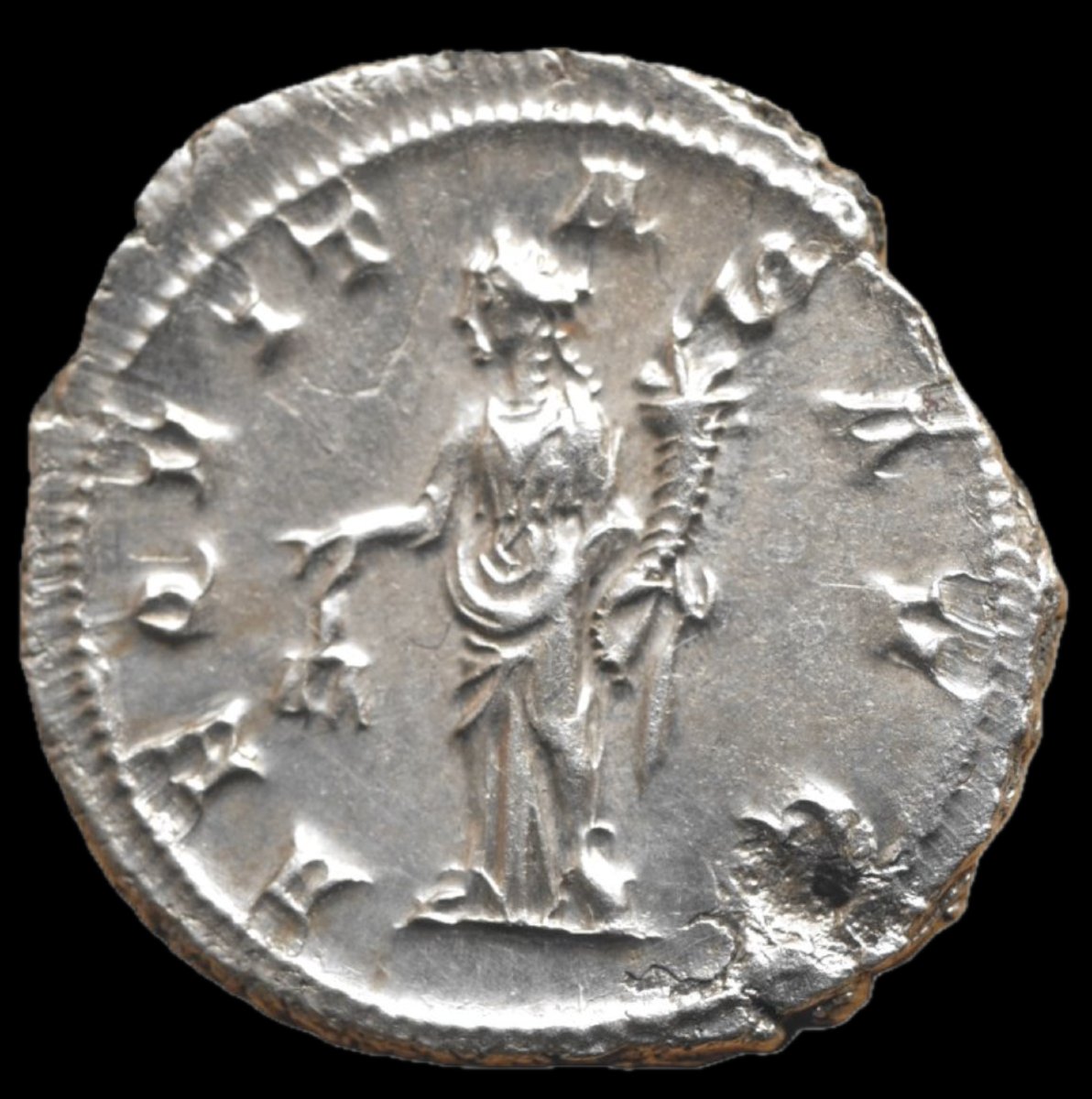
Careful observation under ×10 magnification and raking light: the examination of the photographs, carried out through a continuous reading of the rim, fields, reliefs, and legends, highlights an irregular flan (an expected feature of ancient hammer striking), with peripheral breaks and small edge losses visible, particularly on the reverse in the lower right quadrant, without these accidents compromising identification of the type, since the emperor’s radiate crown, the draped and cuirassed bust seen right, as well as the figure of Aequitas with her attributes, remain clearly recognizable.
On the obverse, the legend IMP CAES M ANT GORDIANVS AVG can be followed satisfactorily around the portrait, despite areas of strike weakness and peripheral contact, while the portrait shows a well-structured radiate crown and a legible facial modeling, with relief still present on the eye, nose, and jawline—elements that support a confident reading of the stated iconography.
On the reverse, the legend AEQVITAS AVG appears around a standing Aequitas, and the scales as well as the scepter can be distinguished—attributes that constitute precisely the typological core of this issue and allow it to be matched, in a directly verifiable way, with the published entries for RIC 177 at Antioch.
CharacteristicsAuthority: GORDIAN III (238–244).
Denomination / metal: Antoninianus (silver/billon according to catalogue and market classifications).
Mint: Antioch.
Obverse: IMP CAES M ANT GORDIANVS AVG, radiate, draped and cuirassed bust right.
Reverse: AEQVITAS AVG, Aequitas standing left, holding scales and scepter.
Reference: RIC 177.
Weight / diameter: 4.6 g ; 23 mm
Historical contextUnder Gordian III, the Empire passes through a phase in which monetary stability and fairness in exchange become themes of public discourse, and the choice of Aequitas—personification of equity and measure, expressed by the scales—belongs to this political rhetoric intended to signify order, rectitude, and regularity, particularly resonant in the eastern provinces where the Antioch mint plays a major monetary role.
Cultural valueFor the collector, this type brings together, in a still generous format for the antoninianus (about 23 mm), an immediately identifiable radiate portrait and an allegorical reverse of strong intellectual clarity, since Aequitas’s scales and scepter condense, in a single image, the Roman idea of a power that claims to govern by measure—giving the specimen a particularly telling testimonial value for the monetary ideology of the 3rd century.
Traceability & guaranteesEach specimen is examined, described, and accompanied by a certificate of authenticity consistent with the standards of the art and heritage market; the study is conducted with careful observation under ×10 magnification and raking light; provenance is European and from an established numismatic dealer; and the acquisition stems from a specialized international transaction carried out within a recognized numismatic network and validated by reference experts, according to the highest standards of the art and heritage market.
Payment termsFor payment methods, please send us a message communicating the location as well as the delivery address, so that we may immediately confirm the corresponding procedure.
If in France: shipment by Colissimo with signature and insurance (price 20 euros).
If abroad: shipment by UPS with signature and insurance (35 euros).
We accept cheques (France only), but delivery is made after receipt of the funds.
We accept bank transfers; simply request our bank details; we can also send you a bank link (cards accepted: CB, Visa, Mastercard, American Express, Apple Pay).
We do not sell to the United States; this limitation is motivated by the complexity of import requirements applicable to cultural goods, by the variability of customs controls, and by the insurance and liability constraints attached to the international transport of heritage objects, within which framework we favor compliance and shipping channels whose traceability remains fully controlled.
Period: Before 16th century
Style: Rome and Antic Greece
Condition: Good condition
Reference (ID): 1715707
Availability: In stock