

Juba II & Cleopatra Selene — Denarius “isis & Sistrum”— Rare — With Certificate Of Authenticity
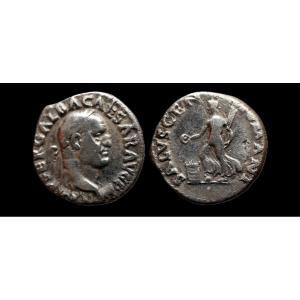
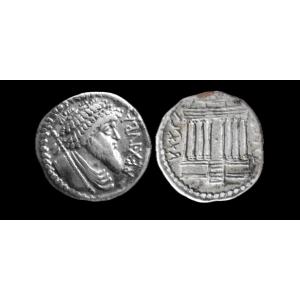
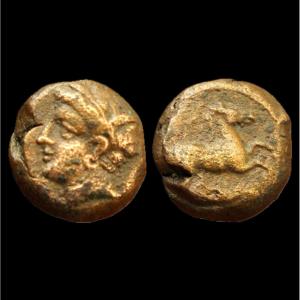
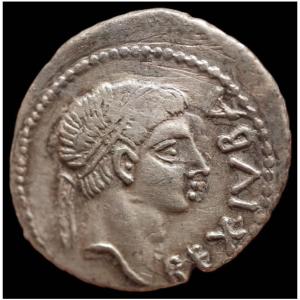
Detailed observation under ×10 magnification and raking light of a silver denarius of the Mauretanian Kingdom, showing on the obverse a diademed head of King Juba II facing right (legend REX IVBA clearly legible), and on the reverse, the headdress of Isis with a sistrum, accompanied by a Greek legend naming ΒΑΣΙΛΙΣΣΑ ΚΛΕΟΠΑΤΡΑ.
Obverse: expressive royal portrait, striated hair under diadem, complete pearl border, well-centered with clean Latin titling.
Reverse: Isis crown clearly engraved, sistrum upright at left, balanced composition, neat Greek inscription.
Surface condition: silver with soft gray patina, fine flan flow lines, and minute striking striations typical of ancient minting; sharp edges, no casting traces. All stylistic, epigraphic, and metallurgical markers indicate a genuine ancient strike from the mint of Caesarea.
Authority: Kingdom of Mauretania — Juba II and Cleopatra Selene
Mint: Caesarea
Date: circa 20 BC – AD 24
Denomination / Metal: Denarius, silver (AR)
Diameter / Weight: 18 mm ; 3.08 g
Obverse: REX IVBA — diademed head of Juba II right
Reverse: Isis headdress and sistrum, legend ΒΑΣΙΛΙΣΣΑ ΚΛΕΟΠΑΤΡΑ (abbreviated)
References: Mazard 222; MAA 89; SNG Copenhagen 573
Condition: clear details, uniform silver tone, well-struck and centered; soft wear enhances reliefs
Rarity: rare, especially well-preserved examples of the joint Juba–Cleopatra issue
Married under Augustus, Juba II—a Romanized Numidian prince—and Cleopatra Selene, daughter of Mark Antony and Cleopatra VII, ruled as client monarchs of Mauretania. Their coinage merges Latin and Greek legends, expressing a dual heritage: Roman authority and Ptolemaic lineage. The Isiac symbols proclaim the queen’s divine ancestry, blending Egyptian mysticism with Roman state theology — a striking emblem of Mediterranean cultural fusion.
Cultural ValueThis rare and historically charged denarius represents the union of two dynasties and two civilizations. Its refined portraiture and bilingual inscriptions make it a museum-worthy specimen, appealing both to seasoned numismatists and new collectors seeking a tangible link between Rome, Africa, and Egypt.
Provenance & GuaranteesProvenance: from established European collections.
Certificate of authenticity included.
Sale: specialized international transaction, conducted through a recognized numismatic network, in full compliance with art-market and cultural heritage regulations.
Period: Before 16th century
Style: Other Style
Condition: Good condition
Reference (ID): 1644920
Availability: In stock