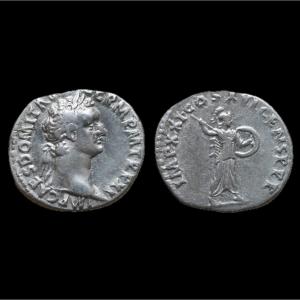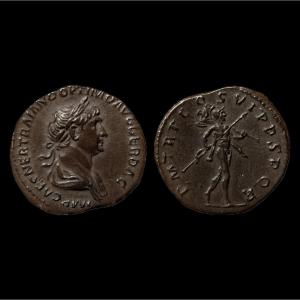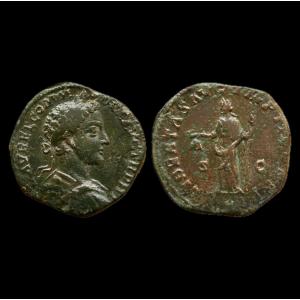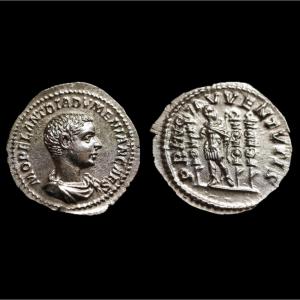


Nero Sestertius “annona Avgvsti Ceres” — Lugdunum — Certificate Of Authenticity
COIN AVAILABLE — THE DIFFERENT PAYMENT METHODS ARE LISTED AT THE END OF THE DESCRIPTION.
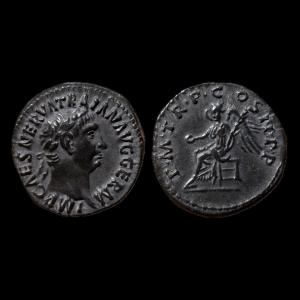
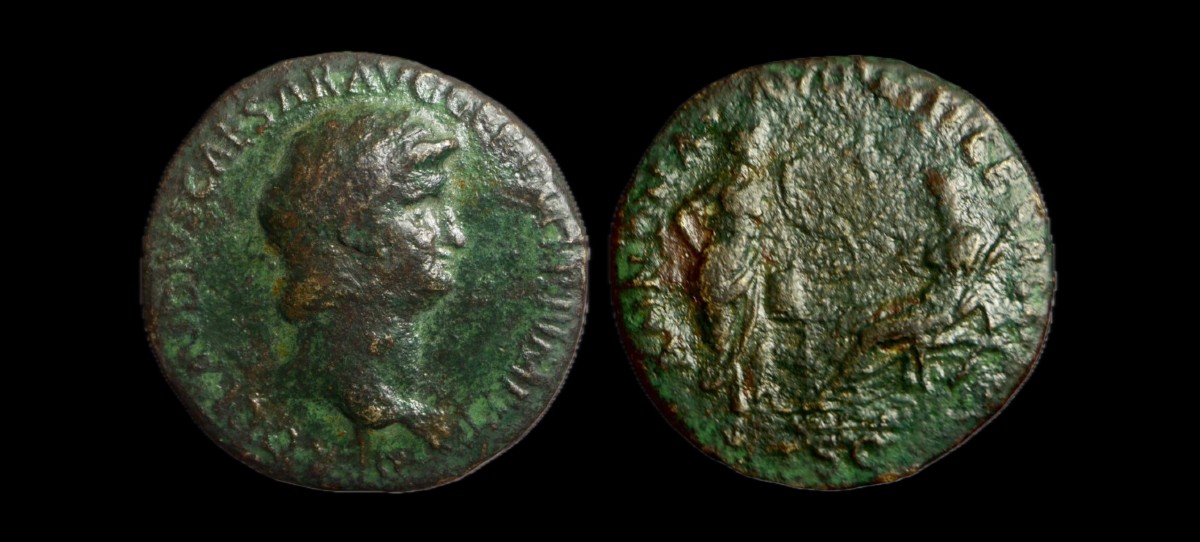
Analysis & expertiseThis sestertius of Nero, attributed to the mint of Lugdunum and dated to around AD 65, corresponds to the type recorded as RIC 390 / Cohen 14 / BMC 305 / CBN 70. Its iconographic combination—laureate imperial portrait on the obverse with a globe at the point of the neck, and the large reverse composition “ANNONA AVGVSTI CERES” with S – C—belongs to the monumental bronze issues of the late reign, particularly sought after for the narrative breadth of their reverses.
Close examination with a ×10 loupe and raking light: review of the photographs, carried out through a progressive reading of the edge, the fields, the relief, and the lettering, highlights a large-module bronze flan with an irregular rim, showing areas of peripheral weakness and irregularities consistent with prolonged circulation. The surface displays a brown patina punctuated by localized green patches, whose appearance and distribution suggest stabilized copper oxidation, with, in places, granulation and small field heterogeneities visible depending on the lighting angle.
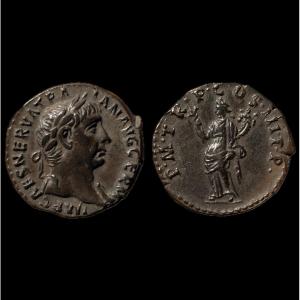
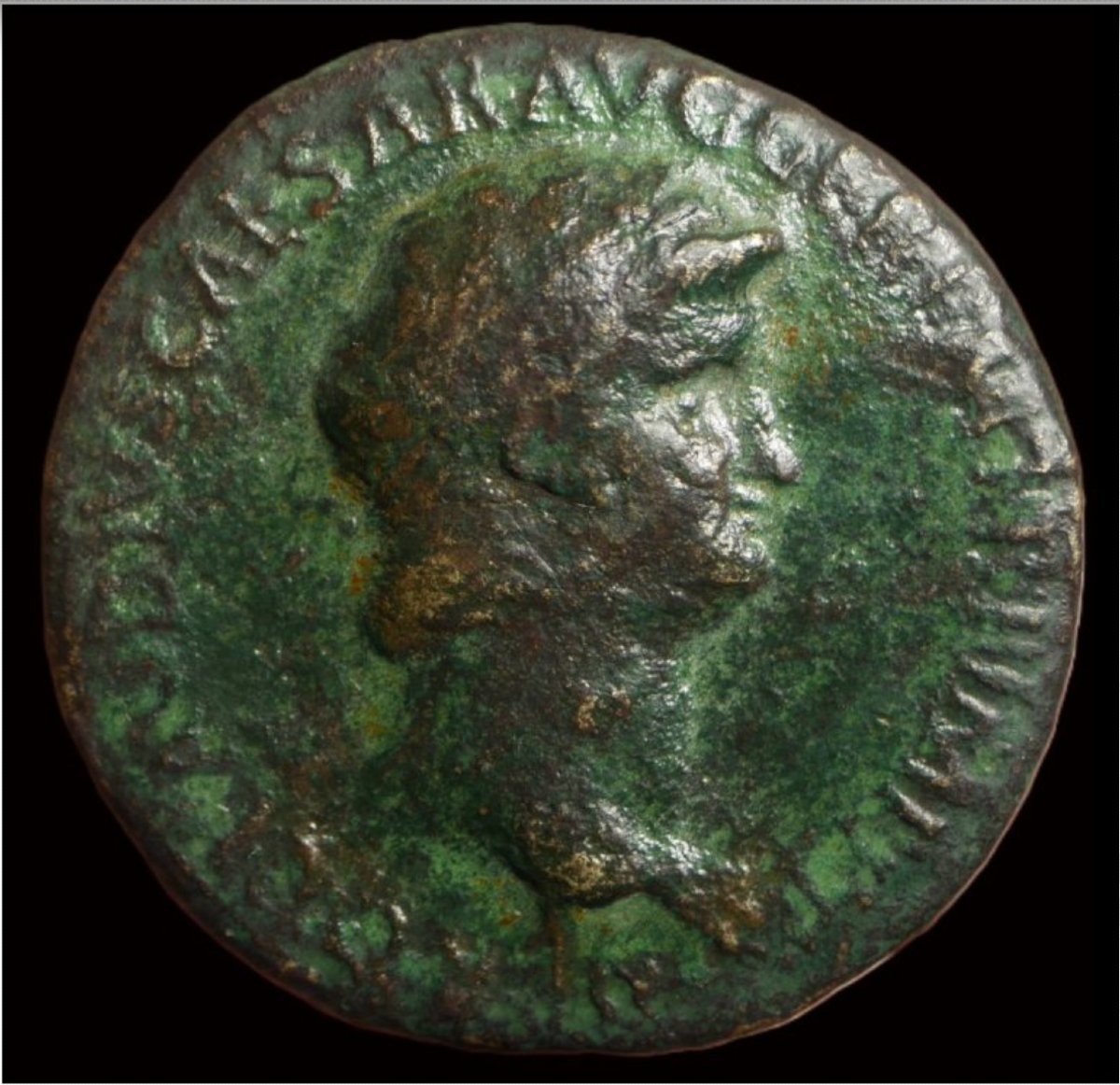
On the obverse, Nero’s portrait appears laureate right, with the globe at the point of the neck—a characteristic detail of the type. The main volumes remain readable—the outline of the wreath, relief of the forehead, modelling of the nose, line of the mouth, and the articulation of the neck—while the peripheral legend NERO CLAVD CAESAR AVG GER P M TR P IMP P P is more or less legible in sectors depending on strike and wear, a configuration frequently observed on large bronzes of this module.
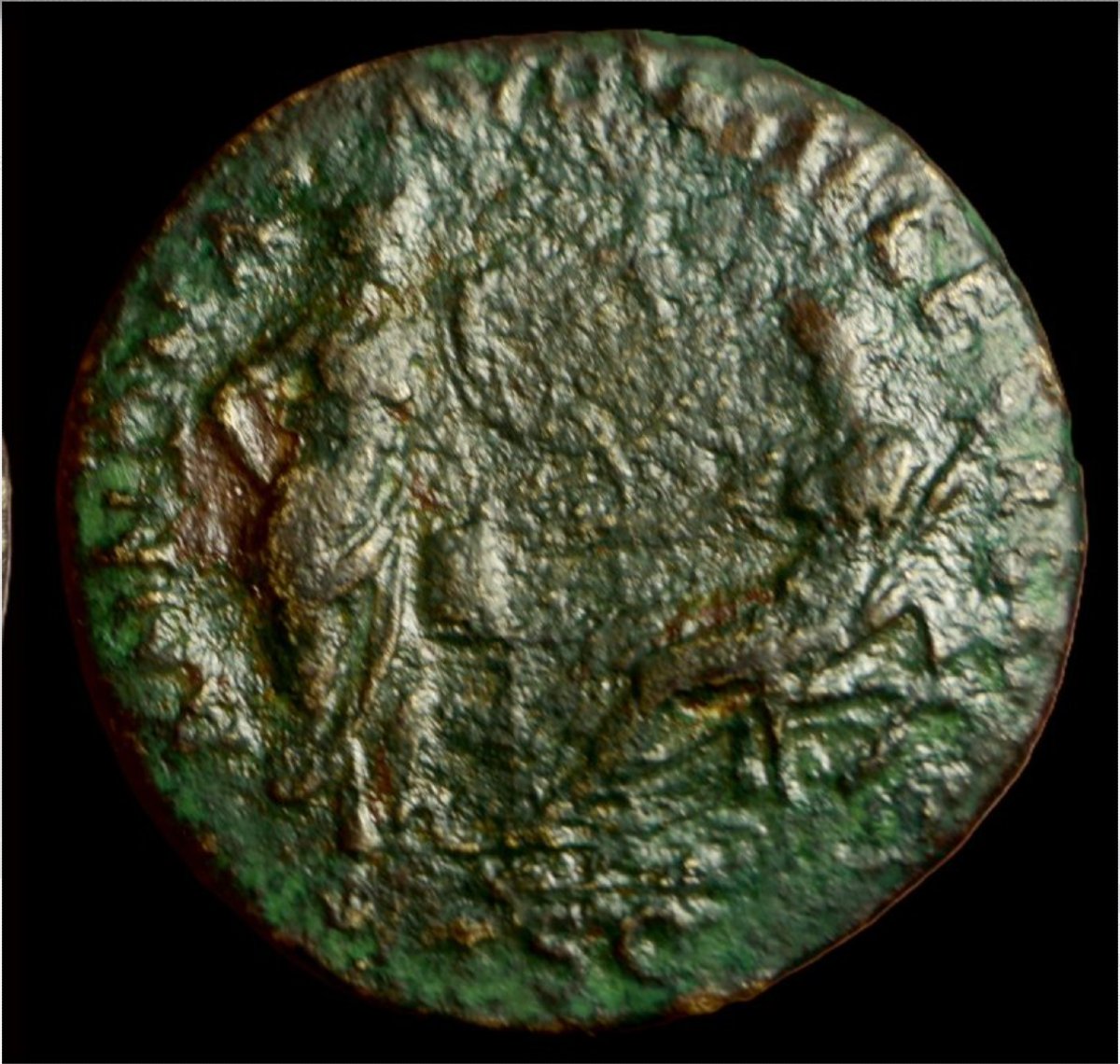
On the reverse, the scene remains narratively intelligible despite wear and patina patches: Ceres, veiled and draped, sits left holding ears of corn and a torch, facing Annona standing right with a cornucopia. Between them is the modius set on a garlanded altar, with the stern of a ship in the background. The whole conforms to the standard “ANNONA AVGVSTI CERES” description for Nero’s sestertii, with S – C readable in the field, anchoring the piece within the senatorial tradition of Roman bronze coinage.
SpecificationsAuthority: Nero Augustus (AD 54–68)
Denomination / metal: Sestertius, Æ
Mint: Lugdunum
Date: circa AD 65
Weight / diameter: 21.89 g; 33 mm
Obverse: NERO CLAVD CAESAR AVG GER P M TR P IMP P P — Laureate head r., with globe at point of neck.
Reverse: ANNONA – AVGVSTI – CERES — Ceres, veiled and draped, seated l., holding corn-ears and torch, her feet on stool, facing Annona standing r., r. hand resting on hip and l. holding cornucopiae; between them, modius on garlanded altar. In the background, ship’s stern. In exergue, S – C.
References: C 14. BMC 305. RIC 390. CBN 70.
Issued at a time when the capital depended closely on the grain supply and the logistical stability of Mediterranean flows, this reverse deploys an immediately legible political language. The joint presence of Ceres (agriculture, fertility, grain) and Annona (public supply, distribution) stages organized abundance, while the ship’s stern makes explicit the maritime horizon of the cura annonae, turning the coin into a vehicle of civic doctrine, in which abundance is not merely promised but presented as a matter of public order.
Cultural valueFor a collector, this sestertius offers the principal appeal of the great imperial bronzes: the material density of the alloyed copper, the depth of the patina, and above all the almost “pictorial” dimension of the reverse, where imperial rhetoric becomes image. The Ceres–Annona pairing provides immediate institutional readability, reinforced by S – C, the traditional mark that connects the coin to the political grammar of Roman bronze and gives the object a particularly expressive historical presence.
Traceability & guaranteesEach specimen is examined, described, and accompanied by a certificate of authenticity consistent with the standards of the art and heritage market. The study is conducted with close observation under a ×10 loupe and raking light. Provenance is European, sourced from an established numismatic dealer, and the acquisition stems from a specialized international transaction carried out within a recognized numismatic network and validated by reference experts, according to the highest standards of the art and heritage market.
Payment termsFor payment methods, please send us a message providing the location as well as the delivery address.
If in France: shipment via Colissimo with signature and insurance (€20).
If abroad: shipment via UPS with signature and insurance (€35).
We accept cheques (France only), but shipment is made after receipt of the funds.
We accept bank transfers; simply ask us for our bank details.
We can also send you a bank payment link (cards accepted: CB, Visa, Mastercard, American Express, Apple Pay).
We do not sell to the United States; this limitation is motivated by the complexity of import requirements applicable to cultural goods, the variability of customs controls, and the insurance and liability constraints attached to the international transport of heritage objects, within which we prioritize compliance and shipping channels whose traceability remains fully controlled.
Period: Before 16th century
Style: Rome and Antic Greece
Condition: Good condition
Reference (ID): 1709503
Availability: In stock