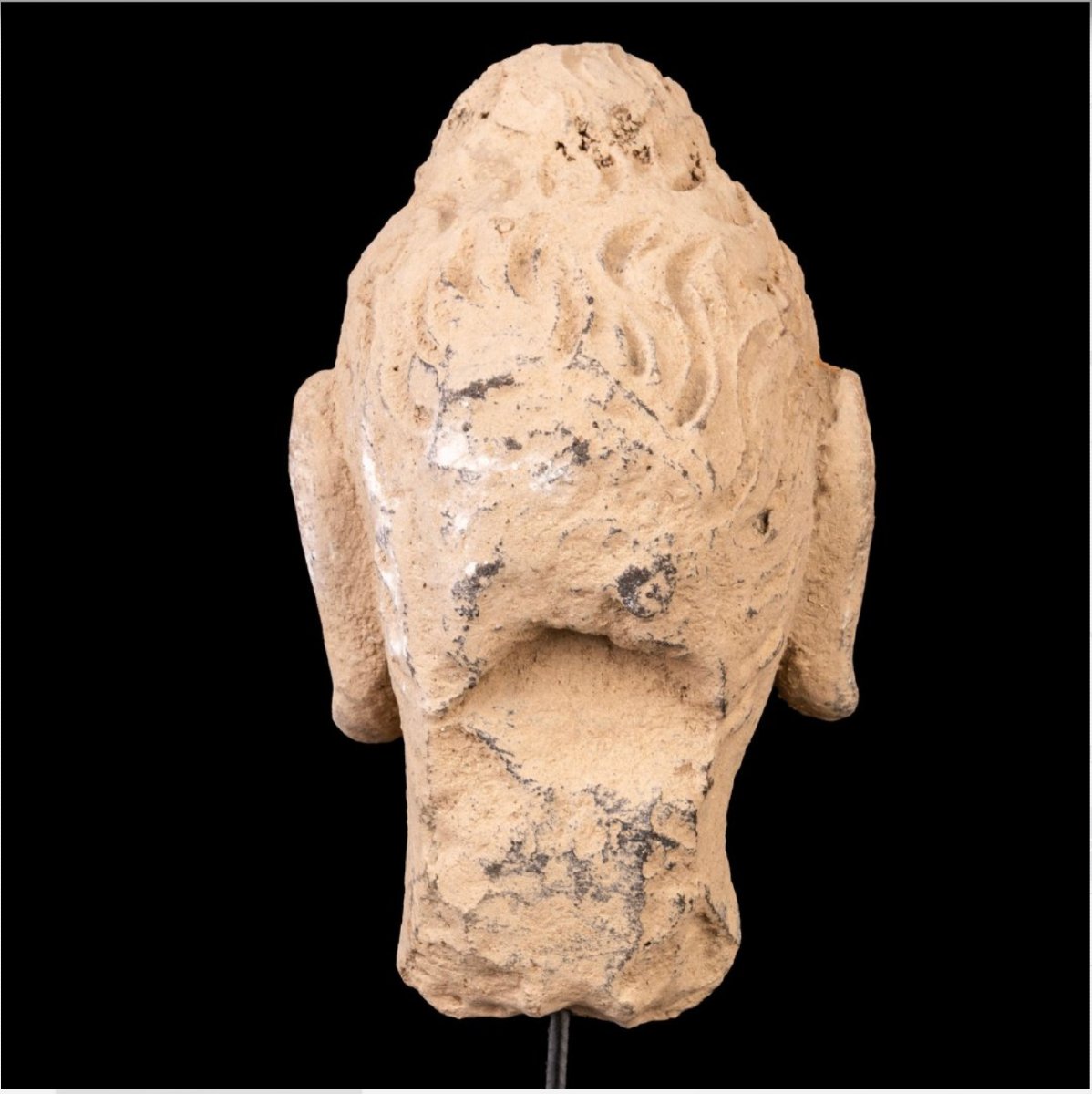




Gandharan Stucco Head Of Buddha — With Certificate Of Authenticity
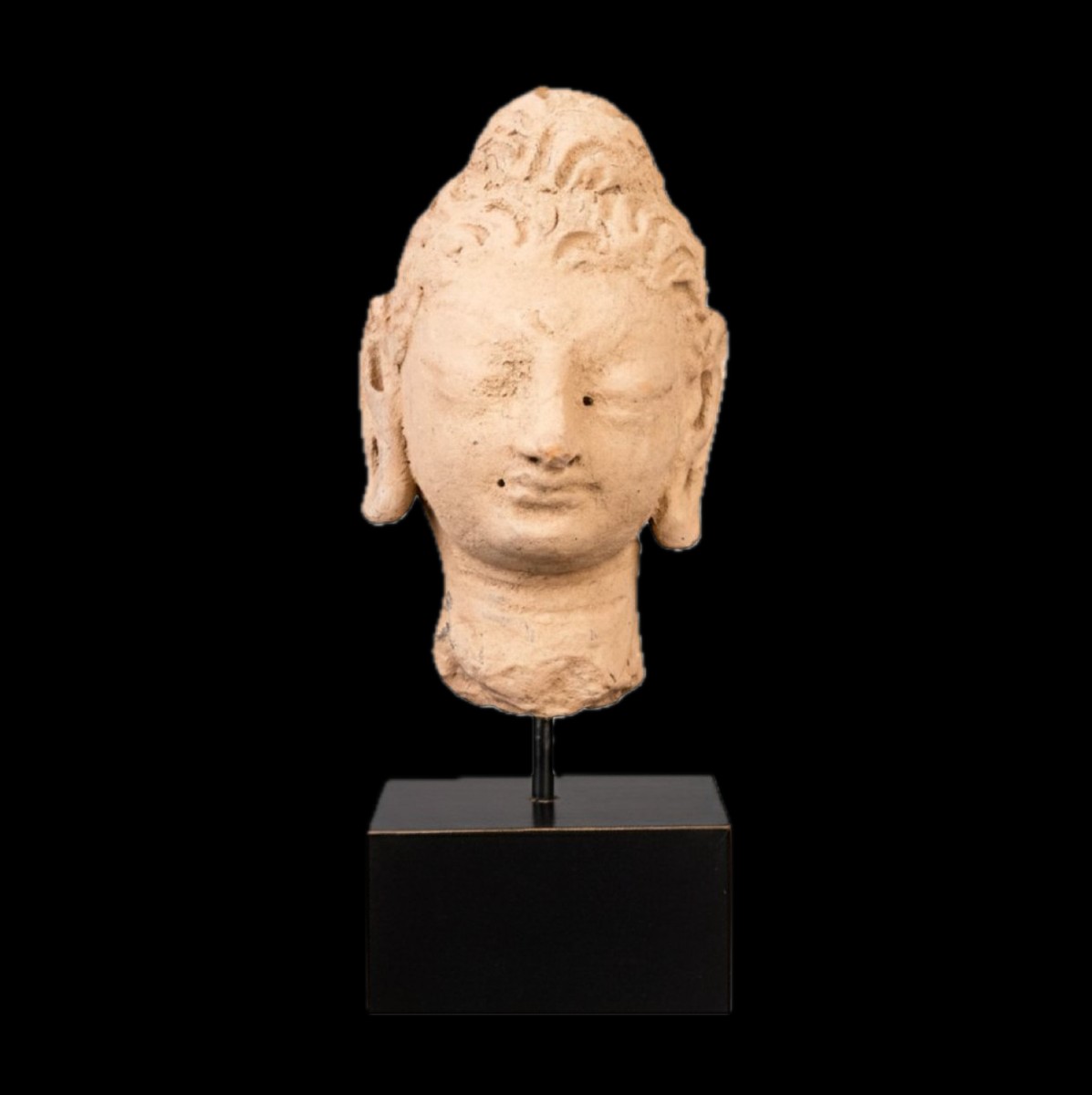
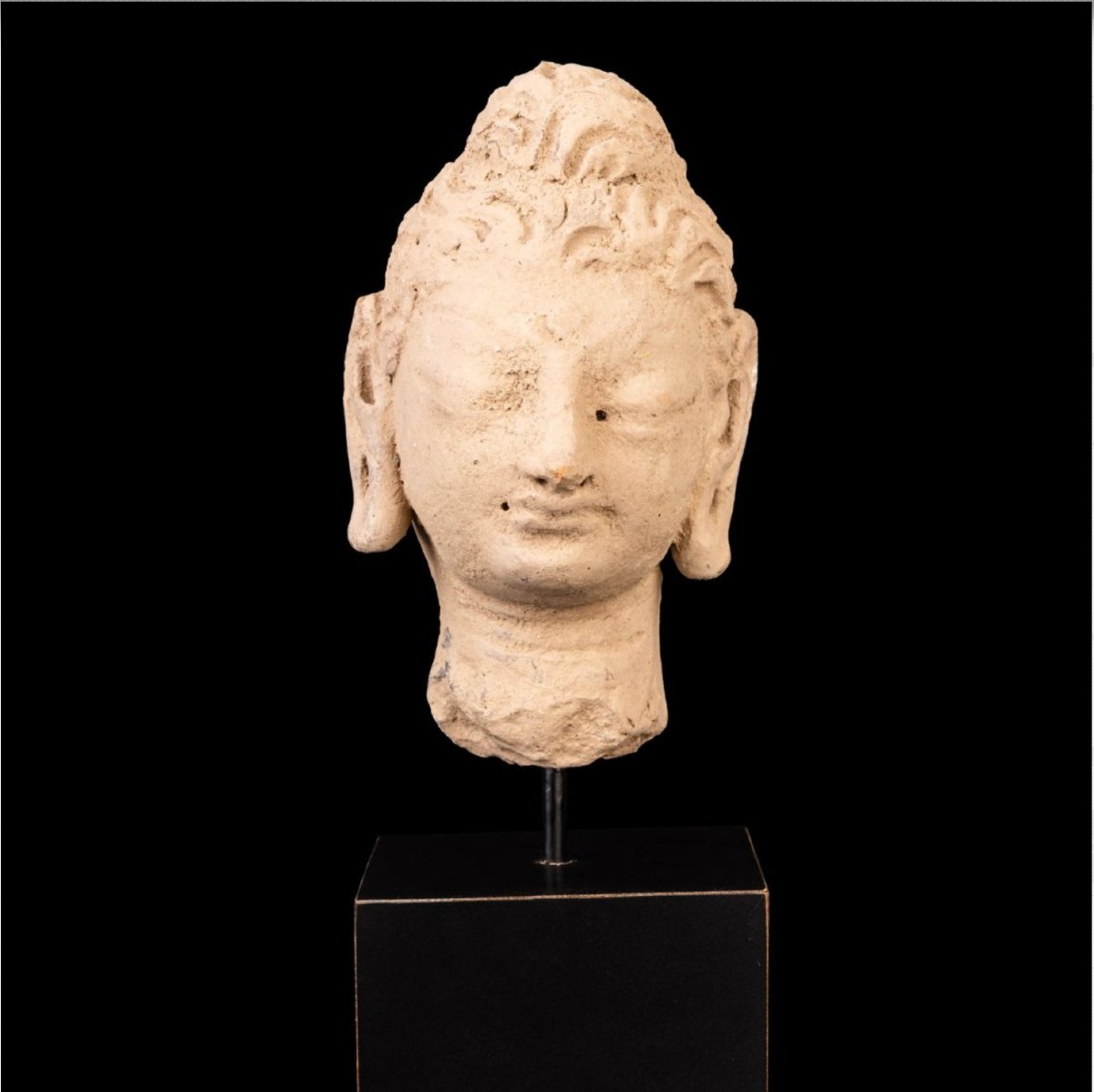
Examined under binocular magnification (×10) and raking light, this stucco head of Buddha, mounted on a modern display base, exemplifies with remarkable precision the serene beauty and spiritual refinement of Gandharan sculpture.
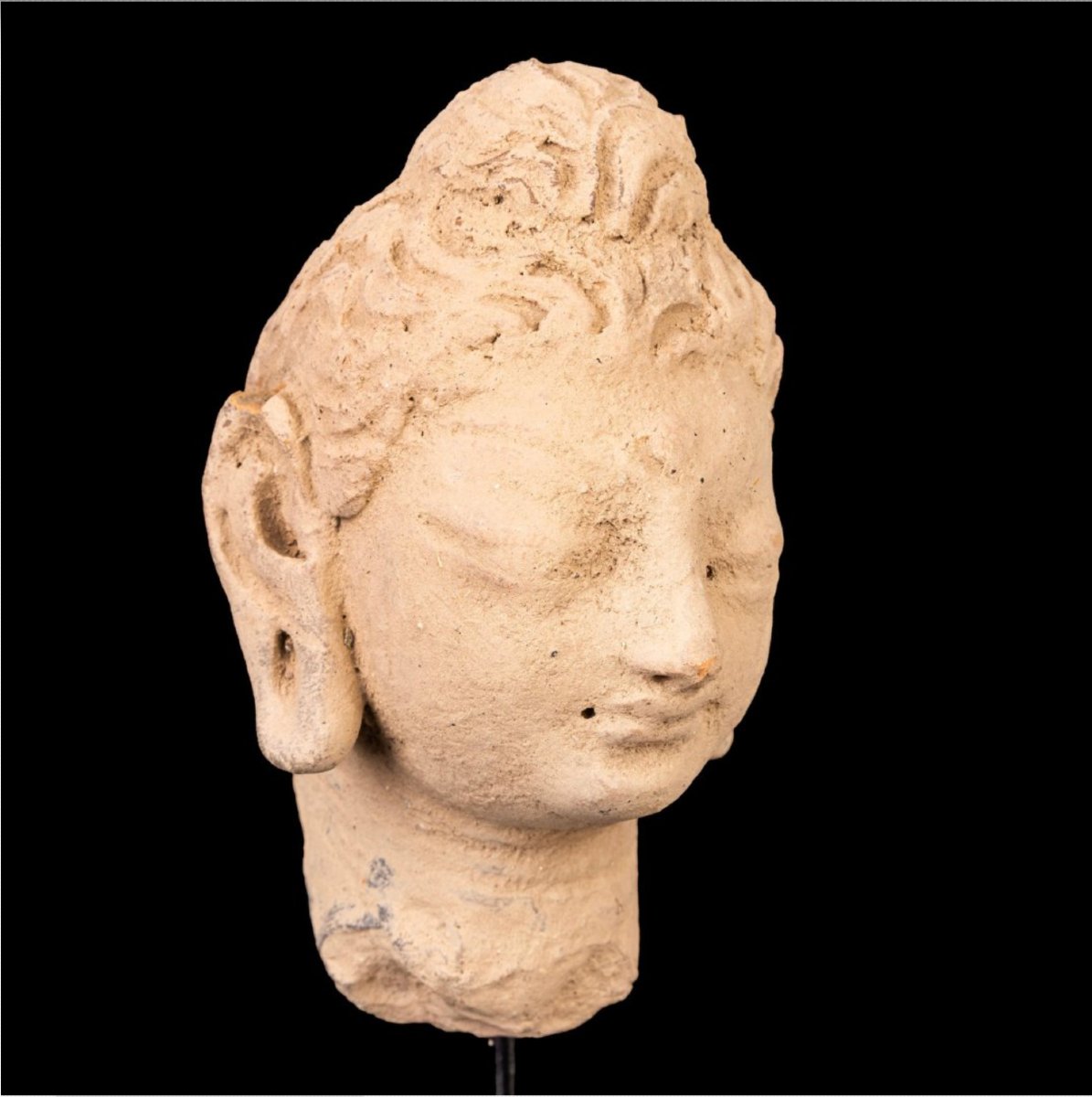
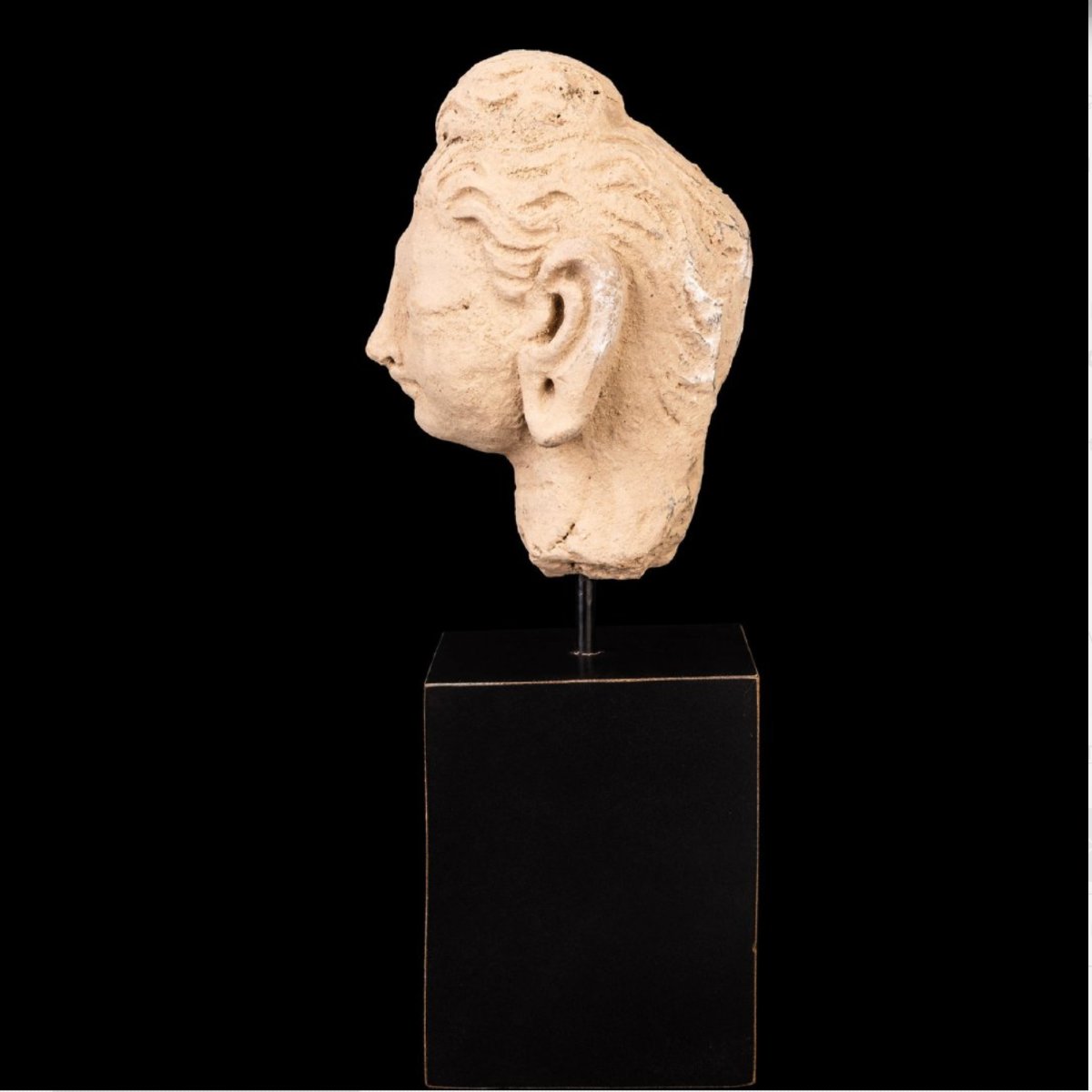
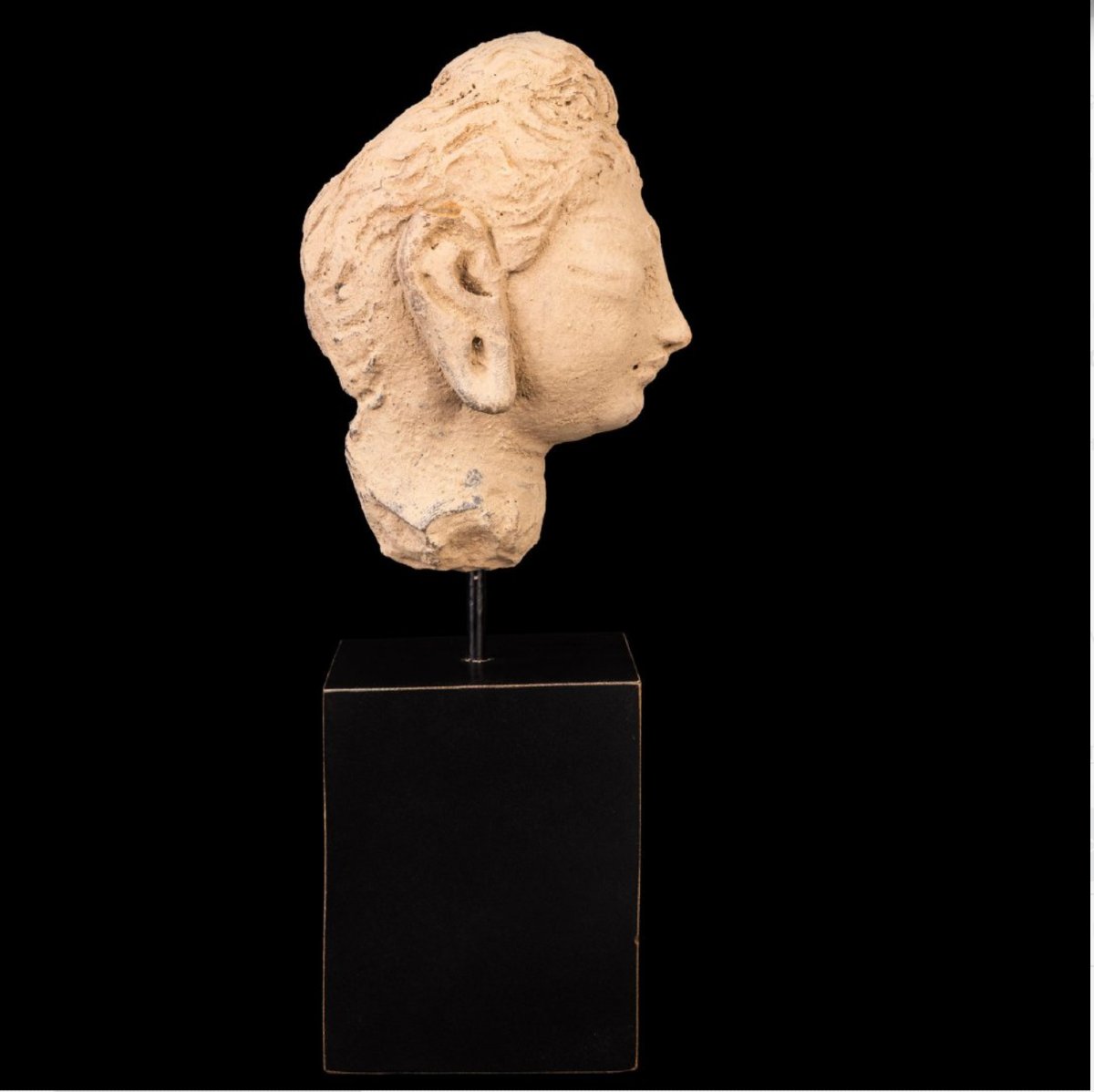
The oval, composed face is characterized by a high uṣṇīṣa structured with softly modeled wavy locks, half-closed eyelids expressing meditation, a fine mouth with softened corners, and elongated pierced earlobes, symbols of wisdom and renunciation.
The material — a fine-grained lime-gypsum stucco — bears a naturally powdery shell patina, animated by minute firing pits and mineral concretions, all consistent with an ancient, authentic aging process.
The capillary volumes remain clear at the back, while the incomplete neck base reveals the stratification of the material. Within the recesses of the hair remain traces of white ground and dark pigments, expected indicators of an original polychromy.
No evidence of modern restoration or repainting has been observed: the piece displays complete archaeological integrity.
Object: Head of Buddha in stucco
Material: Lime and gypsum-based stucco with traces of ground and residual pigments
Culture: Gandhāra (Northwestern Indian Subcontinent)
Period: 3rd–4th century A.D.
Dimensions: 20.5 × 6 × 6 cm (excluding base)
Technique: Molded head with manual reworking (hair, eyelids, lips); modern reversible mounting
Condition: Good; period wear consistent across reliefs, small ancient losses to nose and neck base, stable patina, no visible restoration
Provenance: European private collection; formerly part of a British and European collection established in the 1970s
Presentation: Supplied with modern display base
Authenticity: Certificate of authenticity provided
Sale: European specialized adjudication, under expert supervision
Between the 3rd and 5th centuries A.D., the workshops of Gandhāra — particularly those at Taxila, Takht-i-Bahi, and Hadda — replaced schist with stucco for monastic statuary.
This lighter and more malleable material allowed for exceptional precision in modeling, subtle expressiveness of features, and the application of a delicate polychromy (black for hair, reddish or ochre tones for flesh).
Emerging from the synthesis between Greco-Roman classicism and Buddhist iconography, these figures embody the meditative serenity of the Buddha and the diffusion of a spiritual art at the crossroads between India and the Hellenistic world.
Iconography: High uṣṇīṣa, wavy hair arranged in ordered volutes, downcast gaze, pierced earlobes; straight nose slightly worn, delicate lips.
Volume: Harmonious facial modeling with rounded chin and rhythmic arrangement of large hair locks.
Surface and Patina: Chalky beige tone with dark mineral aggregates; vestiges of white gesso and pigments; natural abrasions along the ridges.
Technique: Multi-layered lime-gypsum stucco, molded then hand-finished; open base indicating ancient separation from the torso.
Material Authenticity: Cohesive aging, homogeneous internal structure, and absence of modern intervention — all fully consistent with Gandharan production of the 3rd–4th century A.D.
This head perfectly illustrates the fusion of Greek naturalism and Buddhist spirituality: the precision of modeling, the calmness of expression, and the honesty of the material together manifest a form of embodied enlightenment.
A rare testimony to the transition from schist to stucco, it represents a museum-quality piece of both contemplation and scholarship, suited to any serious collection of sacred or archaeological art.
It also stands as a historical document of great significance, revealing the evolution of Buddhist iconography and the artistic practices of Gandhāra.
Provenance: European private collection; formerly British collection (1970s).
Authenticity: Certificate of authenticity issued.
Period: Before 16th century
Style: Asian art
Condition: Excellent condition
Reference (ID): 1646072
Availability: In stock