

Canaanite Pyxis, Late Bronze Age (1400–1200 Bc) With Certificate Of Authenticity
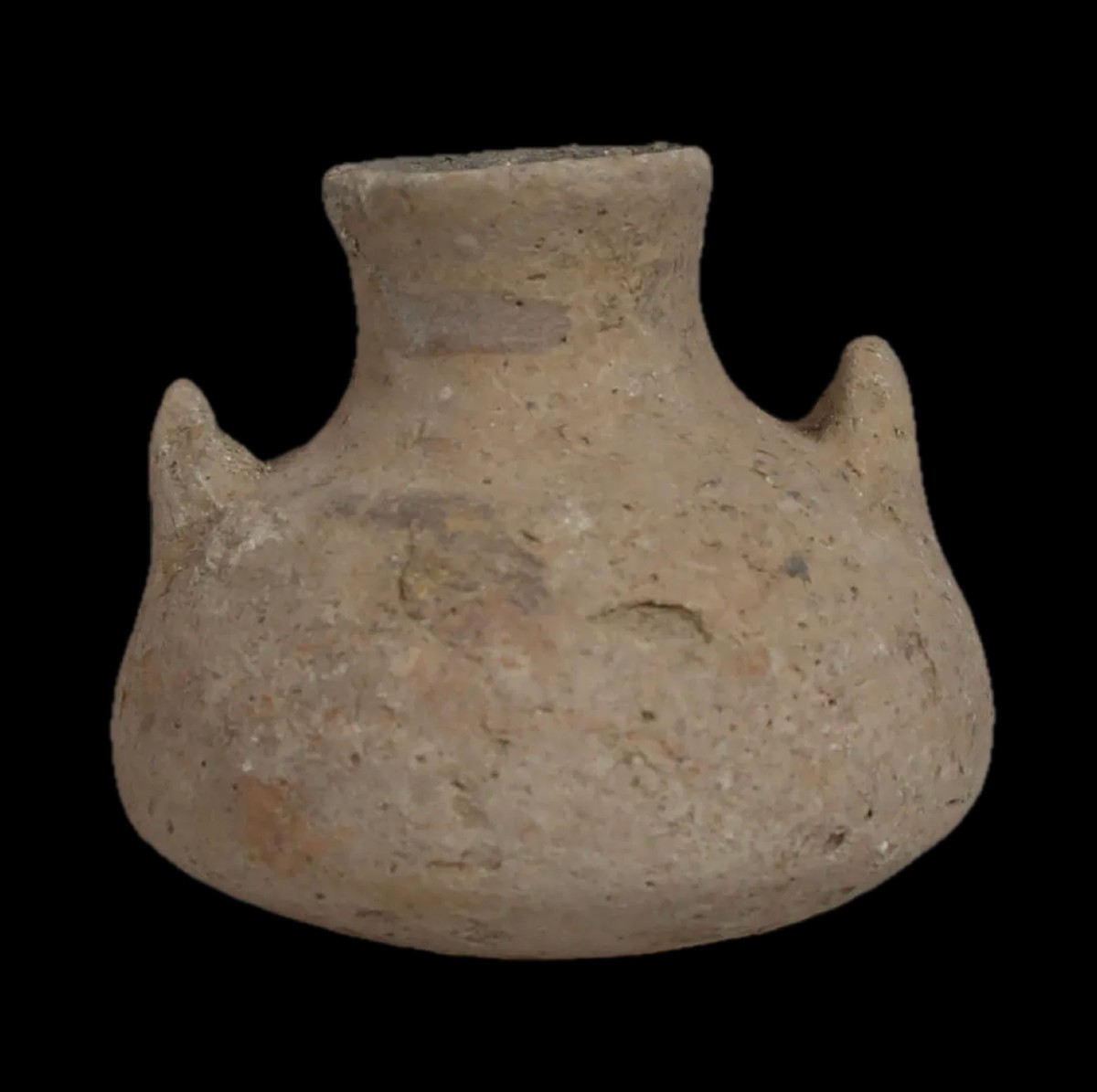
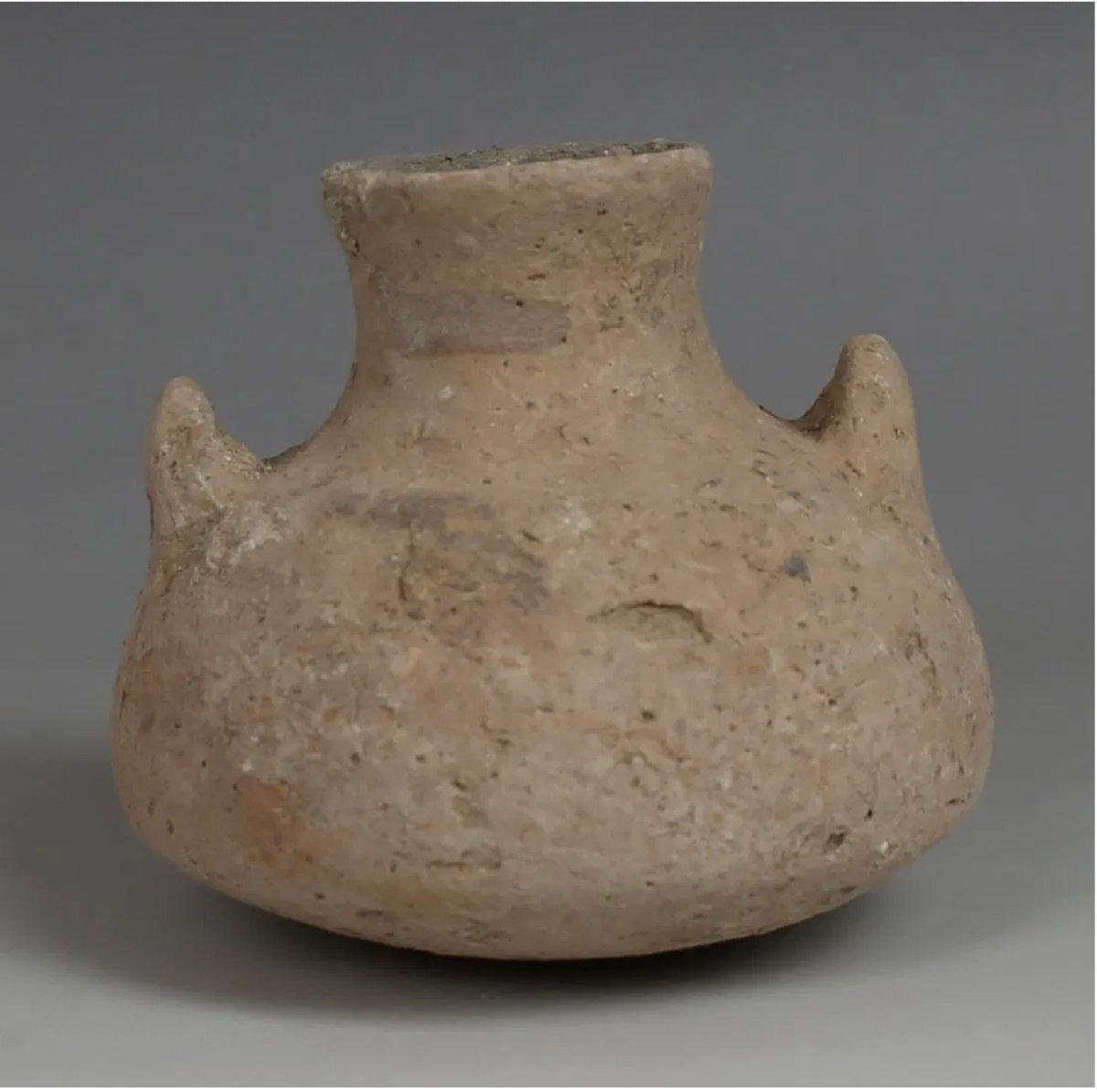
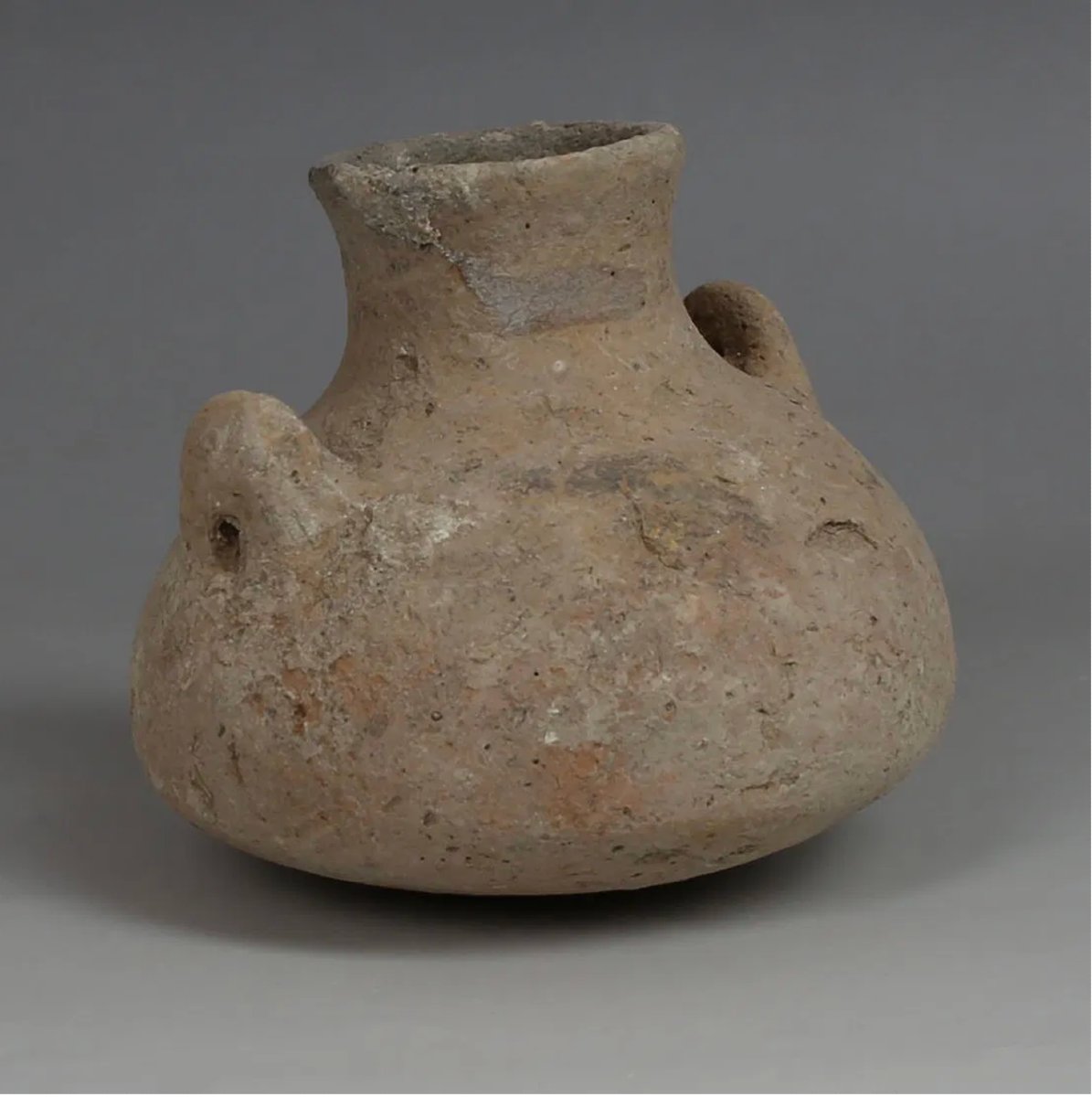
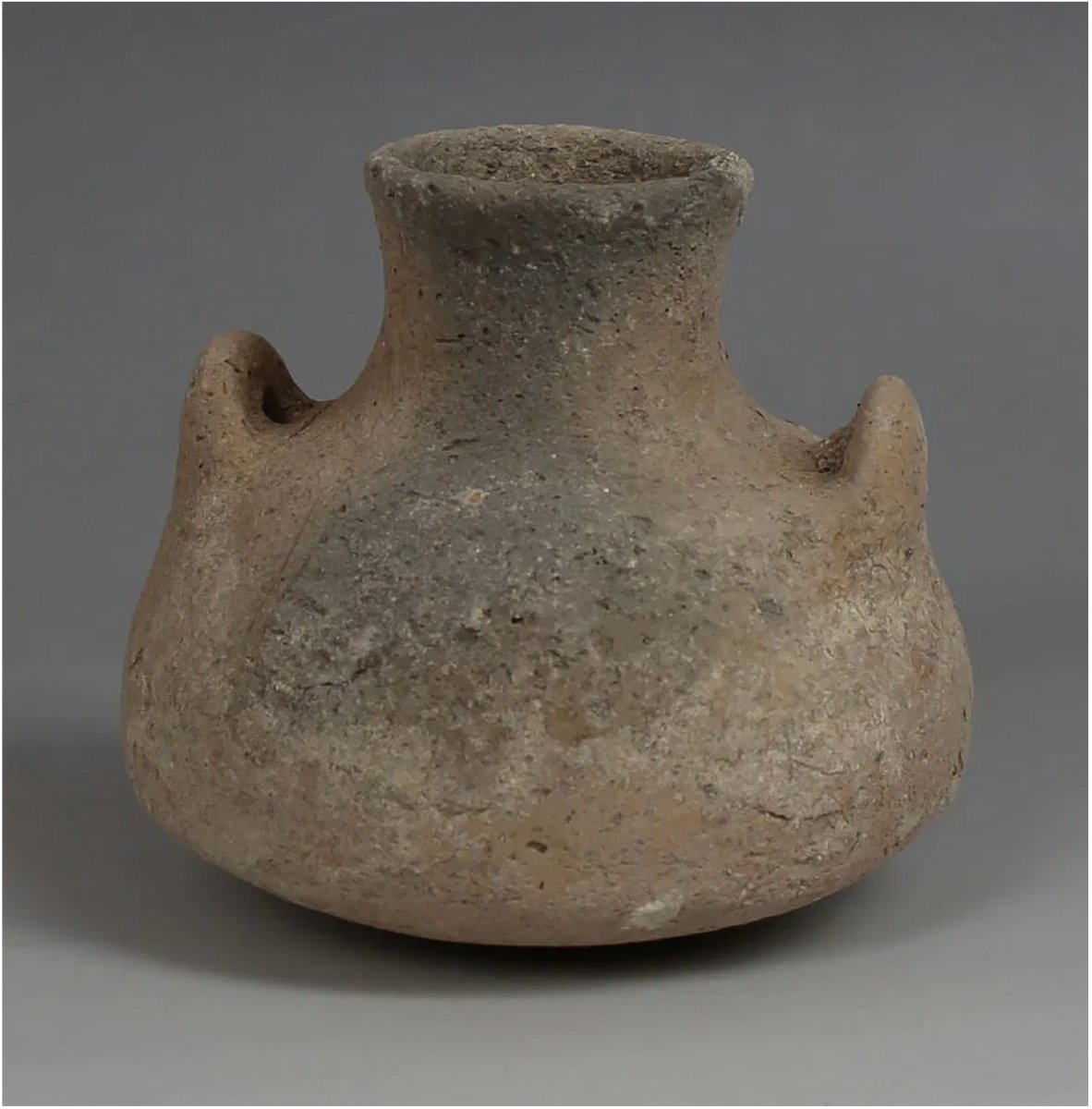
This artifact is a Canaanite pyxis dating from the Late Bronze Age, a direct witness to the material culture of the Southern Levant between 1400 and 1200 BC. The object is characterized by its squat globular form and its utilitarian simplicity. The ceramic is of a coarse ware nature, with an ochre-grayish hue, displaying an irregular and granular surface. These material qualities, far from being imperfections, are fundamental indices of the primitive manufacturing technique and heterogeneous firing conditions, lending the piece a remarkable telluric integrity and raw presence.
Characteristics
Object: Pyxis (storage vessel, lid missing).
Culture: Canaanite, Levant.
Period: Late Bronze Age (1400 – 1200 BC).
Material: Coarse ware pottery, poorly levigated fabric, heterogeneous firing.
Dimensions: Height: 79 mm | Diameter: 92 mm.
Condition: Good structural condition. Raw, rough surface, consistent with the production techniques and the millennia of Bronze Age sedimentation.
Provenance: Ex-private Jerusalem collection, acquired between 1975 and 1990.
Documentation: Supplied with Certificate of Authenticity.
Historical ContextThe Late Bronze Age was an era of intense commercial prosperity and cultural exchange in the Levant, notably under Egyptian influence. The pyxis, designating a small closed container, played an essential role in daily and ritual life, serving to store valuable personal goods such as cosmetics, pigments, jewelry, or seals. Their frequent presence in funerary contexts underscores the importance of personal belongings in Canaanite rites of passage. This specimen is part of an archaic ceramic tradition focused on function and robustness.
Formal and Material Analysis of the Specimen
Shaping and Morphology: The pyxis features a squat globular body, terminating in a short, wide mouth. The granularity of the surface and the irregularity of the contours suggest manufacturing by slow wheel or manual modeling, a technique typical of utilitarian ceramics from this high period.
Firing and Patina: The poorly purified clay was subjected to firing in an uncontrolled atmosphere. The thermal heterogeneity is evident in the chromatic variations: patches of blackening and gray contrast with the base ochre tone, a signature of the open kilns used in the Bronze Age. The surface also exhibits flaking and surface wear, evidence of its telluric interaction over more than three millennia.
Lug Handles: The two lateral protrusions, pierced vertically, are rudimentary lug handles. Created by simply pinching the clay, they are characteristic of the economy of means and the functional design of the era. They originally served to fasten the missing lid with a cord or to allow the vessel to be suspended.
Cultural and Aesthetic ValueThis artifact is an archaeological document of great material sincerity. Its value lies in its chronological rarity and its quality as a direct witness to the craft techniques of the 2nd millennium BC. It embodies the Canaanite tradition at a pivotal moment in its history. The object commands attention through its raw texture and archaic form, conferring a depth and authenticity not found in the more refined ceramics of subsequent periods.
Expertise ReportThe formal and material analysis, corroborated by the documented ancient provenance in Jerusalem (1975–1990), confirms the cultural and chronological attribution:
Typology: The form, neck, and lug handles are perfectly consistent with pyxides from the Late Bronze Age Levant.
Materiality: The coarse fabric, mineral inclusions, and the heterogeneity of the firing colors are crucial markers of authenticity for this period.
Integrity: The raw surface, without modern smoothing attempts, attests to the preservation of the original archaeological state.
The pyxis can reasonably be considered an authentic Canaanite vessel from the Late Bronze Age.
Period: Before 16th century
Style: Other Style
Condition: Good condition
Reference (ID): 1663556
Availability: In stock