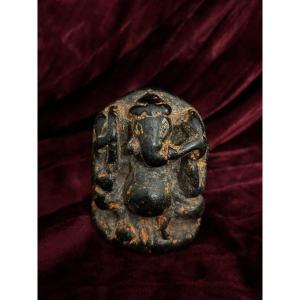
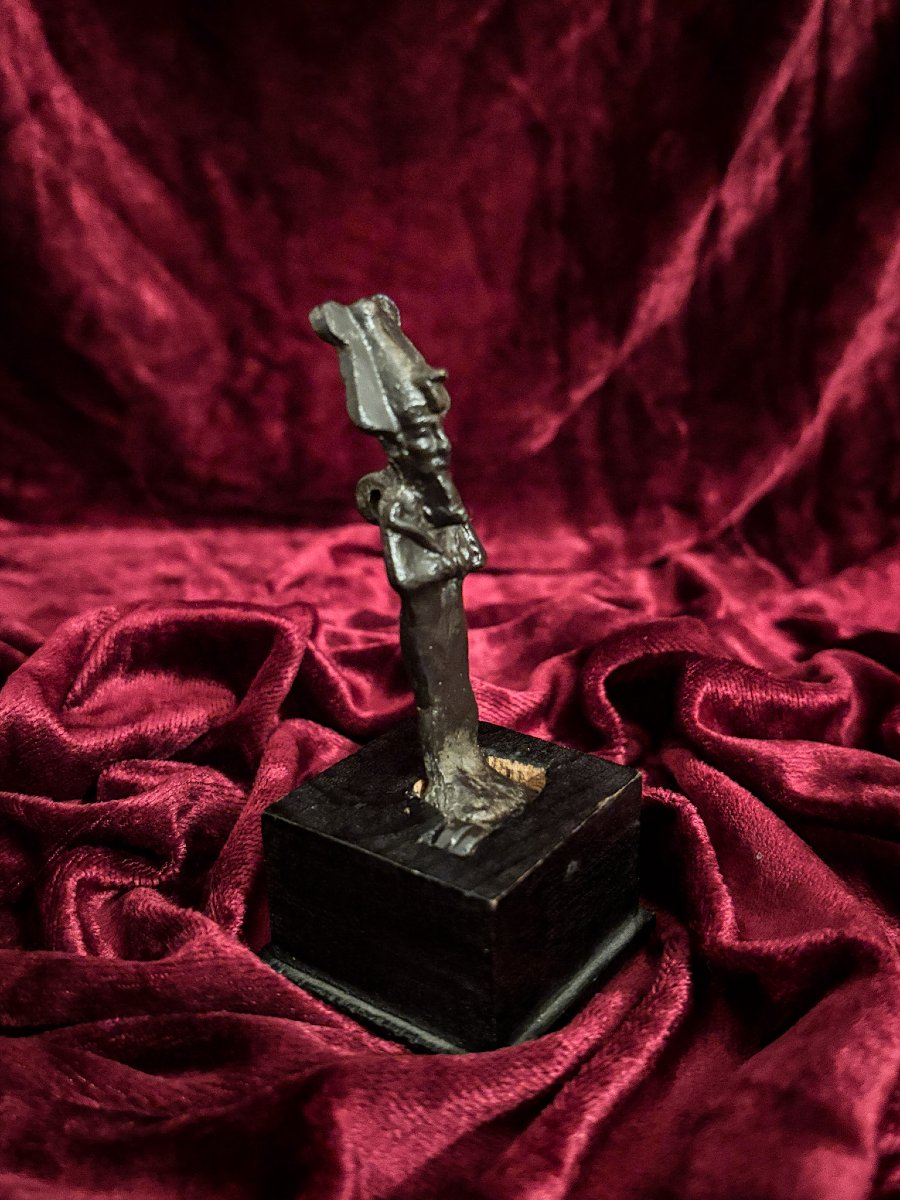


Antique Bronze Statuette Of Osiris, Egypt, Late Period (circa 664-332 Bc).
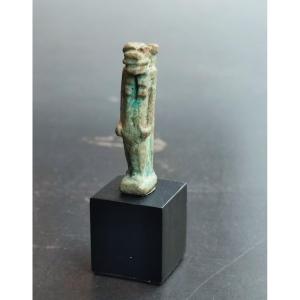
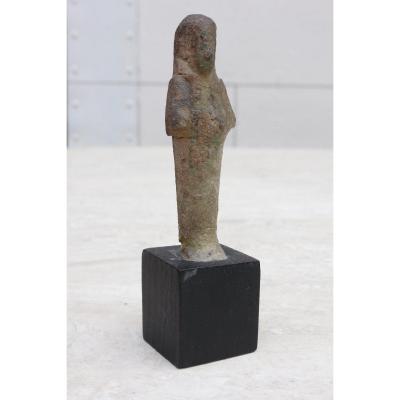
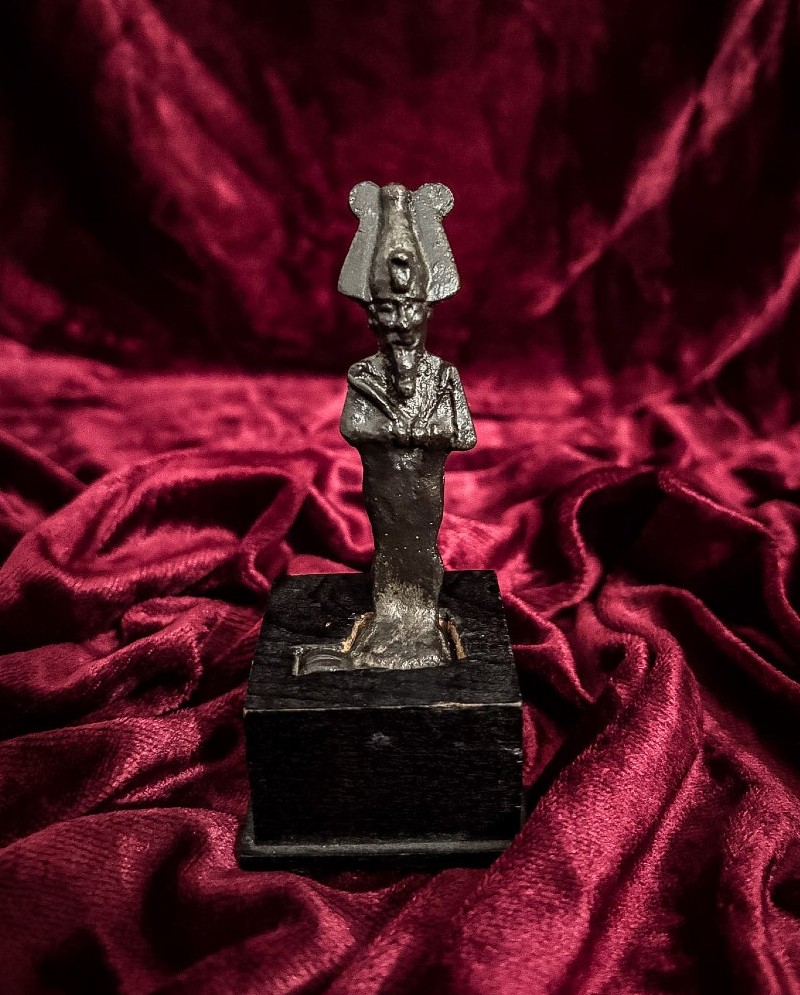
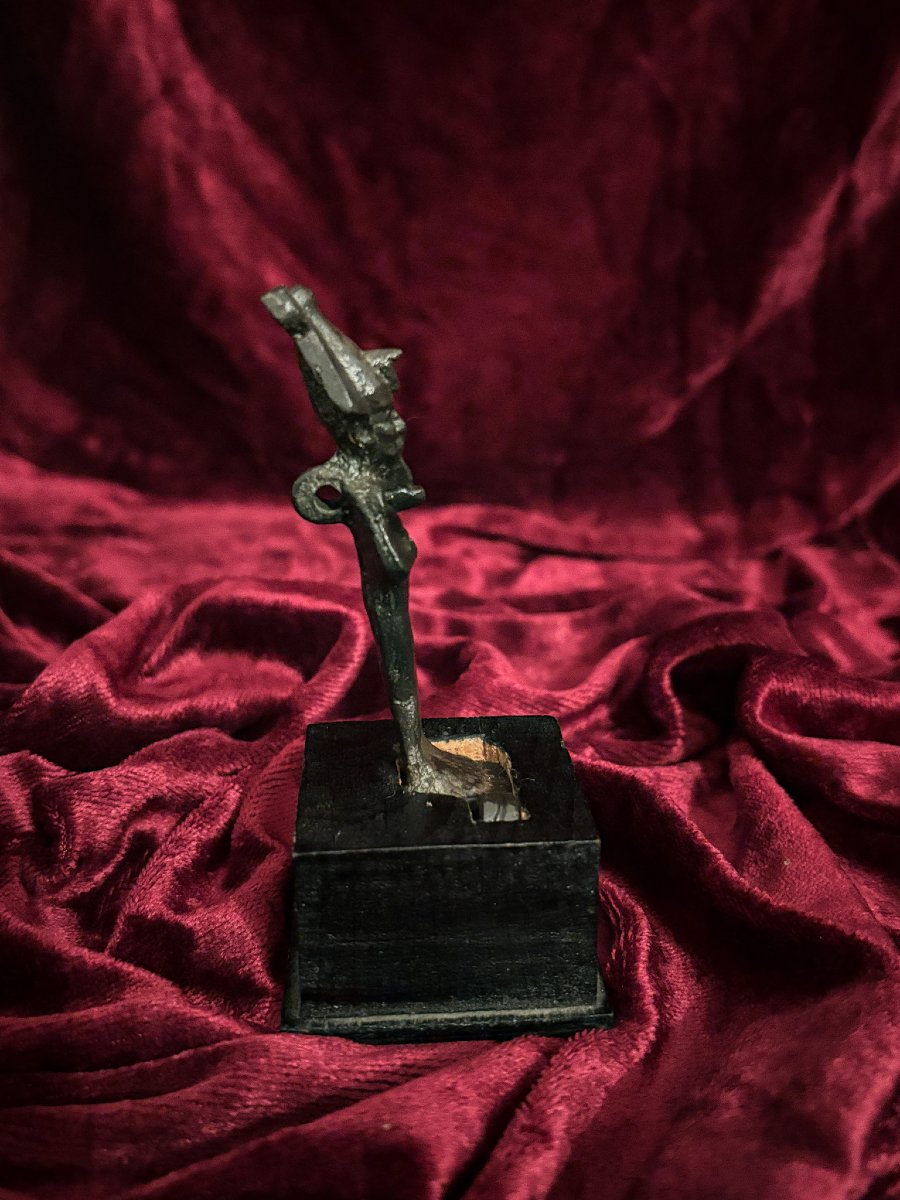
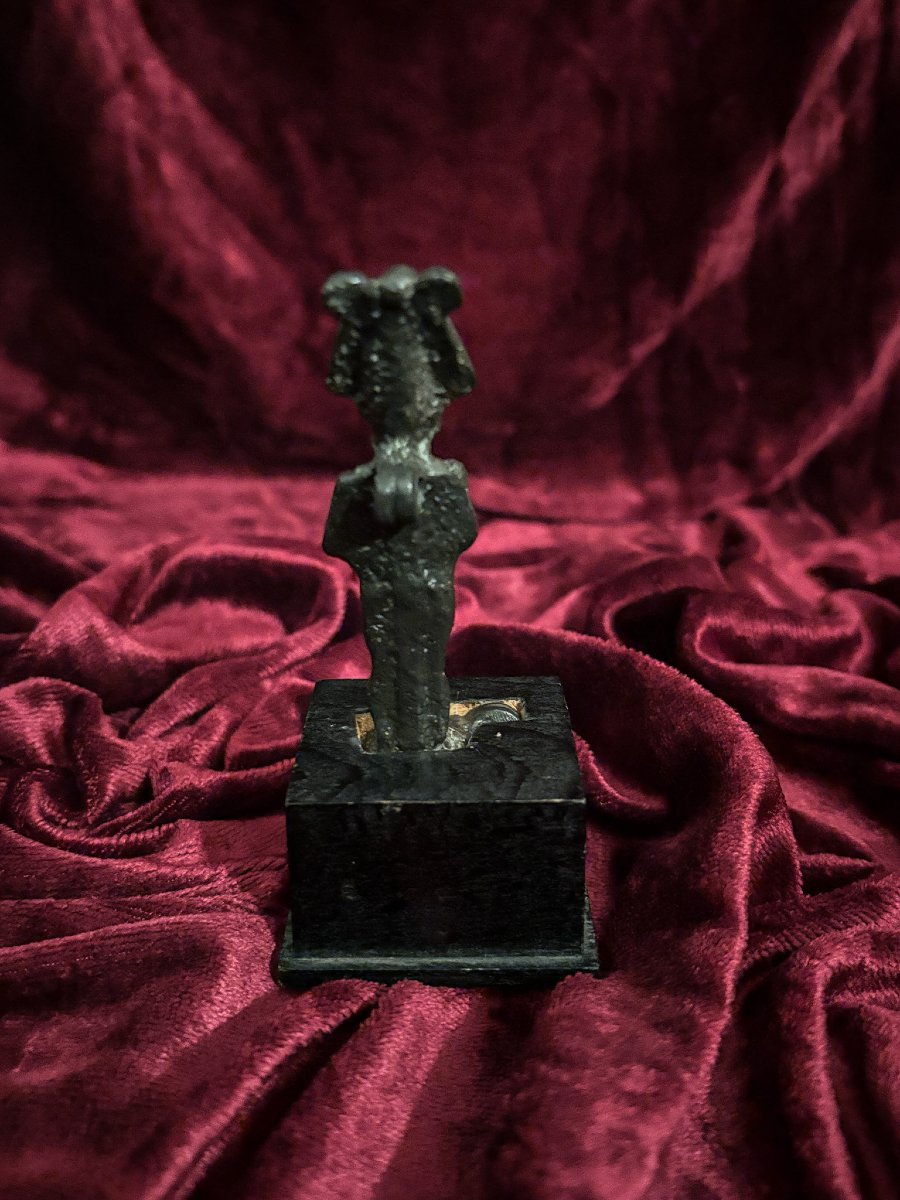
A charming small antique bronze statuette of the god Osiris (god of fertility and judge of the dead) with a brown patina. The deity is depicted standing, mummified, wearing the Atef crown flanked by the two feathers of the goddess Ma'at and adorned with the Uraeus on his forehead. His hands hold the traditional insignia of royal power, the Heka and the Nekhekh. The lower part and the back pillar are embellished with period suspension (or mounting) rings. Presented on a modern, custom-shaped, black-stained wooden base. Ancient Egypt, Late Period (circa 664-332 BC).
Height: 8 cm. Height with base: 10 cm. (Wear and traces of oxidation).
Provenance: Acquired by the previous owner at a public auction around 1990 and subsequently passed down through the family.
During the Late Period, these statuettes most often served as votive offerings. They were deposited by pilgrims in temples (such as those at Abydos or Memphis) to invoke the god's protection or ensure eternal life for the deceased. They could also serve a purely funerary function and be placed in tombs to accompany the mummy, thus helping it to identify with Osiris in order to overcome death and be reborn in the afterlife.
On some examples, the lateral or dorsal ring served to hold the statuette upright inside a funerary casket or on a larger support, sometimes alongside other deities (such as Isis and Horus) to form a triad. The presence of a "suspension ring" or "loop" is also documented on several similar pieces and, in some cases, allowed the statuette to be carried on one's person, suspended from a cord or chain.
The Musée Condé (Notice OA 1136) explicitly describes a similar example from the Late Period as having "a small quadrangular base with a lateral suspension ring" and specifies that "a second ring is located at the top of the dorsal pillar."
The Musée des Beaux-Arts de Lyon (Notice H 1513) also lists these objects under the technical term "Bélière," confirming their function as attachments for suspension.
Height: 8 cm. Height with base: 10 cm. (Wear and traces of oxidation).
Provenance: Acquired by the previous owner at a public auction around 1990 and subsequently passed down through the family.
During the Late Period, these statuettes most often served as votive offerings. They were deposited by pilgrims in temples (such as those at Abydos or Memphis) to invoke the god's protection or ensure eternal life for the deceased. They could also serve a purely funerary function and be placed in tombs to accompany the mummy, thus helping it to identify with Osiris in order to overcome death and be reborn in the afterlife.
On some examples, the lateral or dorsal ring served to hold the statuette upright inside a funerary casket or on a larger support, sometimes alongside other deities (such as Isis and Horus) to form a triad. The presence of a "suspension ring" or "loop" is also documented on several similar pieces and, in some cases, allowed the statuette to be carried on one's person, suspended from a cord or chain.
The Musée Condé (Notice OA 1136) explicitly describes a similar example from the Late Period as having "a small quadrangular base with a lateral suspension ring" and specifies that "a second ring is located at the top of the dorsal pillar."
The Musée des Beaux-Arts de Lyon (Notice H 1513) also lists these objects under the technical term "Bélière," confirming their function as attachments for suspension.
470 €
Period: Before 16th century
Style: Other Style
Condition: Good condition
Material: Bronze
Height: 8 cm
Reference (ID): 1722379
Availability: In stock
Print