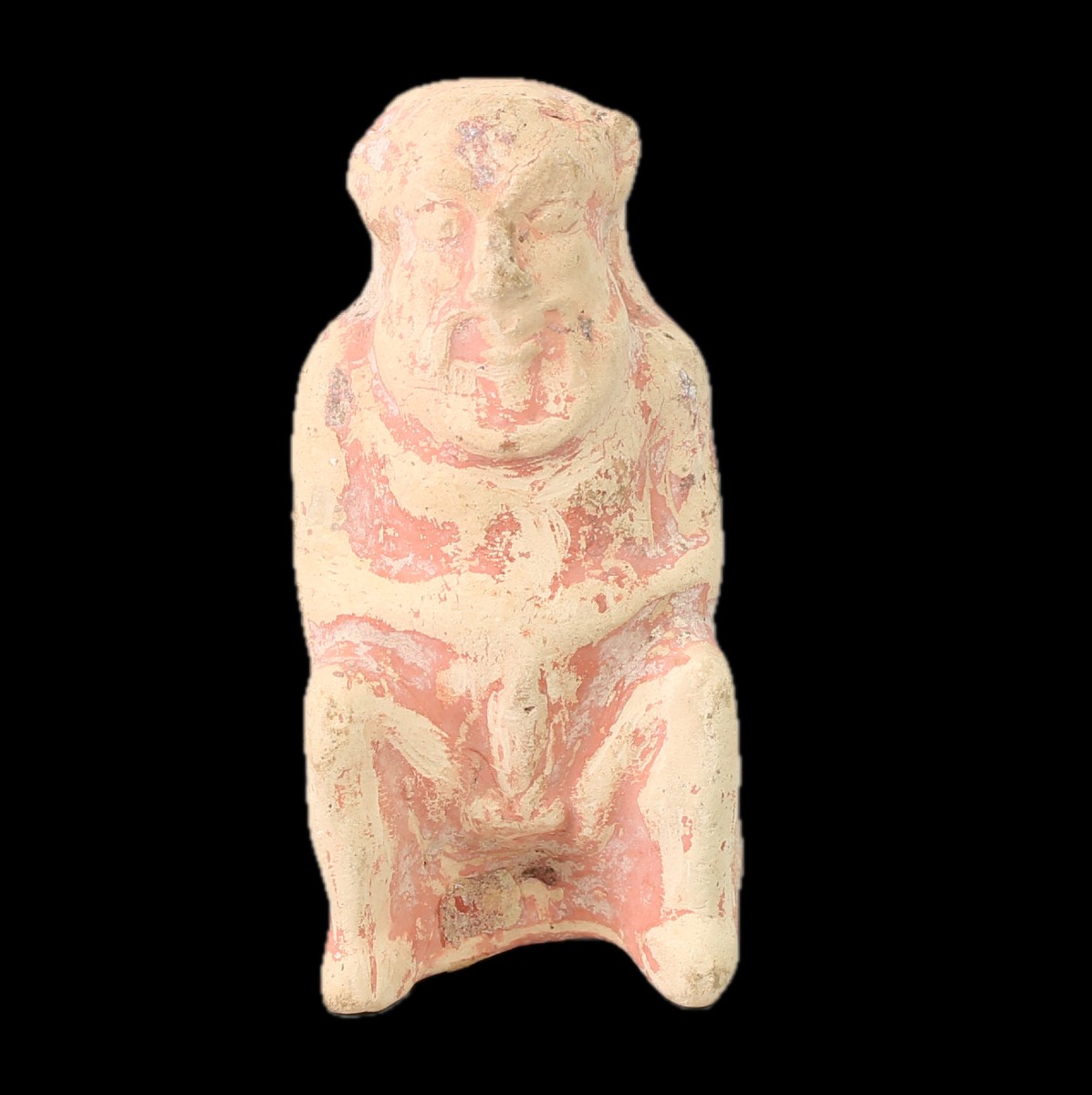
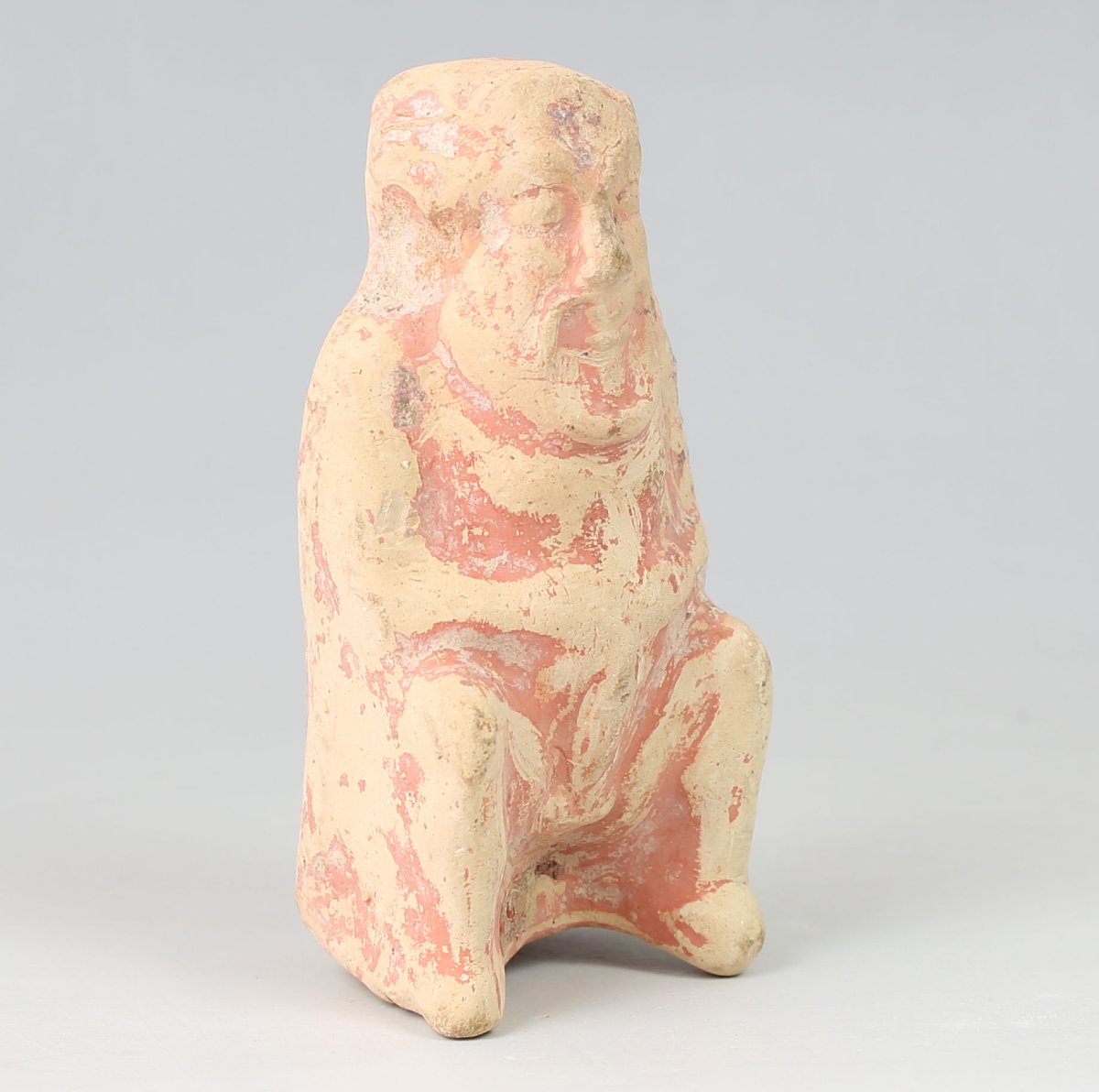
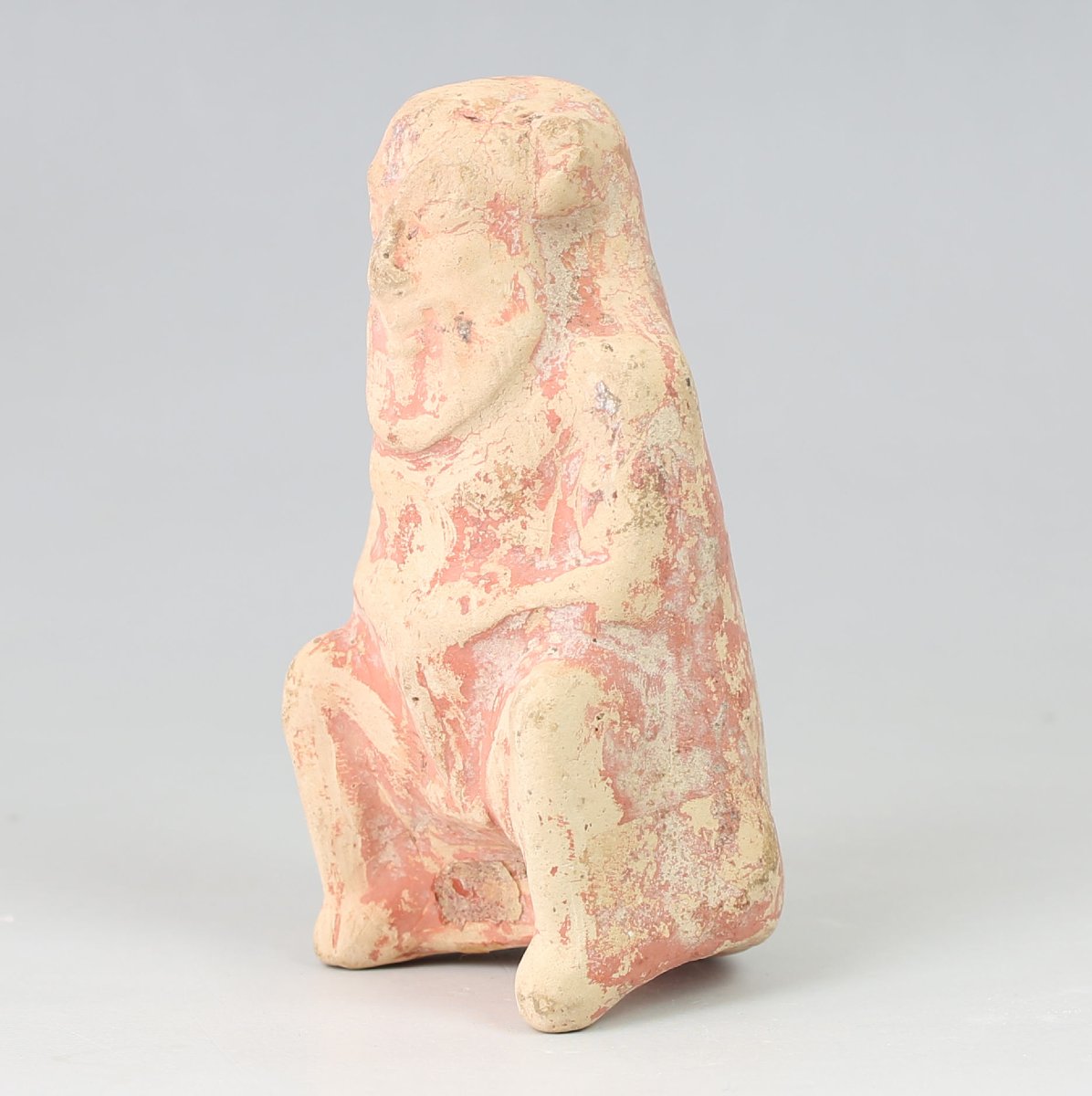


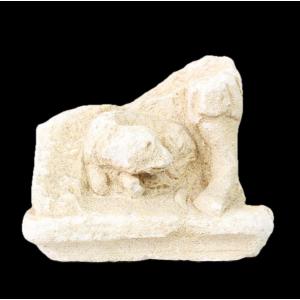
A rare Greek terracotta figurine depicting Silenus, the mythical companion of Dionysus, portrayed in a squatting position typical of the comic and Dionysian imagery of the 5th century BC. The god, shown nude and ithyphallic, displays a compact torso, a broad face, a short nose, and a subtly outlined mouth. His characteristic small beard and sagging cheeks, modeled in soft relief, express both humor and vitality.
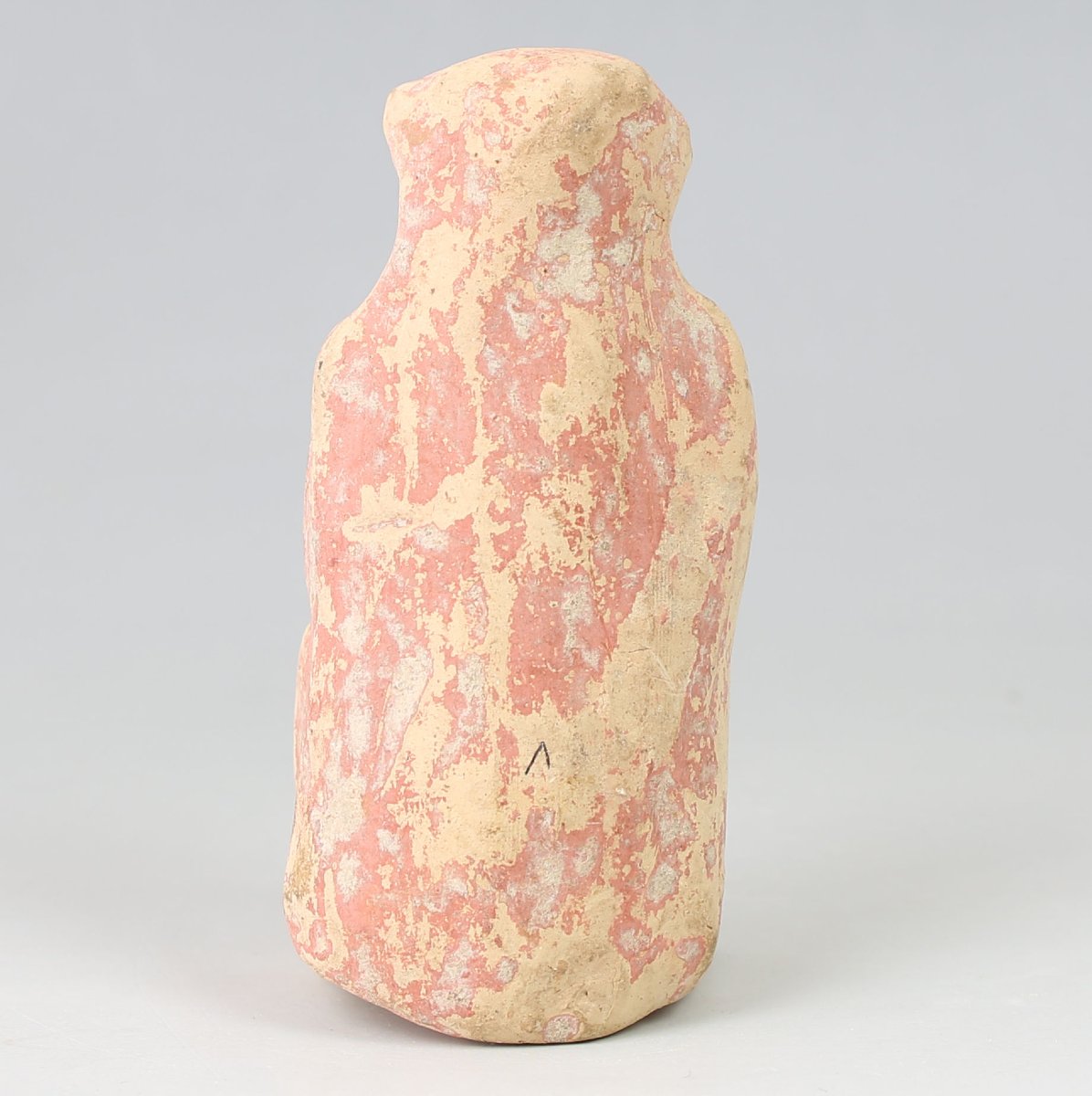
The surface, once covered with a cream slip, now reveals the red-brick clay with delicate pinkish hues, producing a subtle material vibration highly prized by collectors. Examination of all four sides shows finger and tool modeling, minute ancient chips, a vent hole beneath the base (a standard firing technique), and a patina blending ochre and beige, slightly abraded and showing traces of ancient burial.
Entirely authentic and unrestored, the piece demonstrates stylistic and material coherence, characteristic of classical Greek coroplastic art.
Object: Figurine of seated, ithyphallic Silenus
Culture: Greek
Period: 5th century BC
Material: Red terracotta with cream slip and traces of pinkish polychromy
Dimensions: 80 × 35 × 40 mm
Condition: Excellent for its age; ancient surface wear, small chips, stable patina; no visible restoration
Provenance: Former French private collection, acquired between 1970 and 1985
Authenticity: Certificate of authenticity provided
Silenus (Silenos), companion and tutor of Dionysus, embodies the joy of intoxication, fertility, and the paradoxical wisdom born of excess. In Classical Greece, he symbolizes sacred laughter and earthly vitality, celebrated in banquets, festivals, and theatrical rituals.
His effigy, both comic and apotropaic, was common in domestic shrines, rural sanctuaries, and Dionysian processions, where it served as a protective and fertile charm. The squatting and ithyphallic motif belongs to this popular repertoire at the crossroads of religious devotion and theatrical parody, expressing the Greeks’ deep connection between humor and the sacred.
Typology: Small domestic or votive figure; squatting pose with hands resting on thighs; marked ithyphallic attribute — a Dionysian code.
Modeling: Rounded forms, prominent belly and cheeks, expressive though simplified face; knees forming the natural base of the posture.
Polychromy: Residual cream slip with coral-pink tones preserved in recesses — excellent witness to ancient coloration.
Technique: Molded and hand-finished; vent hole under the seat to allow even firing; fine grain, homogeneous clay, well-controlled oxidation.
Surface: Patina combining ochre and beige; minor abrasions, surface oxidation, and traces of burial — all positive markers of antiquity.
Integrity: No restoration, no glued sections; small peripheral chips consistent with age.
This small Greek coroplastic figure encapsulates the spirit of Dionysus — humor, vitality, and fecund protection. Its surviving polychromy, expressive pose, and lively modeling make it a key document of 5th-century Greek figurative art, bridging the domains of theatre, religion, and daily life.
It serves as a didactic example for the study of comic iconography, Dionysian ritual, and ancient sculpture, while retaining a captivating and authentic presence, ideally suited for a collection devoted to Greek art and the classical world.
Documented provenance: Former French private collection (1970–1985)
Authenticity: Named certificate with full descriptive report and photographic documentation
Condition: Structurally sound, unrestored, bearing all archaeological markers of authenticity
This seated Silenus figurine perfectly illustrates the fusion of myth, humor, and sacred meaning in 5th-century Greece — a rare and evocative witness to the ritual and artistic coroplastic tradition of the ancient world.











 Le Magazine de PROANTIC
 TRÉSORS Magazine
 Rivista Artiquariato