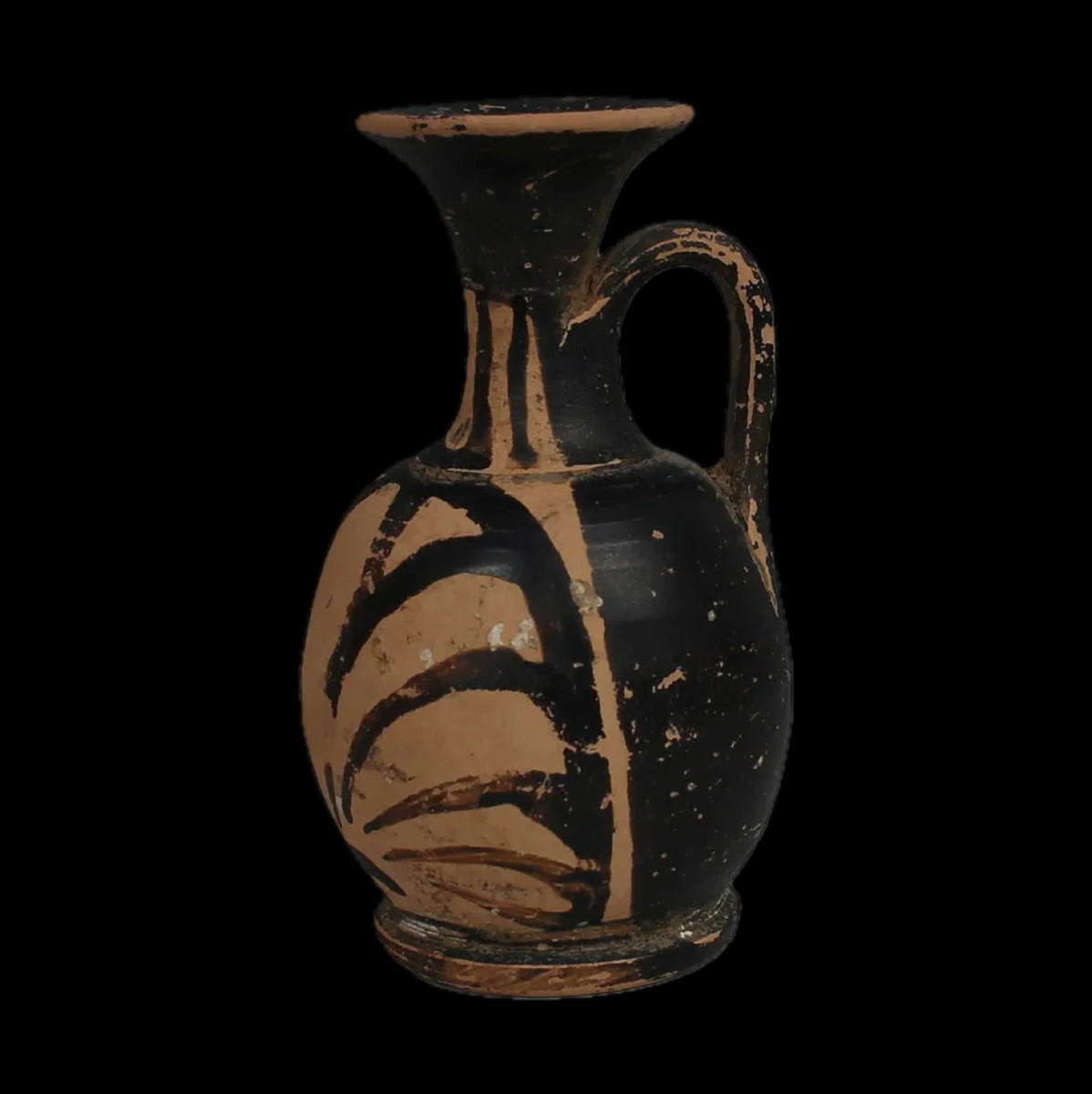
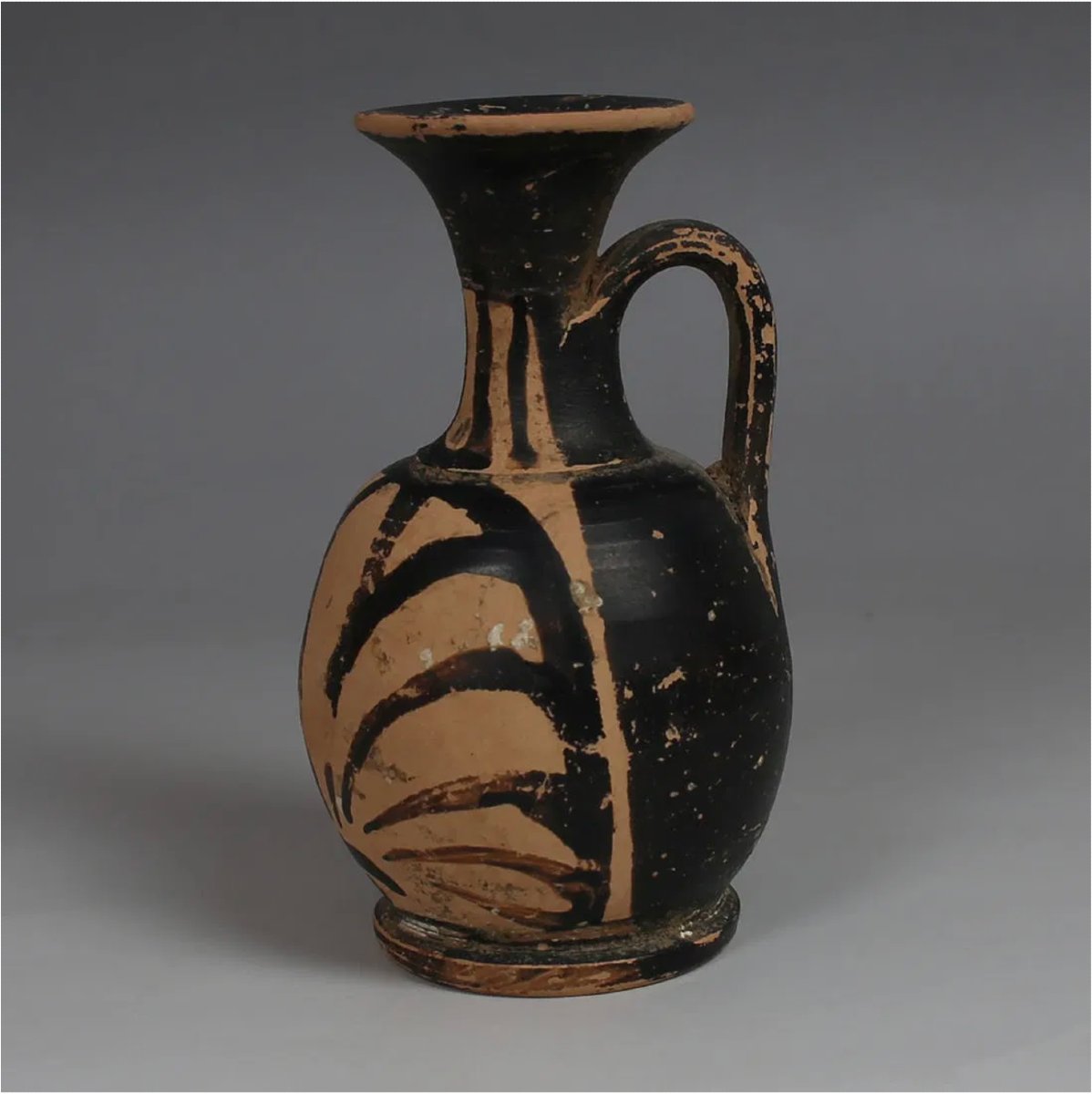
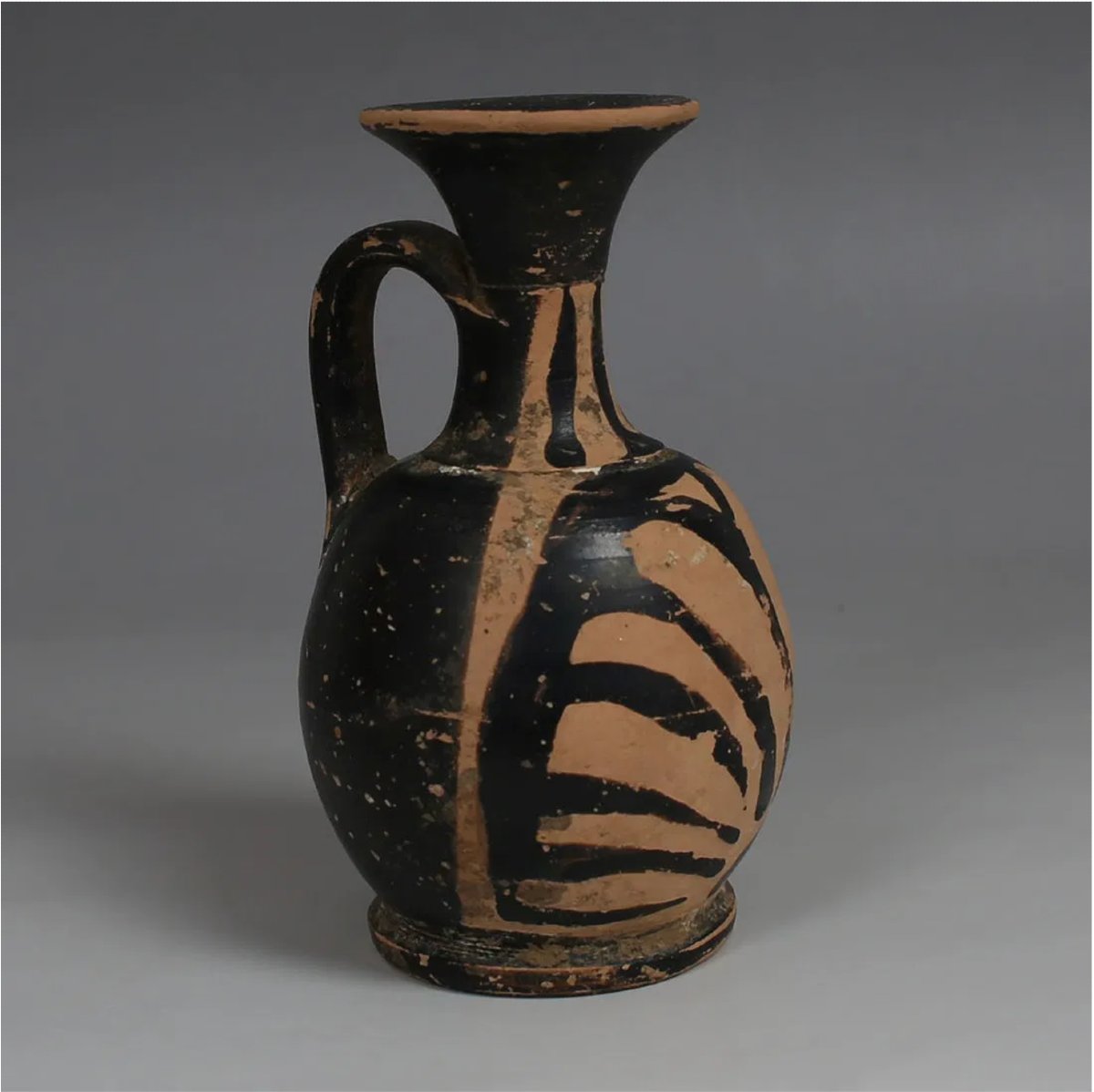
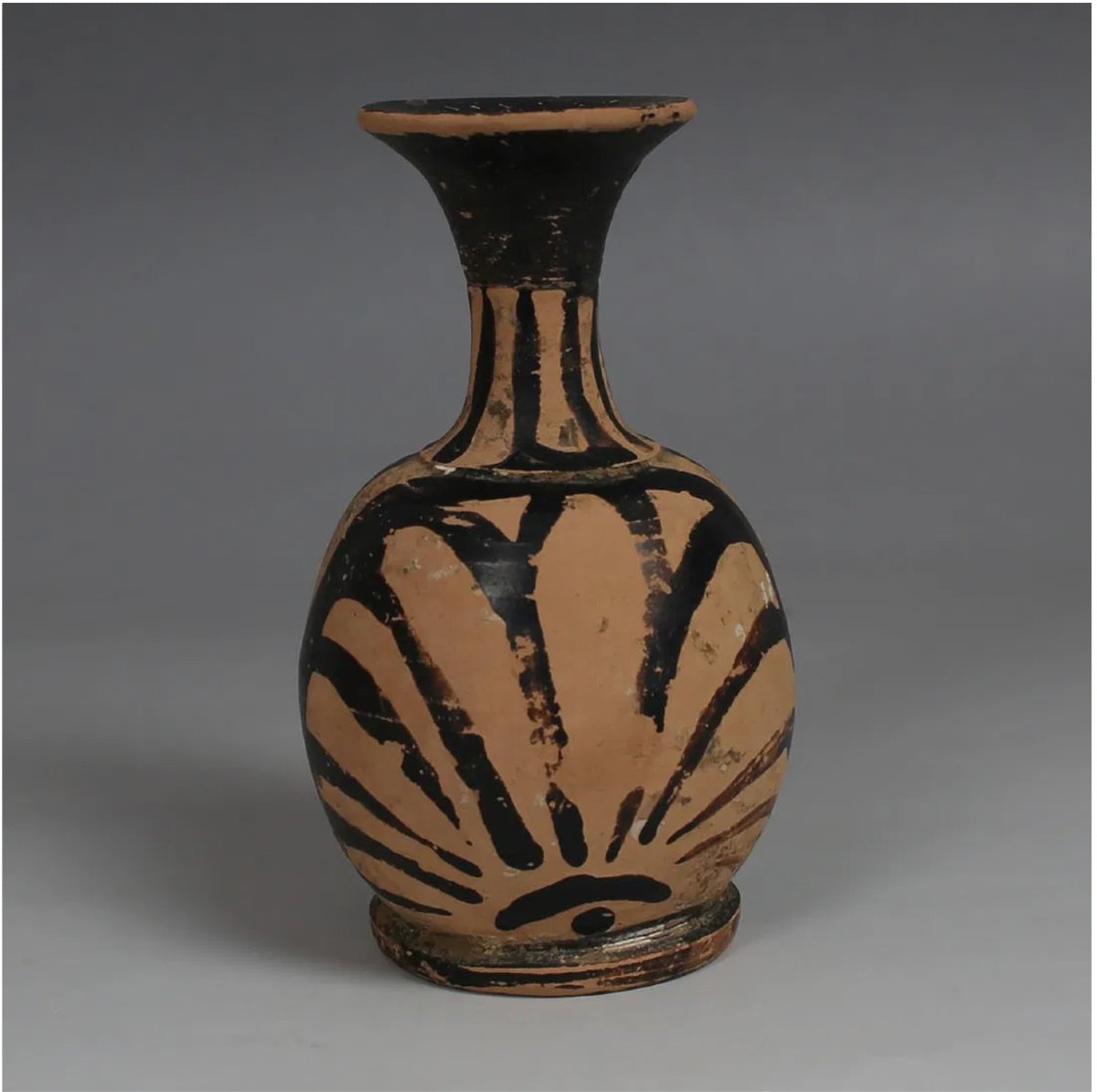


Fine, compact Greek lekythos in ceramic, decorated with large radiating palmettes painted in black on an orange slip, stylistically dated to the 4th century BC. The vessel displays a harmonious profile, a very readable decoration despite the ancient wear of the glaze, and a consistent earthen patina attesting to a long burial period. The piece is complete and stable, showing only minor surface wear and a few small ancient chips fully consistent with age and contributing to its authentic character.
CharacteristicsObject: Compact lekythos with palmette decoration
Material: Ceramic, black glaze on orange slip
Culture: Greek
Period: 4th century BC
Dimensions: approx. 90 mm (h) × 53 mm (diam.)
Condition: Good overall condition – patinated surface, glaze wear, small ancient chips on rim and foot
Provenance: Former German private collection (early 2000s), previously acquired through an online European antiquities auction
Certificate: Supplied with certificate of authenticity
Lekythoi are the quintessential oil flasks of the Greek classical world. Intended for perfumed oils or olive oil used for grooming and bathing, they played a role in both everyday life (gymnasium, baths, personal care) and funerary ritual, where they were placed as offerings to honor the deceased.
The compact, globular variant appears from the 5th–4th centuries BC, with a rounded body, marked foot and narrow neck designed for controlled pouring. Their manageable size made them ideal for personal use as well as burial deposits, where only a few drops of oil were needed for the ritual gesture.
The palmette motif, rendered as large radiating fans, is emblematic of classical ceramic design: elegant, balanced, and timeless, it explains why such vases remain highly sought after by collectors.
Formal & Material AnalysisProfile & proportions:
Ovoid, well-balanced body resting on a small annular foot; slender neck expanding into a wide, horizontally flared rim. A single vertical handle links the shoulder to the upper neck, rounded in section and carefully shaped.
Decoration:
A large stylised palmette occupies the entire body, painted in black glaze with wide, flowing strokes. The radiating “leaves” create a decorative sunburst effect typical of classical pottery. The neck is adorned with vertical black bands visually extending the palmette upward.
Surface & patina:
Black glaze softened by age, micro-wear, slight abrasions on the shoulder, belly and rim. Fine concretions, scattered sediment deposits and a consistent archaeological patina.
Ancient alterations:
Small chips on the rim and foot, slight glaze losses on the handle. No structural damage; all wear is ancient and discreet.
Integrity:
No visible breaks, no reassembly, no repainting. The lekythos is preserved in a single piece — noteworthy for a ceramic of this period.
This lekythos combines several qualities highly appreciated in Greek antiquities:
– an authentic archaeological object attesting to the concrete use of oil in classical Greece,
– a vessel linked to both domestic care and funerary ritual,
– a strongly decorative piece: the radiating palmette gives the body a dynamic, timeless design that suits modern interiors as well as curated displays.
A visually striking vase, ideal for a showcase, for dialogue with other Greek ceramics, or as a standalone piece mounted on a base.
Provenance & GuaranteesFrom a German private collection assembled in the early 2000s, with earlier acquisition through a European antiquities auction. The provenance is clear, coherent, and aligned with typical collecting histories predating recent regulatory tightening.
The lekythos will be delivered with a certificate of authenticity detailing its description, date, culture, material and known provenance.
Expert ReportThe attribution to a compact Greek lekythos of the 4th century BC is supported by multiple defining features:
– compact globular form,
– annular foot,
– narrow neck with flared rim,
– single vertical handle,
– large palmettes in black glaze on reserved ground.
The fine beige-orange clay, naturally worn black glaze, and archaeological patina correspond fully to classical Greek production. The observed alterations (uneven glaze wear, ancient abrasions, sediment patina) reflect genuine age rather than artificial ageing. No signs of modern manufacture or restoration were detected.
In summary, this is an authentic, well-typed Greek vase, aesthetically appealing and supported by coherent provenance — an excellent acquisition for both new and advanced collectors seeking a classical ceramic of refined quality.












 Le Magazine de PROANTIC
 TRÉSORS Magazine
 Rivista Artiquariato