Bust, Greco-roman Period, Mediterranean Basin, 100 To 300 Bc.
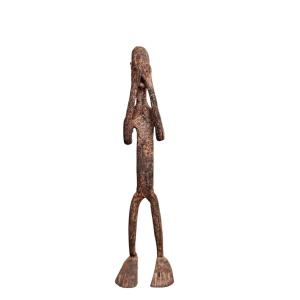
A grotesque bust depicting an emaciated figure with clasped hands raised against the upper torso. The ribcage is rendered in high relief, with prominent ribs that accentuate the extreme thinness of the body. The slightly rounded belly creates an expressive contrast typical of these figures, where disproportion and bodily exaggeration play both an aesthetic and symbolic role. The elongated shoulders and abrupt modeling reinforce the figure's singular dynamism. Beige-orange terracotta, with some small chips, losses, and signs of age (see photos). Greco-Roman period, Mediterranean basin, 100–300 BC. Dimensions: 9 × 6.4 cm; height 11.2 cm with base. Provenance: former Tessier & Sarrou sale, Drouot, Paris. In the Greco-Roman world, terracotta "grotesques" formed a distinct category: gaunt bodies, taut bellies, dramatic or exaggerated poses, inspired by popular theater, satire, and the representation of social marginality. These figurines, widely circulated during the Hellenistic and Roman periods, could serve apotropaic, humorous, or votive purposes, and sometimes appear in sanctuaries dedicated to health or healing. The accentuated modeling of the torso, the posture of the clasped hands, and the deliberate dissonance between gauntness and bodily tension place this example within the tradition of Mediterranean grotesques, demonstrating an aesthetic of expressiveness pushed to the extreme and rarely preserved with such character. Sold with a certificate of authenticity from the expert Serge Reynes and an invoice.* Shipping costs upon request.
320 €
Period: Before 16th century
Style: Rome and Antic Greece
Condition: Condition of use
Material: Terracotta
Width: 6,4 cm
Height: 11,2 cm
Reference (ID): 1654936
Availability: In stock
Print