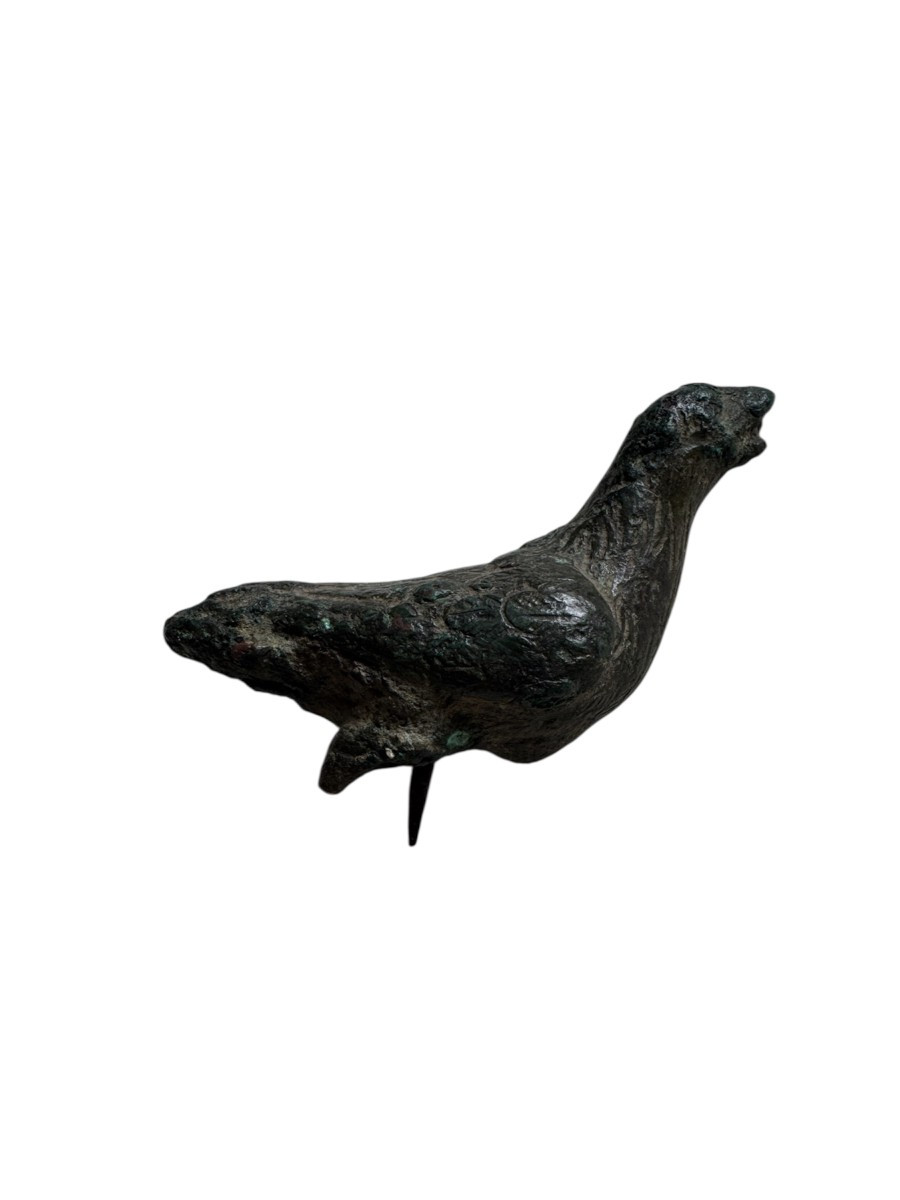
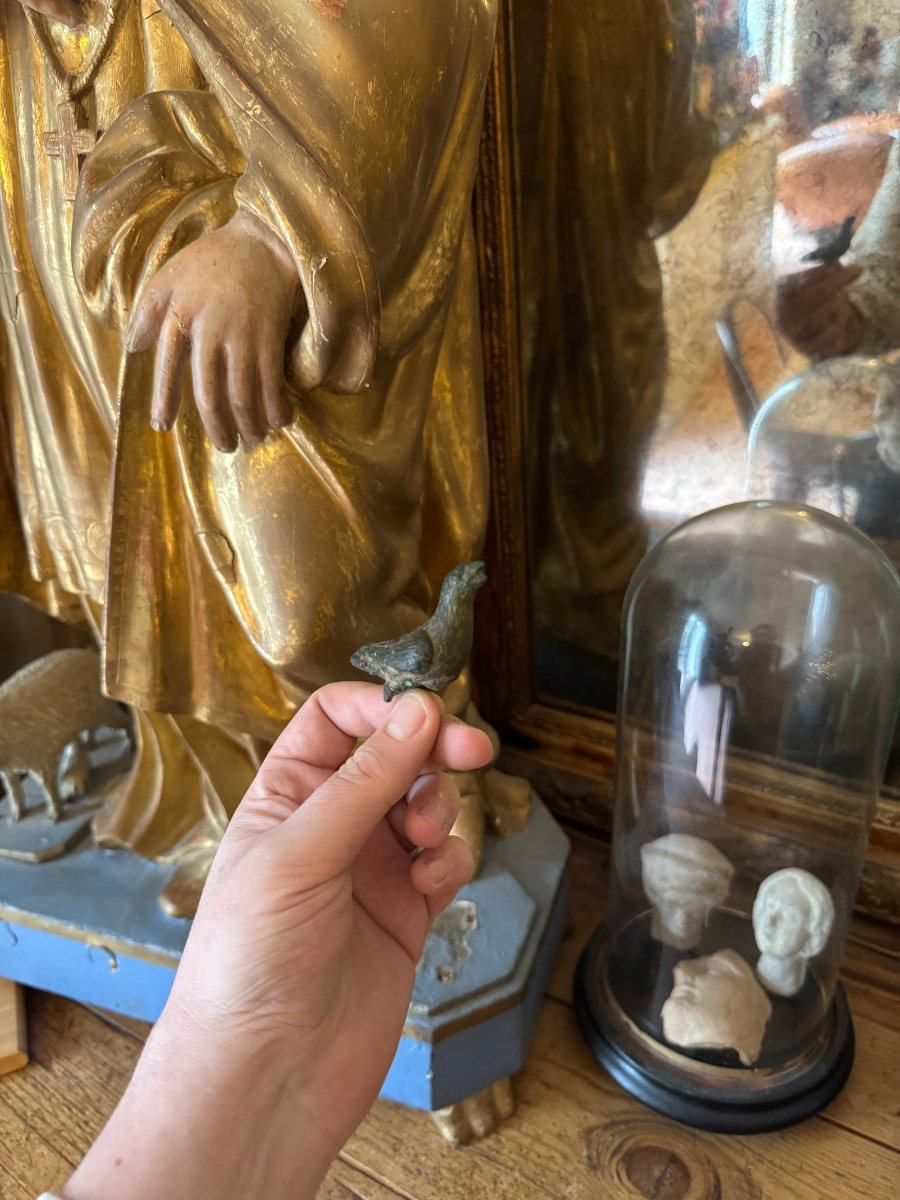
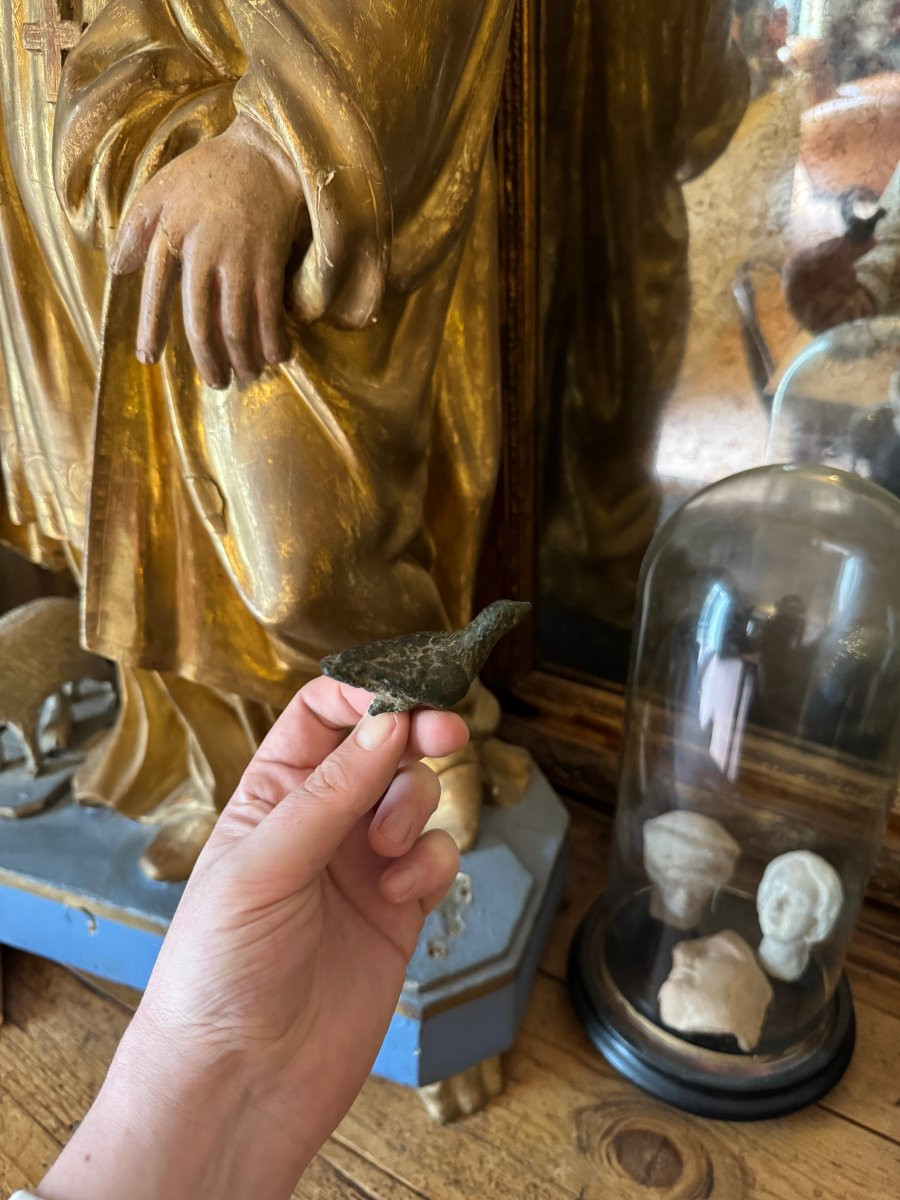
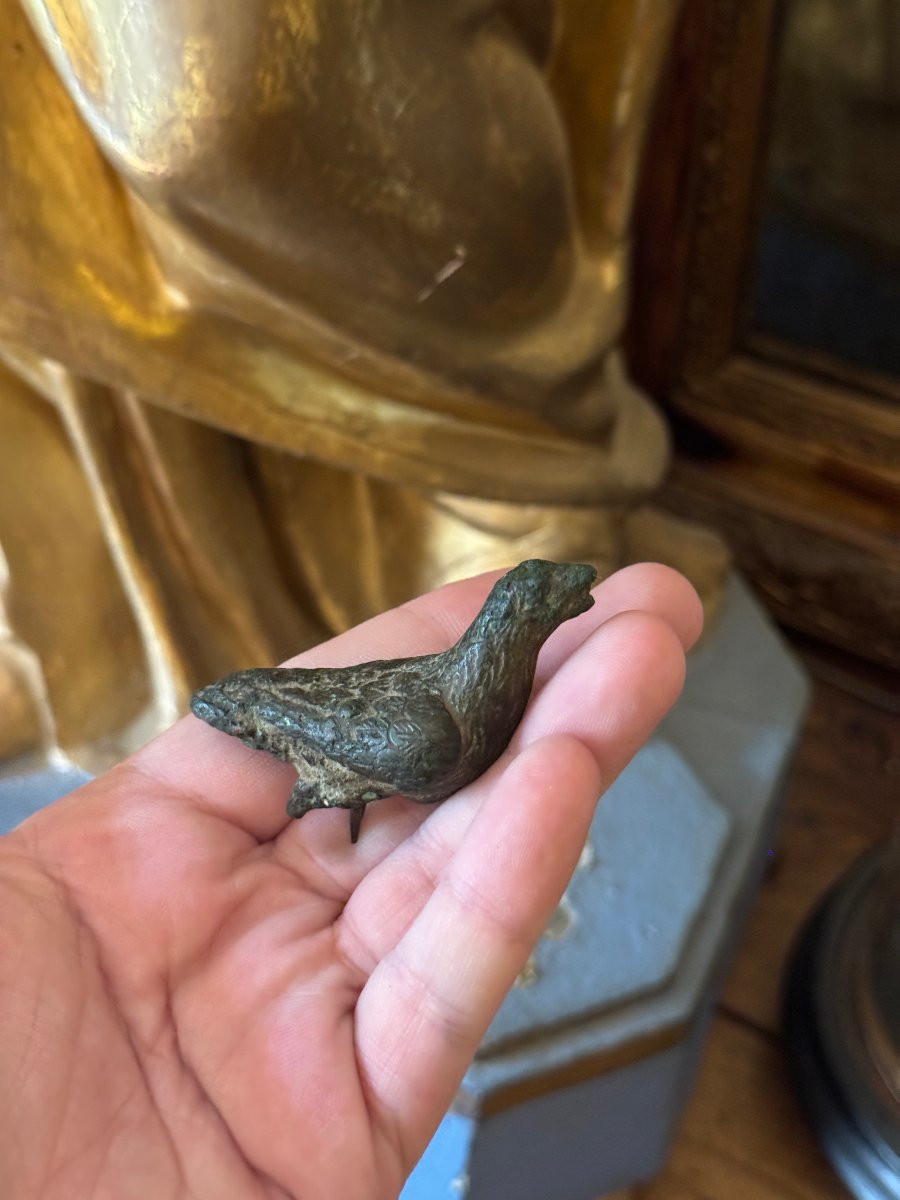
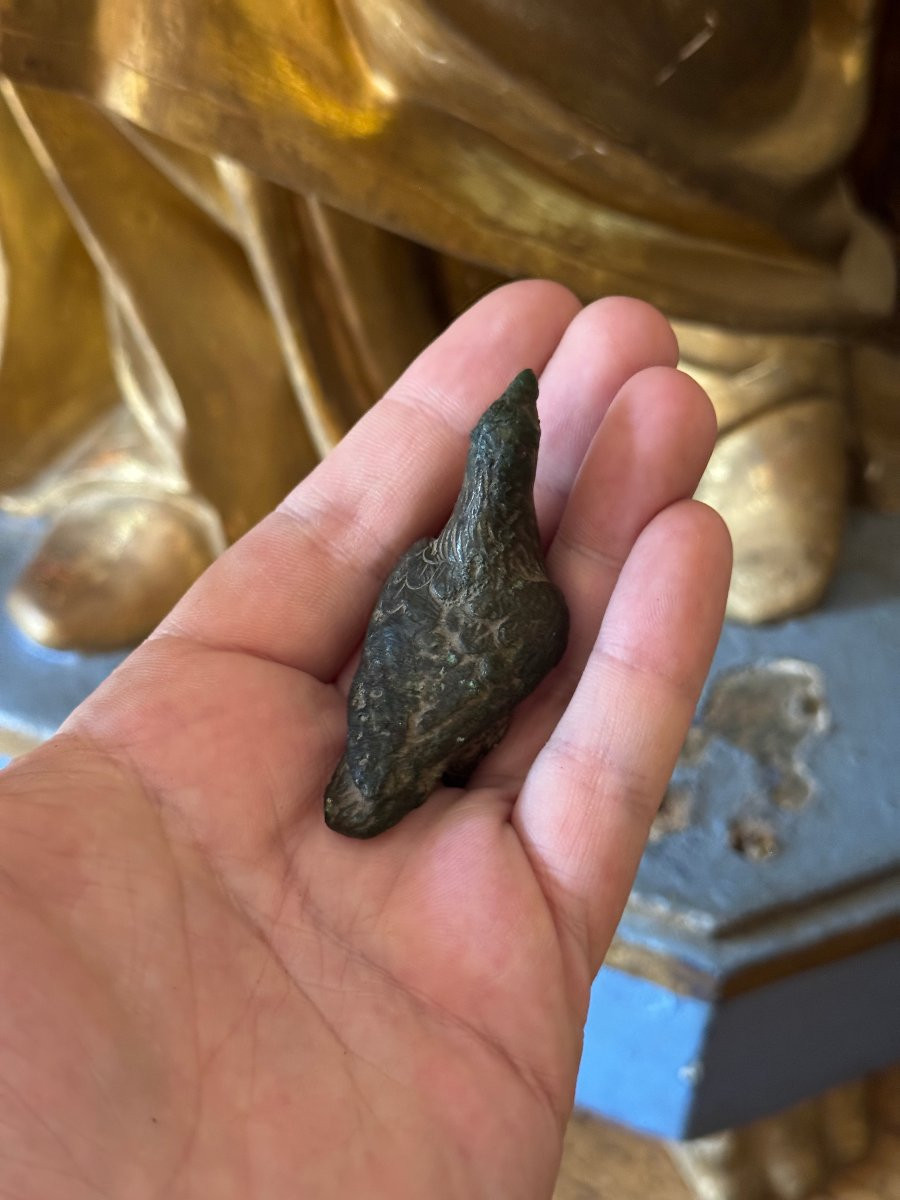
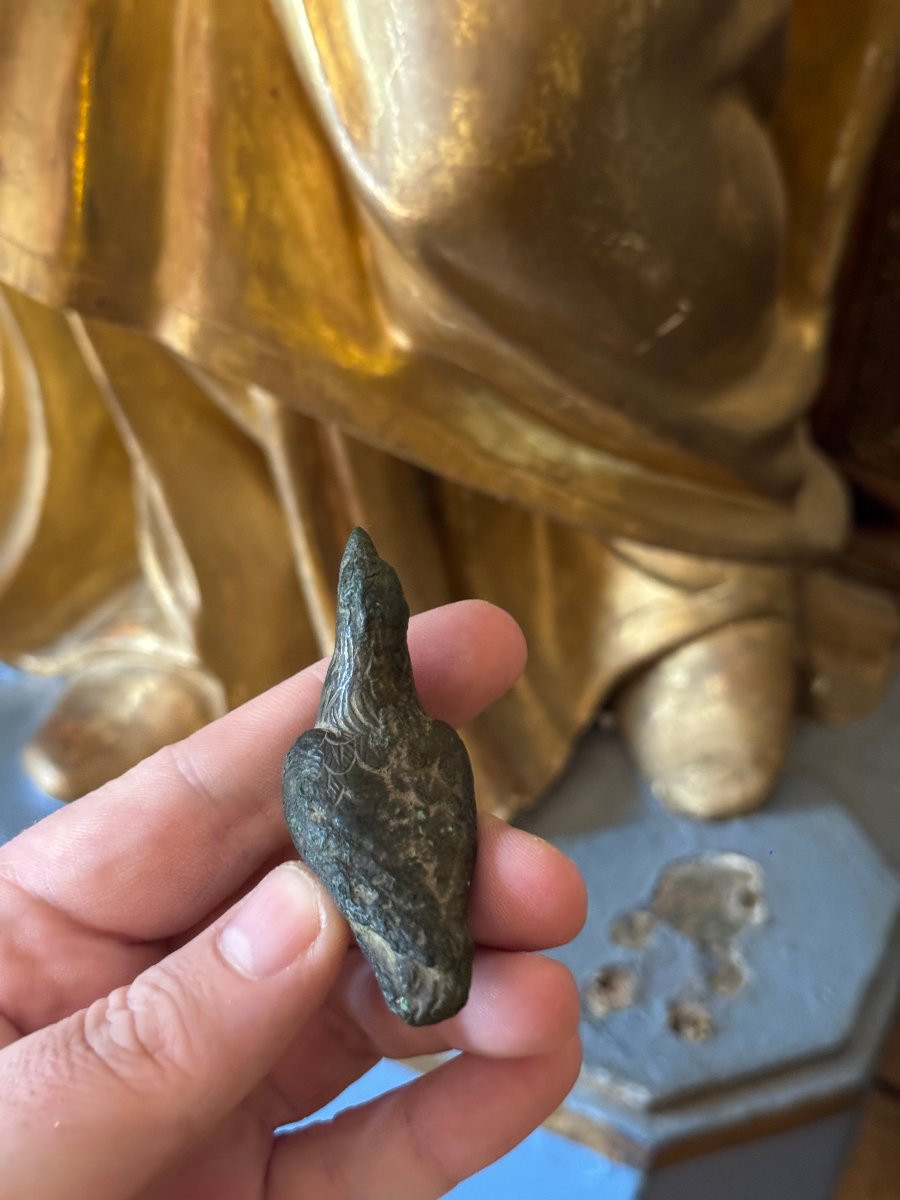
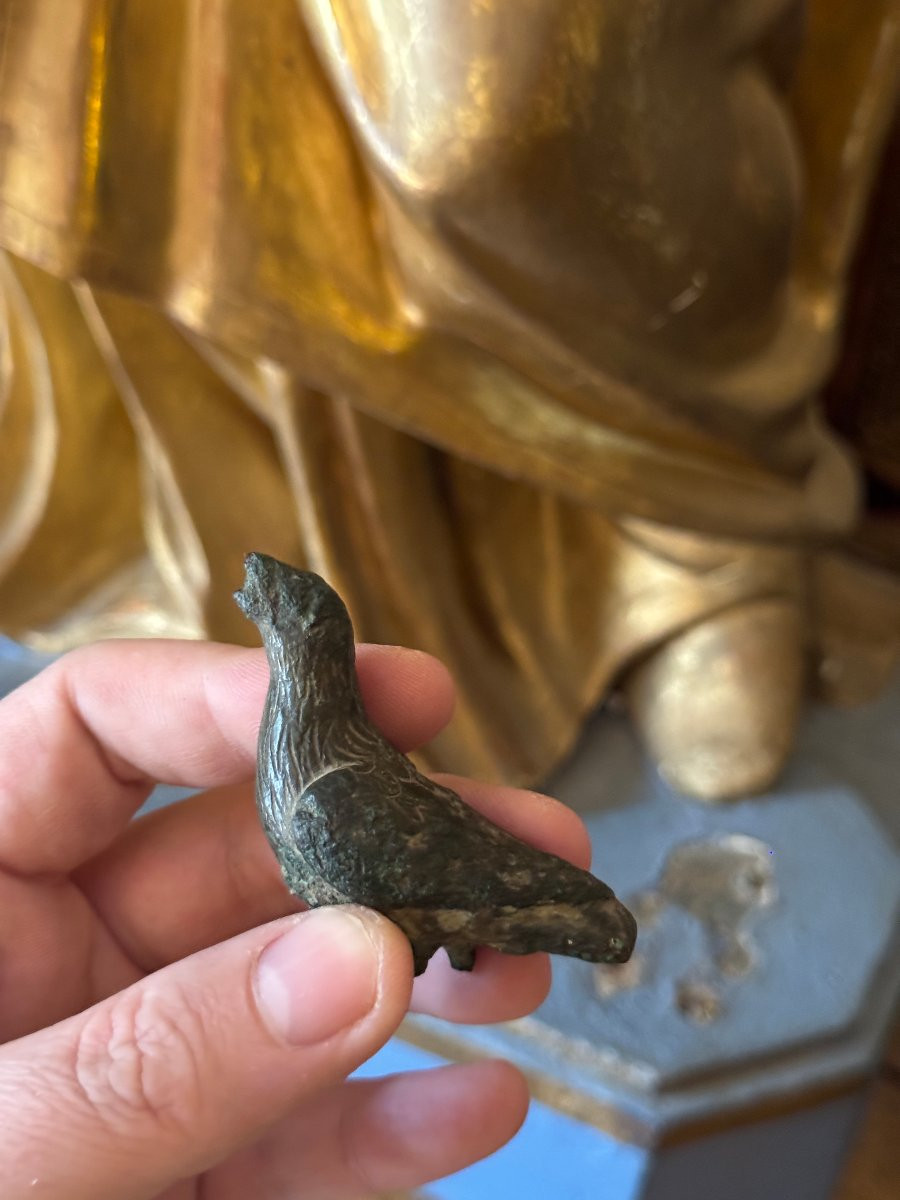
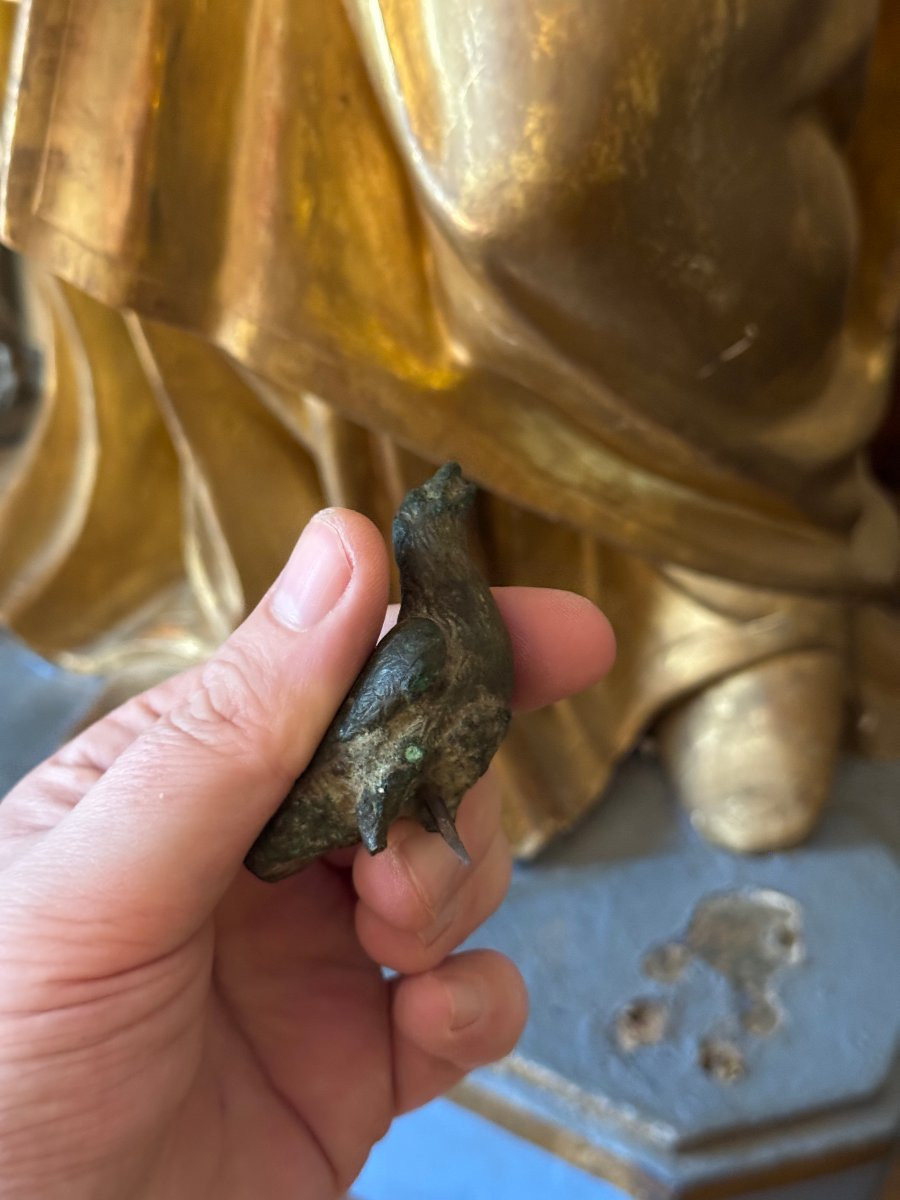
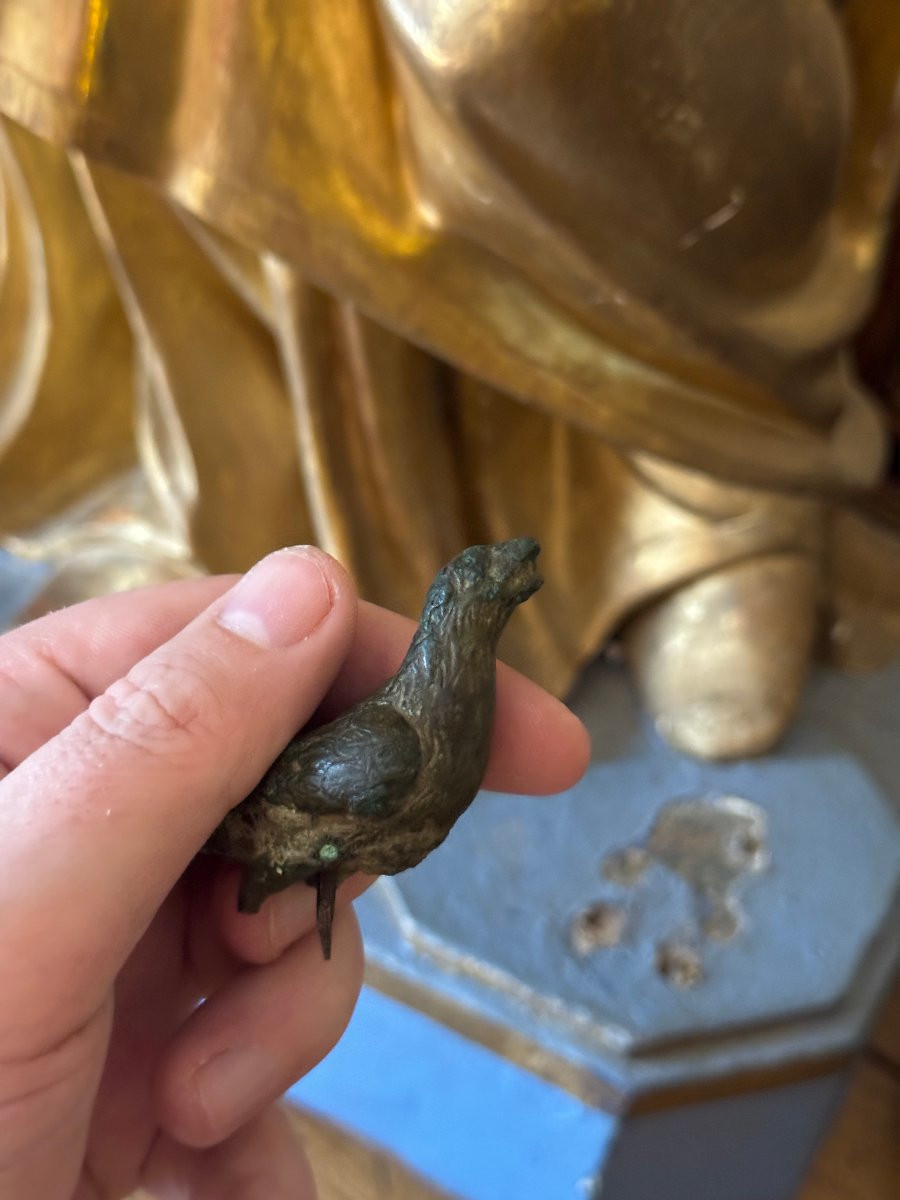
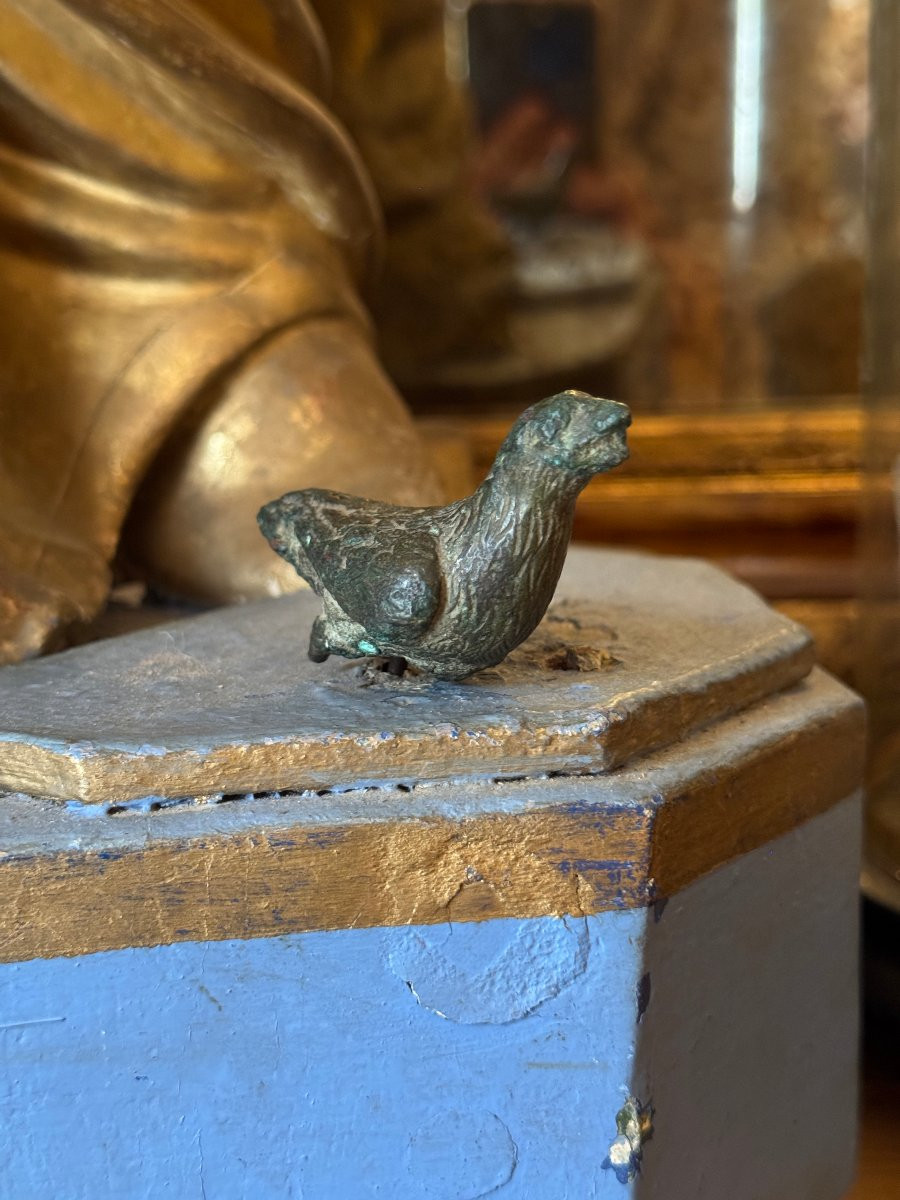
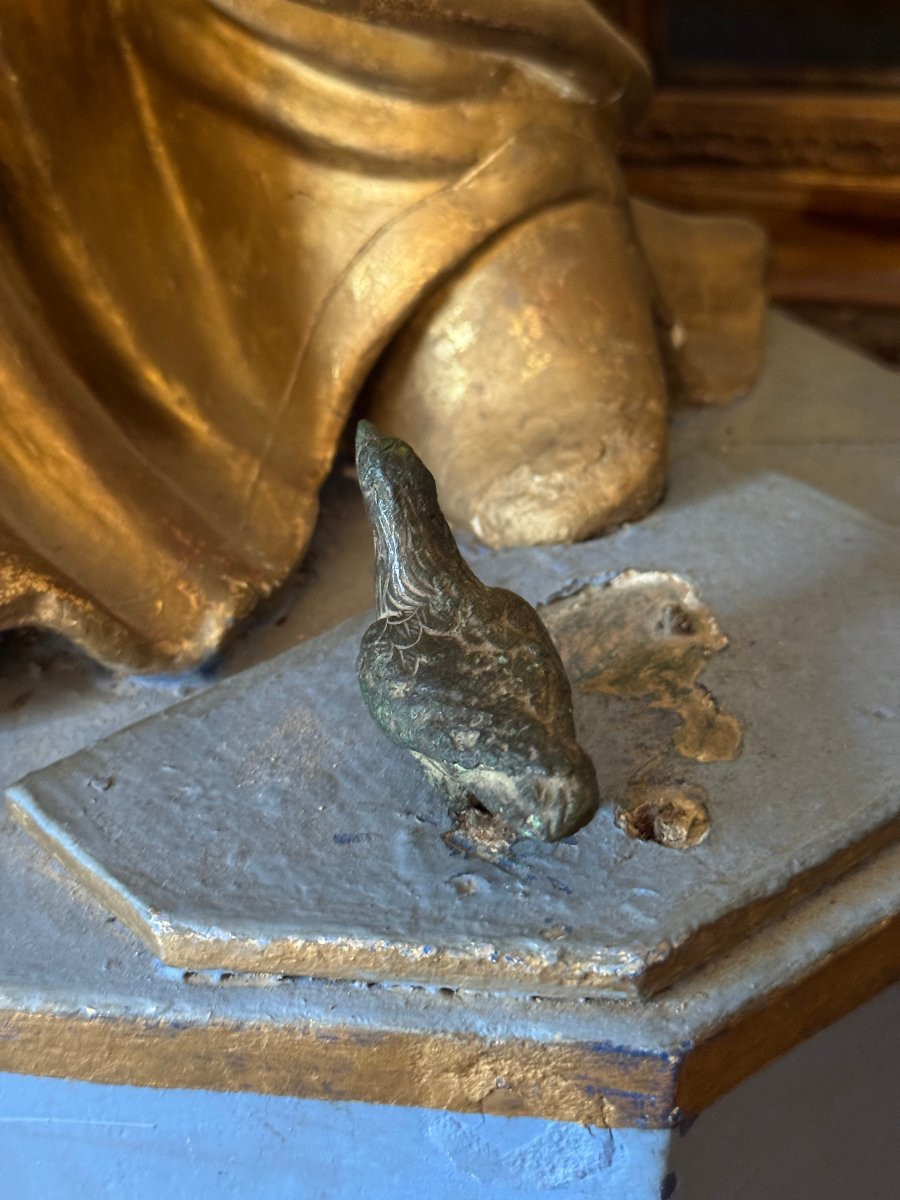
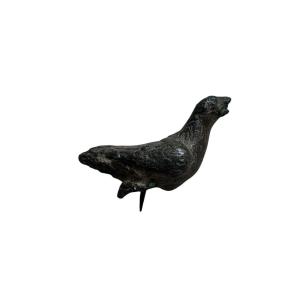


"Artifact – Antiquity – Bronze Eagle Statuette – Roman Empire – Archaeology – Bronze"
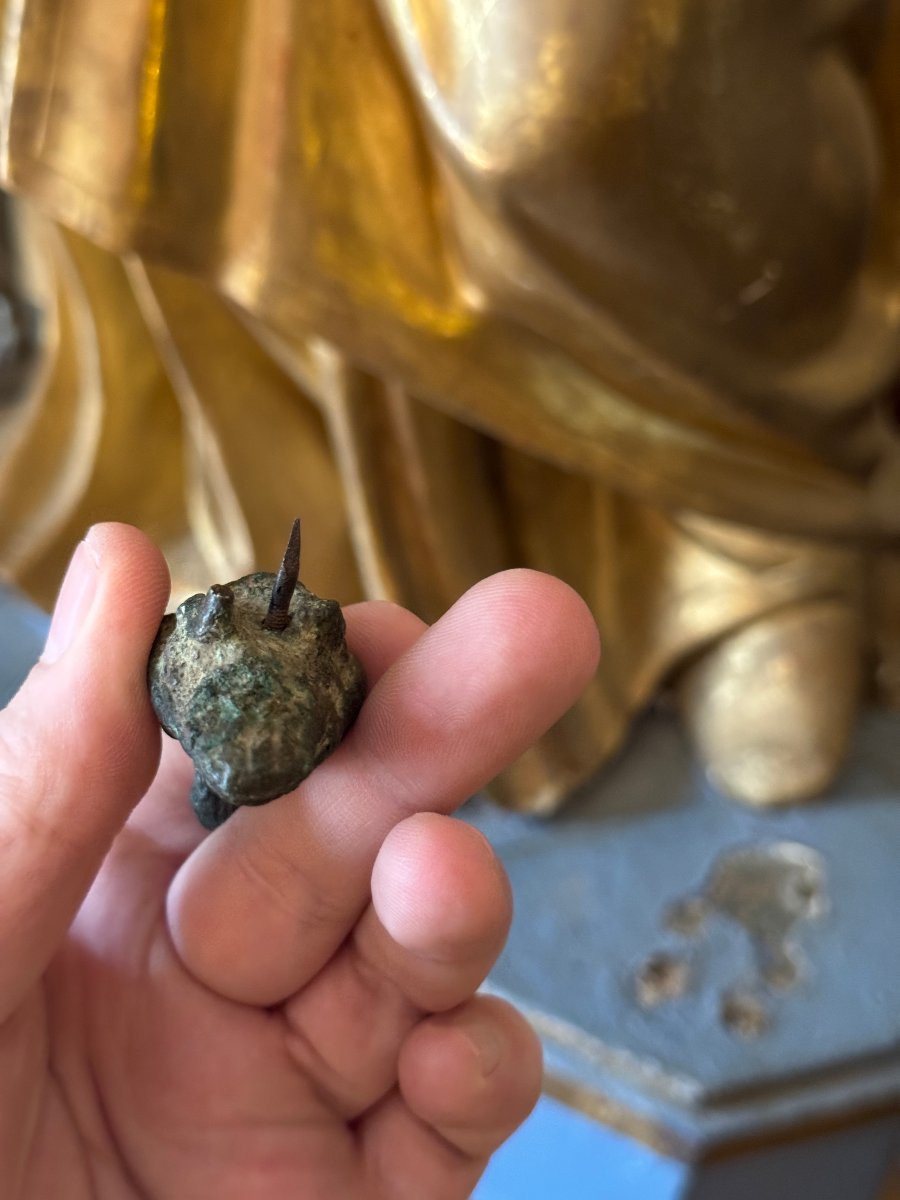
Period: 1st – 3rd century AD. Origin: Provincial Roman world. Provenance: Former private collection in southern France, by inheritance, acquired before 1970. Small antique statuette depicting an eagle, shown standing with its neck slightly raised, in a posture of vigilance and restrained power. The execution is simplified yet highly expressive, characteristic of provincial Roman Empire productions. The breast is rounded, the back taut, the beak prominent, and the wings are indicated by vigorous modeling. The surface displays a beautiful dark green archaeological patina with brownish hues, with localized ancient concretions, perfectly consistent with prolonged immersion in a soil context. The plumage decoration, although stylized, remains legible, particularly on the neck and back. Beneath the body remain the vestiges of an old iron tenon, indicating that this eagle was originally mounted on a support, probably a small pedestal, a piece of furniture, a votive offering, a decorative sign, or a cultic or symbolic device. Description: Material: antique bronze Form: standing eagle, sculpture in the round Decoration: stylized plumage, relief work on the neck and breast Surface: dark green archaeological patina, concretions, old oxidations Technical traces: antique casting, slight surface repair, remains of an old iron tenon Use: In the Roman world, the eagle was a major symbol of Jupiter, but also the emblem of imperial power, victory, and the legions. This type of small bronze could have been used for private votive offerings, domestic decoration, or for symbolic or protective purposes. It is an object at the intersection of worship, power, and protection, typical of the Roman imperial imagination. Condition: Signs of old wear, stable archaeological patina, concretions, original mounting system preserved, no modern restoration, some legs missing. Dimensions: Length: 6 cm Height: 5 cm All deliveries are made via DHL Express only. 







 Le Magazine de PROANTIC
 TRÉSORS Magazine
 Rivista Artiquariato