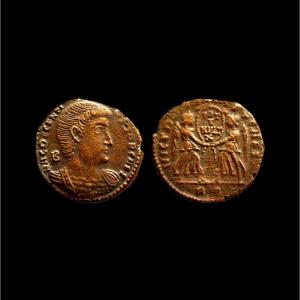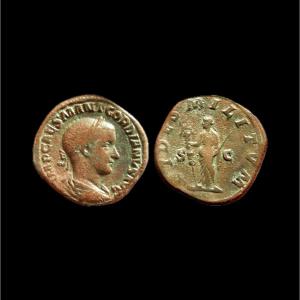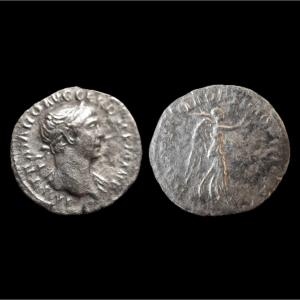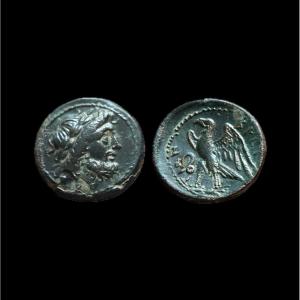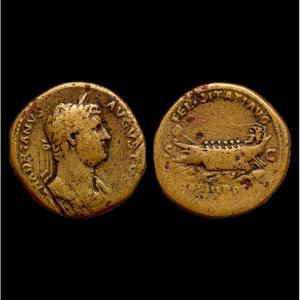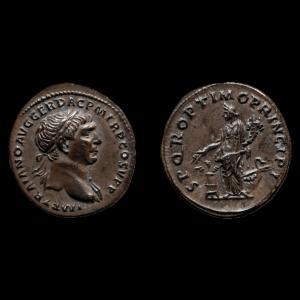


Septimius Severus Denarius “sacrificing Genius” — Certificate Of Authenticity
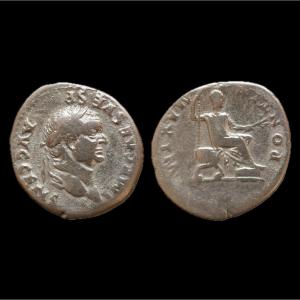
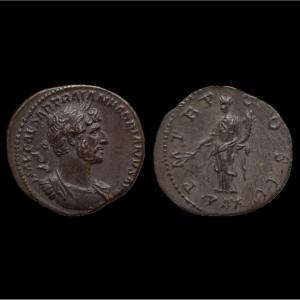
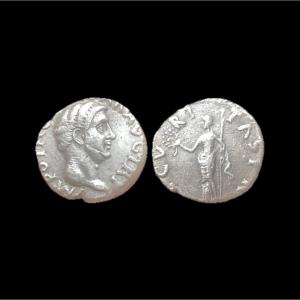
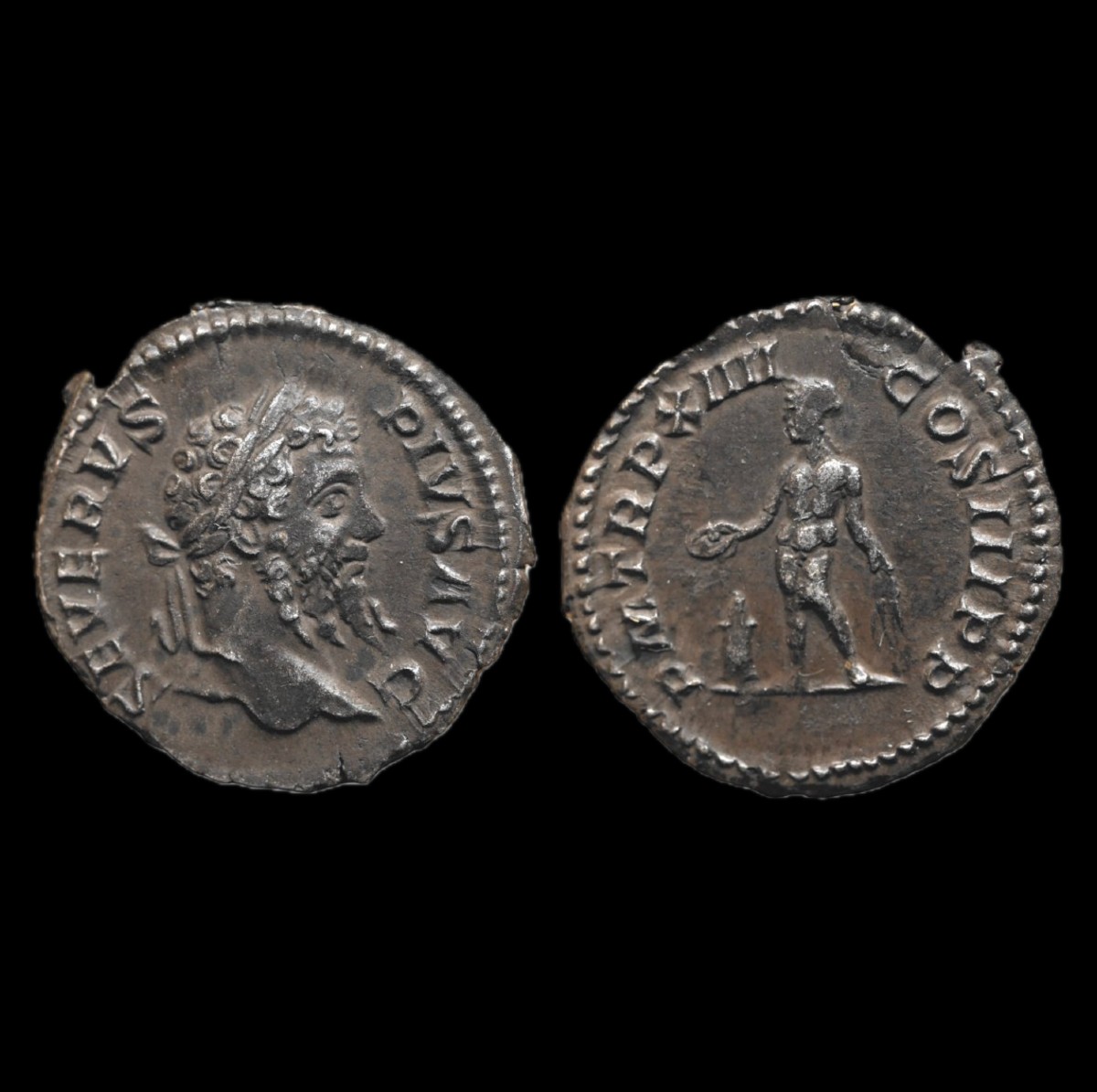
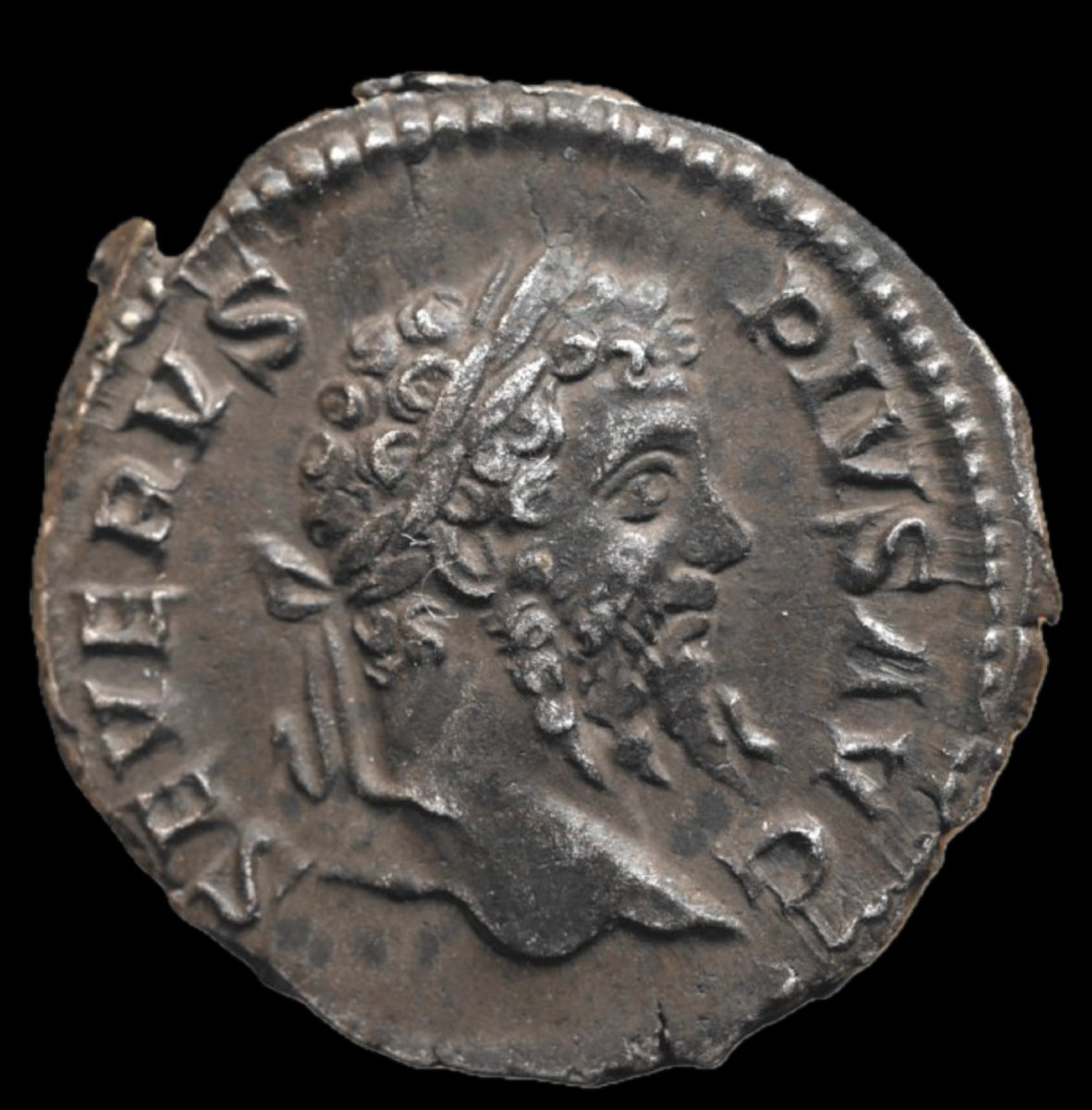
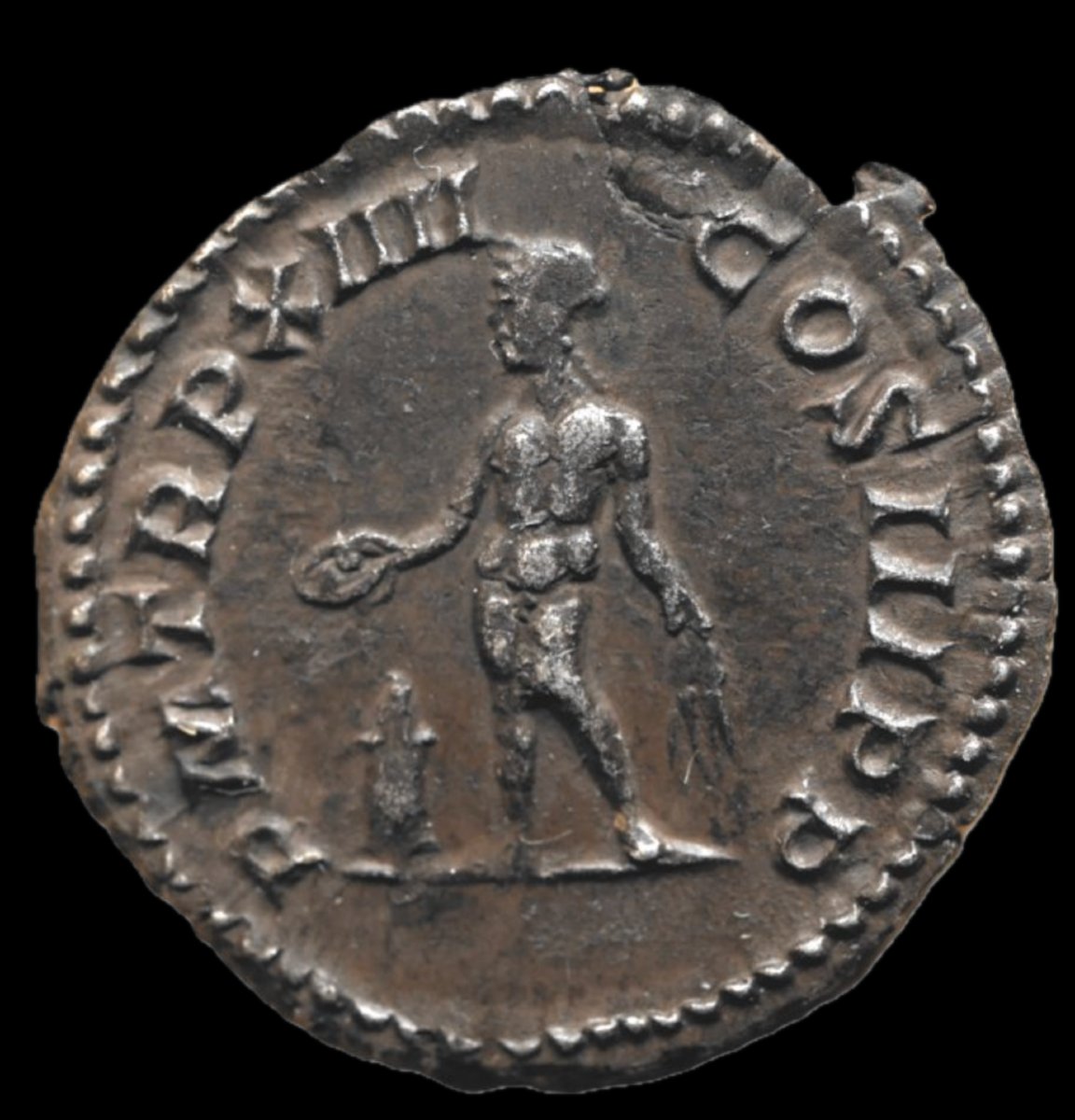
A silver denarius of Septimius Severus, struck at Rome in AD 206, whose appeal to the collector is immediately explained by the distinctly “official” coherence of its language: the obverse SEVERVS PIVS AVG presents a firmly engraved laureate portrait, while the reverse, under P M TR P XIIII COS III P P, displays the Genius in a canonical sacrificial scene—patera above the altar, ears of grain in hand—a type precisely listed as RIC IV 201 / RSC 475, and regularly described in consultable numismatic archives with the same iconographic reading.
Careful observation under ×10 magnification and raking light: the examination highlights a flan with a naturally irregular outline, with peripheral beading still well present in places and a few small marginal losses compatible with the material life of an early 3rd-century denarius; the decisive reliefs nevertheless remain sufficiently structured to ensure stable readability, both on the obverse (laurel wreath, hair, beard, articulation of the profile) and on the reverse (libation gesture, altar, and above all the ears of grain held by the Genius), allowing the attribution to rest on observable, concordant criteria.
SpecificationsAuthority / period: Septimius Severus (AD 193–211).
Mint / date: Rome, issue linked to TR P XIIII and COS III, commonly placed in 206 for this type.
Denomination / metal: Denarius, silver (AR).
Diameter / weight: 19 mm; 3.23 g (specimen data).
Obverse: SEVERVS PIVS AVG, laureate head right.
Reverse: P M TR P XIIII COS III P P, Genius standing left, sacrificing with patera over altar and holding ears of grain.
References: RIC IV 201; RSC 475 (type and description concordances).
Historical contextIn AD 206, imperial coinage serves as a vehicle for a discourse of order and prosperity, and the Genius—the tutelary spirit of the civic body—lends itself to this message with particular clarity: the libation over the altar anchors imperial action in public religion, while the ears of grain refer to abundance, supply, and, more broadly, the promise of a nourishing equilibrium guaranteed by power—an articulation typical of Severan propaganda, in which political stability is readily expressed through images of rite and fertility.
Cultural valueFor a Severan cabinet, this denarius offers very secure value, because it combines a portrait readily placeable within Septimius Severus’ series with a highly legible reverse, where the continuity of rites and the mastery of resources can be read at a glance; it thus forms a particularly relevant piece for a thematic collection on personifications, on Roman civic religion, or on types expressing the idea of public prosperity through sacrificial iconography.
Traceability & guaranteesThe provenance is European, from an established numismatic dealer, and the acquisition was made through a specialized international transaction, conducted within a recognized numismatic network and validated according to professional practices consistent with the standards of the art and heritage market; the attribution is founded on concordance of legends, attributes (patera, altar, ears of grain), and titulature with RIC IV 201 / RSC 475, as described in consultable documentation and sale comparanda.
Each specimen is examined, described, and accompanied by a certificate of authenticity consistent with the standards of the art and heritage market, this notice remaining deliberately tied to observable elements and published references, so that confidence rests on a verifiable basis.
Period: Before 16th century
Style: Rome and Antic Greece
Condition: Good condition
Reference (ID): 1722191
Availability: In stock