

Hadrian Sestertius “felicitati Avg” — Certificate Of Authenticity
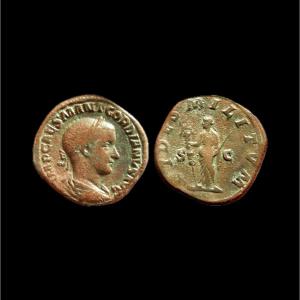
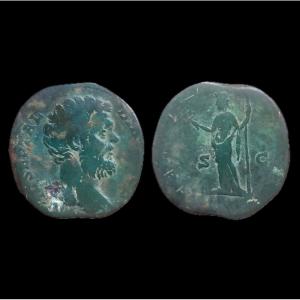
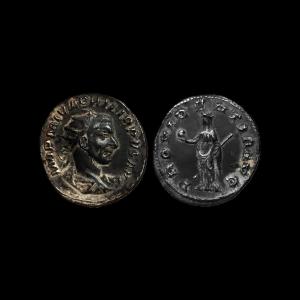
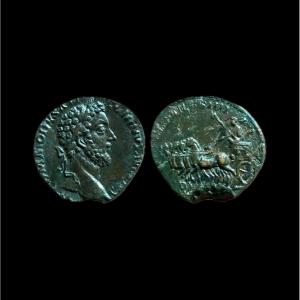
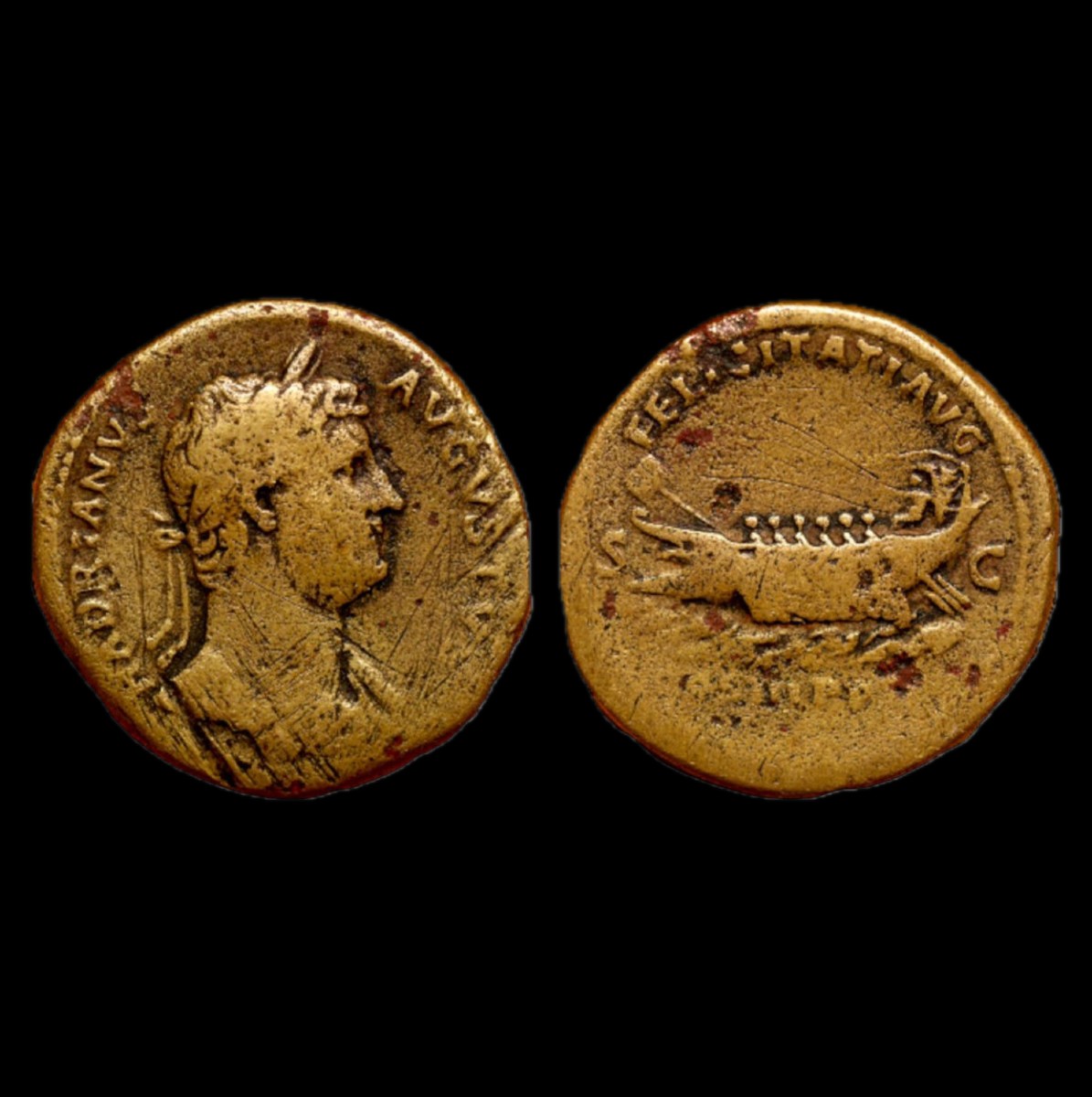
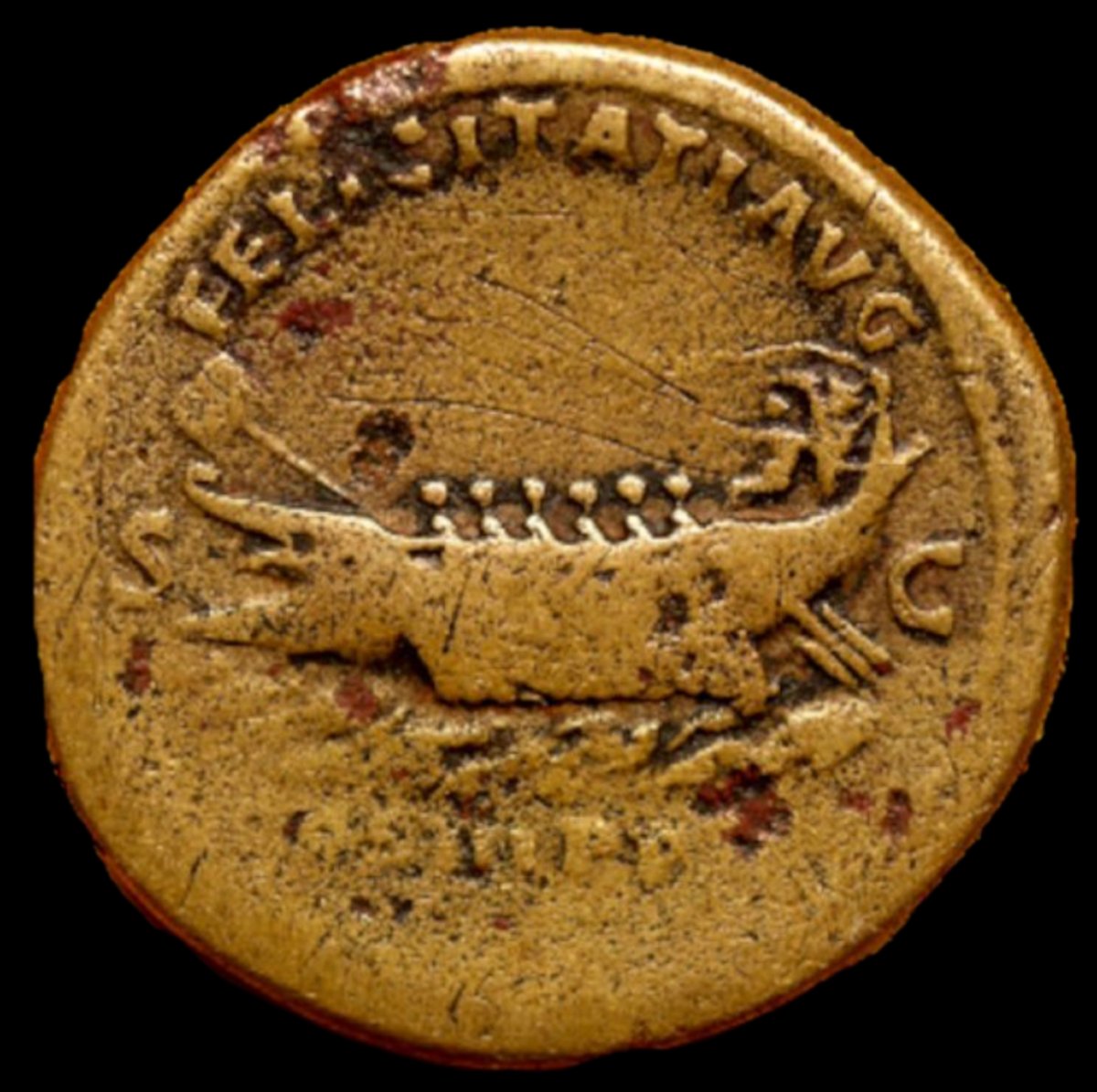
A large-module sestertius of Hadrian, struck at Rome in the period commonly placed in AD 132–134, a collectible piece both evocative and immediately recognizable through the pairing of a sober, magisterial imperial obverse — HADRIANVS AVGVSTVS with laureate and cuirassed bust — and a maritime reverse FELICITATI AVG depicting a galley under way, accompanied by the titles COS III P P and the senatorial mark S-C, a composition firmly attested in reference catalogues and archives and described consistently in specialized sale notices.
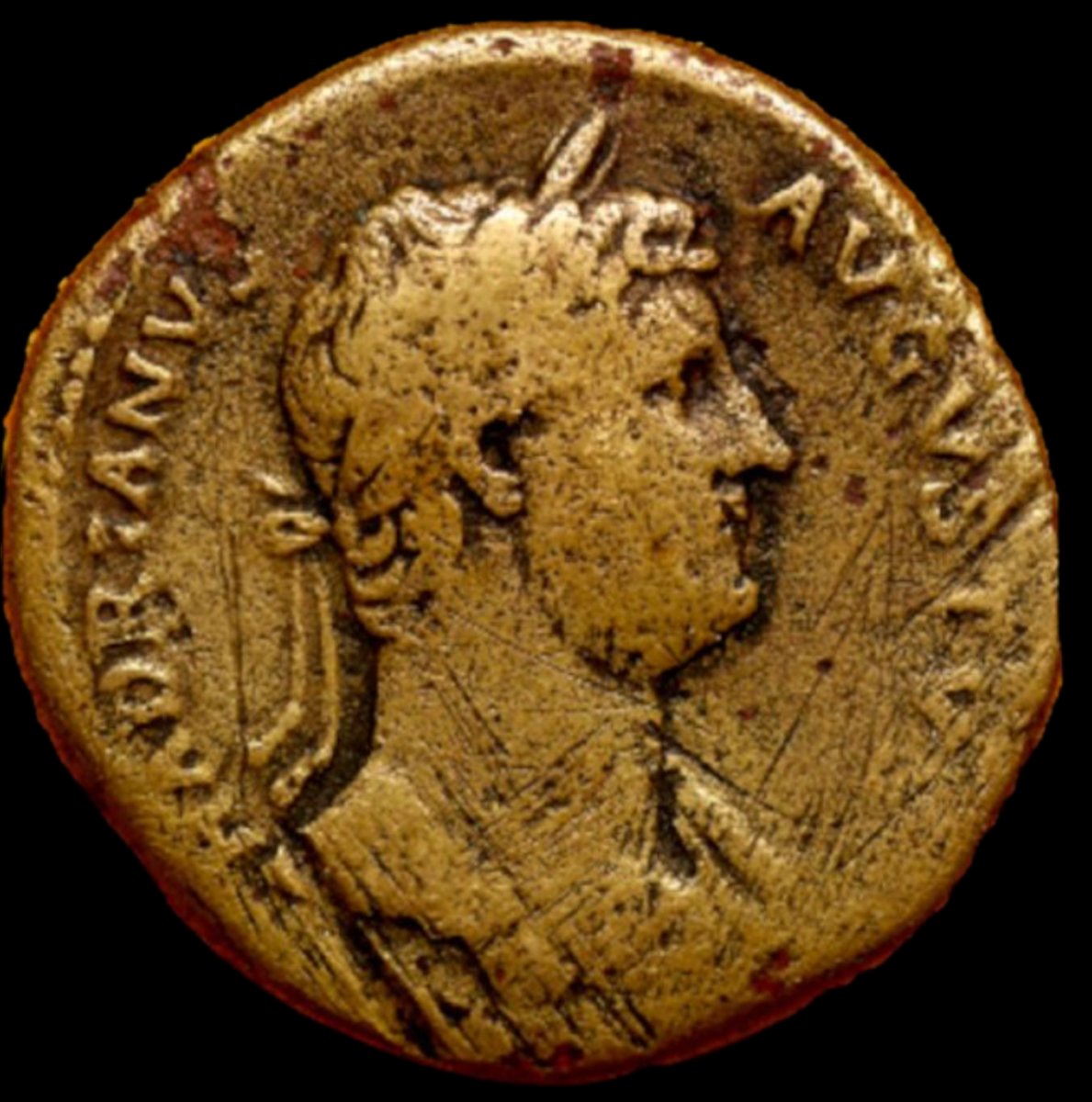
Careful observation under ×10 magnification and raking light: the non-invasive examination highlights the strong “readability” typical of Hadrianic large bronzes, as the portrait preserves its essential structure — laurel wreath, facial volumes, neck articulation, and the beginning of the cuirass — while the reverse remains highly expressive typologically, the galley reading clearly through its hull and silhouette, with titulature arranged in a manner consistent with the tradition of this type, and with S-C placed to either side of the field, the institutional marker expected for the sestertius.
Each specimen is examined, described, and accompanied by a certificate of authenticity consistent with the standards of the art and heritage market; identification is presented on the basis of observable elements (legends, figurative arrangement, module) and documented concordances, so that the collector’s confidence may rest on a truth that is verifiable and serenely transmissible.
CharacteristicsAuthority / period: Hadrian (AD 117–138), large-module bronze issue linked to the years AD 132–134 in market comparanda for the FELICITATI AVG galley type.
Mint: Rome.
Denomination / metal: Sestertius, copper-alloy of the orichalcum type as expected for the denomination and attested by standard descriptive catalogues.
Diameter / weight: 33 mm; 23.70 g (specimen data).
Obverse: HADRIANVS AVGVSTVS, laureate and cuirassed bust right, reading consistent with sale descriptions for Hadrianic sestertii with short legend.
Reverse: FELICITATI AVG, galley under way, with COS III P P and S-C in the field, an arrangement explicitly described for this type in specialized notices.
References: the FELICITATI AVG / COS III P P / S-C galley series appears under neighboring numbers depending on variants and editions; sale archives notably cite RIC 706 for the galley sestertius, while RIC 719 entries also occur in cataloguing tradition for the same broad FELICITATI galley theme depending on module and bust variant.
Historical contextThe FELICITATI AVG reverse belongs to the ideological language through which Hadrian’s principate celebrates an ordered prosperity and the security of exchange: the galley condenses, in an immediately intelligible image, Roman command of maritime routes and the abundance that follows, while the statement of titles (COS III P P) and the S-C mark place the coin within the institutional grammar of large bronze, the quintessential “civic” currency.
Cultural valueFor a Hadrianic cabinet, this sestertius gathers particularly attractive qualities: the large module offers a sovereign material presence; the laureate, cuirassed portrait ensures immediate identification; and the maritime reverse—rarely indifferent to collectors—presents a “narrative” iconography that brings imperial propaganda into dialogue with the Roman Mediterranean imagination, giving the specimen a lasting evocative power well beyond its strictly monetary data.
Traceability & guaranteesThe provenance is European, from an established numismatic dealer, and the acquisition was conducted through a specialized international transaction within a recognized numismatic network, in accordance with the practices of the art and heritage market; attribution is founded on the verifiable concordance of the legends HADRIANVS AVGVSTVS and FELICITATI AVG / COS III P P / S-C with sale-archive descriptions and standard reference catalogues.
Each specimen is examined, described, and accompanied by a certificate of authenticity consistent with the standards of the art and heritage market, ensuring clear traceability and a presentation aligned with the expectations of the demanding collector.
Period: Before 16th century
Style: Rome and Antic Greece
Condition: Good condition
Reference (ID): 1722538
Availability: In stock