

Commodus Triumphal Sestertius — Certificate Of Authenticity
COIN AVAILABLE — THE DIFFERENT PAYMENT METHODS ARE LISTED AT THE END OF THE DESCRIPTION.
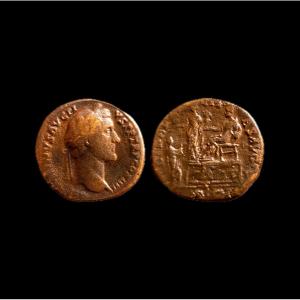
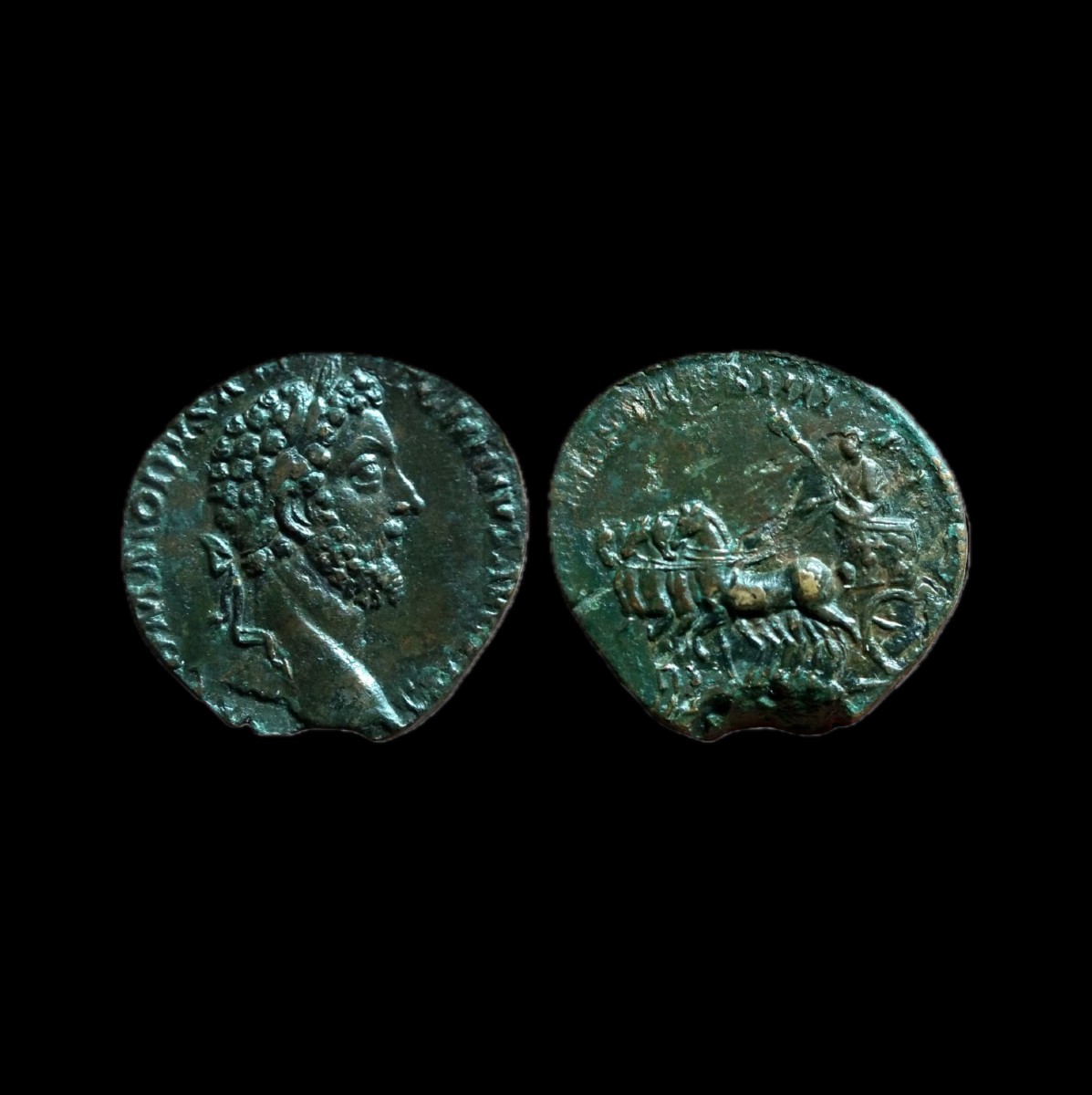
Analysis & expertiseThis large-module bronze sestertius of Commodus, attributable to the Rome mint and datable by titulature to AD 183 (TR P VIII), belongs to a sought-after series distinguished by the visual impact of its reverse: the emperor shown in a triumphal quadriga. The combination of legends, portrait, and iconography matches the type recorded as RIC 376 / Cohen 910, with the expected module markers, notably S C on the reverse.
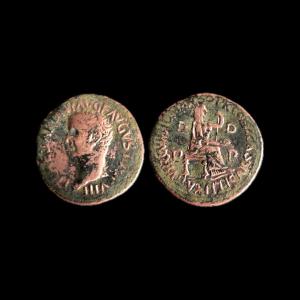
Close examination with a ×10 loupe and raking light: inspection of both sides reveals an old patina dominated by deep blue-green tones, with warm brown nuances and locally lighter areas on the relief. The surface shows a regular micro-granulation and naturally smoothed zones consistent with ancient circulation; the fields display fine, diffuse contact marks, without an artificially “varnished” look or pasty relief, within the strict limits of what can be established from the images. The flan is irregular at the edge (typical of large ancient bronzes), with slight peripheral weakness and a small localized nick that does not impede reading of the type.
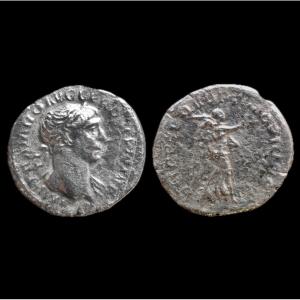
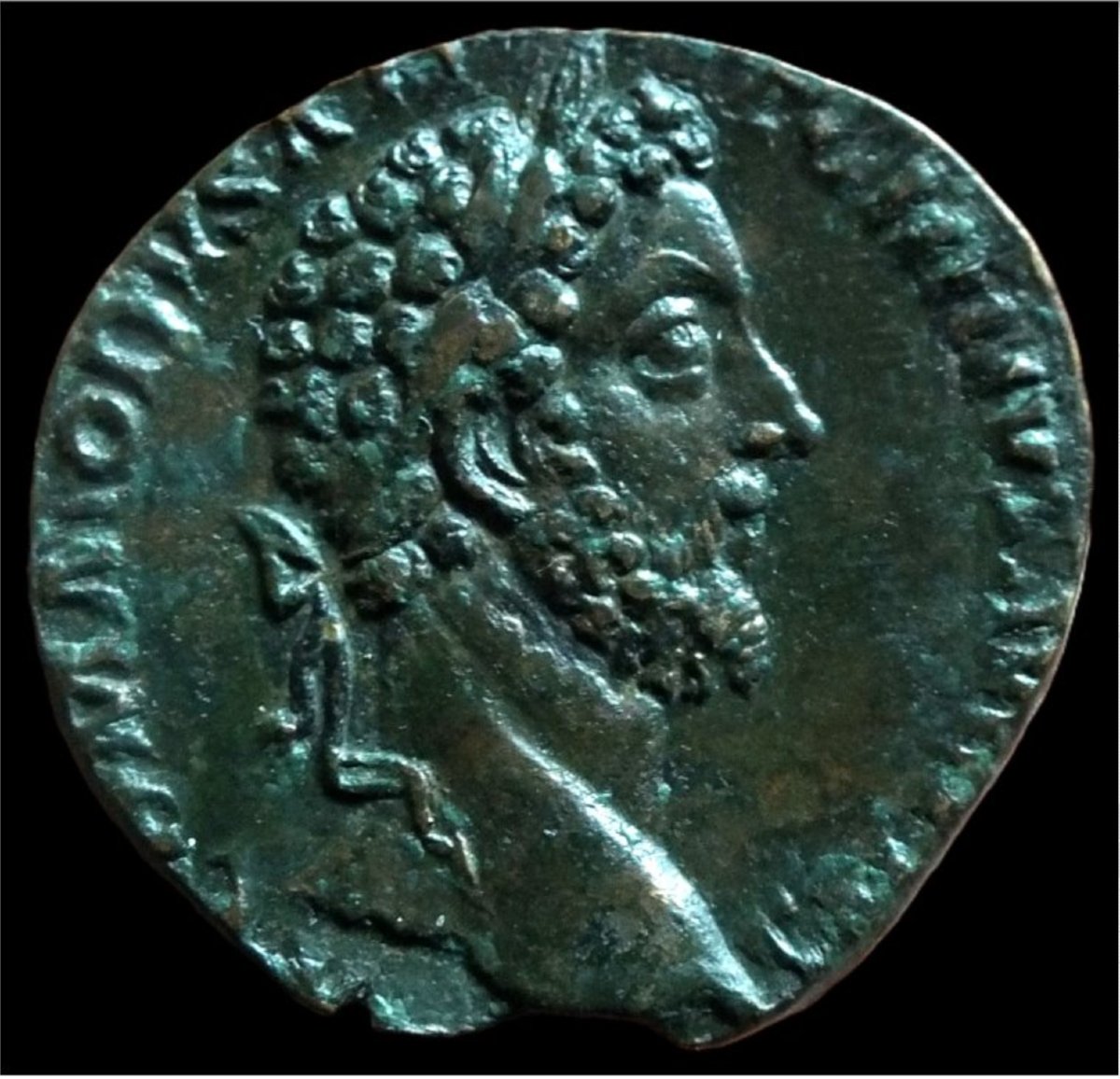
ObverseThe portrait follows the official canon of Commodus: laureate head right, hair rendered in tight curls, and a short, structured beard. Under raking light, the volumes of the forehead, brow ridge, and cheekbone remain clearly readable, while the high points (wreath, nose, beard) show even wear.
The legend M COMMODVS ANTONINVS AVG PIVS is recognizable around the perimeter in segments: some letters stand out clearly, others appear weaker depending on centering and wear. The beaded border is visible in places, contributing to the “monetary” readability of the module.
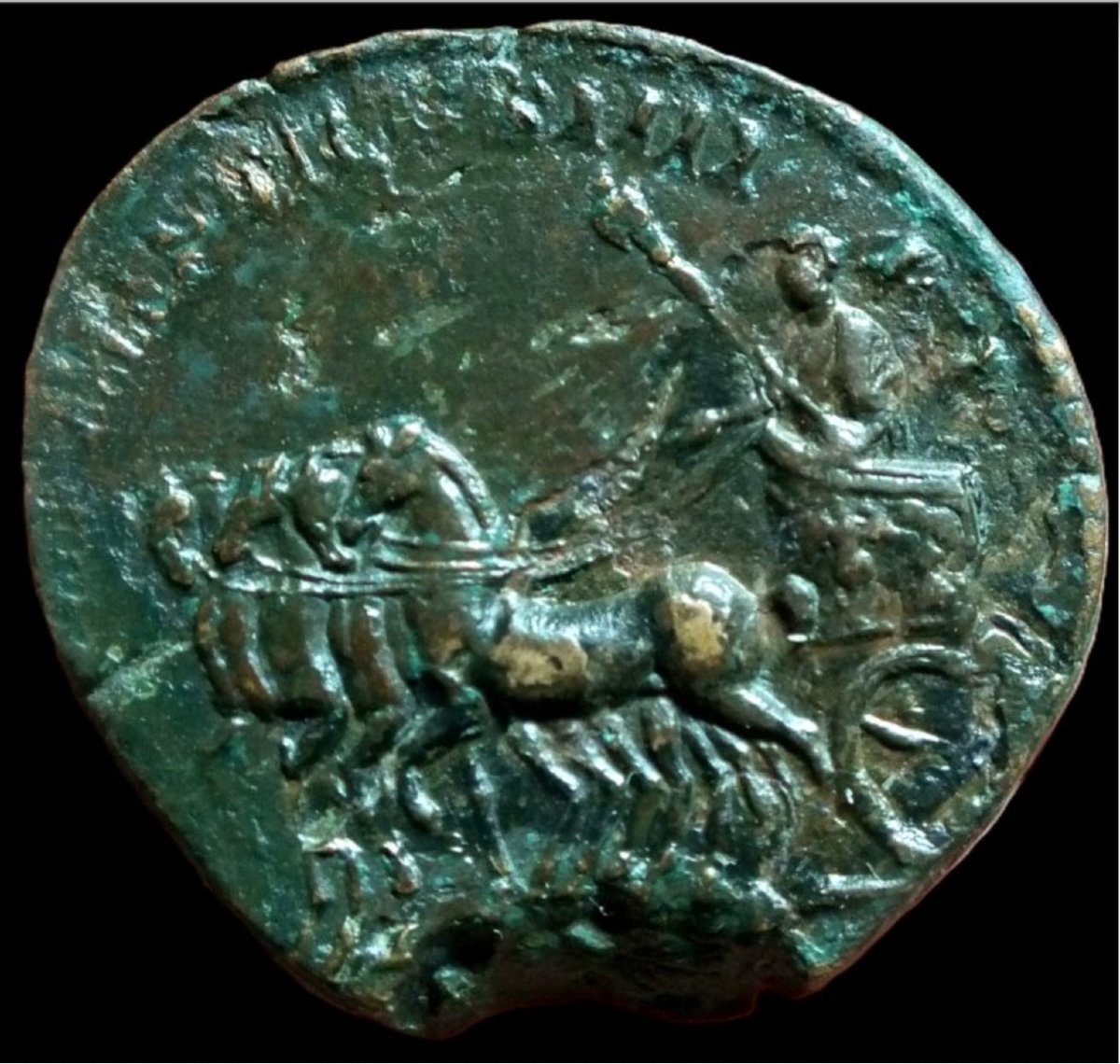
ReverseThe reverse depicts the emperor in a triumphal quadriga to the left. The composition remains highly legible, with the four horses rendered in volume (necks, head masses, and, in places, discernible harness lines) and the chariot identifiable. The emperor holds an eagle-tipped sceptre, a distinctive detail of the type; the drapery and posture remain readable despite wear.
The legend TR P VIII IMP VI COS IIII P P frames the type, readable in segments, and S C appears in the exergue, in accordance with the expected scheme for senatorial large bronzes. The ensemble “titulature + quadriga + S C” forms a particularly characteristic typological set, consistent with the stated attribution.
SpecificationsAuthority: Commodus (AD 177–192)
Denomination: Sestertius (Æ)
Mint: Rome
Date: AD 183 (TR P VIII)
Obverse: M COMMODVS ANTONINVS AVG PIVS, laureate head right
Reverse: TR P VIII IMP VI COS IIII P P, emperor in triumphal quadriga left, holding an eagle-tipped sceptre; S C in exergue
References: RIC 376; Cohen 910
Weight: 18.16 g
Diameter: 30.5 mm
Rarity: type regularly noted as relatively uncommon for this triumphal reverse on Commodus sestertii
The titulature TR P VIII / IMP VI / COS IIII / P P places this issue within a phase in which imperial power foregrounds a public representation of victory and majesty. The triumphal quadriga belongs to a visual vocabulary inherited from Roman triumphs: it proclaims authority as celebrated and visible, embedded in the city’s ceremonial life and in an iconographic tradition immediately intelligible to contemporaries.
Cultural valueFor collectors, this sestertius combines three major strengths: a large module with strong presence, a characteristic official portrait of Commodus, and above all a narrative reverse (triumphal quadriga) that is markedly more striking—and more sought after—than the more common “virtues” reverses. It is a true display piece with immediate iconographic readability.
Traceability & guaranteesIn accordance with our practice, each specimen is examined, described, and accompanied by a certificate of authenticity consistent with the standards of the art and heritage market, with the study conducted through close observation under a ×10 loupe and raking light. Provenance is European, sourced through a professional numismatic channel; the acquisition results from a specialized international transaction carried out within a recognized network and validated by expert review, according to practices applicable to heritage objects.
Secure shippingTo determine the most suitable arrangements for your situation, please send us a message specifying your location and the exact delivery address; we will immediately confirm the corresponding payment and shipping procedure.
France: Colissimo shipping, with signature and insurance (€20).
International: UPS shipping, with signature and insurance (€35).
Period: Before 16th century
Style: Rome and Antic Greece
Condition: Good condition
Reference (ID): 1710004
Availability: In stock