Commodus — Sestertius “salvs” — Certificate Of Authenticity
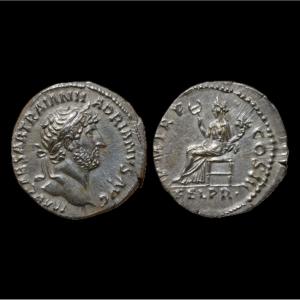
Large bronze of Rome (AD 184–185), distinguished by a reverse that is both architectural and symbolic: Salus feeding the serpent. Type RIC III 450 / BMCRE 556, frequently sought after in specialized sales.
Analysis & expertiseClose examination under ×10 magnification and raking light highlights a sestertius with a dominant deep green patina (malachite tones), moderated by darker brown-black areas and by naturally lighter highlights on the highest points of relief. The surface retains a fine, regular micro-granulation, with small asperities and localized rubs consistent with ancient circulation, and without any uniformly “smoothed” appearance.
The flan is broad yet naturally irregular at the perimeter (gentle waviness, minor beading weaknesses, an edge that is not perfectly circular), a configuration often encountered on large Antonine bronzes. Despite thicker patina in places, the typological reading remains secure: the portrait, the framework of the legends, and the reverse scene remain coherent and identifiable. Within the strict limits of visual examination, the continuity of the modelling and the internal logic of the relief are consistent with an ancient strike of the type.
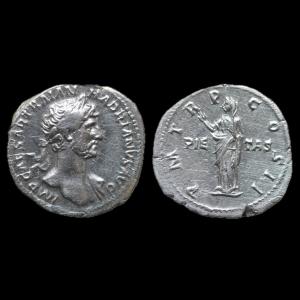
ObverseThe obverse matches the expected model: laureate head of Commodus right, in an official style, with the hair mass still readable despite patina accumulation. Facial volumes remain well set (forehead, nose, mouth, chin), giving the portrait a convincing presence.
The peripheral legend M COMMODVS ANTON AVG PIVS BRIT is readable in segments around the rim: some letters stand out clearly, while others soften under the combined effect of wear and patina.
ReverseThe reverse reproduces the scene described in the standard corpora: Salus seated left on an ornamented chair, feeding a serpent rising toward a patera. The background structure—typical of this issue—remains legible: the presence of a tree and a vertical architectural element interpreted as a column, classically surmounted by a statuette on reference specimens (details here partly softened, yet the overall architecture remains coherent).
The senatorial mark S–C is expected in the field; traces consistent with this layout are visible to either side of the scene, with uneven clarity depending on surface condition.
In the exergue, the inscription SALVS belongs to the typological arrangement of the type; the exergual area is clearly present, with readability conditioned by patina and wear, without compromising identification.
SpecificationsAuthority: Commodus (177–192), issue datable by titulature to TR P X / IMP VII / COS IIII / P P
Mint: Rome
Denomination: Sestertius (Æ)
Obverse: M COMMODVS ANTON AVG PIVS BRIT — laureate head right
Reverse: P M TR P X IMP VII COS IIII P P — Salus seated feeding serpent; tree and column surmounted by a statue; S–C in field; SALVS in exergue
References: RIC III 450; BMCRE 556
Weight: 18.04 g
Diameter: 29 mm
Rarity: rare / highly sought after
The titulature PIVS BRIT places the coin within the phase when Commodus emphasized the “British” theme in his legends, a well-recognized marker within emission classifications for late 184–185. The choice of Salus, divinity of health and protection, belongs to a classical Roman political language: the patera and sacred serpent convey stability, preservation, and public well-being.
Cultural valueFor collectors, this sestertius combines several highly attractive features:
a large Antonine bronze with an immediately recognizable imperial portrait;
a strongly “museum-like” reverse, where the Salus scene is constructed with rich setting (chair, serpent, tree, column, and statuette);
an attribution firmly anchored in RIC / BMC, making comparison, documentation, and integration into an Antonine series straightforward.
In accordance with our practices, each specimen is examined, described, and accompanied by a certificate of authenticity consistent with the standards of the art and heritage market. The study is conducted under ×10 magnification and raking light and includes checks of typological, stylistic, epigraphic, and metrological coherence against the reference corpora (RIC / BMC) and documented comparanda.
The coin comes from professional European provenance, acquired through a specialized international transaction within a recognized numismatic network, following validation practices commonly accepted on the market.
Secure shippingTracked shipment with signature and insurance, in protective packaging suited to numismatics (shock padding and discreet outer packing), ensuring controlled circulation of a heritage object.
Period: Before 16th century
Style: Rome and Antic Greece
Condition: Good condition
Reference (ID): 1716808
Availability: In stock