

Rare Sestertius Of Commodus — Certificate Of Authenticity
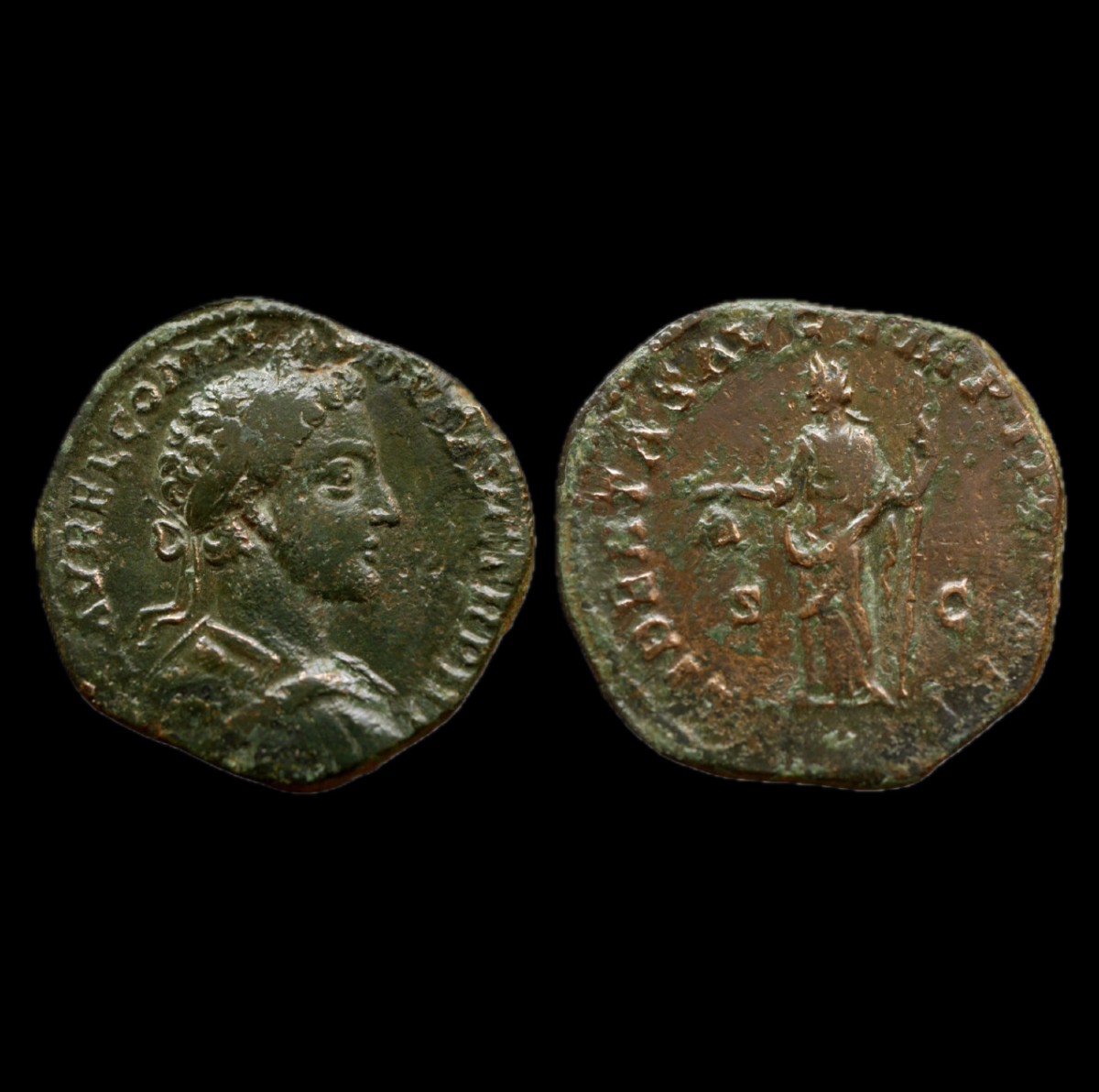
This large bronze of Commodus as Augustus, struck at Rome in AD 178, belongs to a particularly eloquent issue from the young Antonine reign, in which the majesty of the imperial portrait is joined to the civic iconography of Libertas, a central figure of Roman liberty under imperial guarantee; the attribution to type RIC 1590, with concordances BMC 1686 and Cohen 330, fits with very satisfactory coherence within the available numismatic documentation for Commodus sestertii with Libertas standing, holding the pileus and scepter, struck at Rome in AD 177–178 or more precisely in AD 178 according to the repertories consulted. The type is moreover noted as sought-after, Numista assigning it a rarity index of 94, which fully supports a clear emphasis for collectors of Antonine imperial bronzes.
Each specimen is examined, described, and accompanied by a certificate of authenticity in accordance with the standards of the art and heritage market; this one immediately draws attention for its weight of 26.48 g, a very favorable mass for the group, and for an overall physiognomy consistent with the great Rome sestertii from the end of Marcus Aurelius’ reign, Numista giving 23.7 g and 30.5 mm as reference benchmarks for the type, with an observed weight range of about 21.68 to 27.38 g, placing the specimen in the upper, particularly enhancing, portion of the documented bracket.
Analysis & Expertise
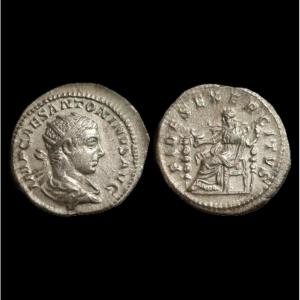
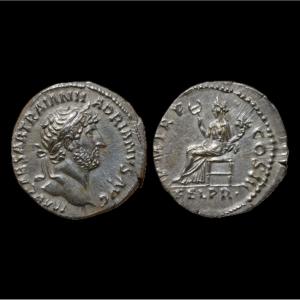
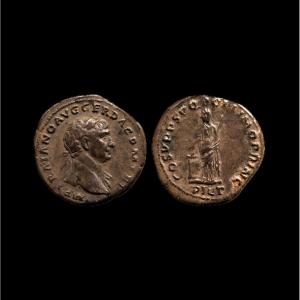
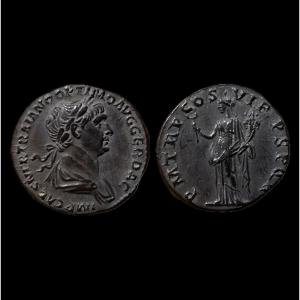
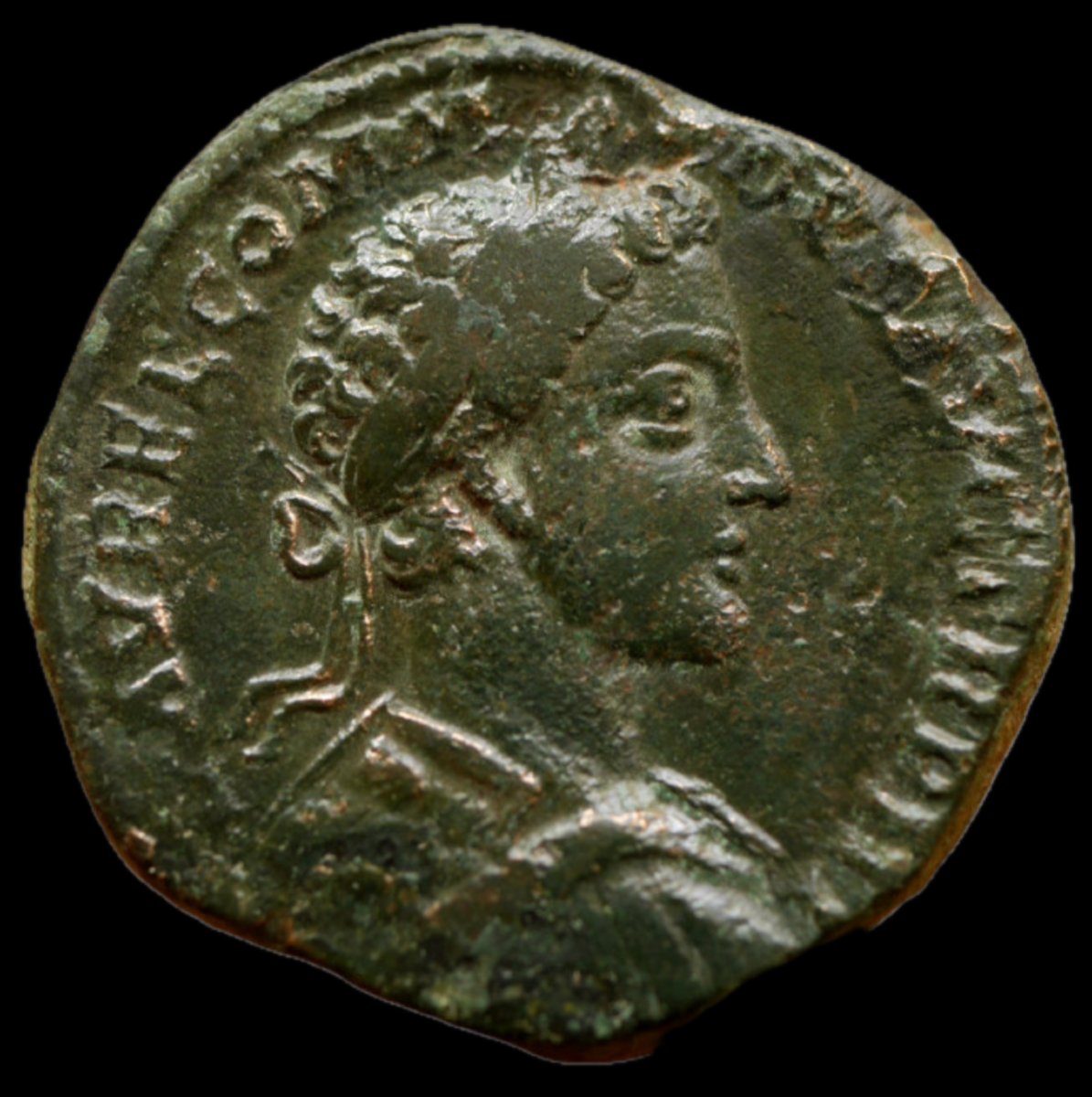
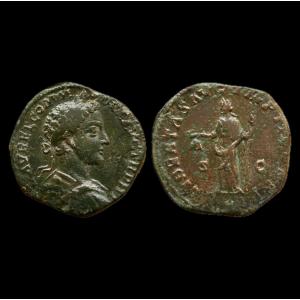
Close observation under ×10 magnification and raking light. Direct examination of the obverse reveals a portrait of Commodus right, laureate and cuirassed, of very assertive presence, whose hair still retains a visible structure in short, curly locks, while the eye, nasal line, mouth, and chin modeling remain clearly constructed, giving the face that youthful firmness characteristic of the prince’s early Augustan issues; the cuirass and the beginning of the drapery remain perceptible at the base of the bust, and the overall relief retains particularly satisfactory legibility for a large circulating bronze. Observation of fields and relief shows regular ancient wear, without loss of reading of the principal type, strengthening the specimen’s collecting presence. The British Museum and Numista descriptions confirm precisely, for this issue, a laureate and cuirassed bust of Commodus right.
The obverse legend, though naturally softened in places, remains largely present around the circumference, with letters still well raised, and the peripheral border can be followed in continuous segments, giving the obverse a very appreciable visual steadiness; the strike appears well set into the flan, whose contour irregularities remain fully compatible with the hammered production of large imperial bronzes. This formal coherence accords with the manufacturing data published for the type, Numista expressly indicating a hammer-struck coin of irregular round shape.
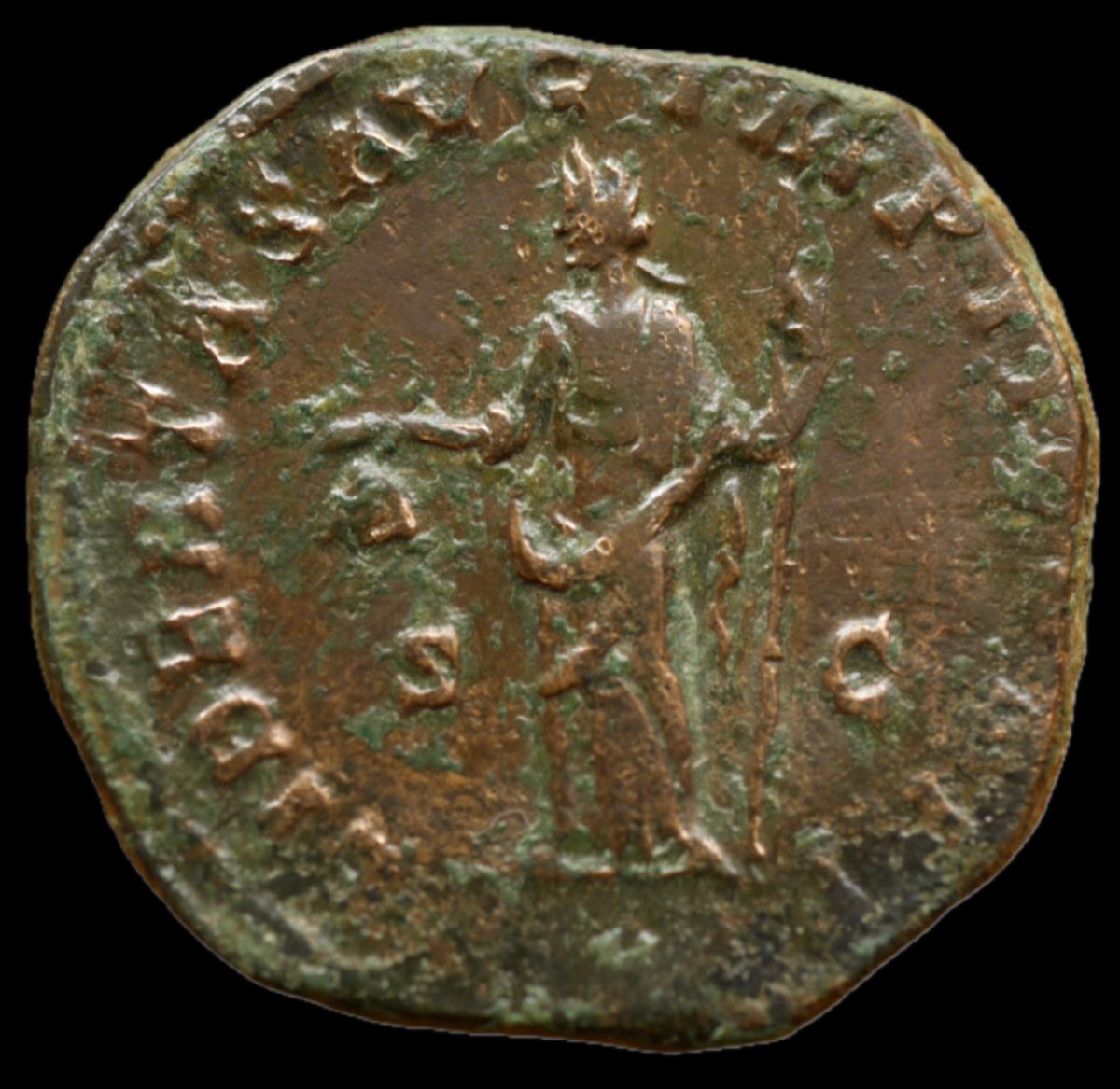
The reverse retains very convincing central legibility, as Libertas appears standing in a clear and immediately intelligible posture, holding in the right hand the pileus, the classic emblem of manumission, and in the left a long vertical scepter; despite normal softening of the most exposed reliefs, the goddess’ silhouette remains stable, the essential attributes are recognizable without effort, and the composition keeps its full balance. The letters S-C, distributed in the fields, remain visible and confer on the whole the institutional authority characteristic of Rome’s senatorial sestertii. This description corresponds exactly to that recorded by the British Museum, Numista, and the London Museum for the same Libertas reverse group.
The surface shows an old olive-brown patina with dark-green highlights, with warmer nuances on certain reliefs and deeper tones in the recesses, giving the coin a very appealing materiality; the whole retains a highly appreciable metal coherence, with ancient, homogeneous wear, without any visual break liable to disturb understanding of the type. The edges, slightly irregular, the tension of the relief, and the rise of the letters accord with the expected physiognomy of a second-century Roman sestertius, and the specimen thus brings together several concretely sought-after qualities: a firm portrait, an immediately legible reverse iconography, favorable metrology, and a characterful patina presence. Specialized comparanda for this reference further show comparable diameters and surface states, with published weights around 17.91 g, 22.12 g, 22.26 g, and 26.48 g, depending on preservation and flan.
Characteristics
Authority.
This issue belongs to Commodus, then associated emperor of the Antonine dynasty, in the phase when he still reigns alongside Marcus Aurelius. The London Museum notes that Commodus was co-emperor from AD 177 to 180, before becoming sole ruler of the Empire after his father’s death.
Mint.
The mint is Rome, an attribution concordantly given by the British Museum, Numista, and specialist notices in the numismatic market.
Dating.
The strike belongs to the AD 177–178 horizon, more precisely to AD 178 according to the Numista typological entry associated with RIC 1590.
Denomination.
Sestertius, i.e., the large circulating bronze denomination of the Roman imperial monetary system.
Metal.
The type is catalogued as bronze or copper alloy, in accordance with the British Museum, Numista, and London Museum notices.
Weight.
The recorded weight for this specimen is 26.48 g, a particularly favorable figure for this type and fully compatible with the range documented by Numista.
Diameter.
The type is documented around 30.5 mm on Numista; specialized comparanda show neighboring diameters, notably 30 mm and 33 mm, placing the present specimen within the expected scale of the large imperial bronze for this issue.
Obverse.
Commodus laureate and cuirassed right, consistent with the description recorded by the British Museum and Numista for this reference.
Reverse.
Libertas standing, holding the pileus and a vertical scepter, with S-C in the fields; this iconography is exactly that described by the British Museum, the London Museum, Numista, iNumis, and CGB for this group.
Typological references.
Attribution to RIC 1590, with market and bibliographic concordances associated with BMC 1686 and Cohen 330; the British Museum references RIC 1590 var., and CGB publishes a specimen precisely noted RIC 1590 – BMC/RE 1686 – C.330.
Rarity.
The type may rightly be presented as rare / sought-after, Numista assigning it a rarity index of 94.
Historical context
This issue belongs to the first years of Commodus’ effective principate as associated Augustus, within the framework of co-regency with Marcus Aurelius; the London Museum notes precisely that Commodus was co-emperor from AD 177 to 180, situating this sestertius within a still dynastic and relatively supervised phase of the reign, before the personal government that followed after 180. The choice of Libertas on the reverse participates in that rhetoric of public virtues through which imperial coinage gives a visible and civic form to the prince’s authority.
The pileus, the manumission cap held by Libertas, carries in the Roman imagination an immediately political and civic meaning, as it refers to legal freedom and the condition of the enfranchised citizen; the London Museum explicitly identifies the reverse as a representation of Libertas, Roman goddess of liberty, while specialist French catalogues translate the legend LIBERTAS AVG IMP II COS P P as a formulation of Augustan liberty tied to the prince’s official titulature. The coin thus appears as a true vehicle of public ideology, in which imperial authority is presented under the sign of an ordered, Roman, and institutional liberty.
Cultural value
The cultural value of this piece is particularly real, because it unites within a single object three dimensions consistently sought by collectors of large imperial bronzes: a youthful portrait of Commodus still rooted in Antonine heritage, an immediately legible civic allegory, and the great format of the Rome sestertius, which gives the iconography full monumental breathing space. It is therefore not only a circulating coin, but a visual document on the way the Roman Empire sought to figure liberty under the prince’s authority.
For the collector, such a specimen offers additional appeal through its high metrology, its old patina, and the enduringly eloquent pairing of portrait and virtue; Commodus’ Libertas issues hold an appreciated place in cabinets devoted to the Antonines, precisely because of this alliance of legibility, historical density, and iconographic nobility. The type’s regular but selective presence in the specialized trade, under consistent references, confirms this durable interest.
Traceability & Guarantees
From a European provenance, from an established numismatic dealer, this specimen was acquired through a specialized international transaction conducted within a recognized numismatic network and validated by reference experts, in accordance with the highest standards of the art and heritage market; examination of the present object retains the stylistic, epigraphic, technical, and metrological characteristics effectively observable, set within the framework of recognized references for Roman imperial coinage and compared against comparable specimens published in corpora and specialist catalogues.
Each specimen is examined, described, and accompanied by a certificate of authenticity in accordance with the standards of the art and heritage market; in the present case, the concordance between Commodus’ laureate and cuirassed portrait, the Libertas reverse with pileus and scepter, the observed metrology, and the references RIC 1590, BMC 1686, and Cohen 330 establishes a particularly solid numismatic attribution.
Period: Before 16th century
Style: Rome and Antic Greece
Condition: Good condition
Reference (ID): 1730240
Availability: In stock