


Trajan Ric 10 — Certificate Of Authenticity
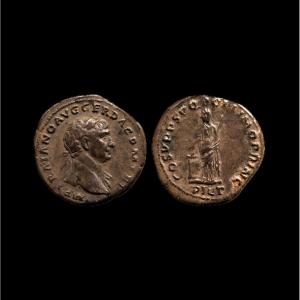
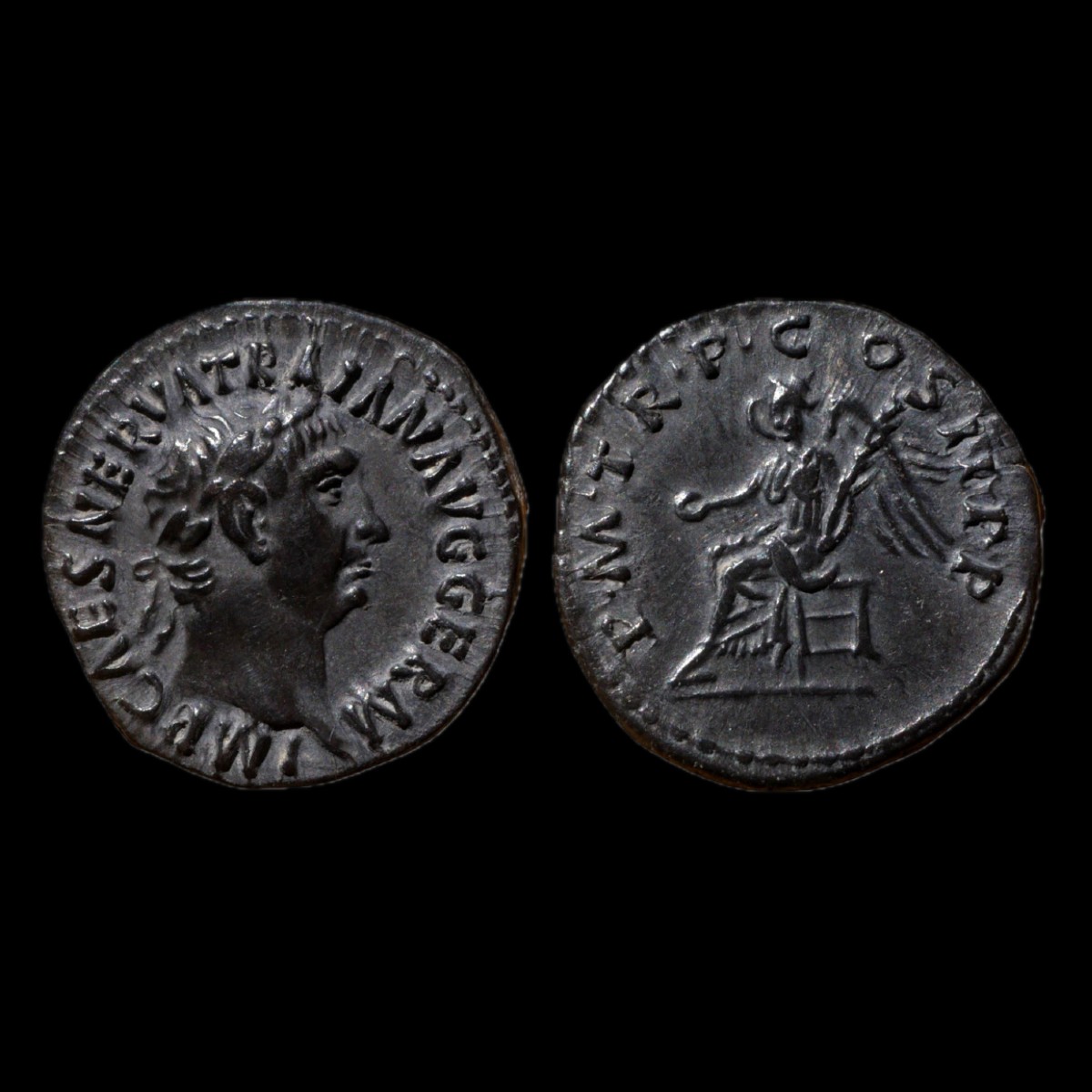
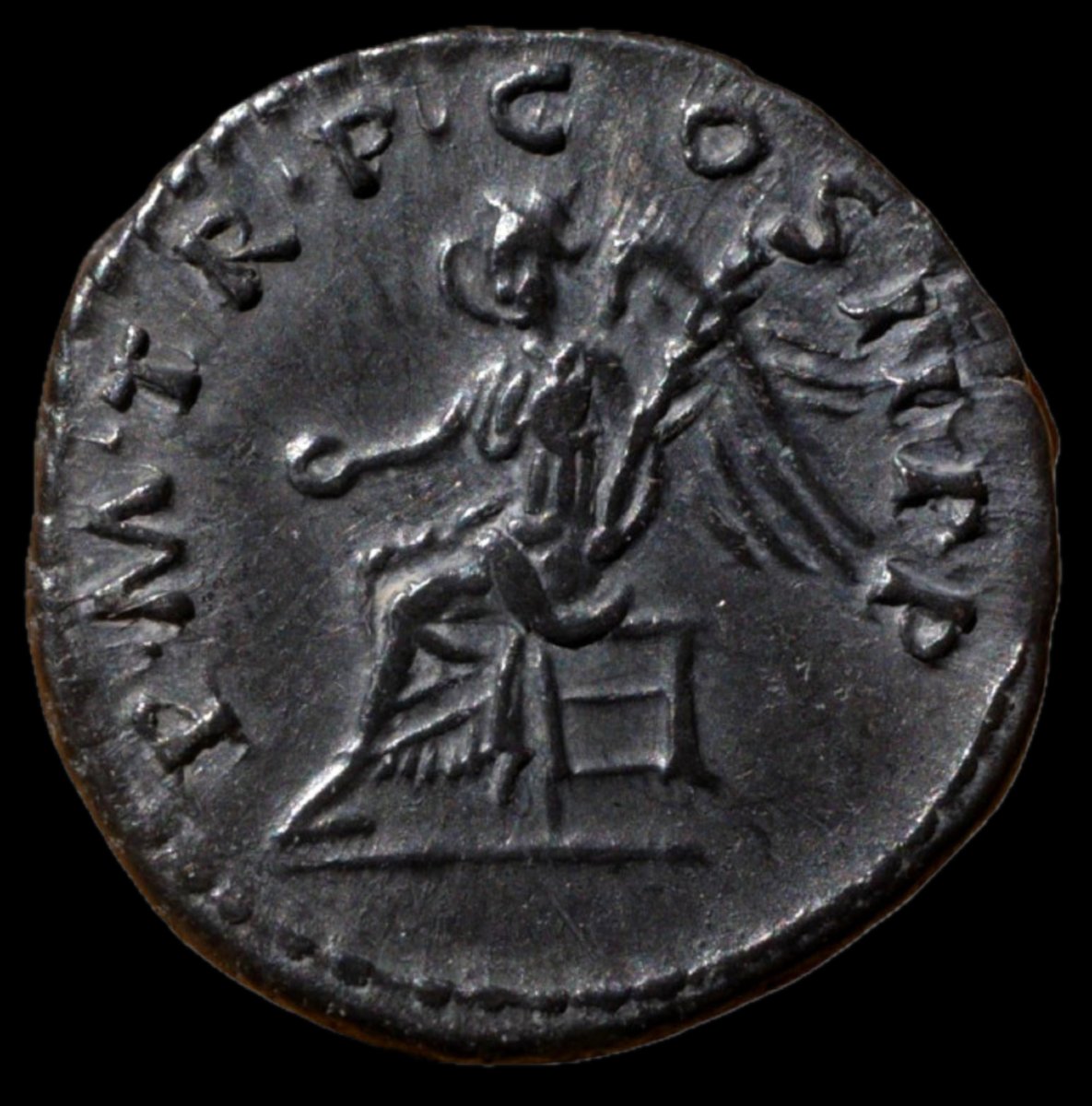
This silver denarius of Trajan, struck at Rome in the very first years of the reign, belongs to the RIC II 10 type, with obverse IMP CAES NERVA TRAIAN AVG GERM and reverse P M TR P COS II P P, where Victory is shown seated left holding a patera and a palm; the series is consistently dated to AD 98–99, and published references also associate it with BMC 41, Cohen 213, and OCRE ric.2.tr.10, placing the specimen within a perfectly established typological framework. The stated metrology, 3.65 g, falls within the known range of the type: Numista records a reference weight of 3.2 g with observed variations of 2.4 to 3.59 g, while commercial comparanda document nearby specimens around 3.24 to 3.40 g for 20 mm.
Analysis & Expertise
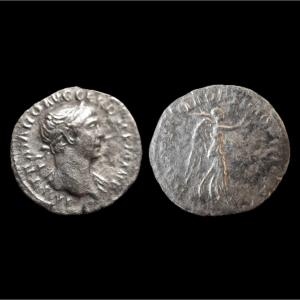
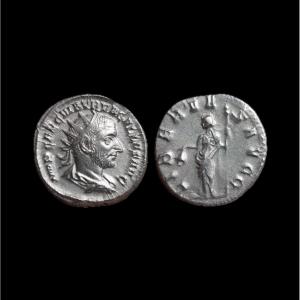
Close observation under ×10 magnification and raking light. The obverse presents an early portrait of Trajan of fine firmness, with a laureate head right whose hair develops in supple, tight locks, a broad forehead, a well-opened eye, a clear nasal line, a soberly drawn mouth, and a strongly built chin; the laurel wreath remains clearly readable, the field stays well balanced, and the portrait as a whole gives the coin that energetic physiognomy characteristic of Rome’s earliest Trajanic issues. The flan, slightly irregular at the edge, remains very favorably centered, allowing broad readability of the titulature and beaded border around much of the circumference. The obverse type is indeed that which the corpora describe as Trajan’s laureate head right, with—in certain museum and commercial specimens—a slight drapery on the left shoulder, a nuance that belongs to the dossier of the series.
The reverse retains particularly secure numismatic readability, with a draped Victory seated left on a backless seat, holding a patera in the right hand and a palm in the left, in a composition of great iconographic purity; the silhouette remains well set, the palm stands out clearly behind the figure, and the reverse’s overall economy remains very legible, which is a real strength for this number. The legend P M TR P COS II P P conforms to the type, and its preservation on the specimen strengthens the overall identification quality.
The silver surface shows a coherent ancient physiognomy, with relief still crisp on the high points of both portrait and reverse figure, a lightly nuanced pale-gray toning, and slight marginal irregularities compatible with hammer striking on an irregular round flan, exactly as the type’s reference sheets indicate; the whole thus retains a very sound, harmonious, and convincing material presence, particularly appreciable for so early an issue of the reign.
Characteristics
The attribution is established as follows: Trajan, Rome mint, silver denarius, struck AD 98–99; obverse IMP CAES NERVA TRAIAN AVG GERM, laureate head right; reverse P M TR P COS II P P, Victory seated left holding patera and palm; specimen weight 3.65 g. The principal bibliographic attribution is RIC II 10, with concordances BMC 41, Cohen 213, CBN 60, and OCRE ric.2.tr.10 as reproduced in specialist catalogues and scholarly-market comparanda. Numista records for this type a reference diameter of 18.5 mm, hammer-struck technique, irregular round shape, and a rarity index of 91, placing this number among the Trajan early denarii that are clearly followed and appreciated by collectors.
Historical context
This denarius belongs to the very beginning of Trajan’s principate, in a phase when the titulature is still that of the earliest years of reign, before the later developments tied to the great Dacian and eastern successes; the legend AVG GERM and the formula COS II P P place the coin within a moment of initial stabilization of power, when the new prince still stands within Nerva’s immediate legacy while already asserting a strongly structured personal authority. The presence of Victory on the reverse perfectly suits this context, for it expresses—still in a sober seated form—an idea of happy legitimacy, success, and public favor.
The chronological interest of this type is all the more real because it precedes the more abundant series of the following years; it therefore belongs to a very identifiable moment of Trajanic coinage, where the emperor’s effigy and the first reverse types still form a tightly coherent ensemble, sought precisely for its inaugural character.
Cultural value
The cultural value of this piece lies in the meeting of three major qualities: an early Trajan portrait of excellent character, a seated Victory reverse of great doctrinal legibility, and a classic reference from the reign’s first imperial coinage. It is a denarius of interest not only for its classification, but for the distinctly Roman manner in which it combines a short legend, a stable image, and nascent imperial authority, in a module still close to the best silver standards of the late first century.
For the knowledgeable collector, this type has genuine distinguishing strength, because it belongs to Trajan’s early issues, preserves immediately intelligible iconography, and remains clearly sought after in contemporary surveys; this desirability does not arise from artificial emphasis, but from a set of objective criteria: the type’s early date, portrait quality, reverse coherence, and the flan’s overall good steadiness.
Traceability & Guarantees
From a European provenance, from an established numismatic dealer, this specimen was acquired through a specialized international transaction conducted within a recognized numismatic network and validated by reference experts, according to the highest standards of the art and heritage market; examination retains only the stylistic, technical, epigraphic, and metrological characteristics effectively observable on the object, set within the framework of the Rome type Trajan / seated Victory / RIC 10, with particular attention to portrait coherence, titulature reading, reverse structure, and the flan’s overall conformity.
The concordance between the obverse IMP CAES NERVA TRAIAN AVG GERM, the reverse P M TR P COS II P P with Victory seated left, the AD 98–99 dating, the Rome mint, the observed metric data, and the attribution to RIC II 10 establishes here a particularly solid numismatic identification; each specimen is examined, described, and accompanied by a certificate of authenticity in accordance with the standards of the art and heritage market, in order to provide the collector with a rigorous, stable, and fully credible descriptive basis.
Period: Before 16th century
Style: Rome and Antic Greece
Condition: Good condition
Reference (ID): 1730299
Availability: In stock