

“athens Owl” Tetradrachm — Certificate Of Authenticity
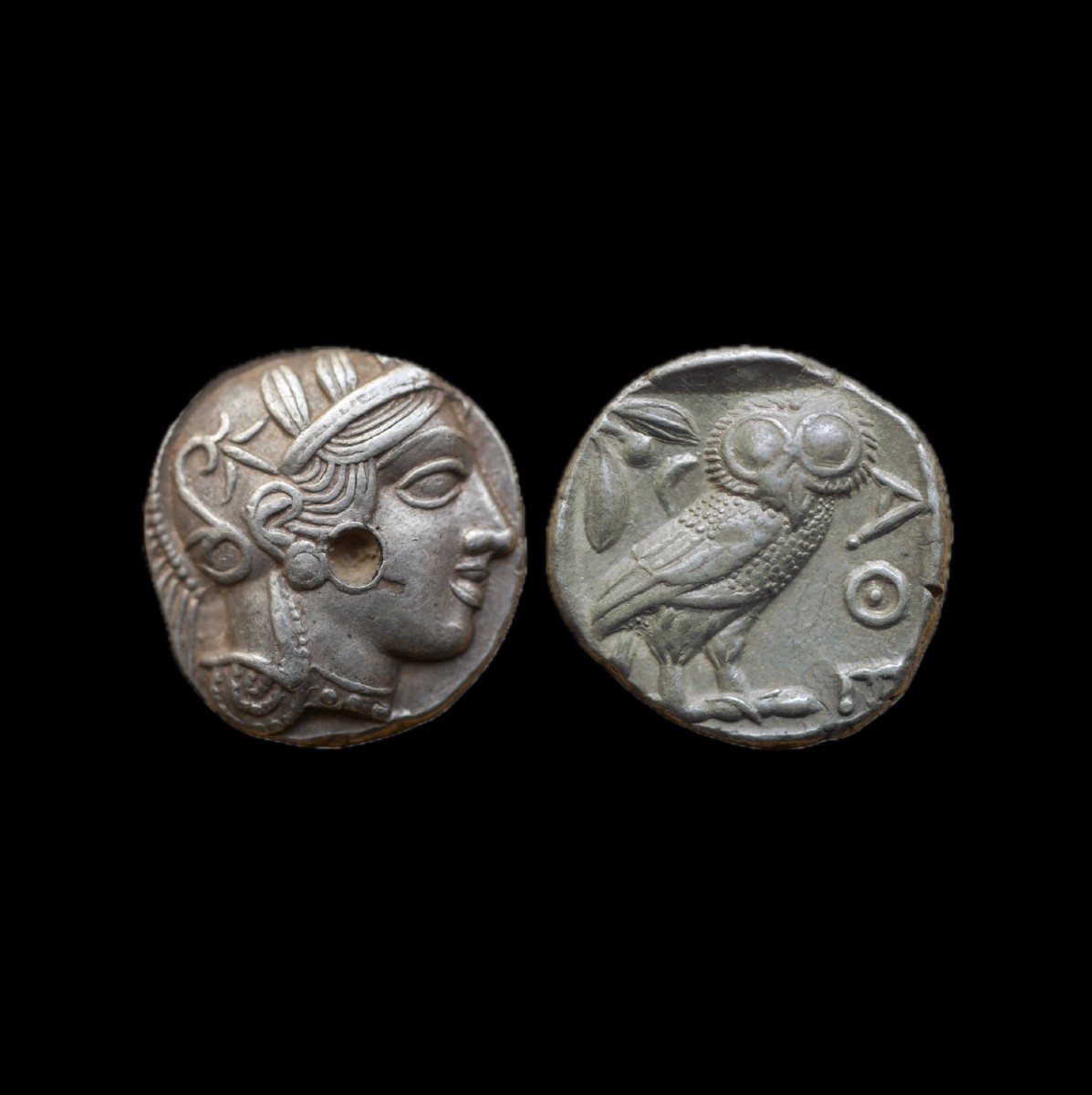
COIN AVAILABLE — silver tetradrachm (AR) of Athens (Attica), major Classical coinage c. 454–404 BC: the absolute archetype of Greek coinage, immediately identifiable by Athena on the obverse and the owl on the reverse, with ΑΘΕ within the incuse square—an emblematic coin with true museum presence, embodying on its own the economic and cultural power of Athens in the 5th century BC.
Analysis & expertiseClose examination with a ×10 loupe and raking light: inspection of both sides reveals a light grey silver tone, with deeper reflections in the recesses, consistent with an old cabinet patina. The flan appears thick and naturally irregular, with a not perfectly circular outline, as expected for ancient hammer-struck coinage. The relief remains structurally readable, with moderate wear on the high points and generally even fields.
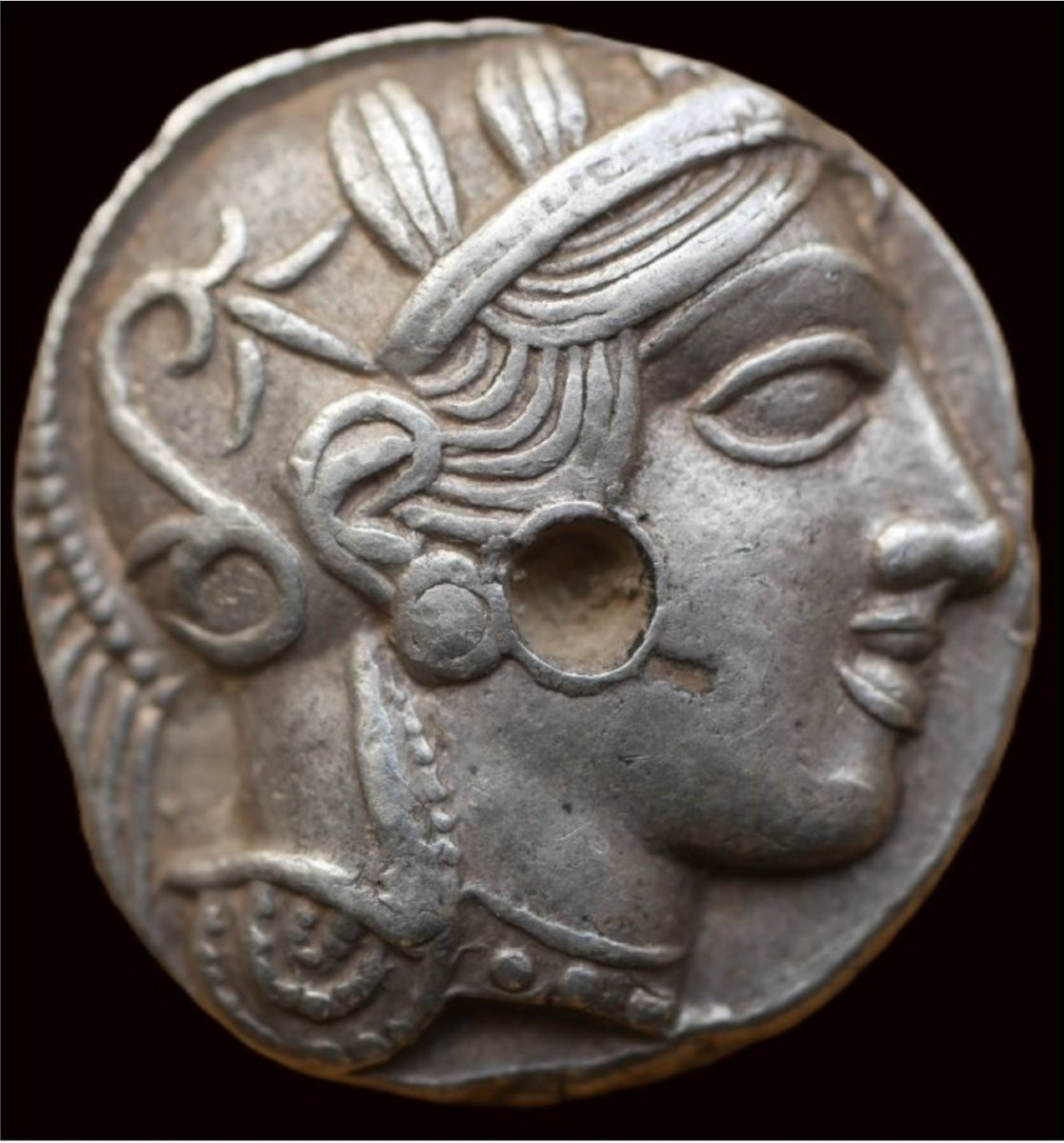
An ancient piercing is visible on the obverse, clearly identifiable and now stabilized, whose appearance integrates visually with the surface. This is an in-period feature disclosed in full transparency, without affecting typological identification, as the composition remains entirely consistent with the Classical Athenian type.
Obverse (Athena)The design matches the expected type: head of Athena right, wearing an Attic crested helmet.
The helmet ornamentation remains perceptible: three laurel leaves at the front and a lateral vine scroll, readable in volume under raking light.
The face retains crisp modelling (forehead, nose, lips, chin) and the almond-shaped eye characteristic of this coinage.
The ancient piercing lies within the portrait field, yet all decisive markers (helmet, profile, overall style) remain fully legible and consistent with the Classical “Owl” issues.
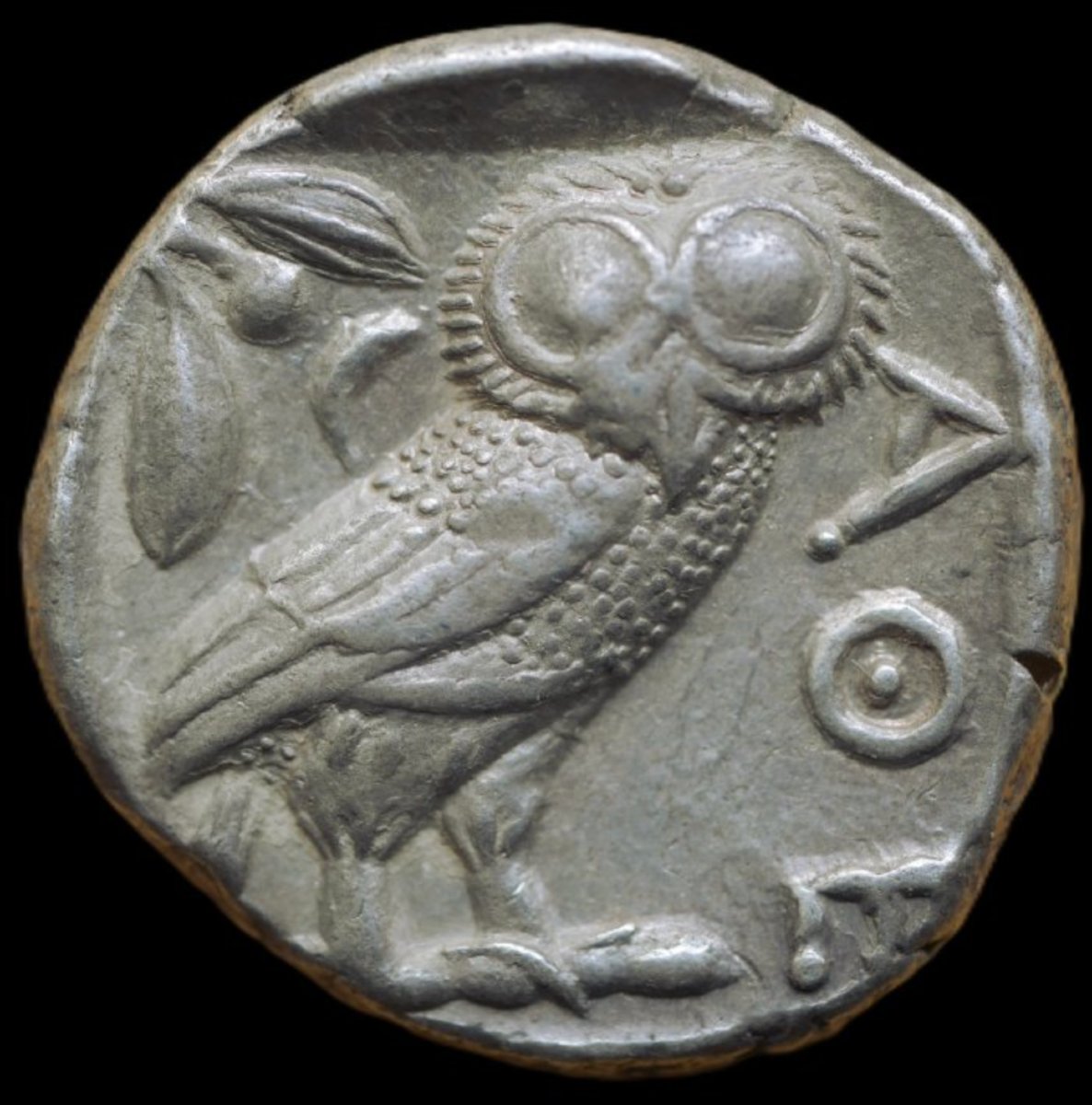
Reverse (Owl)The reverse follows the standard reference scheme within an incuse square:
Owl standing right, head facing, with a still well-structured silhouette (body, wing, legs).
At left, the inscription ΑΘΕ, readable in segments depending on centering.
Behind the owl: olive sprig and crescent, characteristic elements of the type, perceptible despite wear to finer details.
The incuse square frames the scene clearly, with visible corners and variable depth, a frequent feature of these strikes.
Within the strict limits of observation, the combination “Athena with ornamented helmet / owl in incuse / ΑΘΕ + sprig + crescent” forms a complete and particularly solid typological set for attribution.
SpecificationsCity: Athens (Attica)
Denomination: Tetradrachm (AR)
Date: c. 454–404 BC
Obverse: Head of Athena right; crested Attic helmet ornamented with laurel leaves and vine scroll
Reverse: ΑΘΕ; owl standing right, head facing; olive sprig and crescent behind; all within an incuse square
Diameter: 23 mm
Weight: 17.10 g
References (cross bibliography): HGC 4, 1597; SNG Copenhagen 32
Particular feature: ancient piercing visible on the obverse (disclosed and accounted for in the condition description)
This tetradrachm belongs to the period when Athenian silver became a large-scale reference currency across the Aegean and the Mediterranean. The deliberate stability of the type—Athena, protectress of the city, and the emblematic owl—answers a logic of trust: a constant, instantly recognized image, at the heart of a 5th century BC marked by intense exchange, naval power, and Athens’ economic centrality.
Cultural valueFor collectors, the “Athens Owl” brings together leading qualities:
an absolute icon of Greek monetary art, instantly recognizable;
an object with exceptional evocative power, strong presence, and display readability;
one of the best-documented typologies, facilitating comparison, classification, and integration into a coherent Greek collection.
In accordance with our practice, each specimen is examined, described, and accompanied by a certificate of authenticity consistent with the standards of the art and heritage market. The study is conducted with close observation under a ×10 loupe and raking light, and based on typological, stylistic, and metrological coherence, as well as comparison with the standard corpora references (HGC, SNG).
The coin is offered with professional European provenance; the acquisition falls within a specialized international transaction carried out within a recognized numismatic network and validated by expert review, according to practices applicable to heritage objects.
Secure shippingCareful, secure, and traceable shipping, with protective packaging suited to ancient silver, insurance, and signature on delivery depending on destination (France / international). Exact arrangements are confirmed at the time of order according to the delivery address.
Period: Before 16th century
Style: Rome and Antic Greece
Condition: En l'etat
Reference (ID): 1710002
Availability: In stock