


Rare Antoninianus Of Balbinus — Certificate Of Authenticity
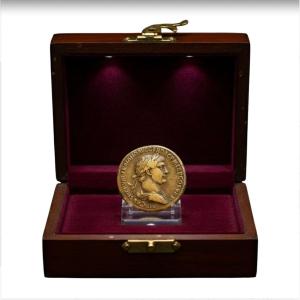
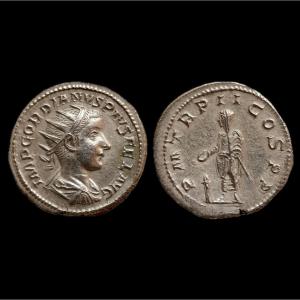
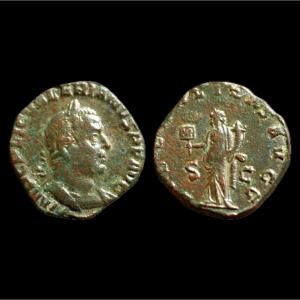
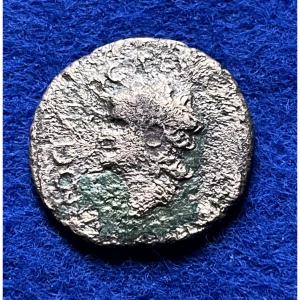
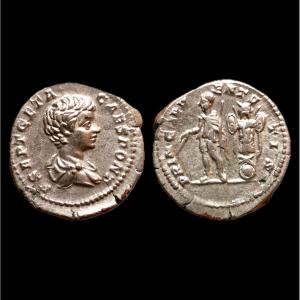
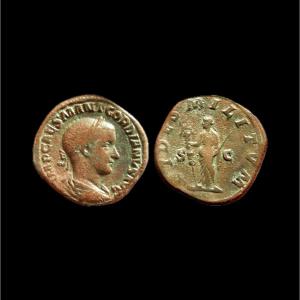
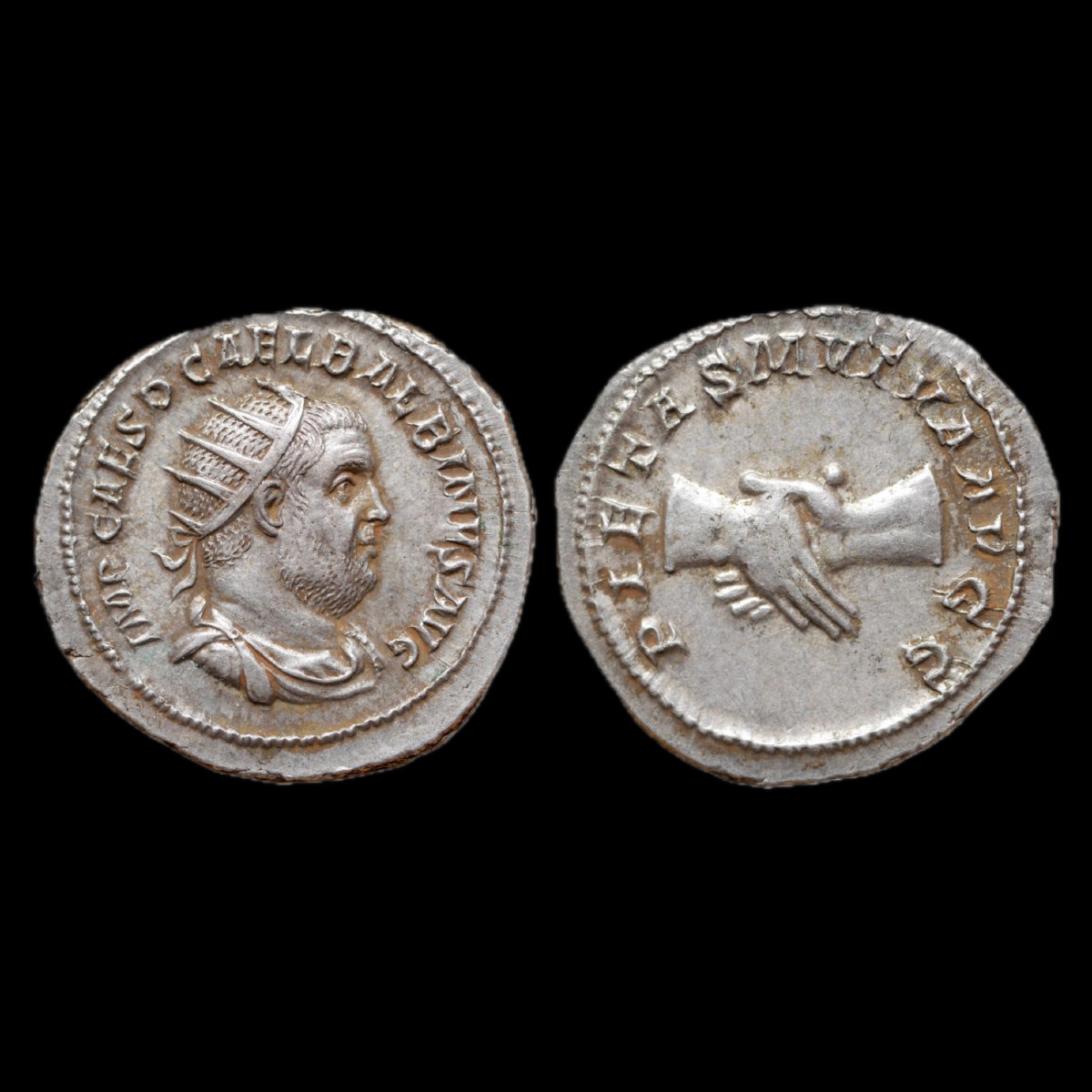
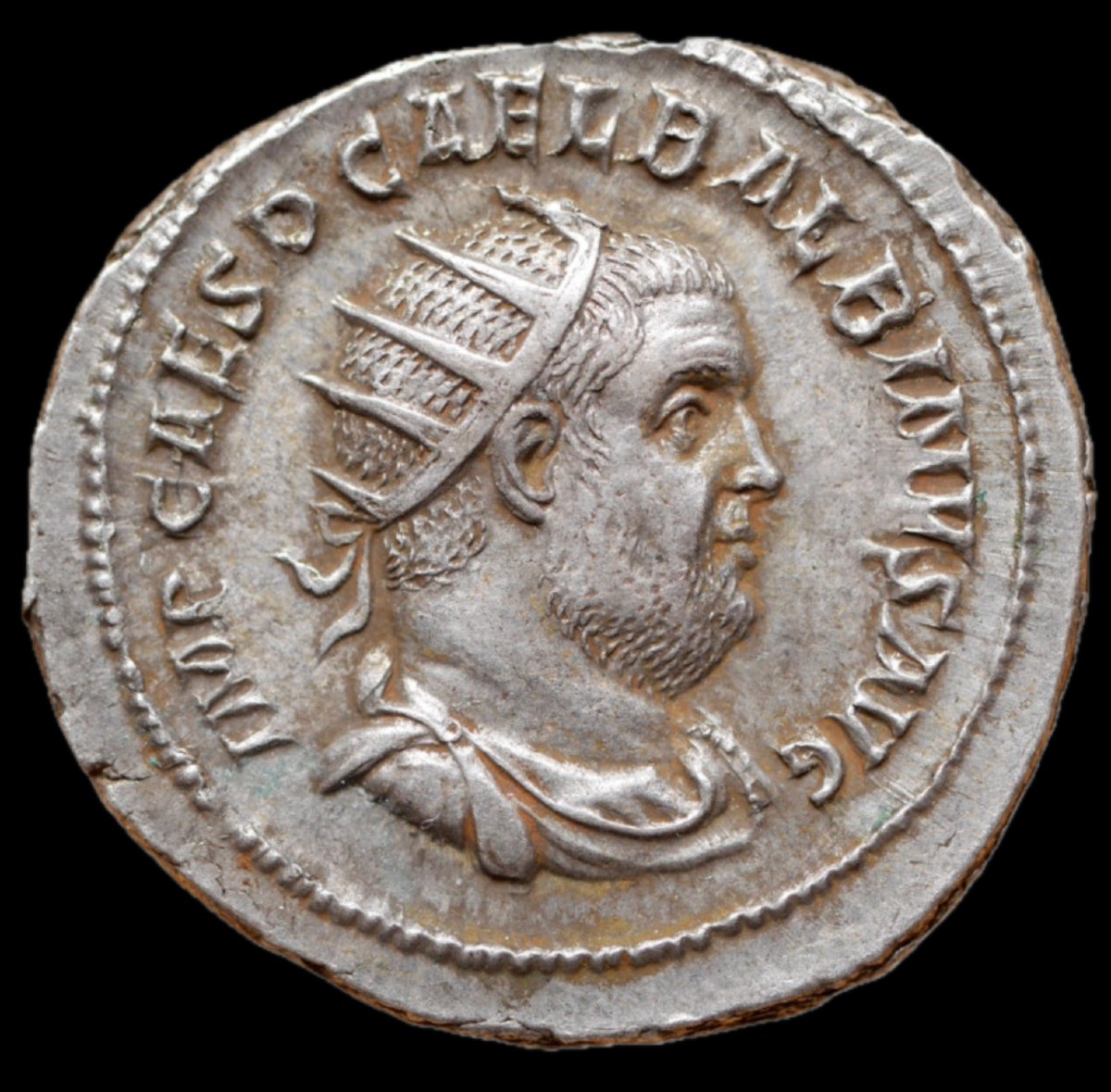
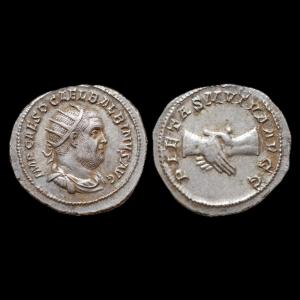
This attractive silver antoninianus of Balbinus, struck at Rome in AD 238, belongs to one of the most expressive issues of the brief joint rule of Balbinus and Pupienus, with on the obverse the titulature IMP CAES D CAEL BALBINVS AVG around a radiate, draped, and cuirassed bust right, and on the reverse the legend PIETAS MVTVA AVGG framing two clasped hands, a type firmly recorded as RIC IV.2, 12 and RSC 17; through the sharpness of its portrait, the stripped elegance of its reverse, and the historical density attached to the year 238, this specimen offers the collector a particularly eloquent witness to the imperial collegiality desired by the Senate at the heart of the third-century crisis.
Each specimen is examined, described, and accompanied by a certificate of authenticity in accordance with the standards of the art and heritage market; the present piece is especially noteworthy for its 23 mm diameter and its 4.92 g weight, which compare very favorably with the documented weight and size range for this type, Numista indicating a reference weight of 4.4 g, a diameter of 22.5 mm, and an observed variation ranging from about 1.84 to 5.59 g, while other specimens published by specialist firms fall within a very close neighborhood, notably 4.74 g at Baldwin’s and 4.37 g at CNG.
Analysis & Expertise
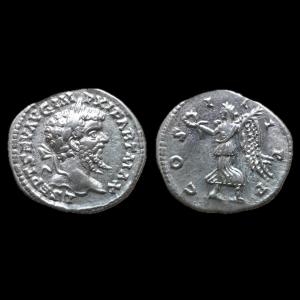
Close observation under ×10 magnification and raking light. Direct examination of the obverse reveals a radiate portrait of Balbinus of truly remarkable presence, whose physiognomy remains particularly well constructed, with a broadly legible radiant crown, a powerful forehead, a well-opened eye, a firm nasal line, a short beard finely indicated, and the beginning of the drapery and cuirass retaining crisp relief, so that the imperial typology of the obverse reads with an immediacy especially appreciable for so brief a reign; the circular legend, largely preserved with pleasing breadth, sits within a beaded border that can still be followed to a great extent, reinforcing the visual balance of a generous flan that is favorably centered.
The reverse stands out for a composition of great iconographic purity, as the clasped hands, perfectly centered, retain their essential articulation, with sleeves and wrists clearly individualized, according to a deliberately concentrated engraving scheme that gives this type all its symbolic force; the legend PIETAS MVTVA AVGG remains legible around a very large portion of the circumference, with minor peripheral softening that does not affect comprehension of the message, and the beaded border, still well present along much of the circumference, frames the whole with a strikingly appealing sense of manufacture for a third-century imperial circulating coin.
The silver surface shows a homogeneous ancient appearance, in a nuanced light gray, with relief that still catches the light with great elegance on the best-struck areas, notably the face, the radiate crown, and the clasped hands; a few discreet old handling marks and very slight peripheral heterogeneities, naturally integrated into the coin’s material life, in no way alter the overall coherence, while the measured irregularity of the flan, the modeling of the letters, the tension of the border, and the natural structuring of the reliefs fully accord with a hammer strike, as given by the references for this type.
What particularly elevates this specimen is the combination, within a single object, of several highly sought-after qualities—namely a well-set portrait, a broadly preserved obverse legend, an emblematic reverse that is immediately legible, and a notably harmonious metal presence—so that the coin’s value lies not only in its catalogue reference, but in the clarity with which it restores, in a compact format, the severe dignity of one of the most tense political moments in Roman imperial history.
Characteristics
Authority
The issue belongs to Balbinus, emperor in 238, within the framework of the senatorial co-regency exercised with Pupienus, a context directly evoked by the reverse formula AVGG, i.e., the “two Augusti.”
Mint
The mint is Rome, as given by the typological repertories and confirmed by specialist specimens published under the same reference.
Dating
The strike belongs to AD 238, i.e., the very brief reign of Balbinus, which Britannica summarizes as three months, giving all his coinage a singular historical concentration.
Denomination
This is an antoninianus, a denomination explicitly indicated by Numista and by concordant commercial catalogues.
Metal
The type is catalogued in silver, a designation retained by Numista and by Baldwin’s for this Rome issue of Balbinus.
Weight
The observed weight for this specimen is 4.92 g, a very favorable figure for the type and fully compatible with comparable antoniniani documented in the specialized trade, notably 4.74 g at Baldwin’s and 4.37 g at CNG.
Diameter
The observed diameter is 23 mm, very consistent with Numista’s published reference diameter of 22.5 mm, and with market specimens in the same order of magnitude.
Obverse
The obverse bears the legend IMP CAES D CAEL BALBINVS AVG around a radiate, draped, and cuirassed bust right, exactly matching the recorded type.
Reverse
The reverse bears the legend PIETAS MVTVA AVGG with two right hands clasped, an iconographic and epigraphic formula unanimously recognized for this reference.
Typological references
Identification rests on RIC IV.2, 12, with the corresponding OCRE ric.4.balb.12, and on RSC 17, references cited by Numista as well as by CNG and Baldwin’s.
Rarity
The type may rightly be presented as sought-after: Numista assigns it a rarity index of 95, while several market professionals explicitly note it as rare or as an uncommon issue for an emperor whose reign was exceptionally brief.
Historical context
The year 238 belongs to what historiography has retained as one of the most unstable moments of the third century: after the revolt directed against Maximinus, the Senate raised Balbinus and Pupienus as joint emperors, before also making room for the young Gordian III to ease popular tension; it is within this profoundly political framework, where authority had to be rebuilt in urgency, that the present coin should be read—not as a purely accounting issue, but as an assertion of governmental cohesion.
The formula PIETAS MVTVA AVGG, which Numista translates as the “mutual piety of the two emperors,” admirably condenses this intention, for the handshake does not signify mere private civility, but an institutional solidarity between two Augusti chosen to restore order; the reverse thus places into circulation a very precise political idea—imperial concord guaranteed by mutual respect—at the very moment when Roman power sought to make itself credible again.
Cultural value
The cultural value of this piece is particularly high, because it unites—within a small-module silver object—three dimensions that Roman high numismatics rarely holds together with such density: the portrait of an emperor of lightning brief reign, the visible expression of a co-regency, and a symbolic formula of exemplary clarity, in which two joined hands suffice to express an entire program of government.
For the collector, a Balbinus antoninianus of this type has a singular appeal, because it does not proceed solely from the biographical rarity of a short reign, but from an iconography that is immediately intelligible, austere, and magisterial, making this coin a true distillation of the third-century imperial crisis; it is a piece where political history, epigraphic elegance, and symbolic sobriety meet with rare precision.
From the standpoint of representational history, this clasped-hands reverse belongs to the great Roman tradition of signs of concord and alliance, but here in a singularly pared-down, almost doctrinal form, where power renounces figurative abundance in favor of the clarity of a single emblem; it is precisely this sovereign economy of means that gives the coin its deeply Roman accent, and makes it a particularly eloquent cabinet piece.
Traceability & Guarantees
From a European provenance, from an established numismatic dealer, this specimen was acquired through a specialized international transaction conducted within a recognized numismatic network and validated by reference experts, in accordance with the highest standards of the art and heritage market; examination of the present object retains exclusively the features effectively observable on the coin, set within the framework of recognized bibliographic references, in order to offer the collector a presentation that is firm, coherent, and fully consistent with sector practice.
Each specimen is examined, described, and accompanied by a certificate of authenticity in accordance with the standards of the art and heritage market; in the present case, the concordance between titulature, clasped-hands typology, diameter, metal, general style, and the references RIC 12 / RSC 17 / OCRE ric.4.balb.12 establishes a particularly solid numismatic attribution.
Period: Before 16th century
Style: Rome and Antic Greece
Condition: Good condition
Reference (ID): 1730189
Availability: In stock