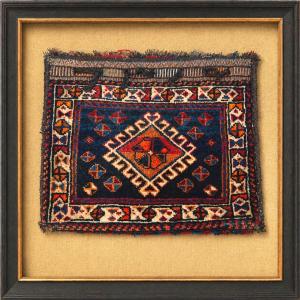


Khorjin Bathiyari Fragment. Persia. Circa 1880. 90 X 68 Cm
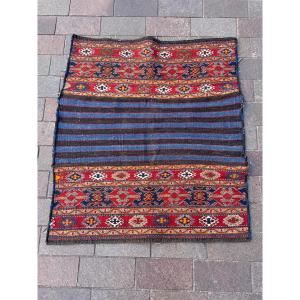
A rare fragment of a double bag (khorjin) woven by the Bakhtiari nomadic tribes of southwestern Persia in the late 19th century.
Made using a mixed technique—wool on wool—this piece attests to the remarkable craftsmanship of the Bakhtiari weavers. These large bags accompanied seasonal migrations and were used to carry personal belongings and provisions.
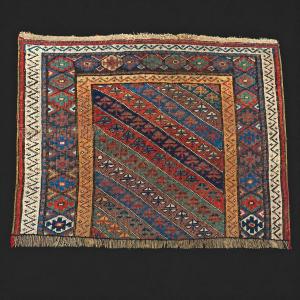
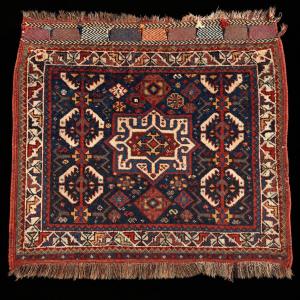
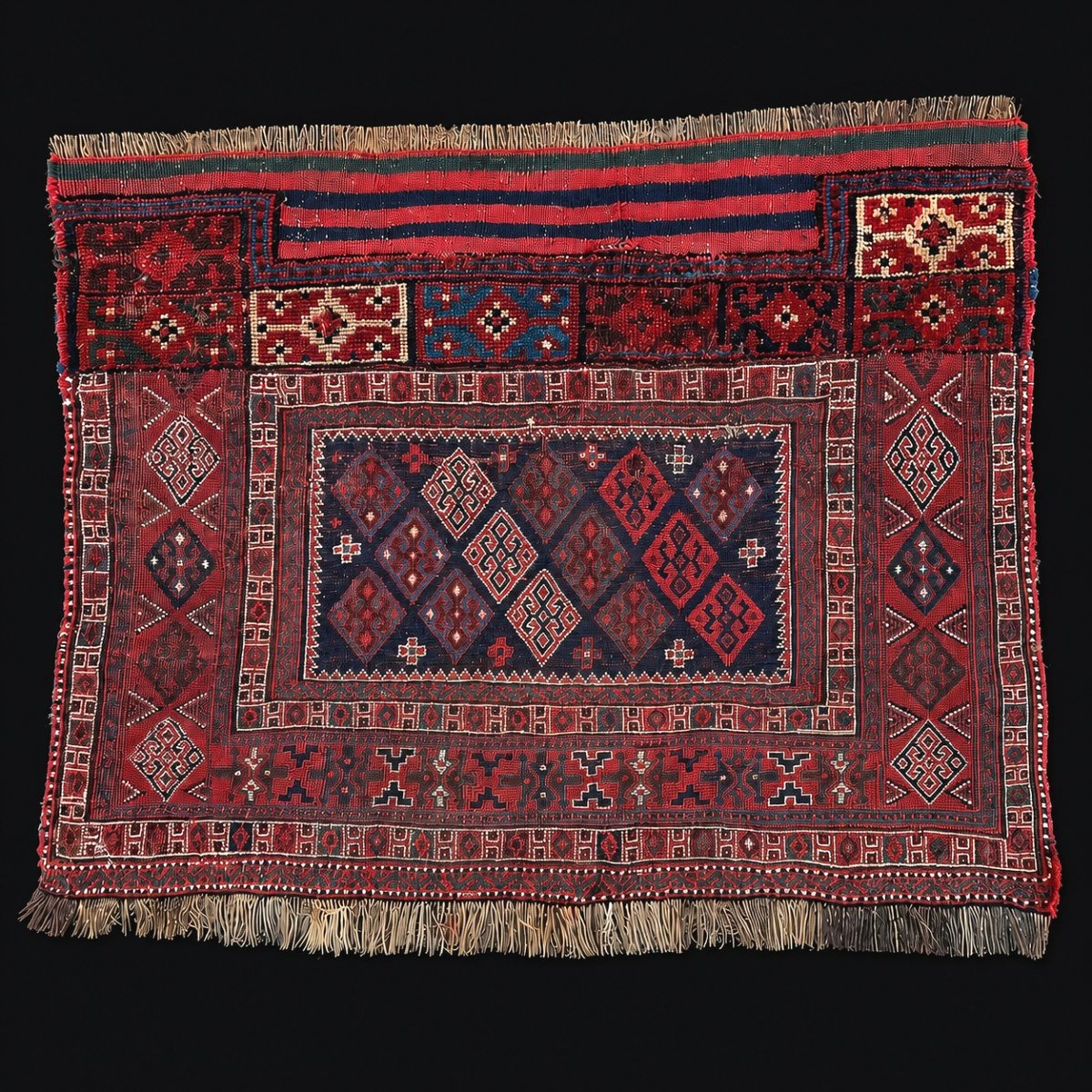
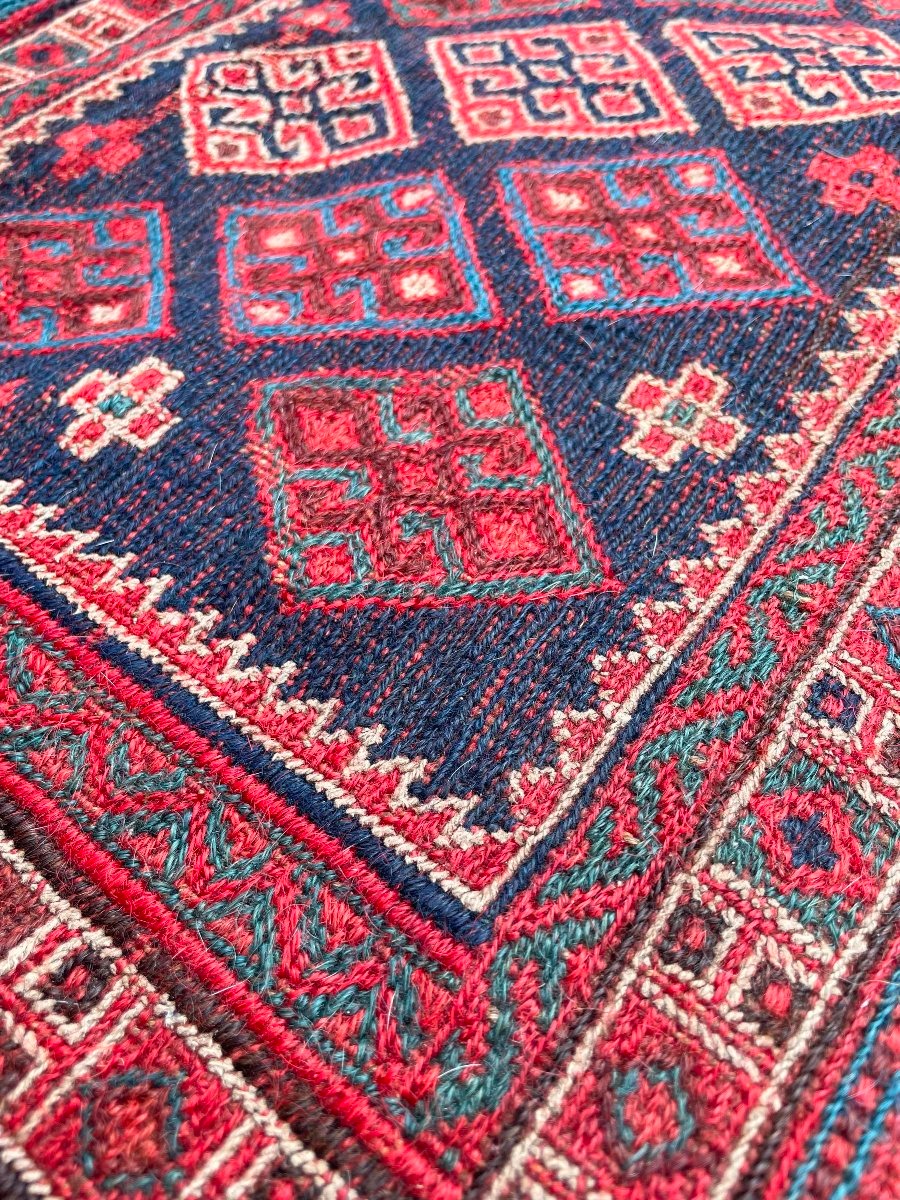
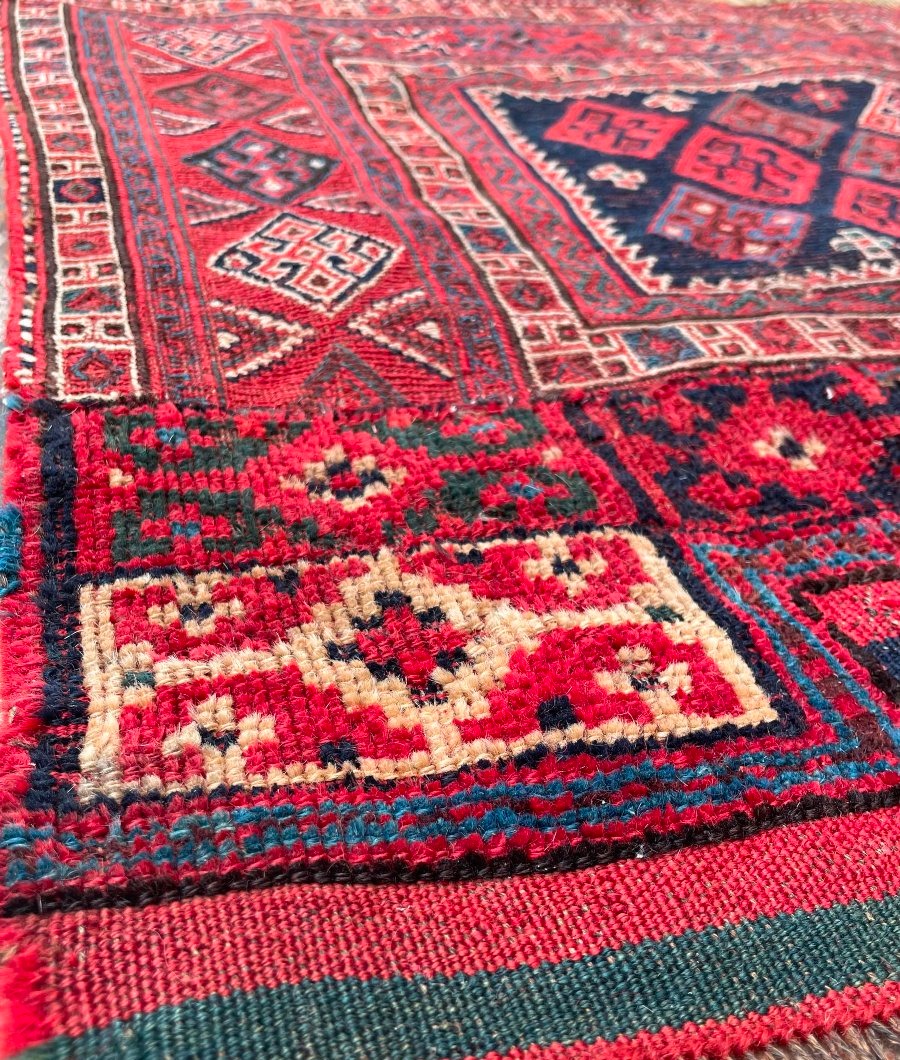
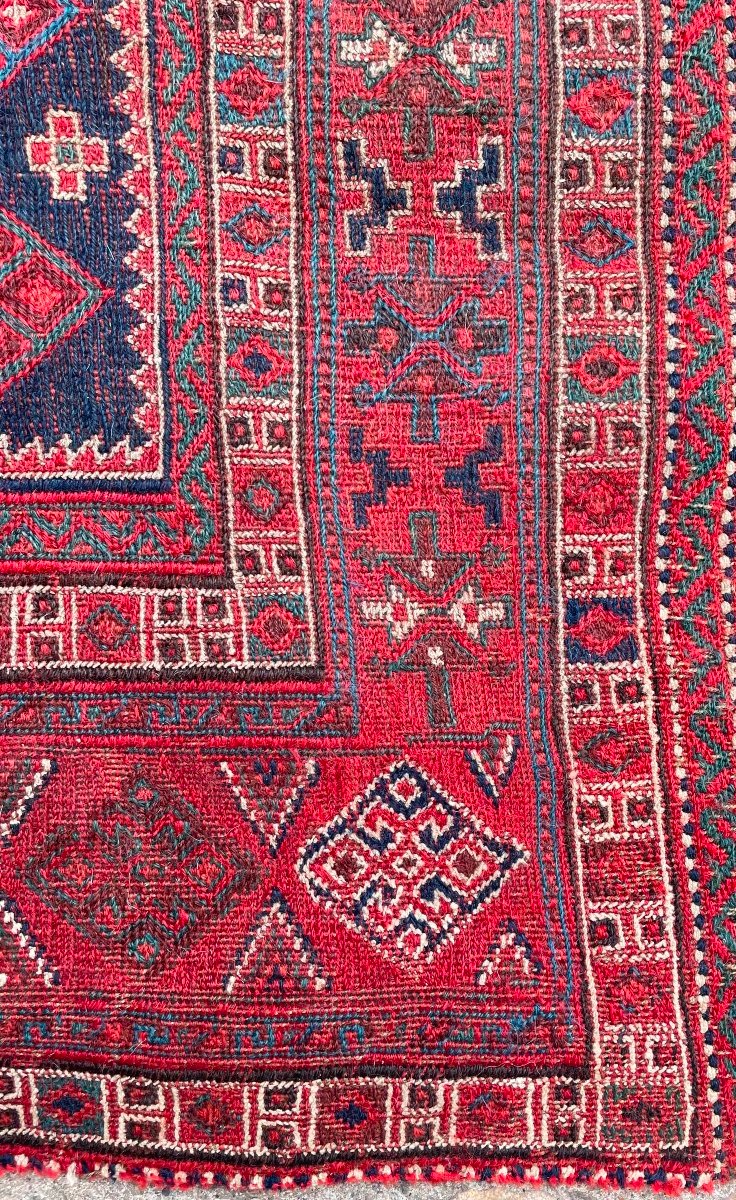
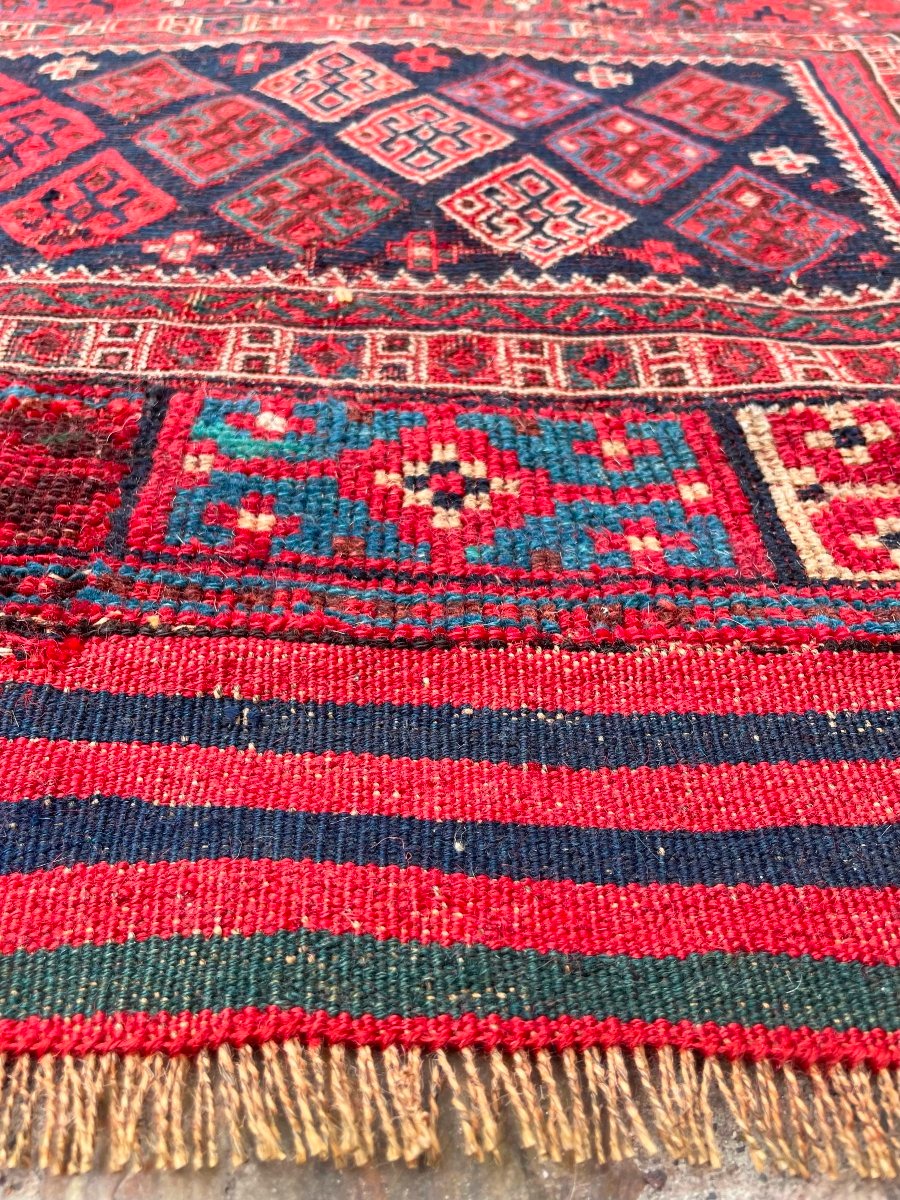
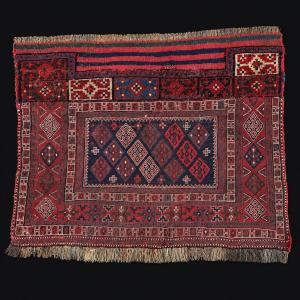
The design is organized around a vast midnight-blue field, punctuated by a series of diamonds arranged in a staggered pattern. Within and around these figures appear small hooked motifs reminiscent of a scorpion, a figure traditionally associated with a protective function in tribal textile symbolism. Their repetition lends the design a striking graphic density.
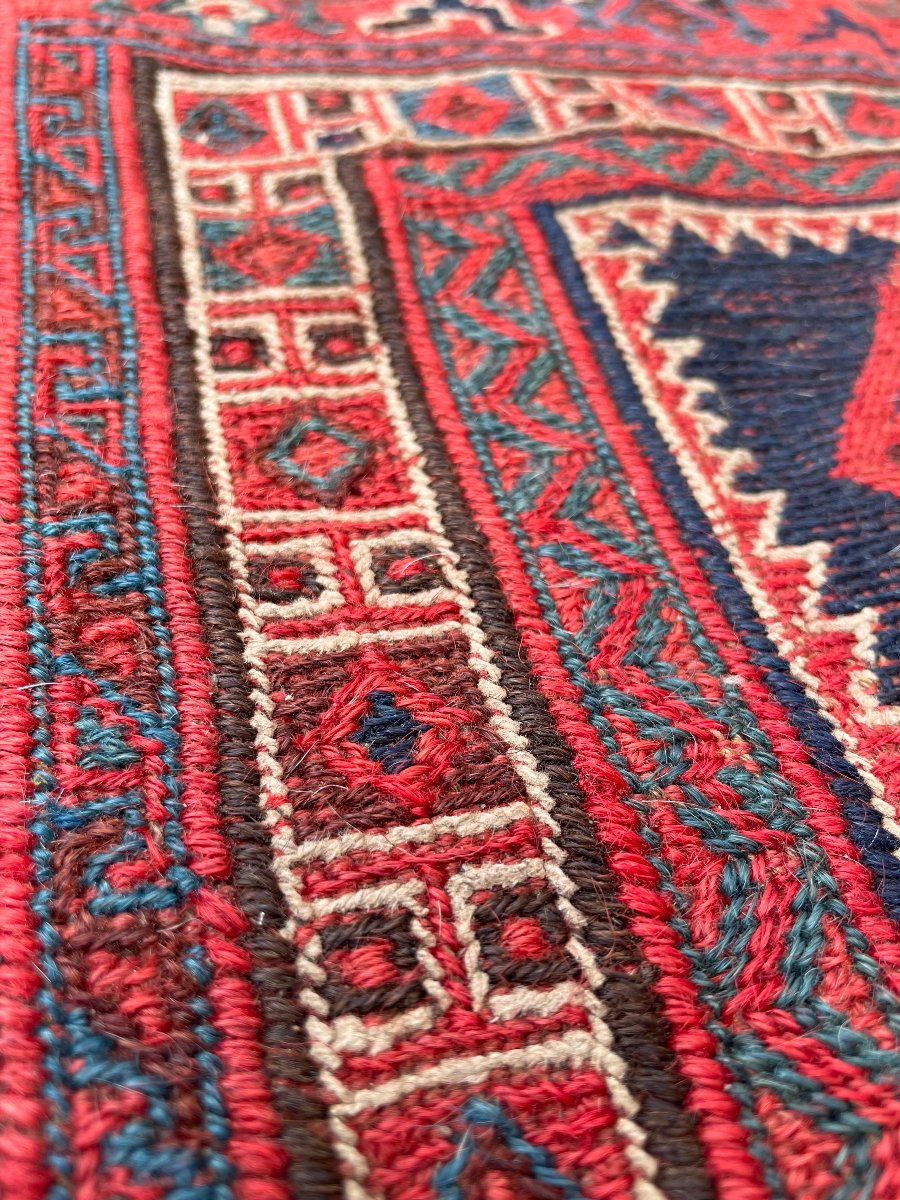
This central field is surrounded by a series of narrow borders featuring geometric motifs: broken lines, small hooks, S-shapes, and cross-like elements interplay in a particularly meticulous arrangement.
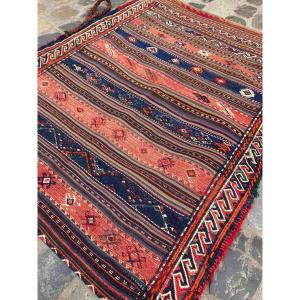
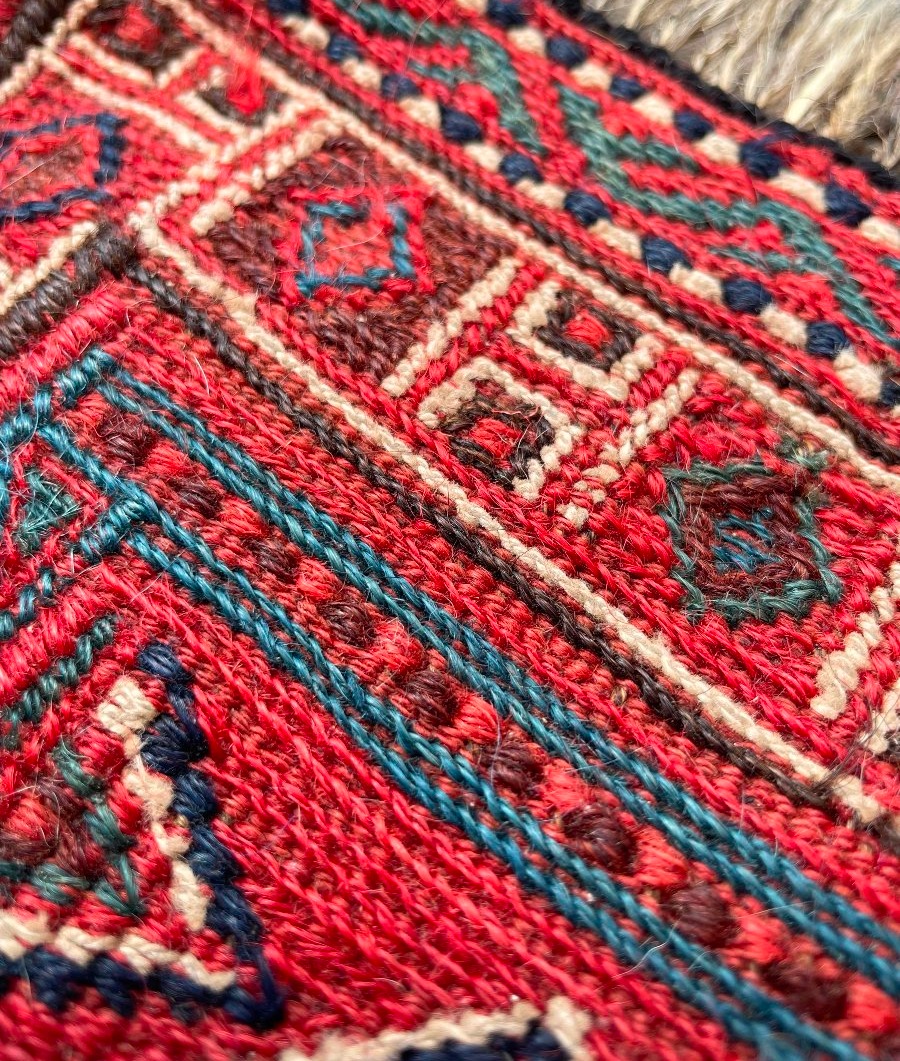
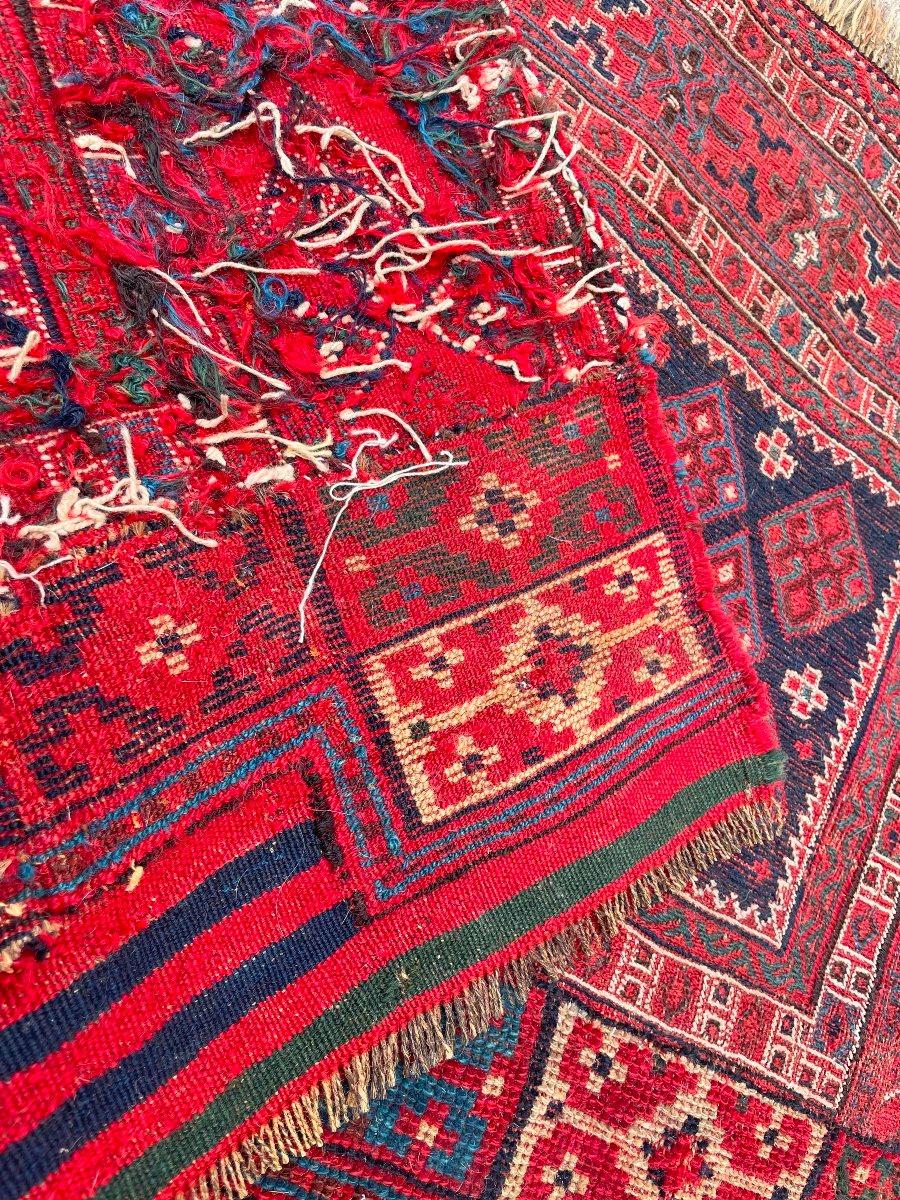
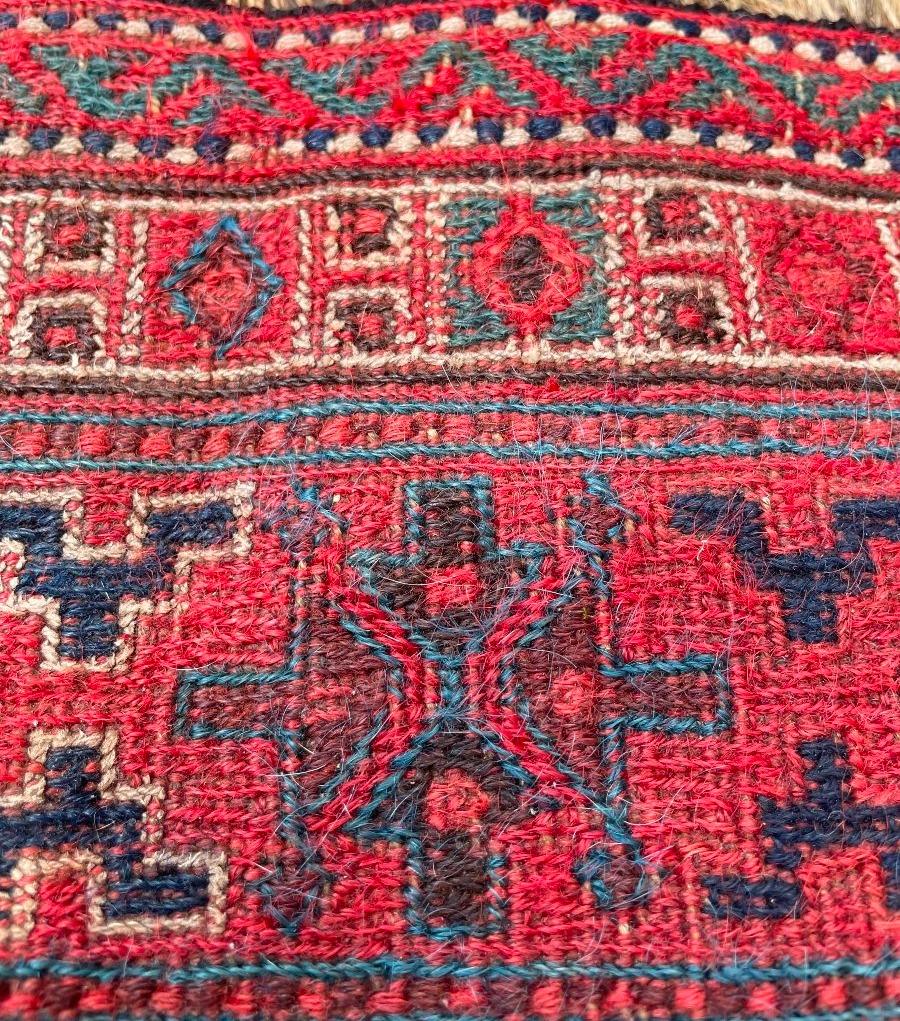
The diversity of techniques also contributes to the refinement of the piece. The main section is executed in sumak, topped by a band worked in a short-pile velvet knot stitch, and then extended by several finely woven bands. This alternation creates variations in texture and relief that are particularly noticeable when viewing the piece up close.
The color palette is based on a deep indigo blue, madder reds, brick red, and brownish red, complemented by touches of ivory, dark brown, turquoise blue, and muted green. The subtle variations in tone, characteristic of traditional natural dyes, lend the piece its full depth.
If I could express the full subtlety of this work using everyday words, I would gladly do so! The piece is supple and light as a cloud. Its refinement is evident from one end to the other, both in the precision of the design and in the exceptional quality of the weaving.
Superb condition.
Bakhtiari, Persia. Late 19th century.
Dimensions: 90 × 68 cm
Laurent
Beauty of Kilims
Made using a mixed technique—wool on wool—this piece attests to the remarkable craftsmanship of the Bakhtiari weavers. These large bags accompanied seasonal migrations and were used to carry personal belongings and provisions.
The design is organized around a vast midnight-blue field, punctuated by a series of diamonds arranged in a staggered pattern. Within and around these figures appear small hooked motifs reminiscent of a scorpion, a figure traditionally associated with a protective function in tribal textile symbolism. Their repetition lends the design a striking graphic density.
This central field is surrounded by a series of narrow borders featuring geometric motifs: broken lines, small hooks, S-shapes, and cross-like elements interplay in a particularly meticulous arrangement.
The diversity of techniques also contributes to the refinement of the piece. The main section is executed in sumak, topped by a band worked in a short-pile velvet knot stitch, and then extended by several finely woven bands. This alternation creates variations in texture and relief that are particularly noticeable when viewing the piece up close.
The color palette is based on a deep indigo blue, madder reds, brick red, and brownish red, complemented by touches of ivory, dark brown, turquoise blue, and muted green. The subtle variations in tone, characteristic of traditional natural dyes, lend the piece its full depth.
If I could express the full subtlety of this work using everyday words, I would gladly do so! The piece is supple and light as a cloud. Its refinement is evident from one end to the other, both in the precision of the design and in the exceptional quality of the weaving.
Superb condition.
Bakhtiari, Persia. Late 19th century.
Dimensions: 90 × 68 cm
Laurent
Beauty of Kilims
540 €
Period: 19th century
Style: Orientalism
Condition: Excellent condition
Material: Wool
Length: 90 cm
Width: 68 cm
Reference (ID): 1805938
Availability: In stock
Print