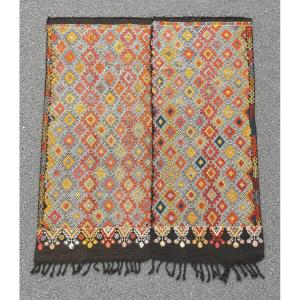
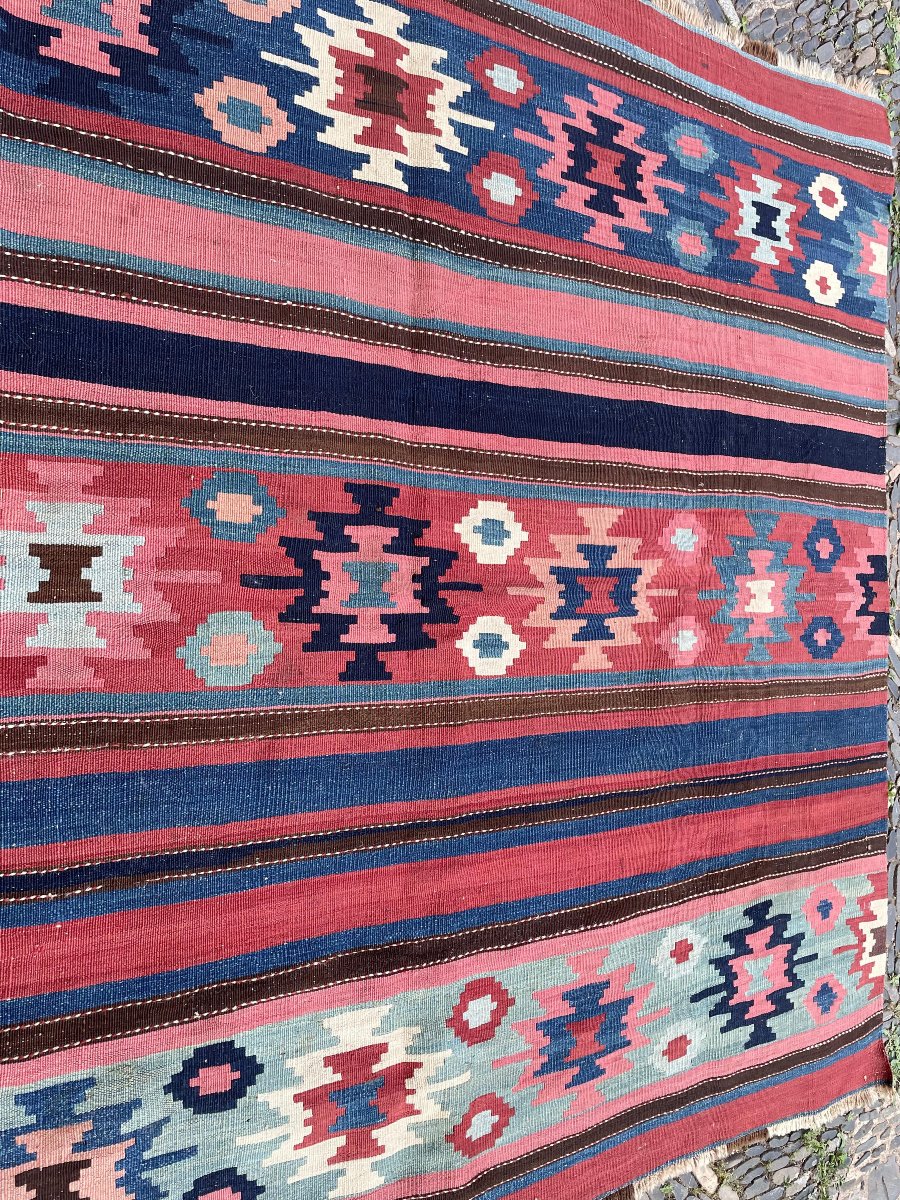
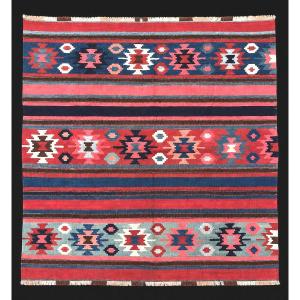


Shasaven Kilim. Persia. Circa 1880. 177 X 169 Cm
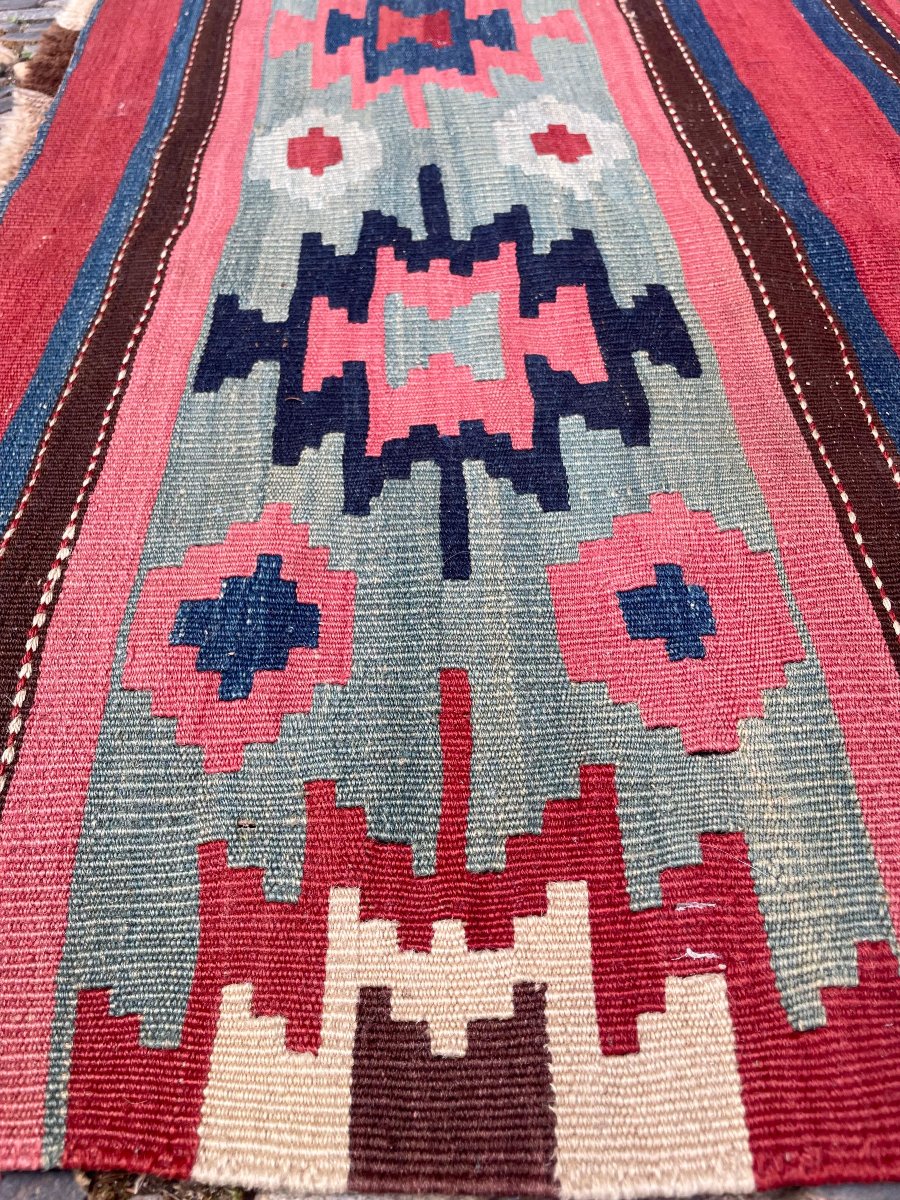
Just this once, let’s forget about the kilim and take a look at its fringes.
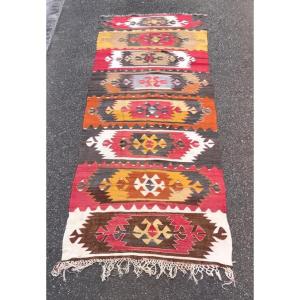
One detail immediately catches the eye: they alternate between two very distinct natural colors—a luminous ecru and a deep brown. The former is made of sheep’s wool, the latter of goat’s wool, a particularly durable fiber.
Far from being a mere anecdote, this detail brings us closer to the reality of nomadic weaving: using available materials, making the most of their inherent qualities, and preserving their natural colors. The durability of goat’s wool serves a practical purpose; its alternation with ecru wool creates, almost by chance, a rhythm and an aesthetic.
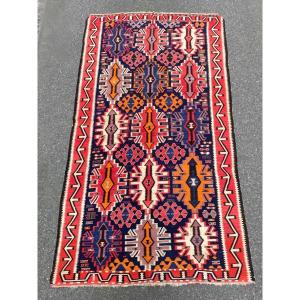
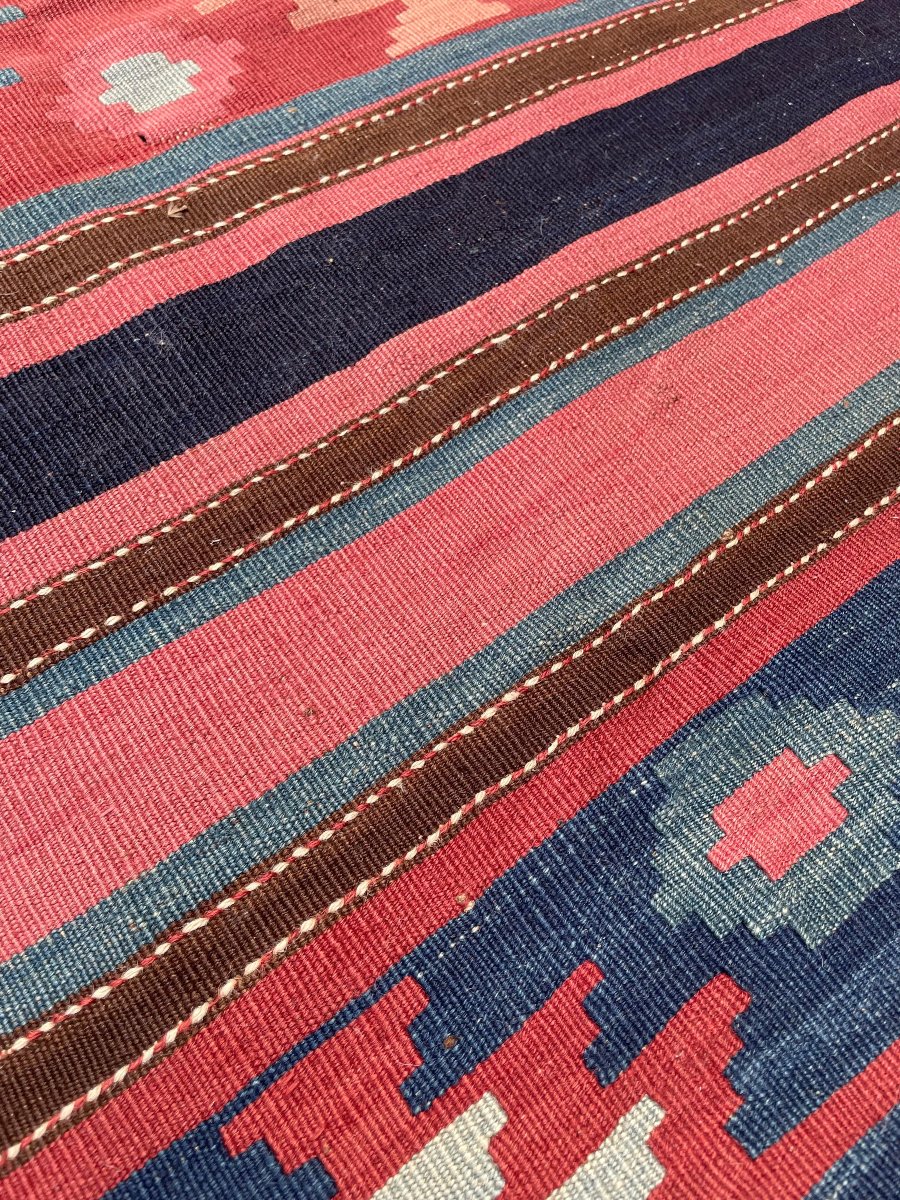
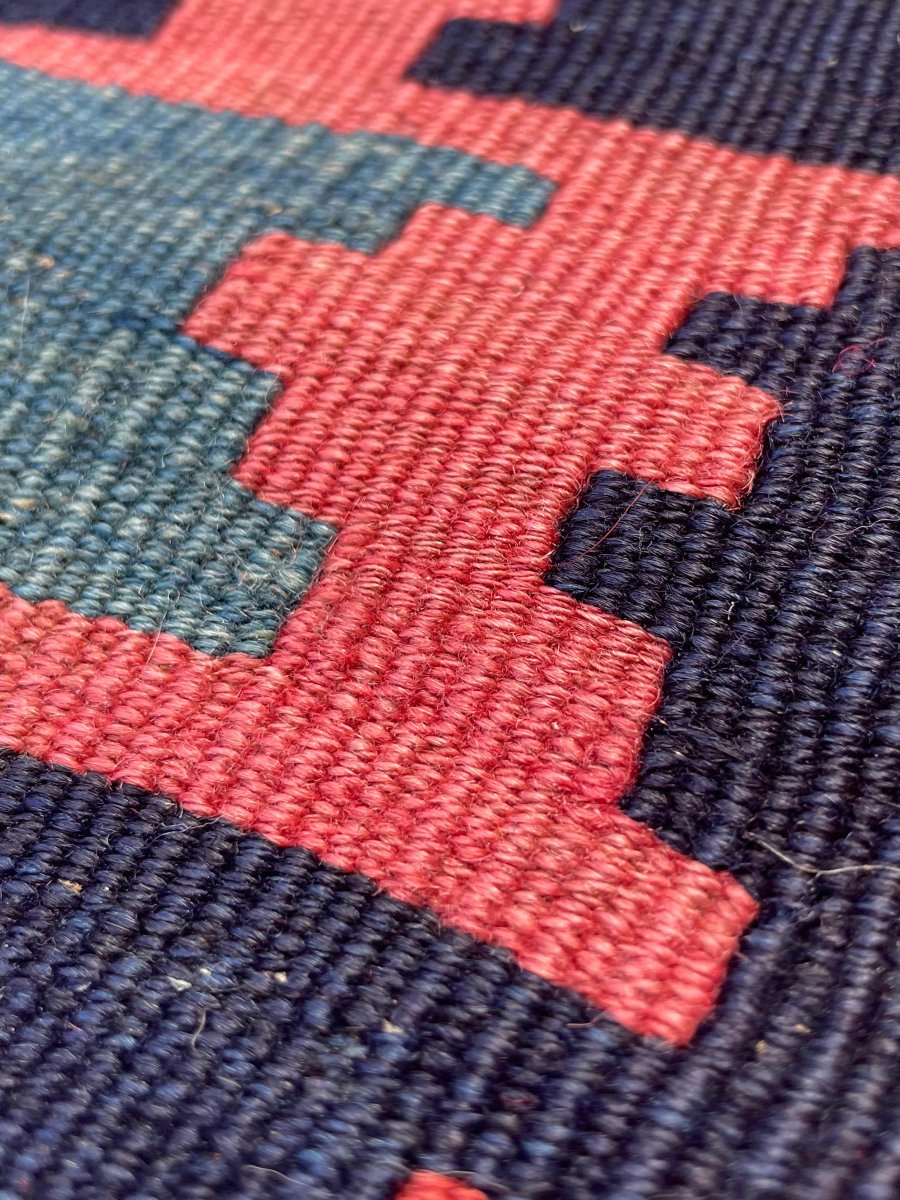
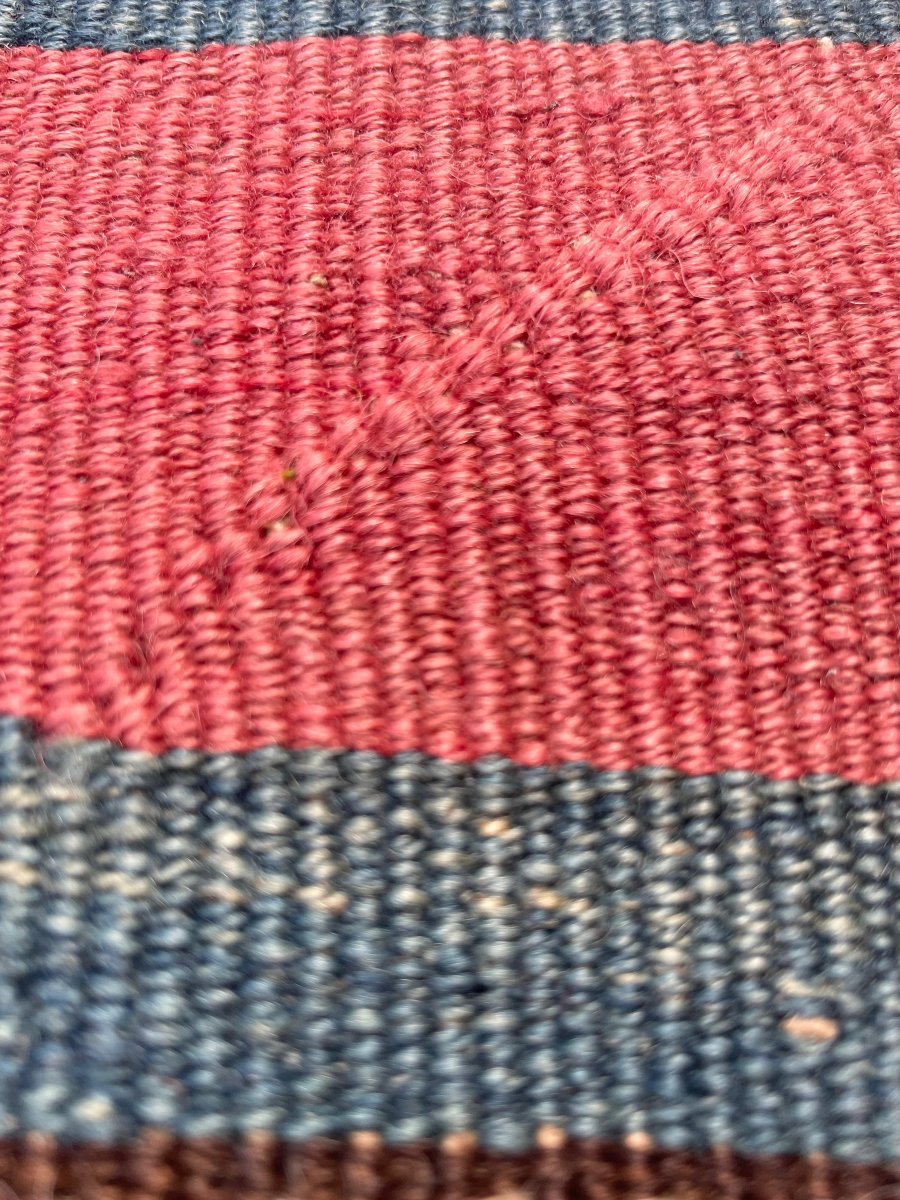
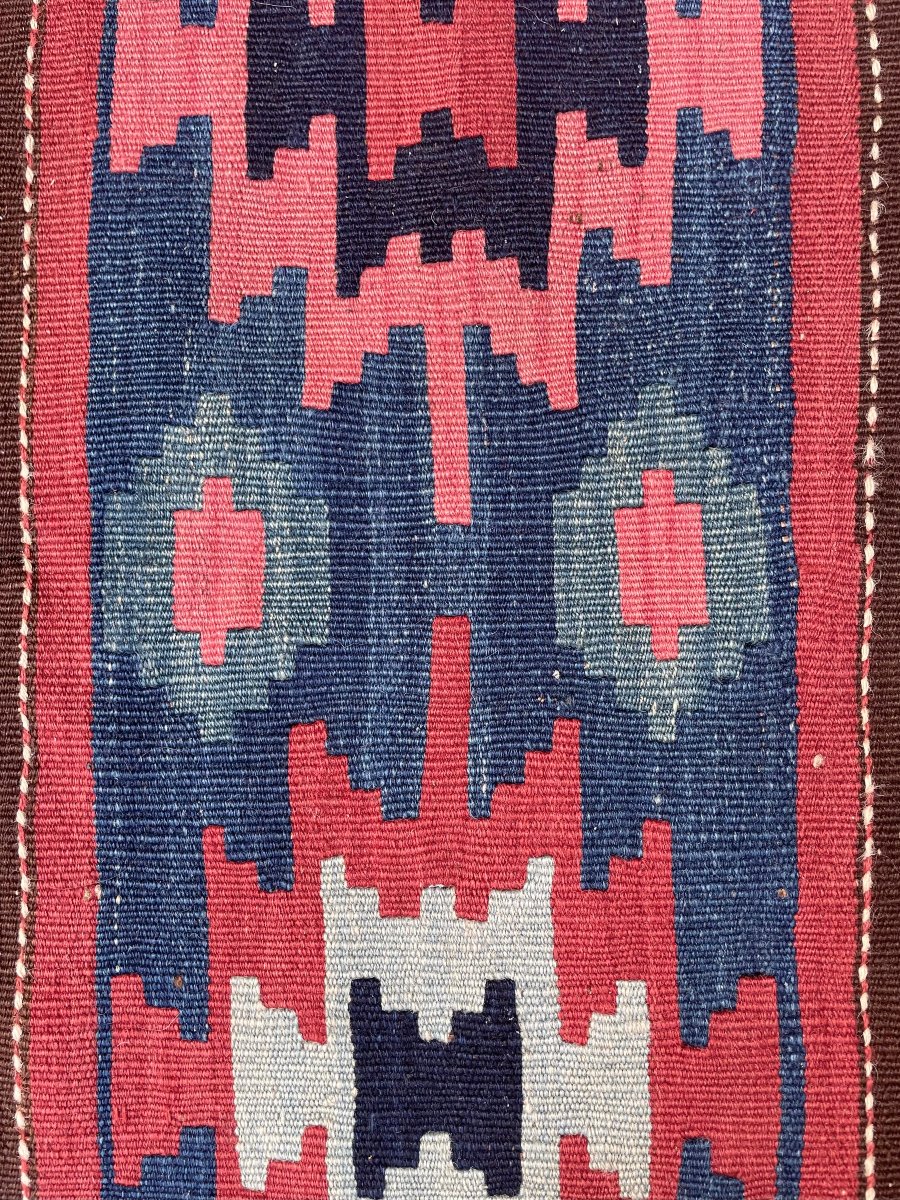
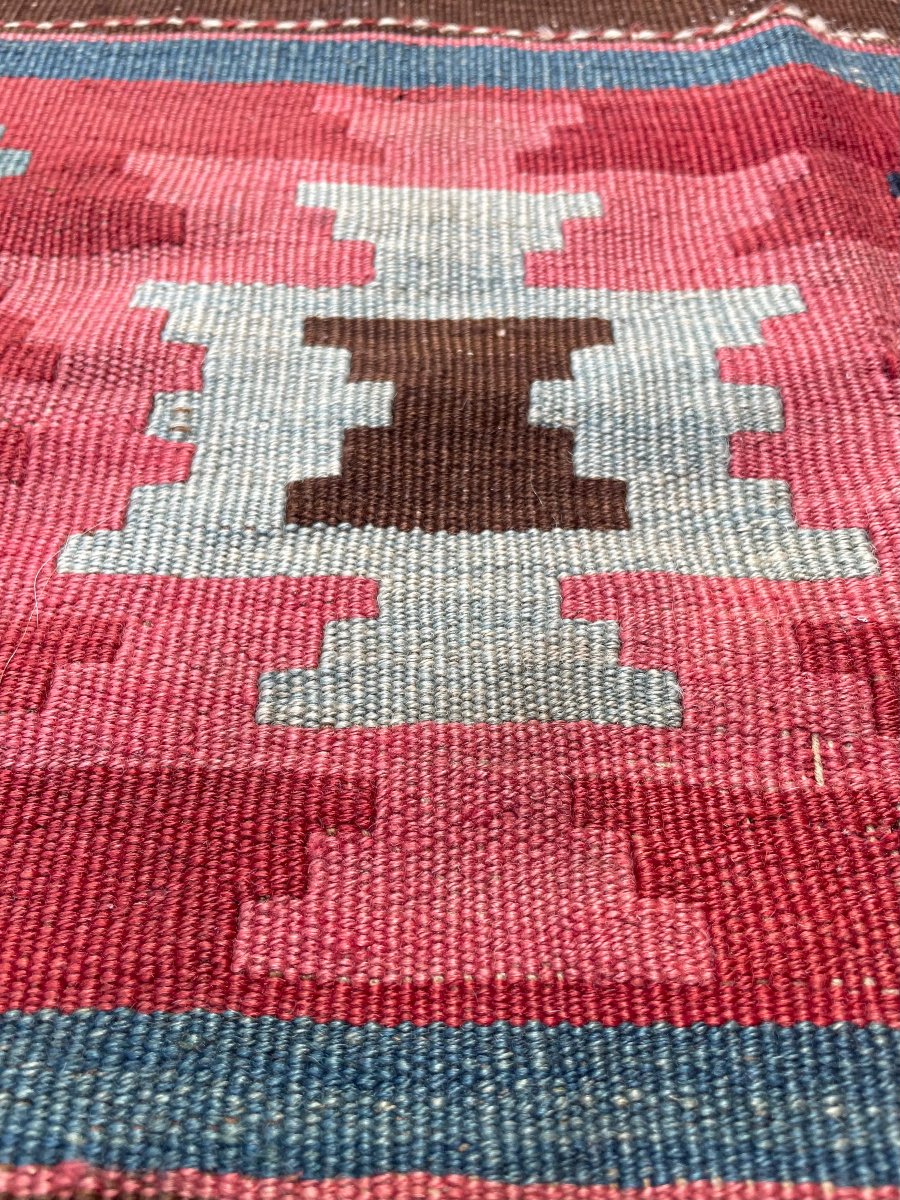
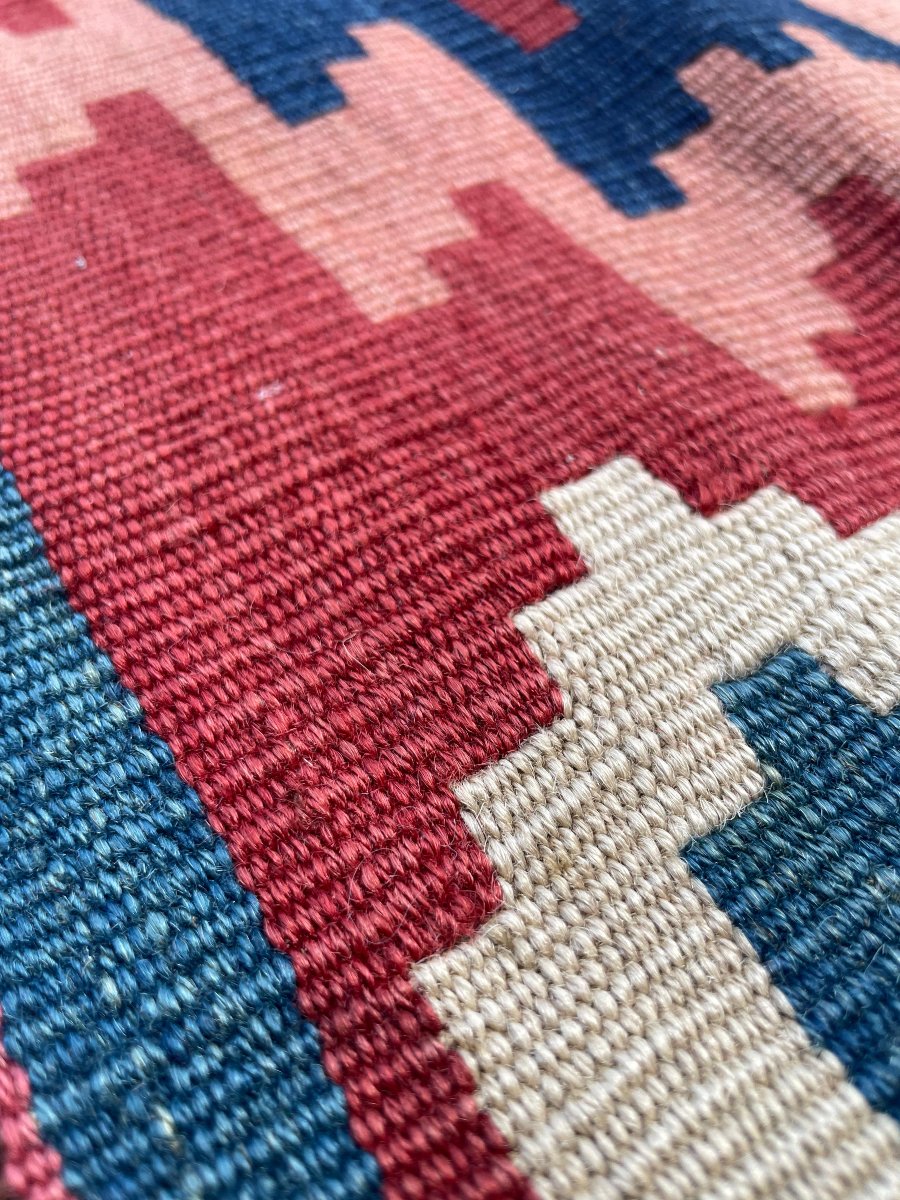
The colors of this Shahsavan kilim from Persia are stunning. Together with the quality of the weaving, they provide a valuable clue for dating the piece to earlier periods. The weave is extremely fine and tight, yet the kilim remains remarkably supple and surprisingly light. This combination of fineness, density, and lightness allows us to date its production to the very end of the 19th century.
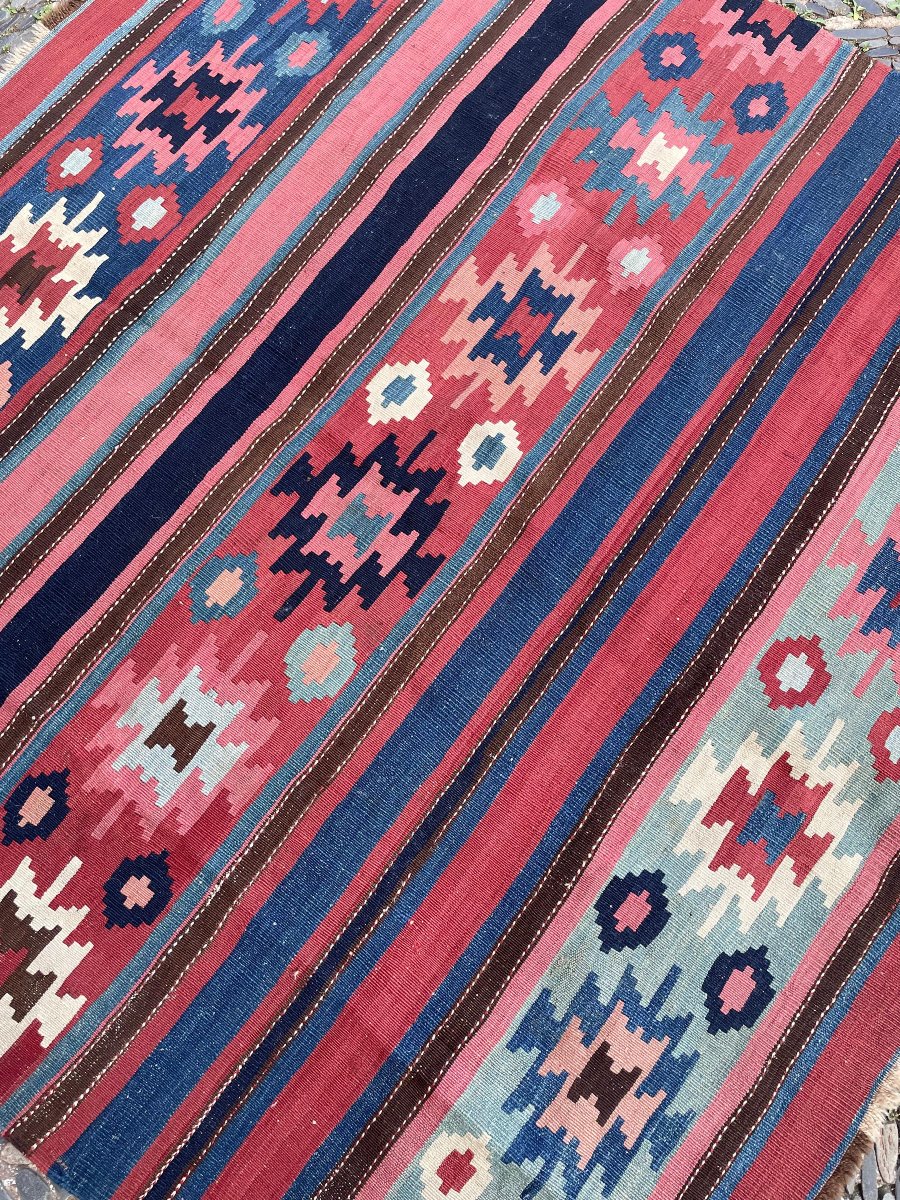
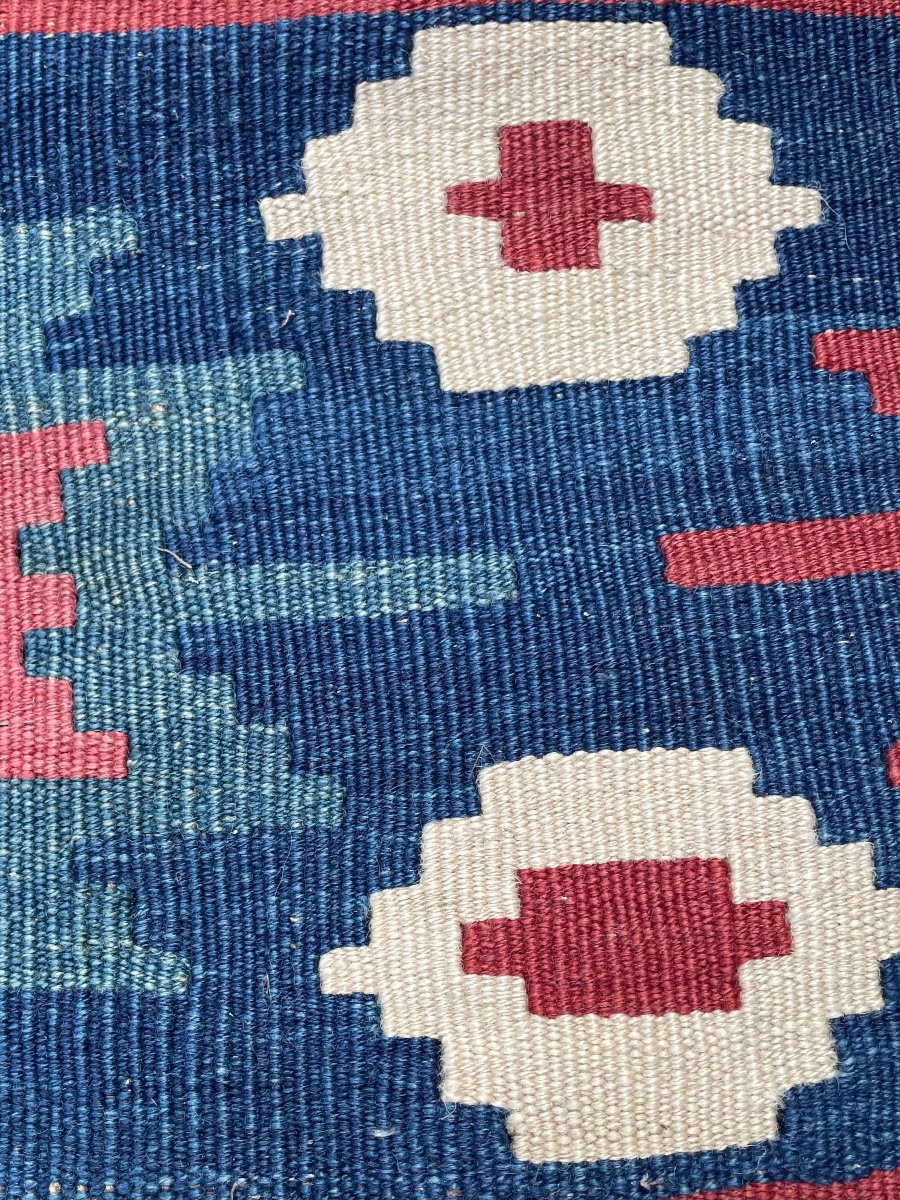
At first glance, one is instantly captivated by the purity of the plant-based dyes, their softness, and their luminosity. Deep, rich indigo blue, turquoise, pale pink, dark brown, and ecru make up a palette of rare subtlety. The colors interact without ever clashing, creating a particularly gentle harmony.
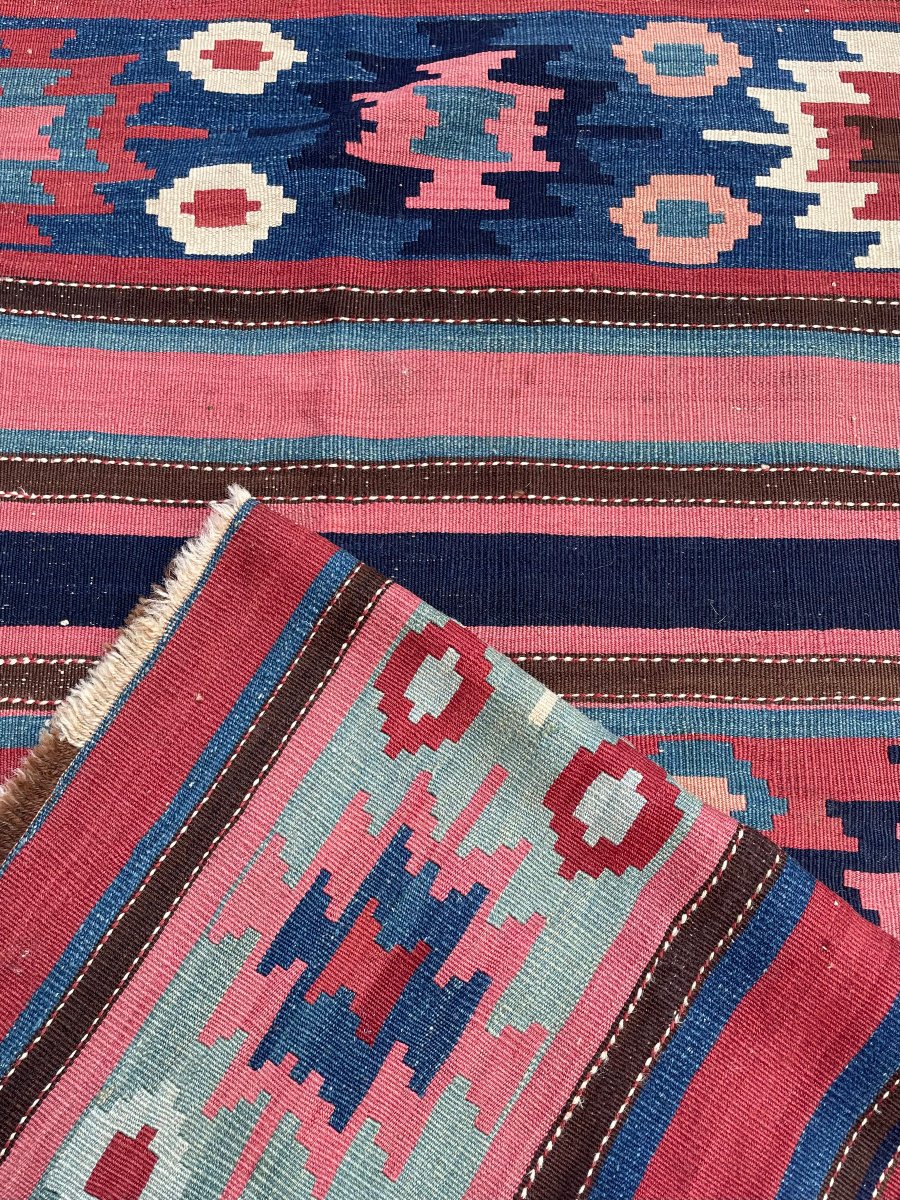
This is a fragment. Originally, the piece must have been around three meters long. The age and wear of part of the kilim led to it being trimmed to preserve the intact section. This process has given it its current compact, almost square shape, which is particularly appealing from a decorative standpoint.
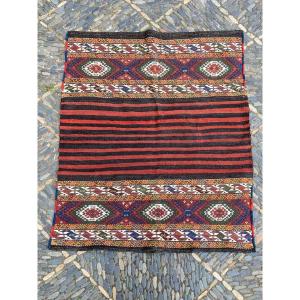
The composition is organized into a succession of horizontal bands—alternating between solid and patterned—which give the piece its rhythm and remarkable graphic presence. The star-shaped geometric motifs appear alongside the “eye” motif, a protective symbol traditionally associated with warding off the evil eye.
An antique piece with a strong character, whose graphic impact, the finesse of its weave, and above all its exceptional color palette make it a particularly interesting object today.
Circa 1880
Dimensions: 177 × 169 cm
Laurent
Beauty of Kilims
One detail immediately catches the eye: they alternate between two very distinct natural colors—a luminous ecru and a deep brown. The former is made of sheep’s wool, the latter of goat’s wool, a particularly durable fiber.
Far from being a mere anecdote, this detail brings us closer to the reality of nomadic weaving: using available materials, making the most of their inherent qualities, and preserving their natural colors. The durability of goat’s wool serves a practical purpose; its alternation with ecru wool creates, almost by chance, a rhythm and an aesthetic.
The colors of this Shahsavan kilim from Persia are stunning. Together with the quality of the weaving, they provide a valuable clue for dating the piece to earlier periods. The weave is extremely fine and tight, yet the kilim remains remarkably supple and surprisingly light. This combination of fineness, density, and lightness allows us to date its production to the very end of the 19th century.
At first glance, one is instantly captivated by the purity of the plant-based dyes, their softness, and their luminosity. Deep, rich indigo blue, turquoise, pale pink, dark brown, and ecru make up a palette of rare subtlety. The colors interact without ever clashing, creating a particularly gentle harmony.
This is a fragment. Originally, the piece must have been around three meters long. The age and wear of part of the kilim led to it being trimmed to preserve the intact section. This process has given it its current compact, almost square shape, which is particularly appealing from a decorative standpoint.
The composition is organized into a succession of horizontal bands—alternating between solid and patterned—which give the piece its rhythm and remarkable graphic presence. The star-shaped geometric motifs appear alongside the “eye” motif, a protective symbol traditionally associated with warding off the evil eye.
An antique piece with a strong character, whose graphic impact, the finesse of its weave, and above all its exceptional color palette make it a particularly interesting object today.
Circa 1880
Dimensions: 177 × 169 cm
Laurent
Beauty of Kilims
950 €
Period: 19th century
Style: Orientalism
Condition: Perfect condition
Material: Wool
Length: 177 cm
Width: 169 cm
Reference (ID): 1808082
Availability: In stock
Print