THIS OBJECT WAS SOLD
Etrusco-corinthian Piriform Aryballos (7th C. Bc) With Certificate Of Authenticity
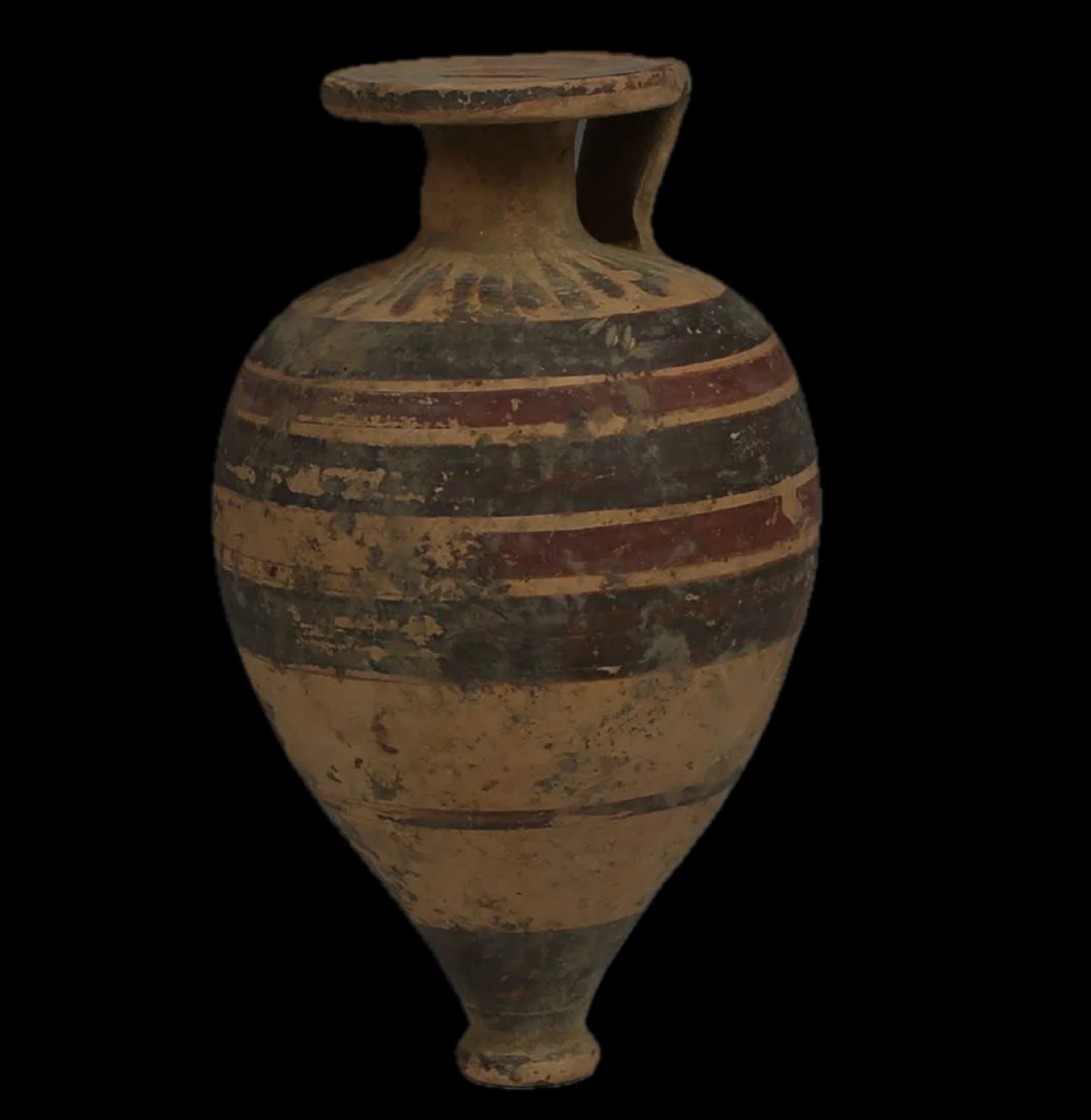
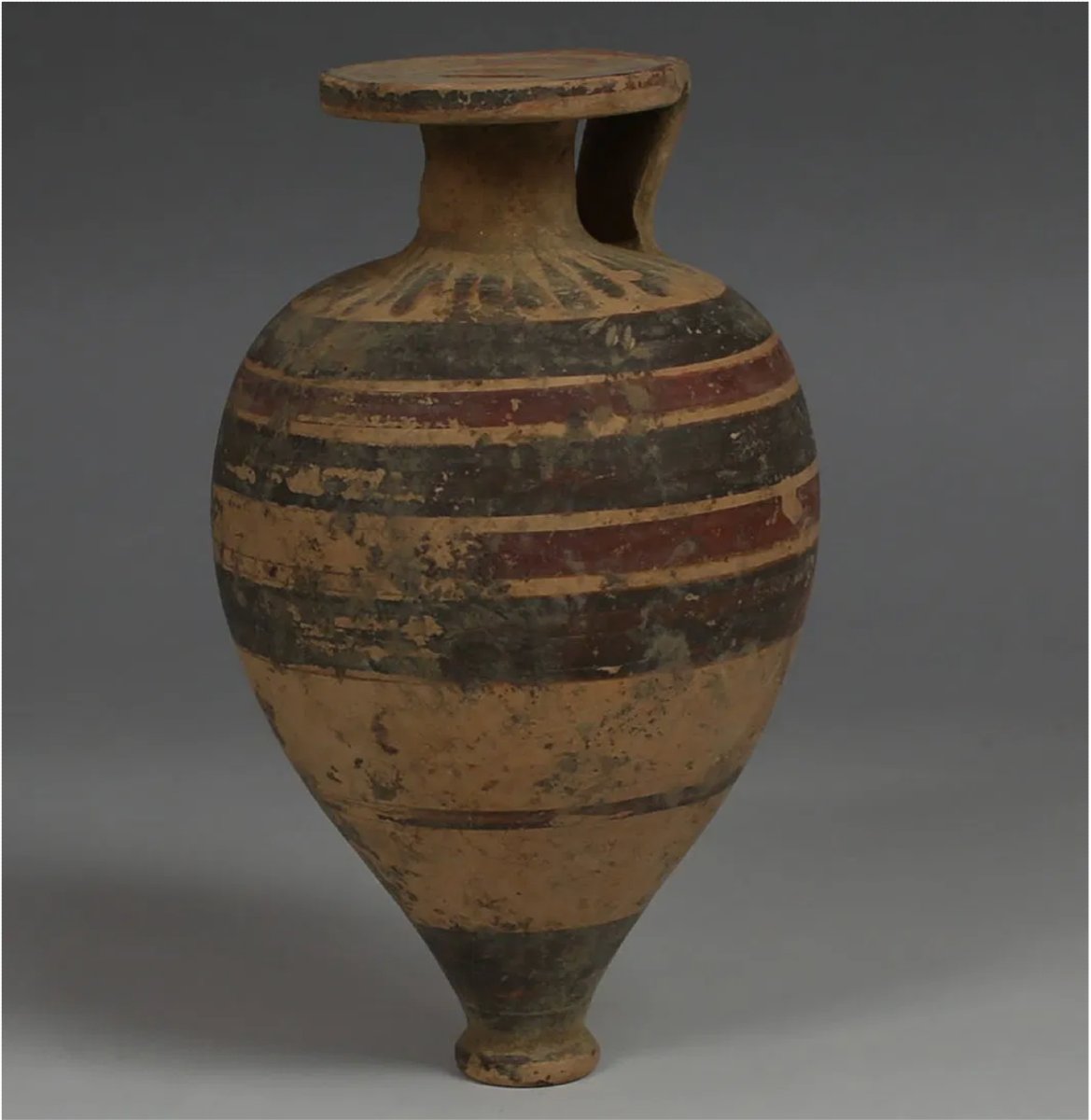
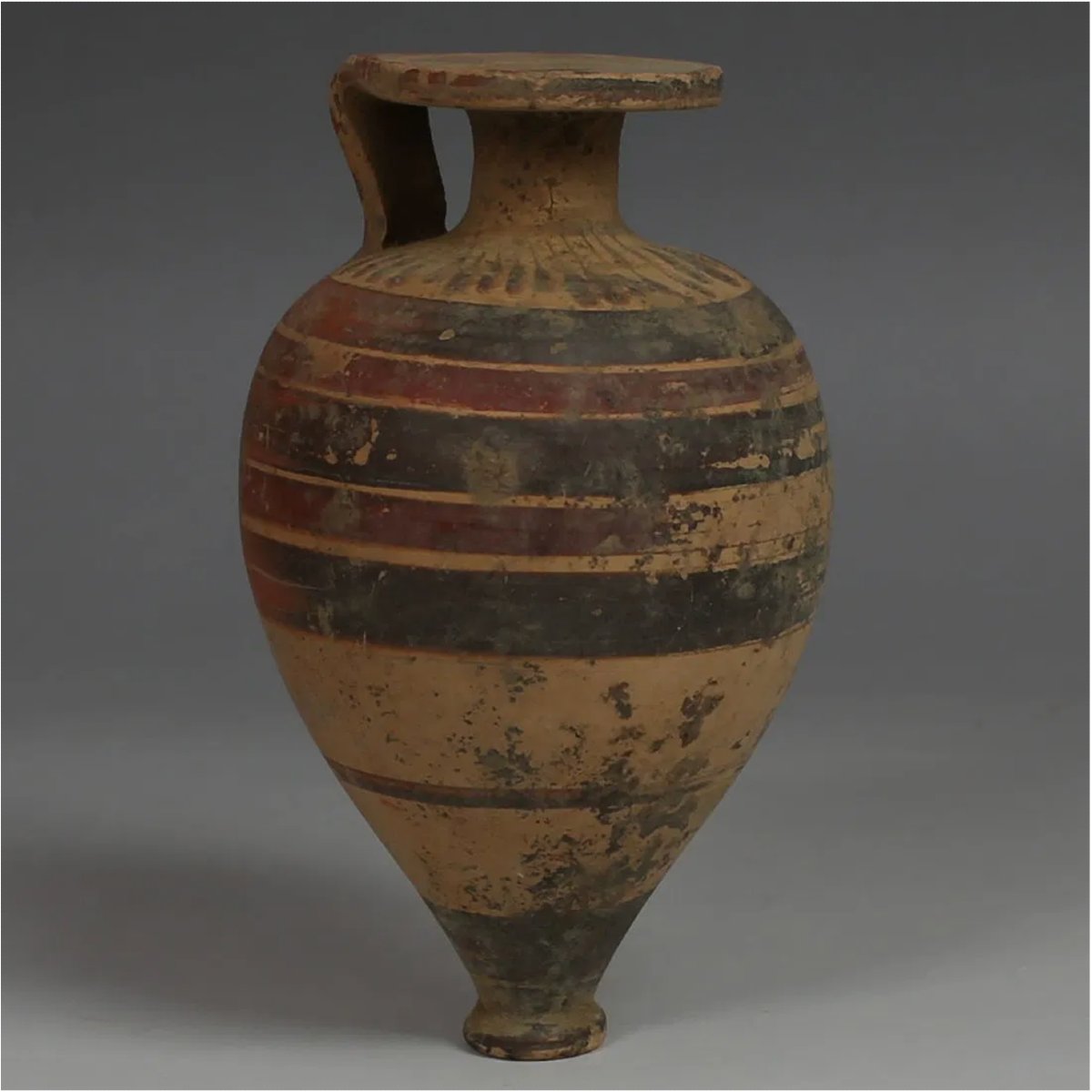
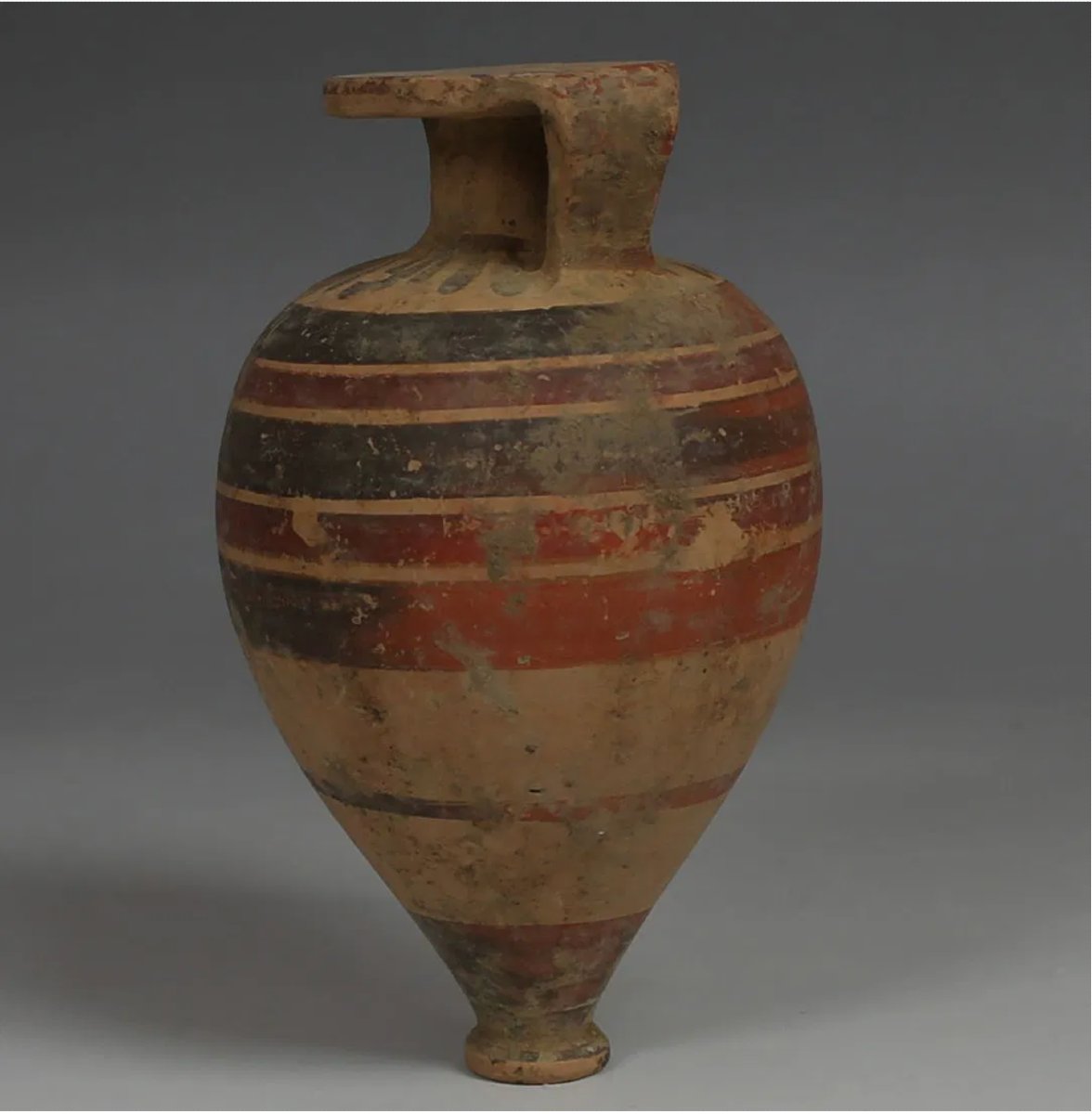
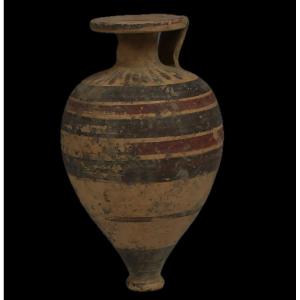


This piriform aryballos embodies the functional elegance of Etrusco-Corinthian ceramics from the Orientalizing period. Its tapered silhouette is characteristic of 7th-century BC productions, directly inspired by Corinthian prototypes imported into Etruria. The object presents itself in a moving state of archaeological nudity: the original painted decor has faded to reveal the raw texture of the orange terracotta. This surface erosion, far from being a flaw, confers indisputable authenticity to the piece, exposing a heterogeneous patina composed of calcareous concretions and sedimentary veils. It is an artifact that offers the material reality of a twenty-six-century-old utilitarian object, without the artifice of restoration.
Characteristics
Object: Piriform Aryballos (perfume/oil flask).
Culture: Etrusco-Corinthian (Etruscan production of Greek inspiration).
Period: 7th – 6th century BC.
Material: Ceramic (terracotta), orange fabric with fine inclusions.
Dimensions: Height: 103 mm | Diameter: 61 mm.
Condition: Good structural condition; eroded surface presenting an excavation patina and calcareous concretions.
Provenance: Ex-private Belgian collection; acquired from a Spanish dealer (2022); ex-private Belgian collection, Brussels.
Documentation: Sold with Certificate of Authenticity.
Historical Context The aryballos is the emblematic vessel of the athlete and the aristocrat in Antiquity. Designed to contain perfumed oils used for bodily hygiene at the gymnasium or the baths, it was often worn suspended from the wrist. Etruscan workshops, influenced by the Corinthian ceramics that dominated Mediterranean trade at the time, abundantly reproduced these forms. The "piriform" (pear-shaped) typology chronologically precedes the globular models, situating this object in an early and refined phase of cultural assimilation between Greece and Etruria.
Formal and Material Analysis
Architecture: The piece is distinguished by a slender body tapering toward a narrow base. The neck is short and tubular, designed to regulate the flow of the liquid. The mouth terminates in a broad, flat disk lip, whose ergonomic function was to allow the direct application of oil to the skin. A vertical ribbon handle securely connects the shoulder to the lip.
Material and Patina: Examination of the epidermis reveals a fine-grained terracotta of a warm orange-brown hue. The surface bears the stigmata of burial: a dense network of whitish calcareous micro-concretions and mineralized earthen deposits.
Decor: Although the painted decor has vanished, "ghosts" of horizontal lines can be discerned in places. This absence of modern repainting guarantees the archaeological integrity of the object.
Cultural and Decorative Value This aryballos is a humble yet powerful witness to ancient daily life, evoking the practices of the palaestra and body care. Its value for the collector lies in its pure archaic form and its "fresh from excavation" surface condition, which constitutes an immediate visual guarantee of its authenticity.
Expertise Report Technical examination confirms the attribution:
Typology: The piriform shape with a flat lip is consistent with Etrusco-Corinthian productions of the 7th century BC.
Surface Condition: The presence of hard concretions and the natural erosion of the terracotta attest to a long stay in the ground and the absence of aggressive chemical cleaning.
Traceability: The collection history (Belgium/Spain) secures the provenance.
Explore similar pieces and discover your ideal find:
archeology