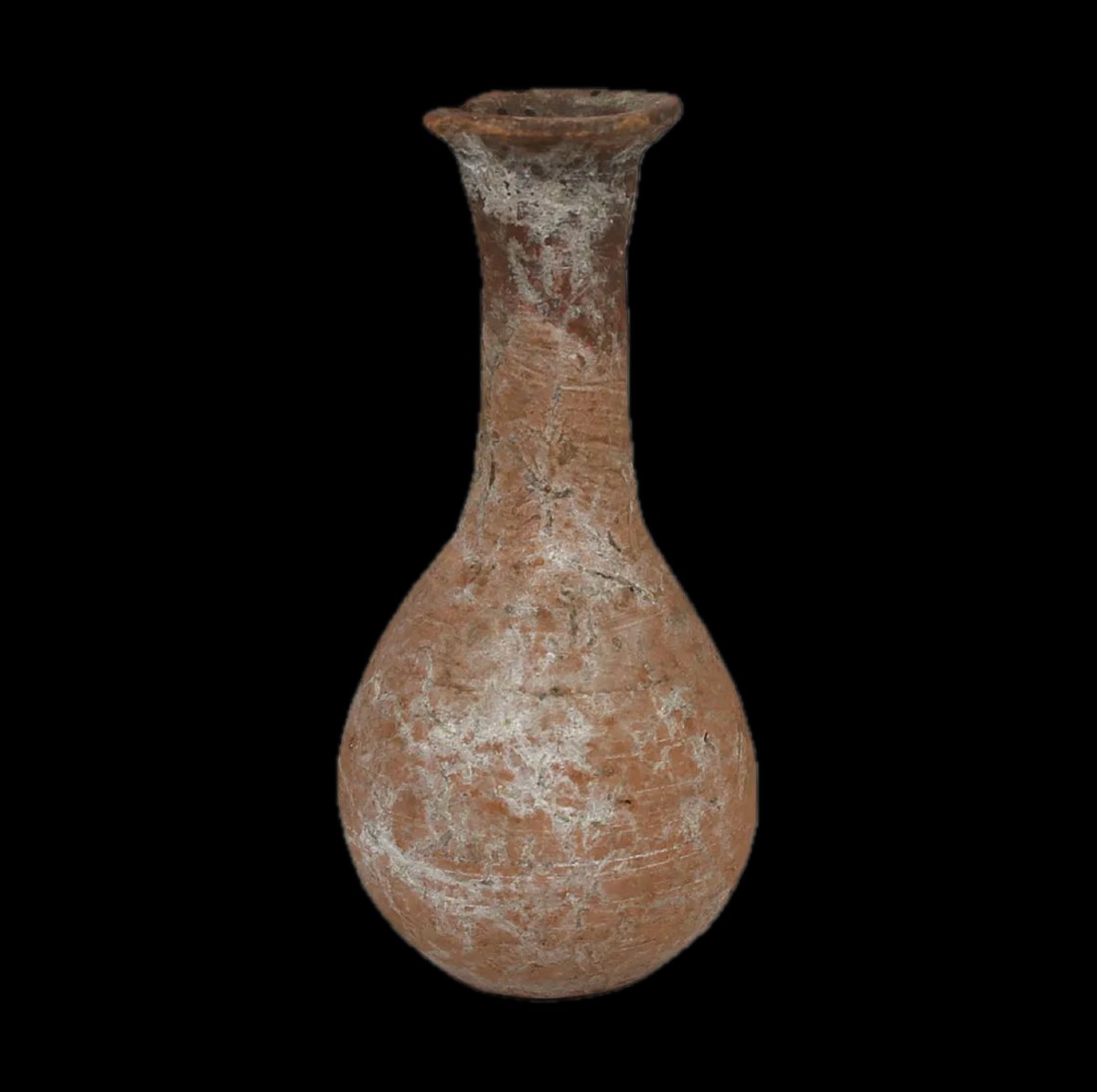
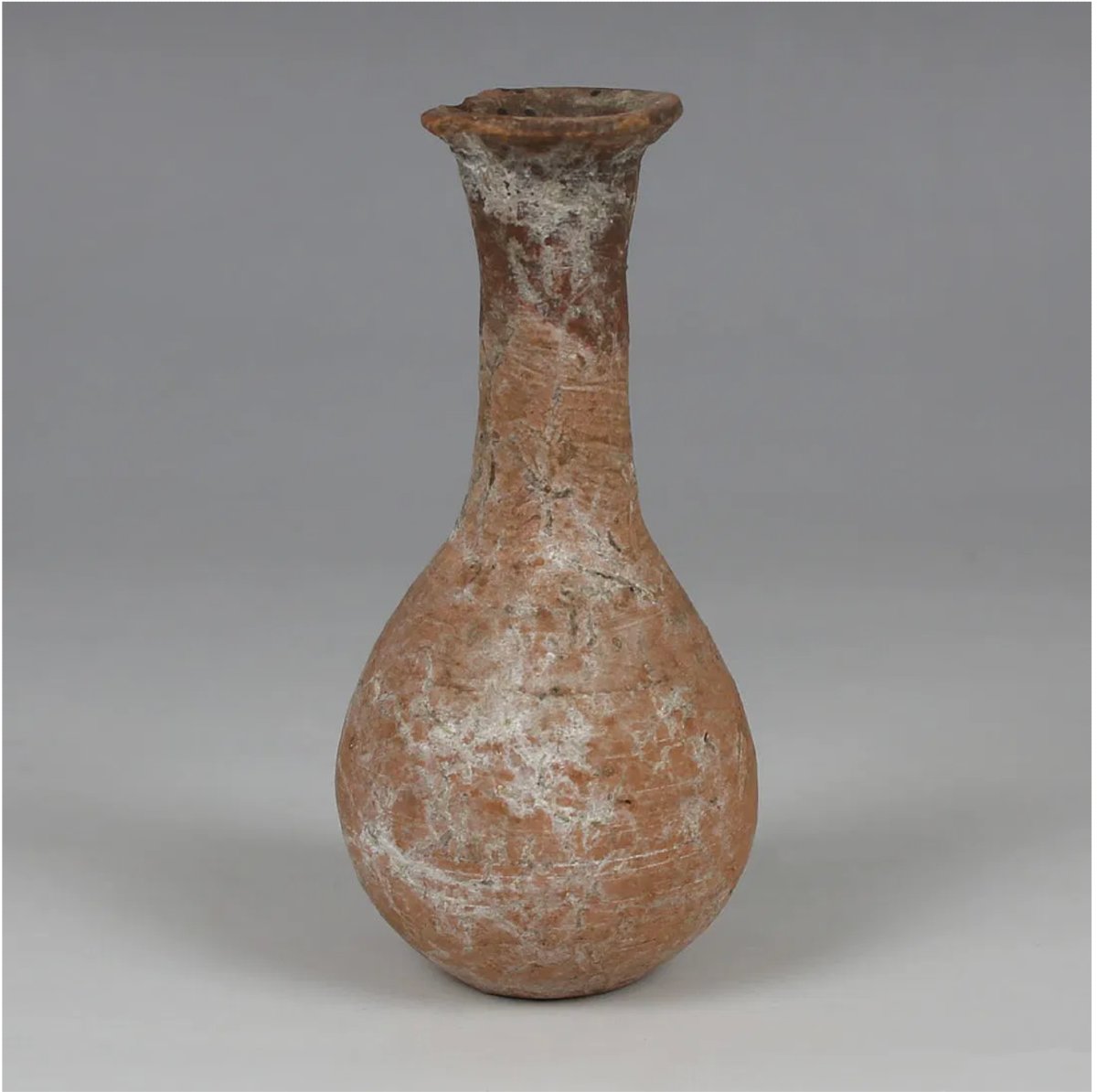
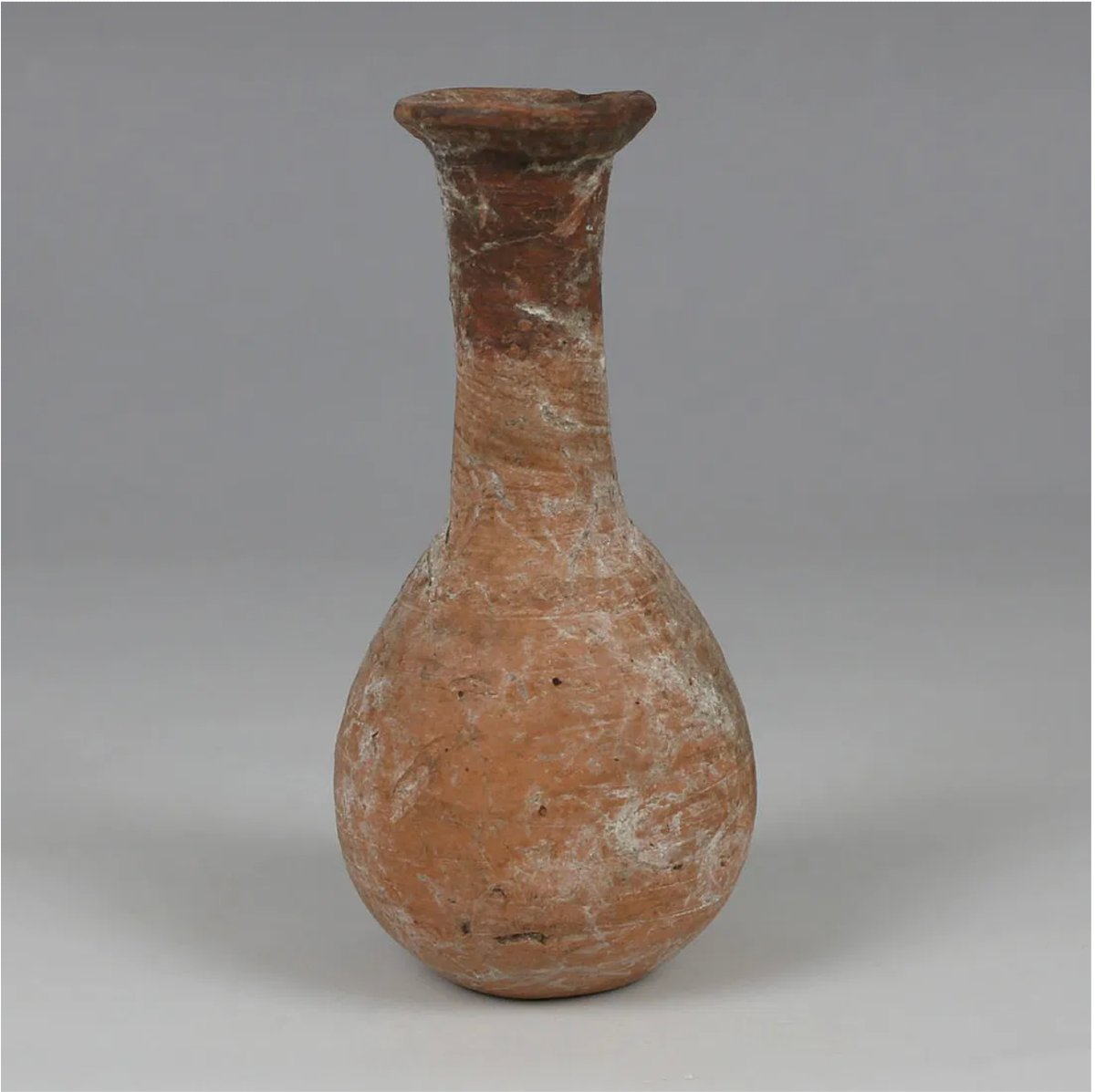
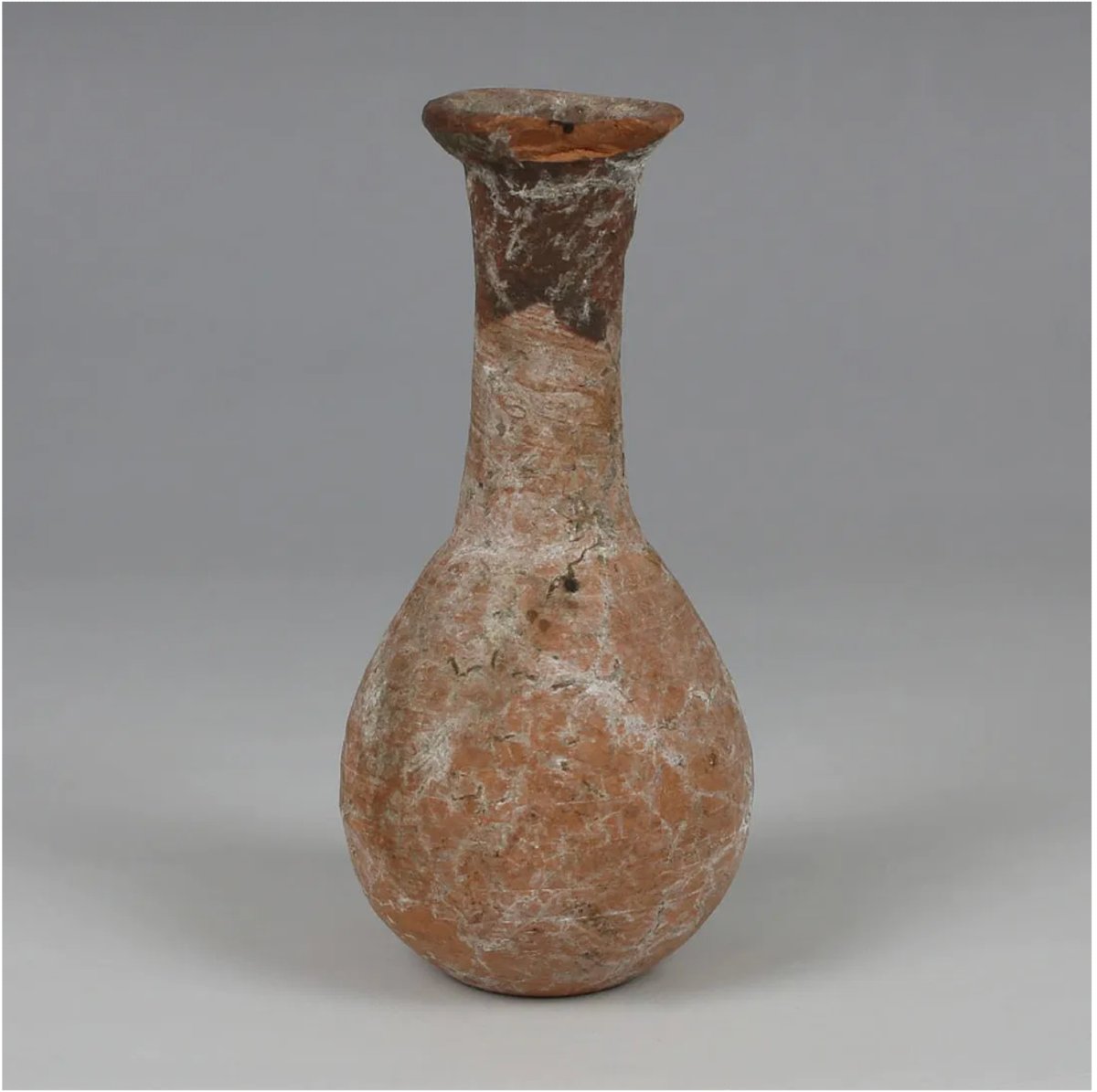
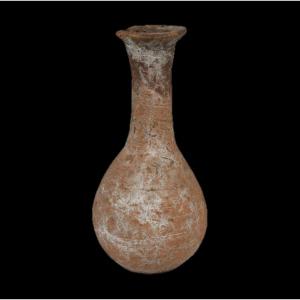


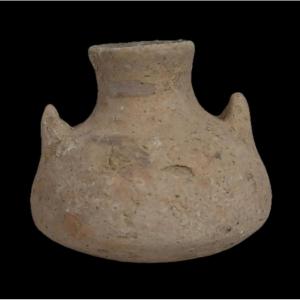
This terracotta unguentarium is a classic fusiform flask emblematic of Roman utilitarian production during the High Empire, specifically designed for the conservation of precious oils, perfumes, and balms. The object is presented in a remarkable archaeological state, its structural integrity complemented by a pronounced excavation patina. The original ochre-red surface is largely obscured by a dense calcareous sedimentation, forming a gray-white mineral crust. This surface veil is the irrefutable signature of prolonged chemical interaction with the soil, confirming that the artifact has been preserved without alteration from aggressive modern cleaning.
Characteristics
Object: Unguentarium (Balsamarium/Oil Flask).
Culture : Roman.
Period : 1st – 3rd century AD (High Empire).
Material : Terracotta, wheel-finished, calcareous patina.
Dimensions : Height: 82 mm | Max Width: 40 mm.
Condition : Good overall condition; structural integrity preserved; surface exhibits characteristic erosion and concretions indicative of antiquity.
Provenance : Ex-private American collection, established between 1970 and 2000.
Documentation : Supplied with Certificate of Authenticity.
Historical Context The unguentarium was an essential accessory in Roman personal care rituals and funerary practices. Its shape is dictated by its function: the tubular, narrow neck limits the evaporation of costly perfumes and ensures precise, drop-by-drop dispensing, while the bulbous body maximizes usable volume. Often placed in tombs as an offering, this flask served as a viaticum for the deceased, symbolizing the continuation of bodily care in the afterlife. It is a key indicator of a civilization that placed great importance on hygiene and aesthetic practice.
Formal and Material Analysis of the Specimen
Typology and Shaping: The piece adopts a classic fusiform profile with a slightly globular tendency. The low, rounded body ensures stability and capacity, gradually tapering into an elongated tubular neck. The slightly everted and irregular lip testifies to rapid wheel-throwing, typical of standardized production for daily use.
Material and Patina: The primary interest of this example lies in its materiality. The ceramic fabric, of a warm ochre-red hue, is intermittently visible beneath a dense layer of sediment. The matte, "crusty" appearance of the white deposits indicates natural mineral crystallization. In places, a network of surface crazing and wear is observable—not defects, but stigmata of time that validate the object's age.
Technique: The slight asymmetries in the silhouette and the turning marks perceptible beneath the patina reveal the hand of the potter, lending a unique identity to this otherwise standardized object.
Cultural and Decorative Value This unguentarium transcends its function as a mere container to become an object of memory, embodying the intimacy of the Roman citizen. Its value lies not in decorative sophistication but in its raw authenticity: it is preserved in its original state of discovery. With its purified profile and rich patina, it offers the collector a tactile experience of Antiquity, free from artifice. It is an atmospheric artifact, evoking the palaestrae and the necropolises of the Empire.
Expertise Report The technical and stylistic analysis confirms the authenticity and classification of this piece:
Typology: The fusiform shape with a low body and narrow neck is typical of unguentaria produced between the 1st and 3rd centuries AD.
Patina and Wear: The nature, density, and distribution of the calcareous concretions on the terracotta serve as a powerful indicator of genuine antiquity. The absence of mechanical or chemical cleaning marks attests to the high archaeological integrity of the piece.
Traceability: The ancient provenance, documented over three decades, aligns with market standards for this type of object.
Subject to direct examination, this flask is reasonably considered an authentic Roman terracotta unguentarium in excellent archaeological condition.











 Le Magazine de PROANTIC
 TRÉSORS Magazine
 Rivista Artiquariato