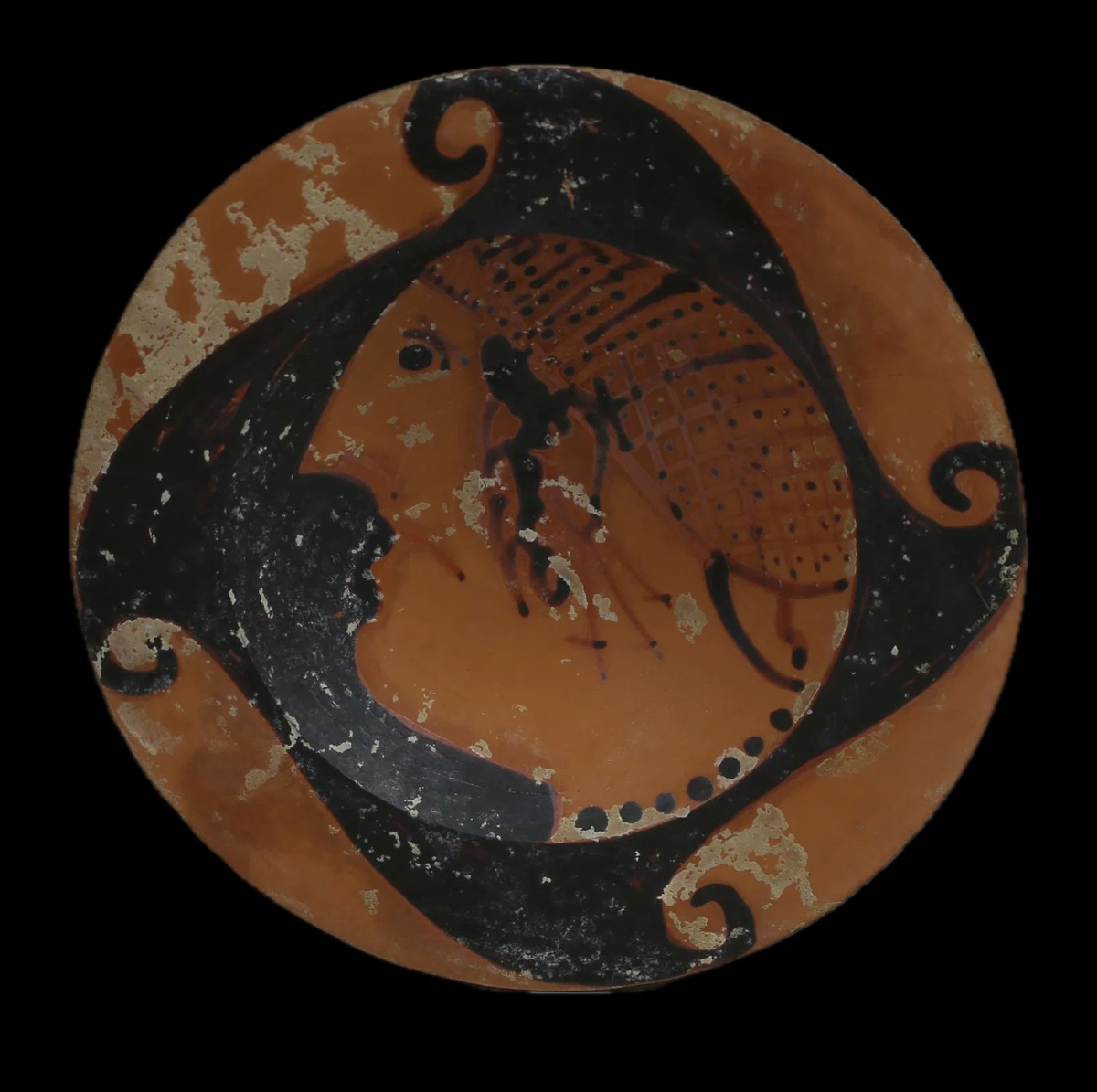
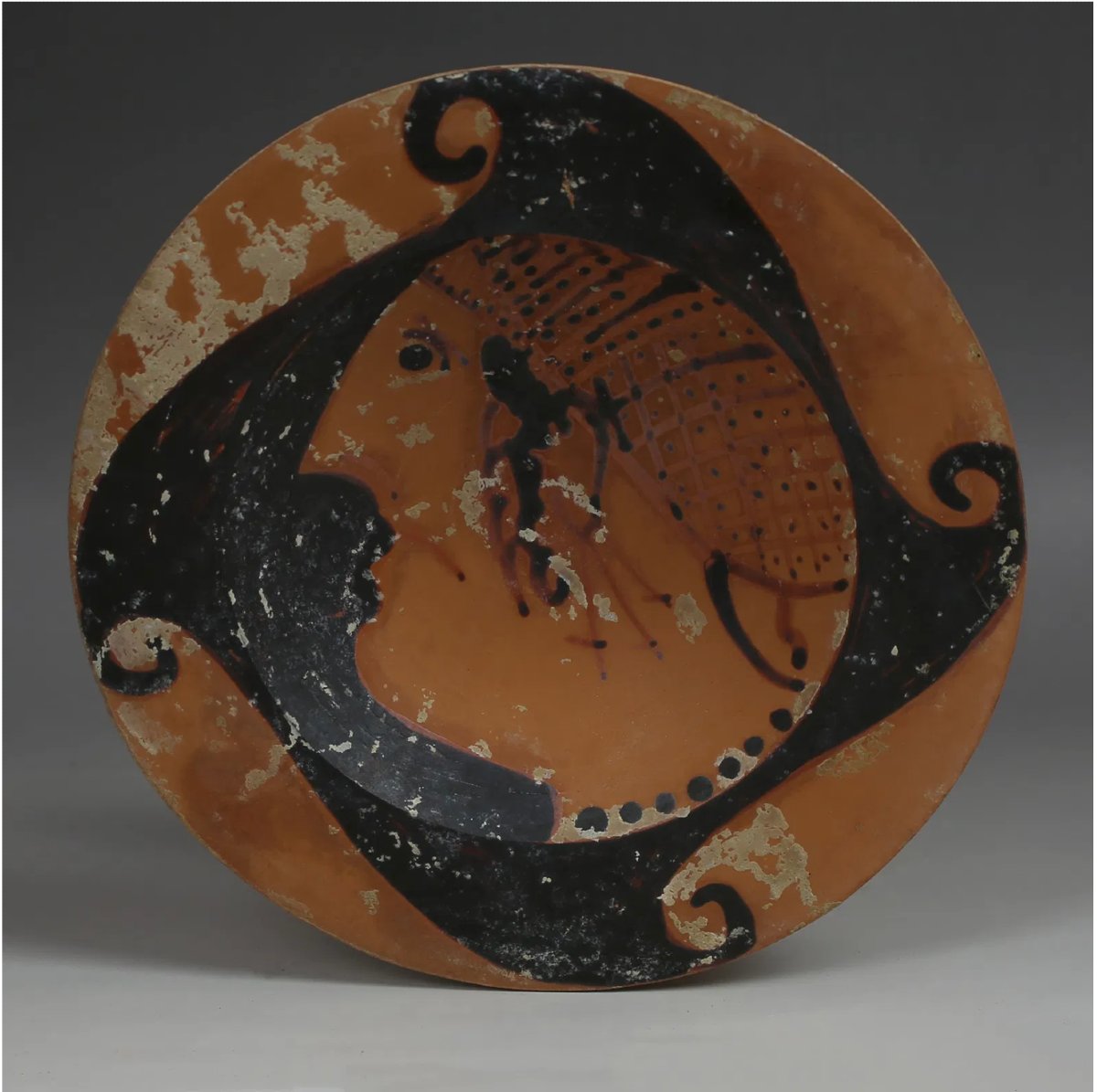

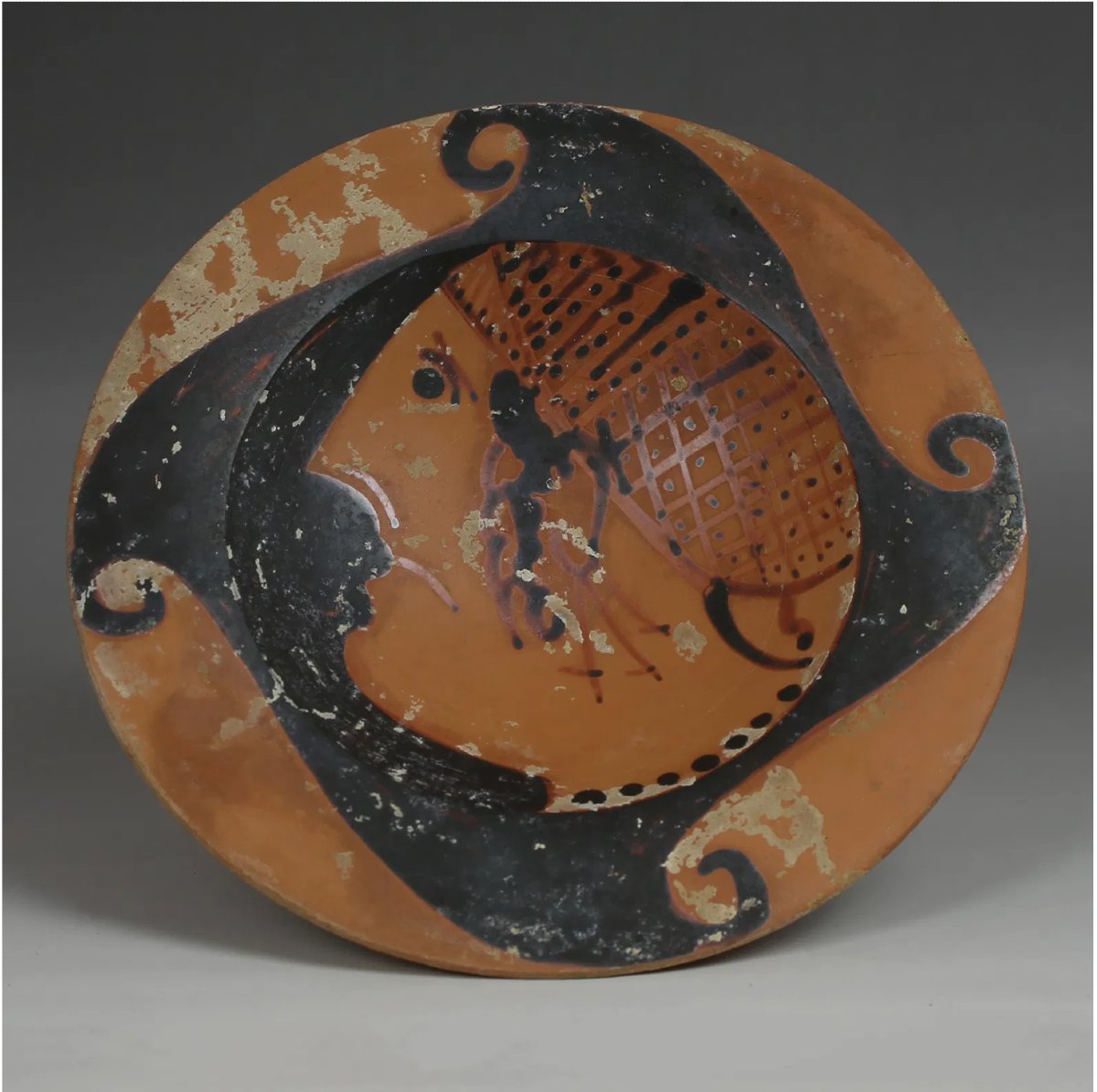
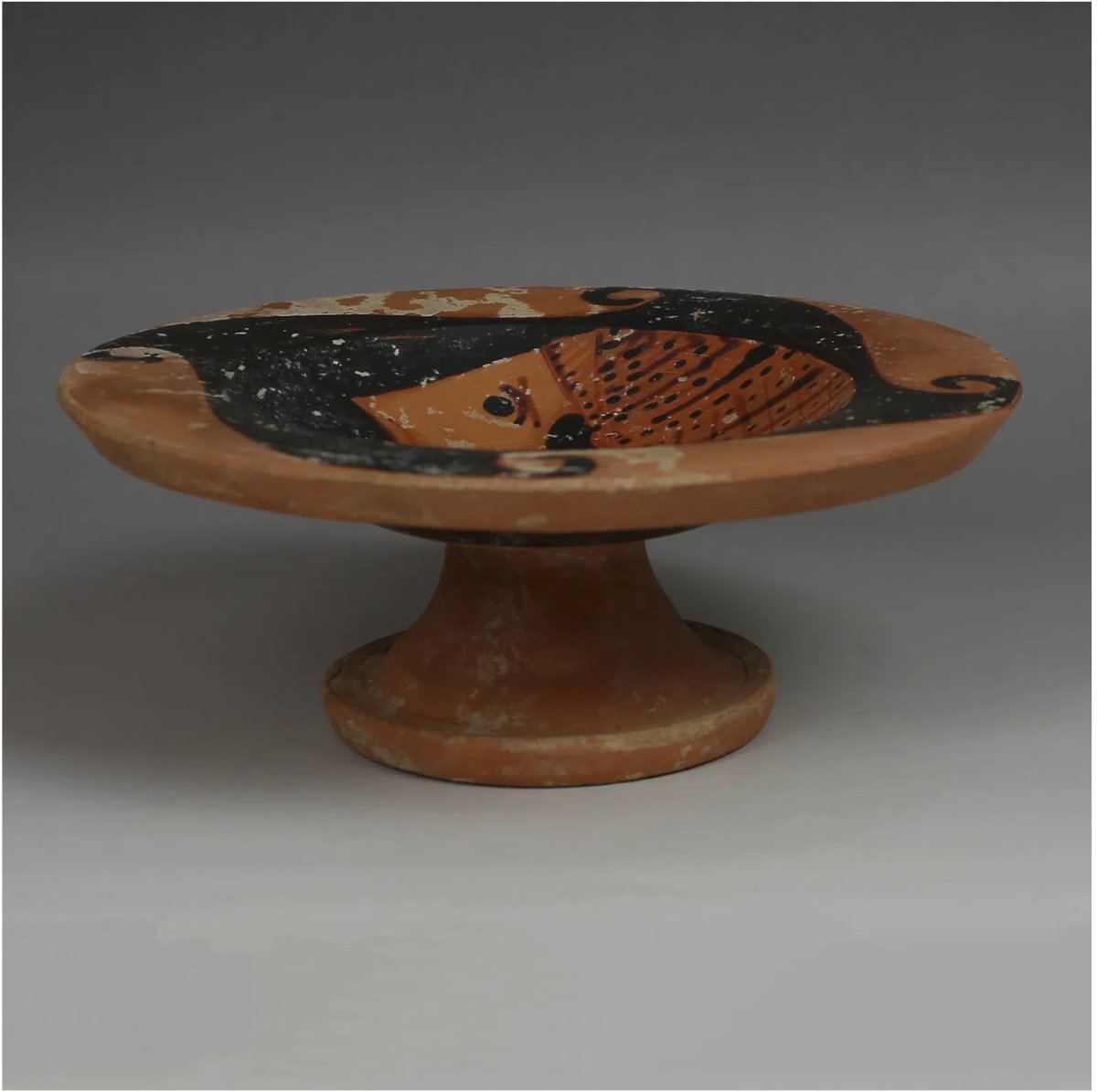
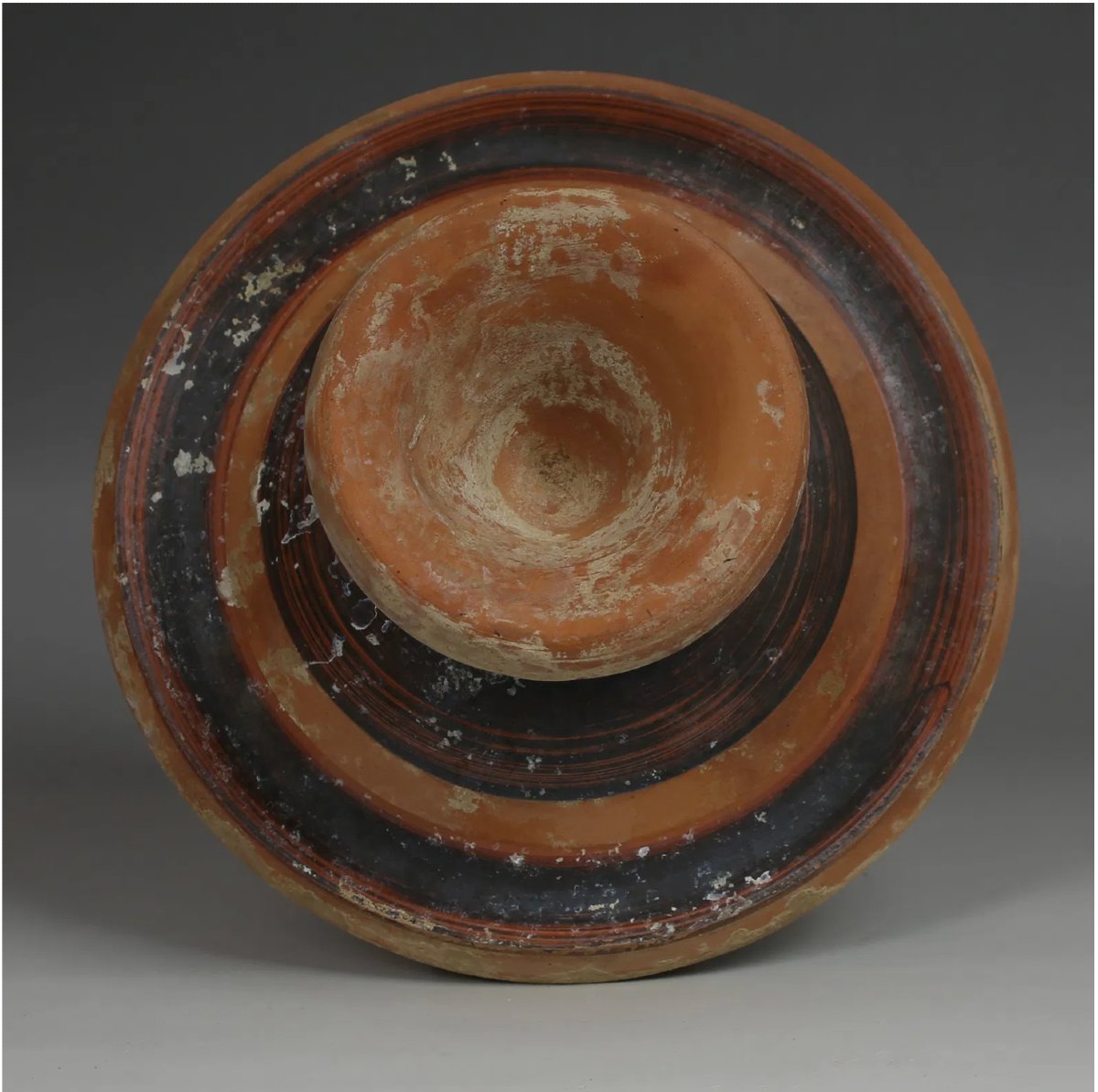


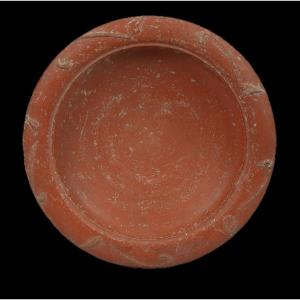
This stemmed plate is a representative example of the Etruscan ceramic production known as the "Genucilia Group," a major stylistic category that disseminated Hellenizing imagery across Central Italy during the 4th century BC. The work is characterized by its central medallion (tondo) adorned with a female profile, executed with the cursive graphic quality typical of the Falerii or Caere workshops. The primary interest of this specimen lies in its archaeological state of conservation: the surface, preserved from aggressive chemical cleaning, exhibits significant calcareous sedimentation and earthen deposits, attesting to its integrity and history.
Characteristics
Object: Stemmed Plate with Decorated Medallion.
Culture: Etruscan, Genucilia Group.
Period: 4th century BC.
Material: Red-figure ceramic, black varnish highlights.
Dimensions: Height: 65 mm | Diameter: 163 mm.
Condition: Good structural condition. Surface left "as found" with heavy excavation concretions.
Provenance: Ex-European private collection; ex-Lakythos SARL (1987); ex-Hydra Gallery, Geneva (1984).
Documentation: Sold with a Certificate of Authenticity.
Historical Context The Genucilia Group plates, named after an ancient ownership inscription, mark a key stage in Etrusco-Faliscan ceramics. They demonstrate the local adaptation of the Attic red-figure technique, simplified for mass production intended for votive deposits and funerary goods. The female head in profile, the almost exclusive subject of this production, does not aim for realistic portraiture but rather the symbolic evocation of a divine sphere (Aphrodite or a chthonic deity), serving as a protective offering in the necropolises of Southern Etruria.
Formal and Material Analysis
Iconography: The tondo features the canonical profile facing left. The treatment is graphic, prioritizing speed of execution: the hairstyle is structured by a reticulated sakkos (hairnet) and punctuated by beaded motifs. The rim (marli) is animated by a running wave pattern, a kinetic motif that guides the eye toward the center.
Material and Surface: The object is distinguished by tangible material authenticity. The black varnish and red clay are partially obscured by whitish calcareous concretions and beige earthen deposits. This heterogeneous patina, the signature of millennia of burial, confirms the absence of modern surface restoration or repainting.
Structure: The typology is classic: a shallow bowl resting on a short, wide foot, ensuring stability. The underside, left in its natural state, shows wheel-turning marks enhanced by concentric black and red bands, witnessing the artisan's gesture.
Cultural and Aesthetic Value This plate possesses a dual documentary and aesthetic value. It illustrates the spontaneity of Etruscan art, capable of synthesizing Greek models into an efficient stylized language. For the collector, the provenance traced back to the 1980s (Hydra Gallery) and the unstripped surface condition constitute guarantees of quality, prioritizing the historical truth of the object over an artificially smoothed aesthetic.
Expertise Report Examination of the piece confirms its attribution to the Etruscan corpus of the 4th century BC:
Stylistic Conformity: The profile, the reticulated sakkos, and the wave frieze are characteristic of the Genucilia Group.
Surface Condition: The presence of hard, adherent concretions on the varnish is a reliable indicator of antiquity, difficult to reproduce artificially.
Traceability: The collection history dating back to 1984 secures the piece's antecedence on the art market. The object is authentic, intact, and representative of its typology.












 Le Magazine de PROANTIC
 TRÉSORS Magazine
 Rivista Artiquariato