THIS OBJECT WAS SOLD
Decorated Roman Terra Sigillata Bowl – With Certificate Of Authenticity
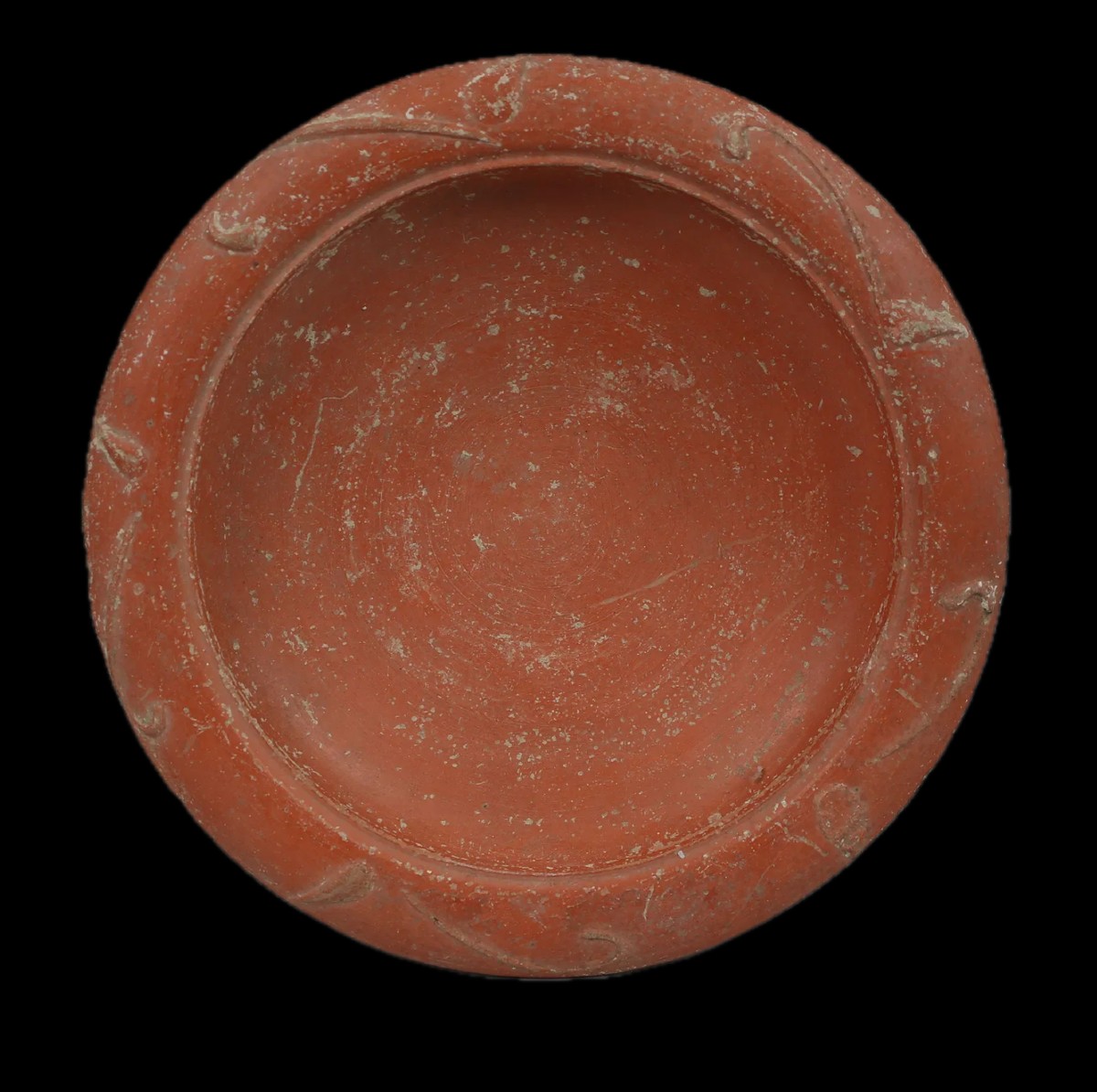
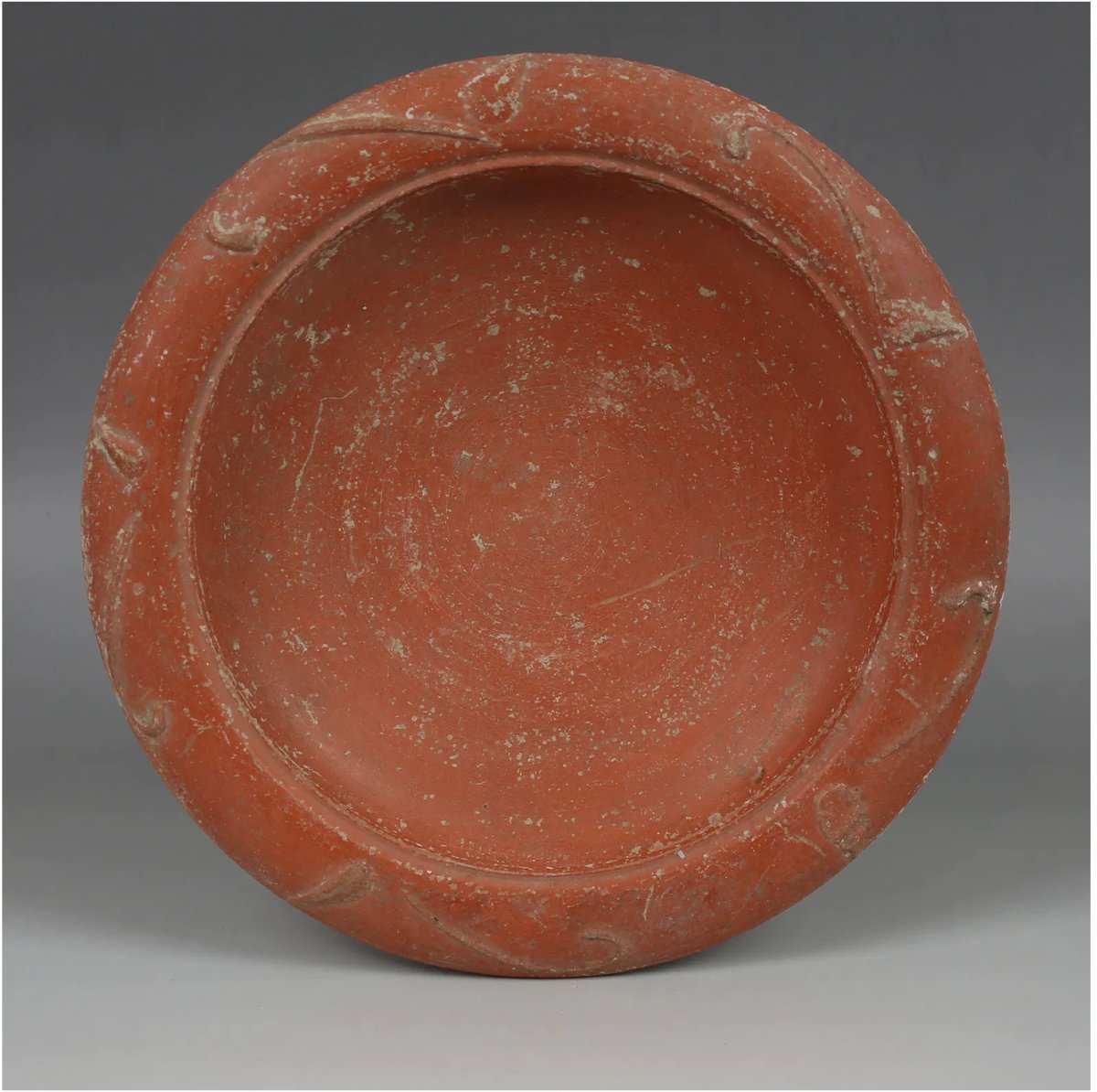
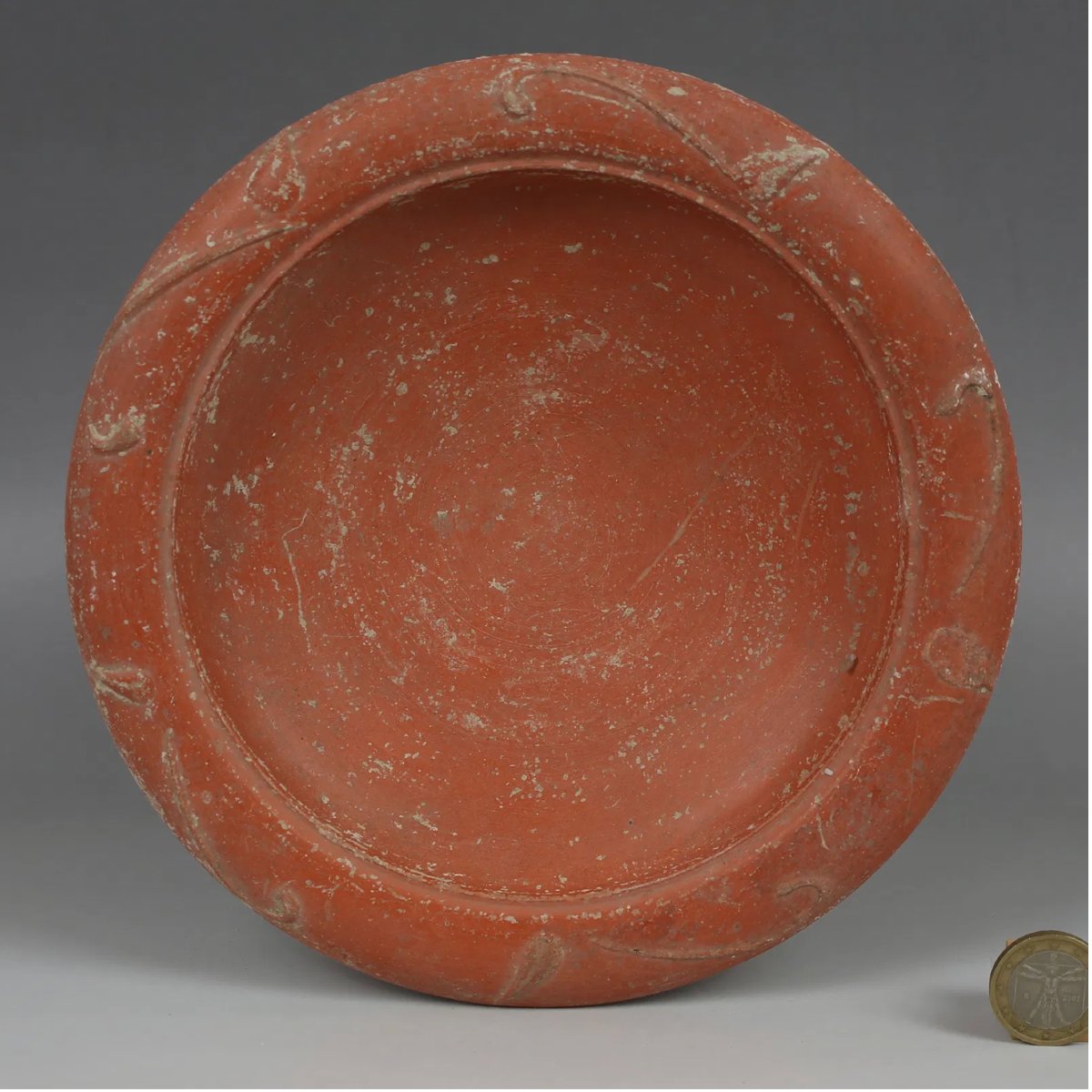
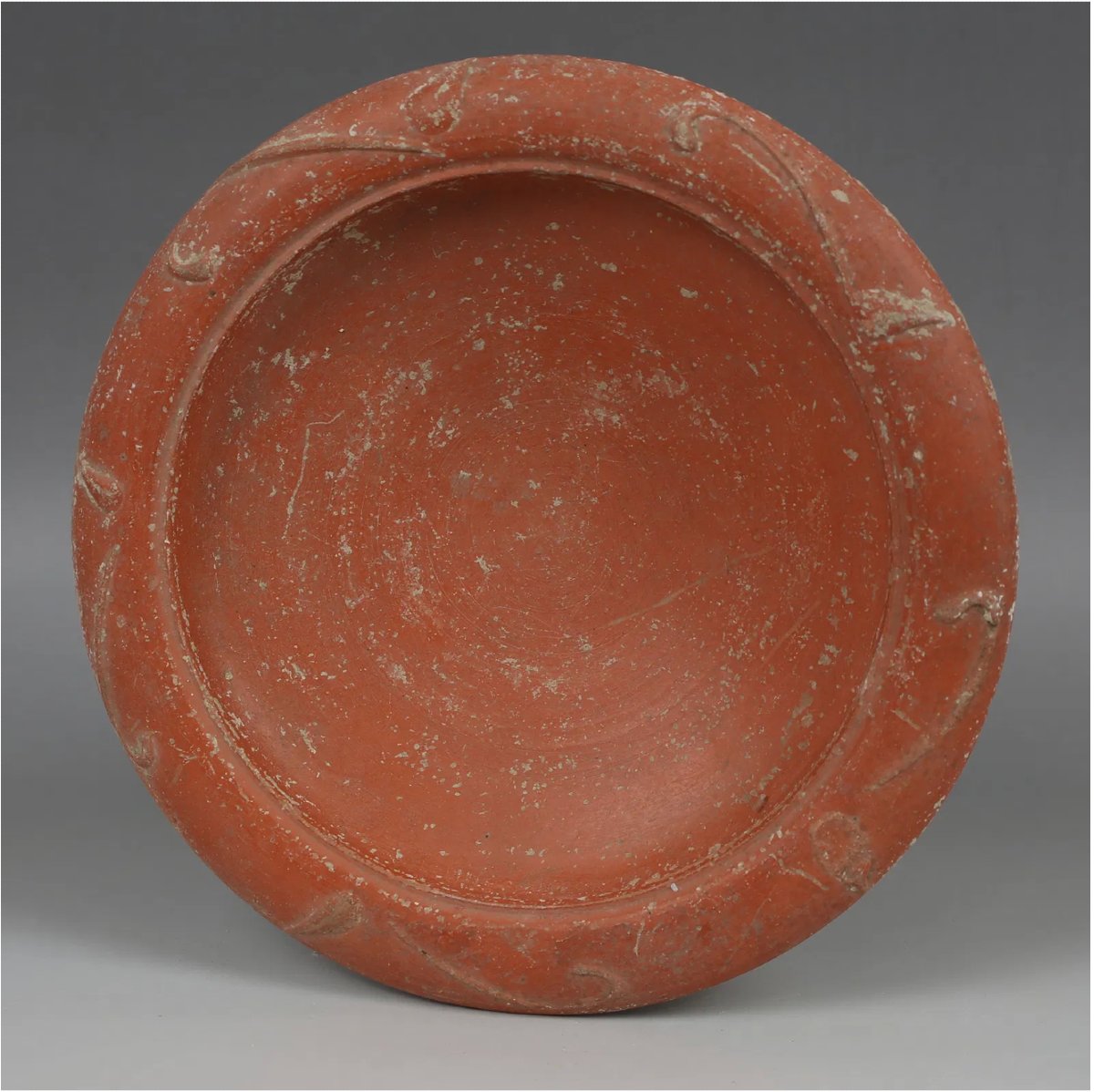
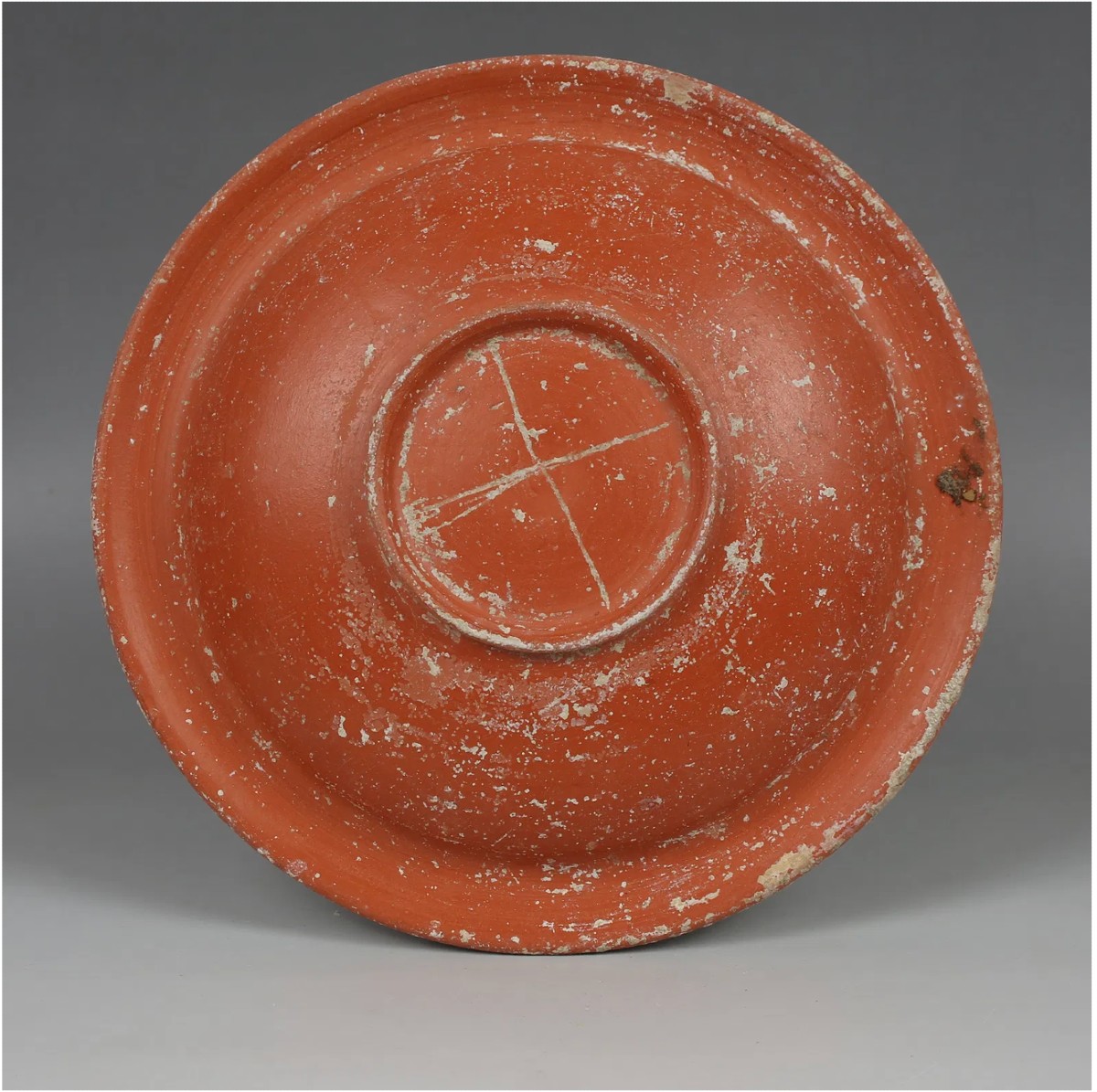
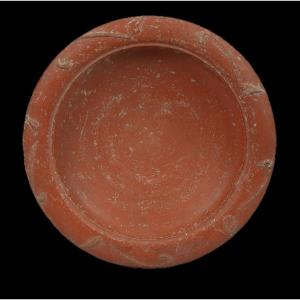


Large Roman Terra Sigillata bowl with wide decorated rim, datable to the 2nd–3rd century AD. The piece displays all the hallmarks of genuine ancient production: fine red-orange clay, glossy slip, homogeneous surface wear, and ancient burial deposits. Examined from multiple angles and under raking light, the bowl shows no visible restoration or joins and is in excellent structural condition for its period, with a clear profile and strong decorative presence.
CharacteristicsObject: Bowl with wide decorated rim
Culture: Roman
Material: Terra Sigillata, fine red clay with glossy slip
Period: 2nd–3rd century AD
Dimensions: approx. 40 mm (h) × 190 mm (diam.)
Condition: Good condition – surface wear, small ancient chips
Provenance: Former American private collection (acquired between 1970 and 2000)
Certificate: Supplied with certificate of authenticity
Terra Sigillata is the most emblematic fine tableware of the Roman world. Produced in large workshops (Italy, Gaul, North Africa), it is recognisable by its bright red glossy surface and standardised shapes. These bowls circulated widely across the Empire — from the Mediterranean to the northern provinces — and were used both at the elite table and in cultic or funerary contexts. This example illustrates the refined standardisation of the period: functional shape, smooth interior for serving food, broad rim for easy handling, and here a discreet decorative animation of the marli.
Formal & Material AnalysisGeneral profile:
Slightly concave base, continuous ascending wall, then broad rounded rim marked by a subtle internal ridge. A classic silhouette of Early Imperial open forms.
Interior:
Smoothly finished basin with circular turning marks still perceptible beneath the patina.
The red slip shows regular, ancient wear: micro-scratches, matte patches, light abrasions — all typical of antique use, with no signs of modern retouching.
The rim is adorned with a discreet frieze of wavy or “S-shaped” motifs in very low relief. The softened edges testify to natural wear while still catching the light attractively.
Exterior & underside:
Well-defined wide foot-ring.
At the centre, a shallow raised circle surrounds an incised cross-shaped graffito (X), made with a pointed tool after firing — commonly interpreted as a workshop, batch, or owner’s mark. The patina matches the rest of the surface, indicating ancient origin.
White mineral concretions and oxidation specks scattered across the underside (and more lightly inside) are consistent with prolonged burial.
Small ancient chips and abrasions on the exterior rim, well patinated and non-structural.
Clay & integrity:
Fine, homogeneous red-orange clay with minimal coarse inclusions, fully in line with quality Terra Sigillata production.
No joins, no fills, no modern restoration detectable: the bowl is preserved in a single piece — noteworthy for a diameter approaching 19 cm.
Typologically, this bowl belongs to the large family of Early Imperial Terra Sigillata open forms with decorated rims. The treatment of the rim, the general profile, the quality of the clay and slip, and the patina and wear patterns all support a 2nd–3rd century AD dating.
Key strengths of this example:
– Clear aesthetics: strong red colour, sober but readable rim decoration, balanced silhouette.
– Undeniable authenticity: coherent ancient wear, archaeological patina, ancient graffito, absence of restoration.
– Decorative impact: generous diameter suitable for immediate display in a showcase or on a console, evoking the elegance of Roman tableware.
A solid, authentic and visually appealing Terra Sigillata bowl — ideal for starting or enriching a Roman collection, pairing with glassware, oil lamps or bronzes, or bringing refined antique design into a contemporary interior.
Cultural ValueBeyond collecting value, this bowl is a tangible fragment of Roman daily life: it served dishes, accompanied meals, and reflects the refined culinary culture of the Empire. Its red surface with minimal decoration embodies the fusion of mass production and aesthetic taste characteristic of Roman craftsmanship. Displayed today, it evokes banquets, taverns, and the domestic life of villas where Terra Sigillata and common wares coexisted.
Provenance & GuaranteesFrom an American private collection assembled between 1970 and 2000.
Sale conducted in accordance with art-market best practices and cultural-property regulations.
The bowl is delivered with a certificate of authenticity detailing its description, dating, material, and known provenance.
Explore similar pieces and discover your ideal find:
archeology