THIS OBJECT WAS SOLD
Large Canaanite Jug (3rd – 2nd Millennium Bc) With Certificate Of Authenticity
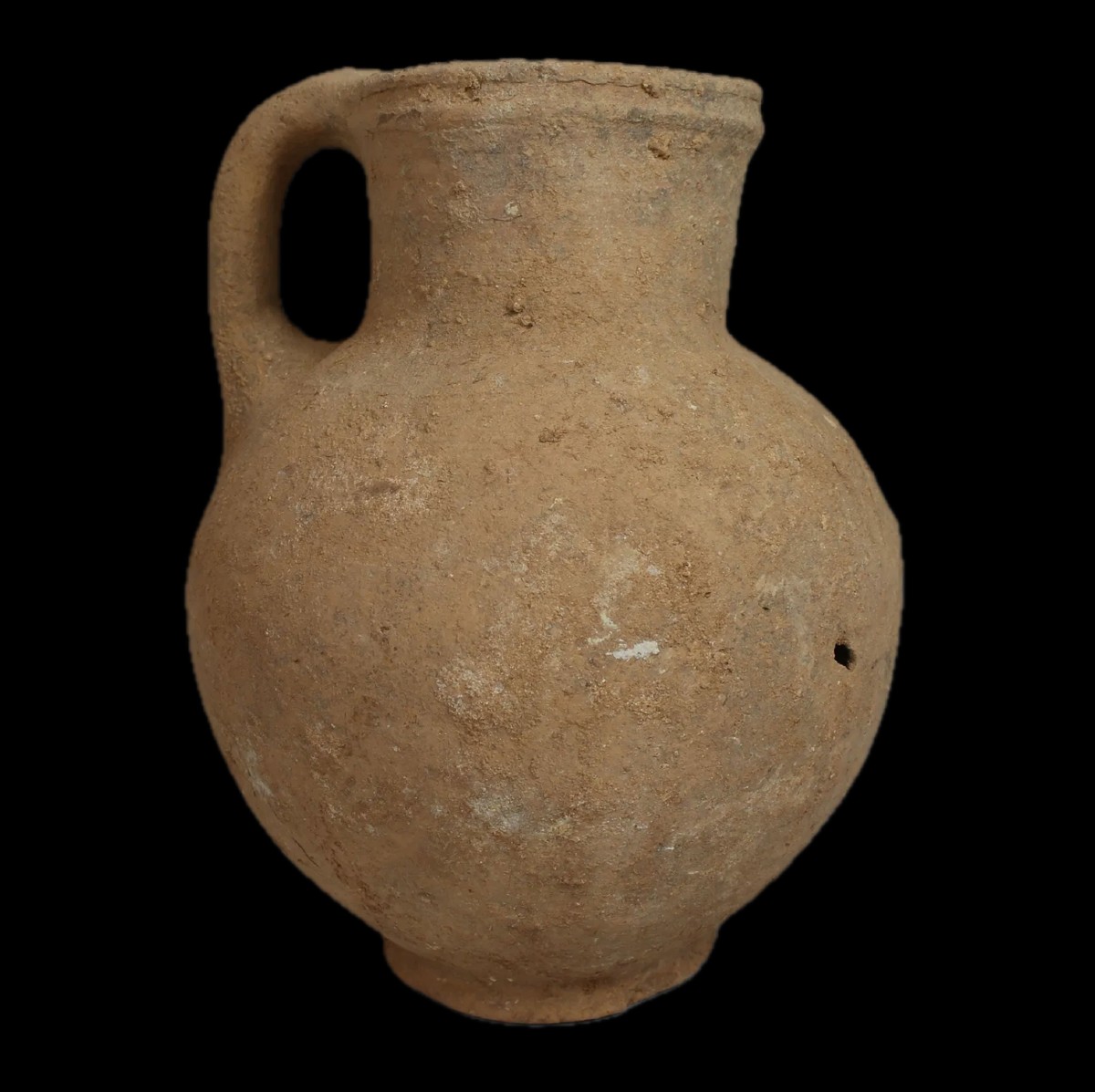
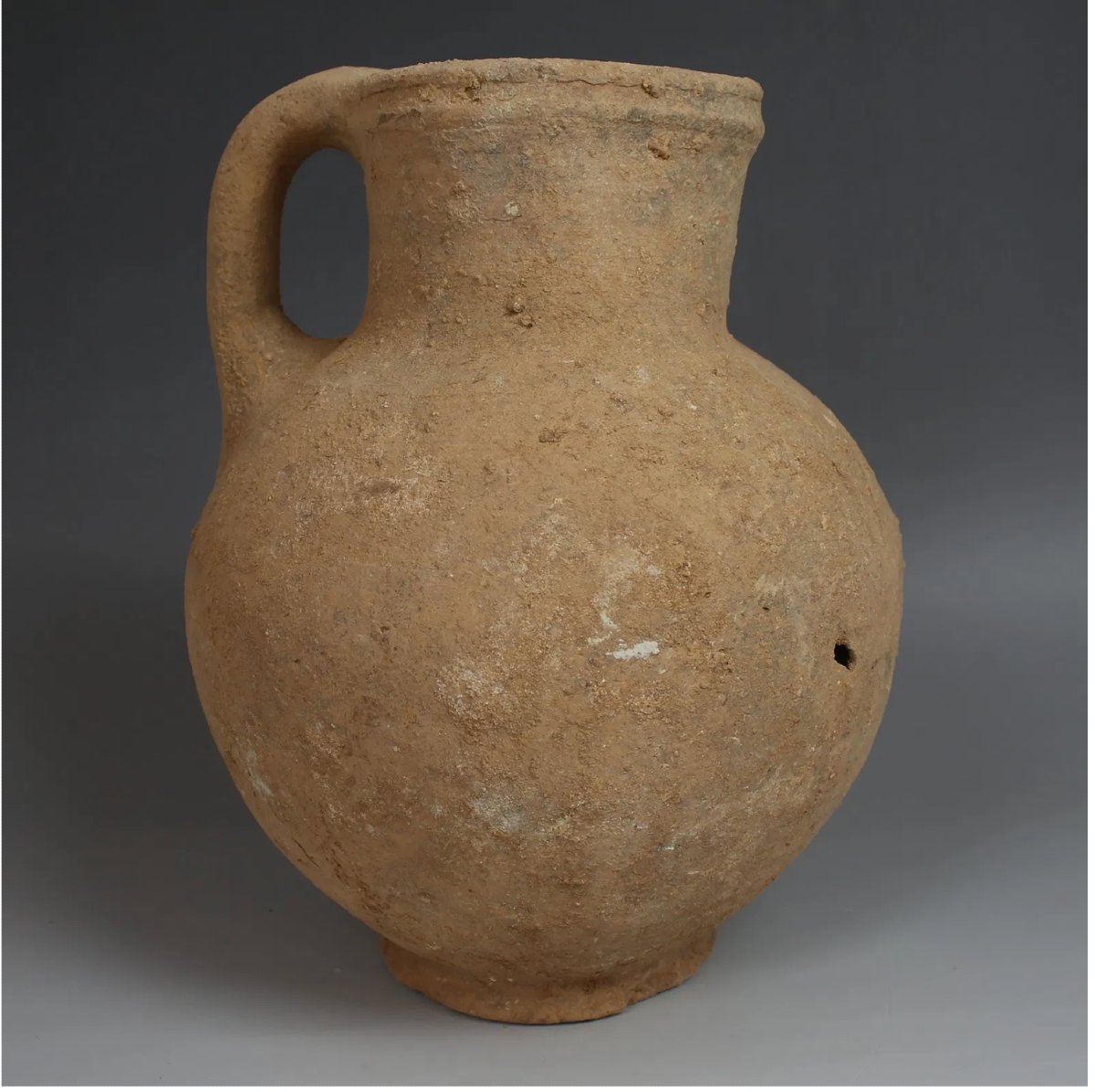

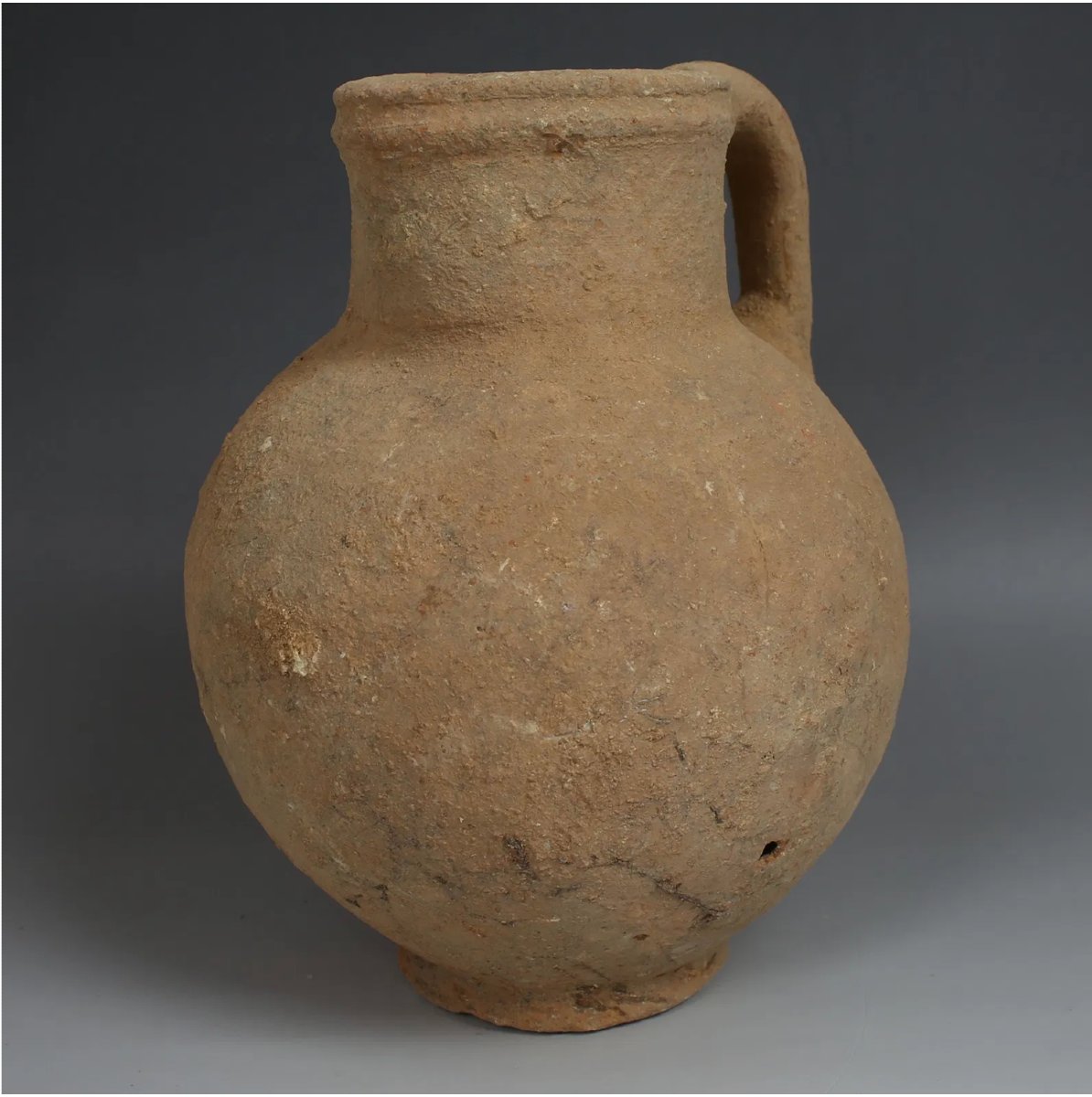
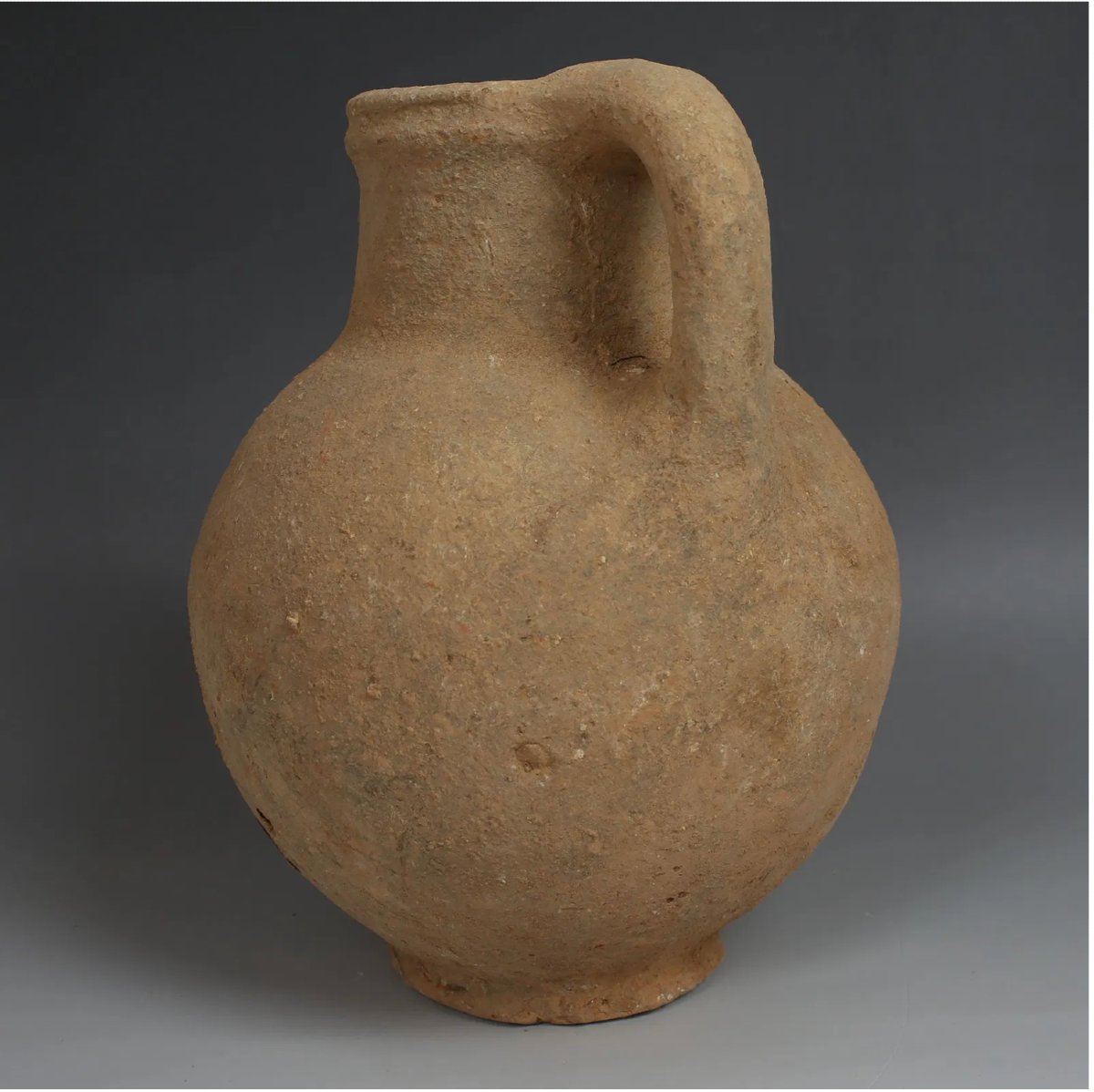


This artifact is a jug of significant dimensions (H. 23.2 cm), constituting a major utility vessel from the Bronze Age in the Levant. It is characterized by a robust construction and a strictly functional aesthetic, typical of the potting techniques employed between the 3rd and 2nd millennium BC. The ceramic is coarse ware, exhibiting a rough, granular texture across the entire surface. This roughness, far from being a flaw, is a direct index of its antiquity and the unrefined nature of the local clay. The piece bears a small lateral perforation on its body, a mark of history that may indicate ancient use or an attempted antique repair, confirming the value and authenticity of the object's use in antiquity.
CharacteristicsObject: Jug (pouring/storage vessel), utilitarian form.
Culture: Bronze Age (presumably Canaanite, Levant).
Period: 3rd – 2nd Millennium BC.
Material: Coarse pottery, ochre-sand fabric with heavy inclusions.
Dimensions: Height: 232 mm | Maximum Diameter: 182 mm.
Condition: Good structural condition; presence of a minor perforation attesting to ancient use; surface coated in an excavation patina.
Provenance: Former private Jerusalem collection, acquired between 1975 and 1990.
Documentation: Supplied with Certificate of Authenticity.
Jugs formed the backbone of storage and serving ware in Near Eastern societies during the Bronze Age. They were indispensable for the transport and preservation of essential liquids (water, oil, wine). This robust, globular form is typical of the logistical needs of the first urban communities and the emerging trade networks in the Levant. Frequently deposited in burials, these jugs also fulfilled a symbolic function as a viaticum, ensuring the deceased's provisions in the afterlife, highlighting their value beyond simple utility.
Formal and Material Analysis of the SpecimenVolumetrics and Shaping: The jug is distinguished by a fully globular body, maximizing storage capacity. The short neck, topped by a simple rolled rim, facilitates easy filling. The handle is a broad strap, strongly secured to the lip and shoulder, providing excellent ergonomics for pouring a large volume. The thick fabric and surface irregularities suggest manufacturing on a slow wheel or via the coiling technique (colombins), preceding the widespread adoption of the fast wheel for fine wares.
Fabric and Patina: Analysis reveals a sandy-beige fabric containing a high proportion of coarse temper (mineral inclusions), which gives the piece its characteristic granular texture. This materiality is a reliable chronological marker. The surface is covered in a light mineral veil and scattered concretions, evidence of long-term sedimentation. The absence of decorative slip or glaze emphasizes the raw materiality of the clay.
Mark of Use: The minor perforation observed on the body is interpreted as a stigma of use: it confirms that the object, even after a small damage, was deemed valuable enough to be kept or potentially repaired (by organic plugging or binding), thus validating its status as an artifact fully integrated into ancient life.
This large jug is an essential document in the material history of the Bronze Age. Its value lies in its unsophisticated yet perfectly functional form, which directly connects the viewer to the fundamental needs of antiquity. Its imposing dimensions for a ceramic object of this era lend it a museum-quality presence, while its raw texture and exceptional chronological age (over 3,000 years) secure its status as a foundational collector's artifact.
Expertise ReportThe analysis confirms the cultural and chronological attribution of the piece:
Typology: The globular shape, broad strap handle, and short neck are perfectly compatible with storage jugs from the Levant during the 3rd–2nd millennium BC.
Materiality: The coarse fabric, inclusive temper, and rough texture are crucial markers of authenticity for the Bronze Age.
Traceability: The ancient provenance, established in Jerusalem between 1975 and 1990, conforms to market standards.
This jug is an authentic Canaanite vessel from the Bronze Age, in good archaeological condition.
Explore similar pieces and discover your ideal find:
archeology