THIS OBJECT WAS SOLD
North African Lamp With Paleo-christian Symbol (5th–7th C. Ad) With Certificate Of Authenticity
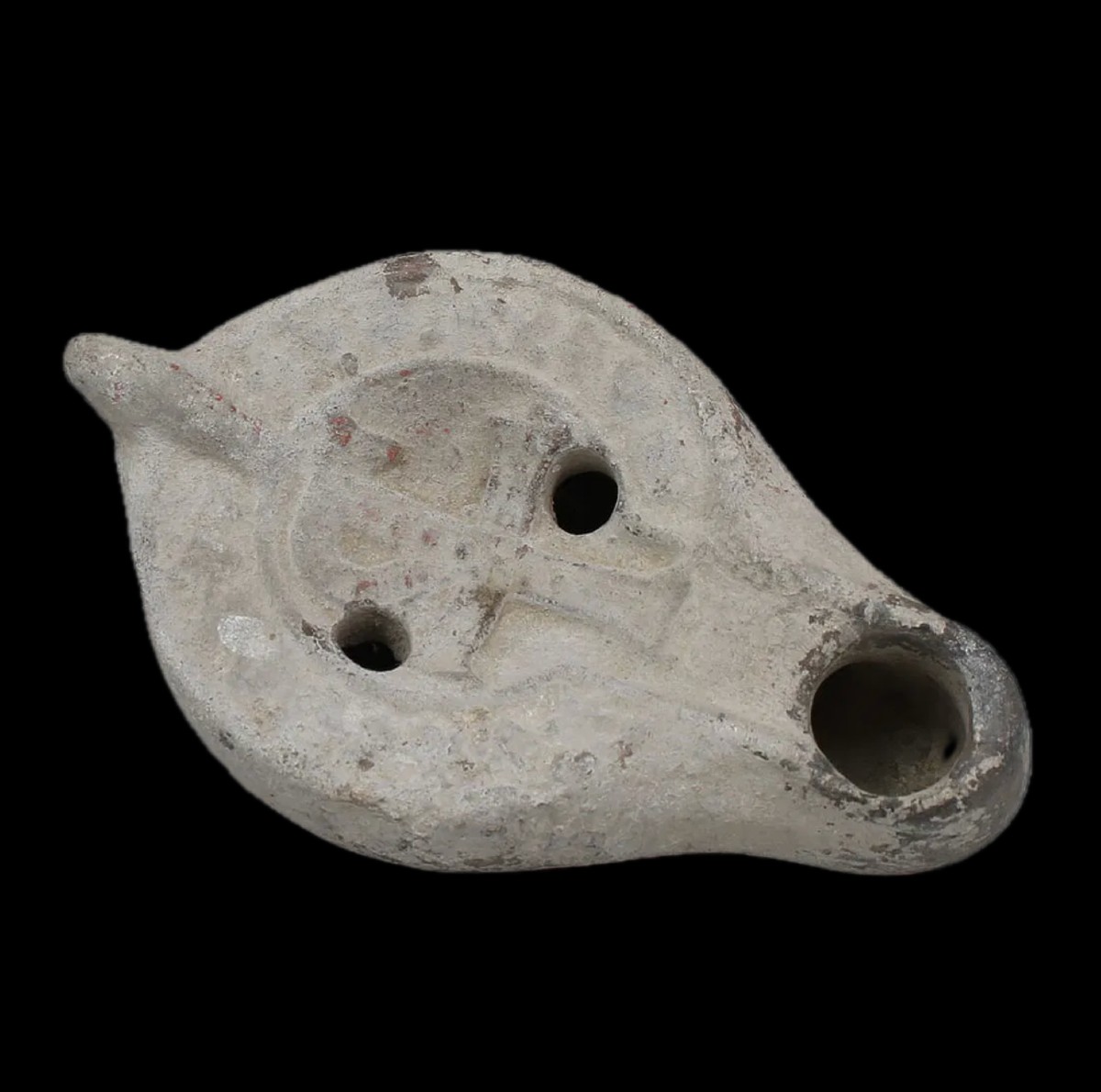
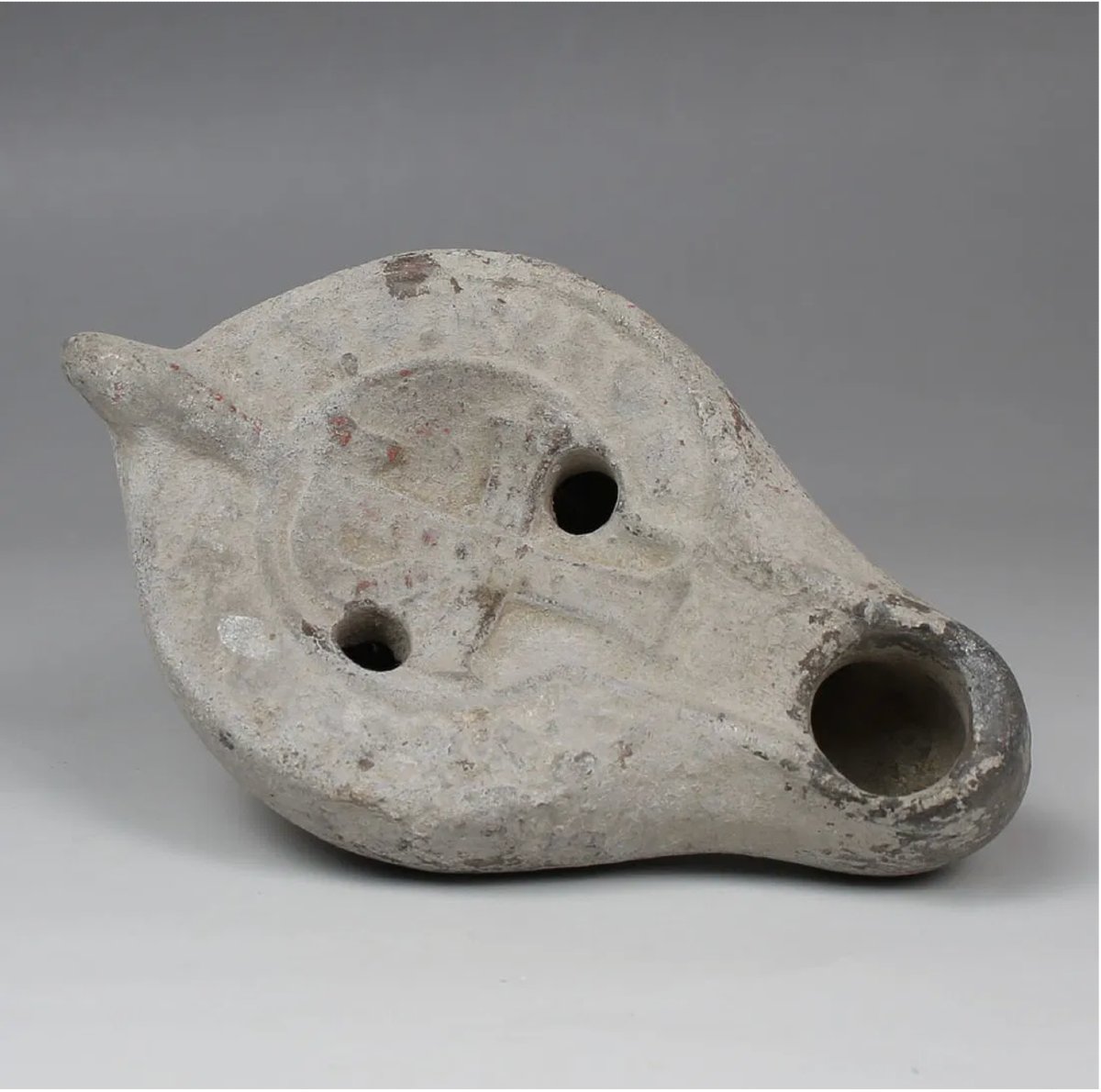
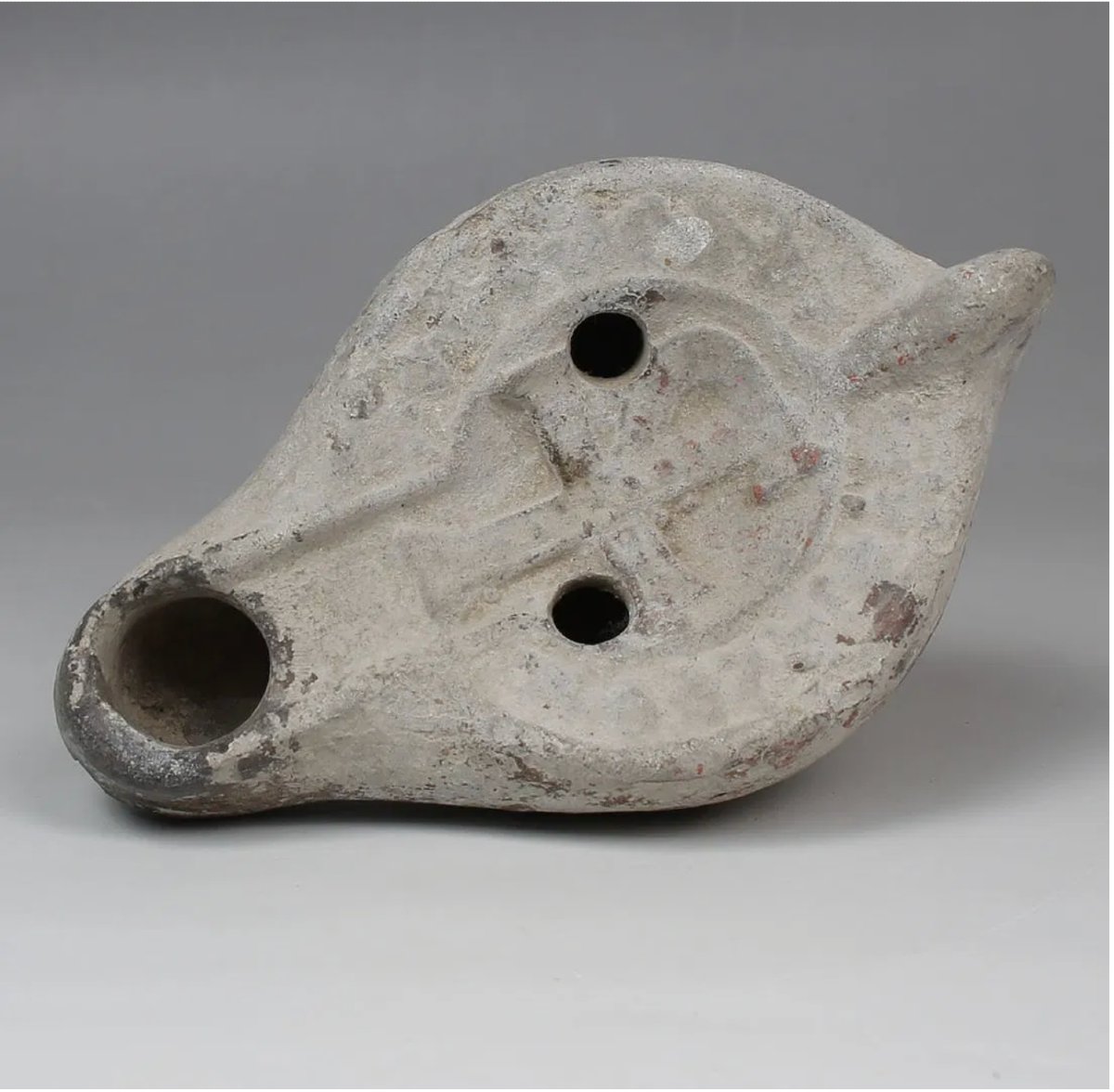
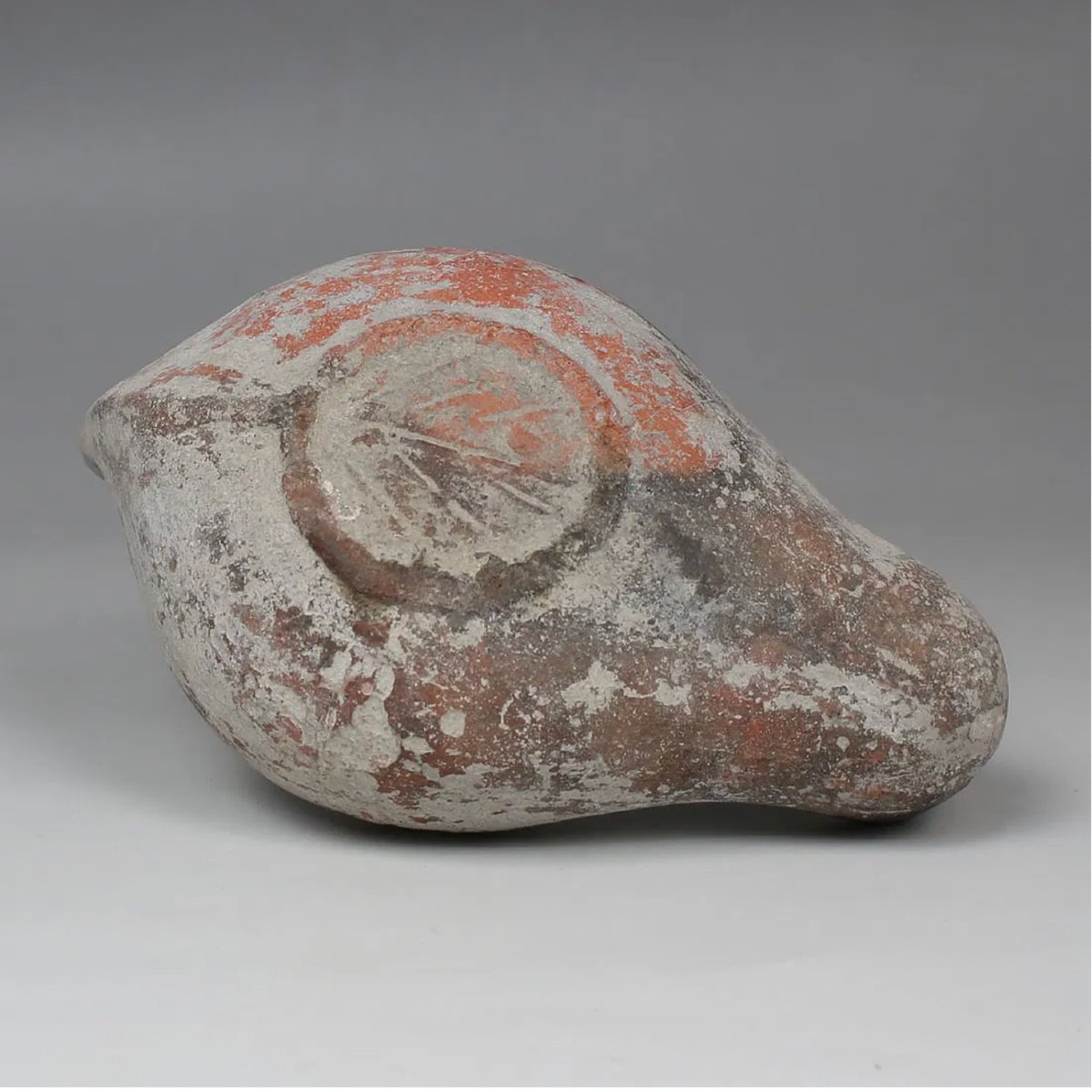
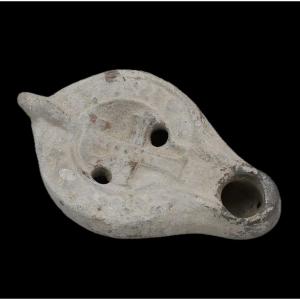


This molded oil lamp is a significant artifact from Late Antiquity (5th–7th century AD), illustrating the integration of Christian symbolism into the daily domestic object. The piece belongs to a well-documented typology, often associated with the workshops of North Africa (Tunisia/Libya), major centers of ceramic production during the Byzantine era. The object is notable for the preservation of a thick, hard sedimentary sheath, a gray-white calcareous crust that entirely covers the lamp's surface. This mineral patina is not a degradation but a natural protection that has sealed and preserved the molded relief of the central disk from physical corrosion.
CharacteristicsObject: Molded oil lamp with a figurative disk.
Typology: Bussière E IX 31 - Atlante X A1 a.
Culture: Christian, North African/Byzantine Production.
Period: 5th – 7th century AD.
Material: Molded ceramic, covered in massive calcareous concretion.
Dimensions: Length: 125 mm | Width: 76 mm | Height: 46 mm.
Condition: Good structural condition; decor preserved beneath a very dense and protective archaeological sedimentation.
Provenance: Former private French collection, acquired before the 2000s.
Reference: Typological parallel (ENNABLI, Lampes chrétiennes de Tunisie, pl. XV, fig. 1025).
Documentation: Supplied with Certificate of Authenticity.
The period from the 5th to the 7th century AD represents the apogee of molded Christian lamps, reflecting the officialization and spread of the faith across the Empire. These objects transcended their practical lighting function to become ubiquitous theological symbols in homes, places of worship, and tombs. The relief of the Cross or the Christogram (Chi-Rho) served to invoke divine protection. Deposited in burials, they embodied the "Eternal Light of Christ" and the promise of Resurrection, attesting to the essential role of Christian symbolism in Late Antiquity.
Formal and Material Analysis of the SpecimenTechnique and Iconography: The lamp is the product of serial molding, ensuring the fidelity of the iconographic motif. The central disk features a powerful Christian motif (cross or monogram) in relief, a Paleo-Christian emblem. The piece is equipped with two small, symmetrically placed filling holes, typical of this late production.
Typology: The ovoid shape, the prominent nozzle (bec), and the two-hole configuration are the distinctive markers of the late North African typology, which was widely distributed throughout the Byzantine Mediterranean basin.
Patina and Concretions: The major element of expertise is the uniform mineral sedimentation. This thick, gray-white crust is proof of a limestone-rich burial environment. It has created a protective sheath that preserved the integrity of the delicate molded disk relief against physical erosion, unequivocally confirming the archaeological antiquity and the "as-found" state of the object.
This lamp is a valuable material document of the religious transition and craftsmanship of Late Antiquity. Its value rests on the strength of its symbolic testimony and the quality of its preservation beneath its protective crust, which guarantees the legibility of the motif underneath. It represents an essential segment of the history of Christian decorative art, where utilitarian function is subordinated to the theological message. It offers a historical presence and a surface state that is tactilely evocative of its millenary burial.
Expertise ReportThe analysis confirms the cultural and chronological attribution:
Typology: The shape, nozzle, and orifice characteristics are consistent with the Bussière and Atlante classifications for North African lamps of the 5th to 7th centuries.
Materiality: The thickness and calcareous nature of the concretion confirm archaeological antiquity and the absence of aggressive modern intervention.
Traceability: The history of the private French collection, established before 2000, secures the antecedence.
The object is an authentic Paleo-Christian oil lamp, preserved beneath its original excavation sheath.
Explore similar pieces and discover your ideal find:
archeology