THIS OBJECT WAS SOLD
Roman Ceramic Jug, High Empire (1st–3rd C. Ad), With Certificate
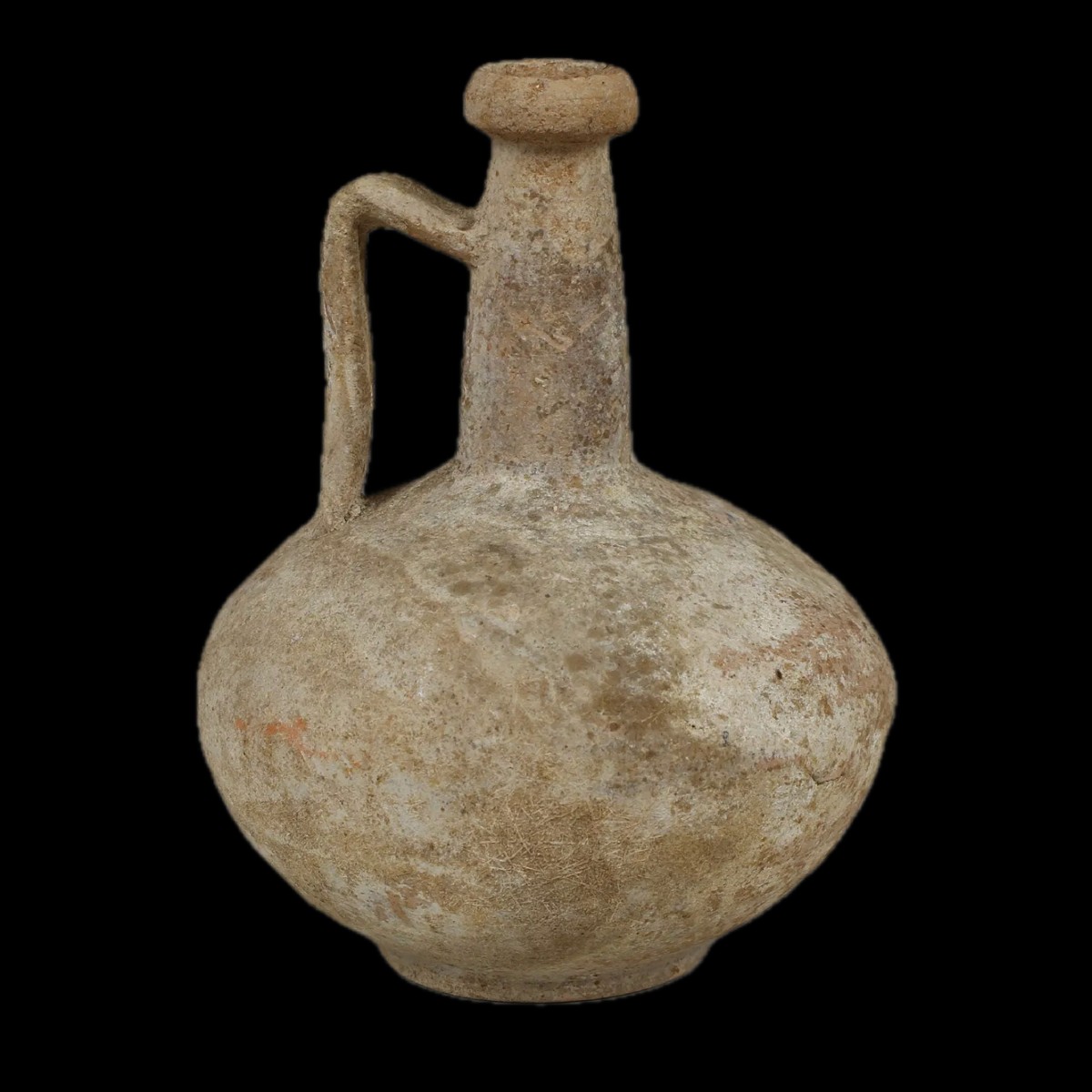
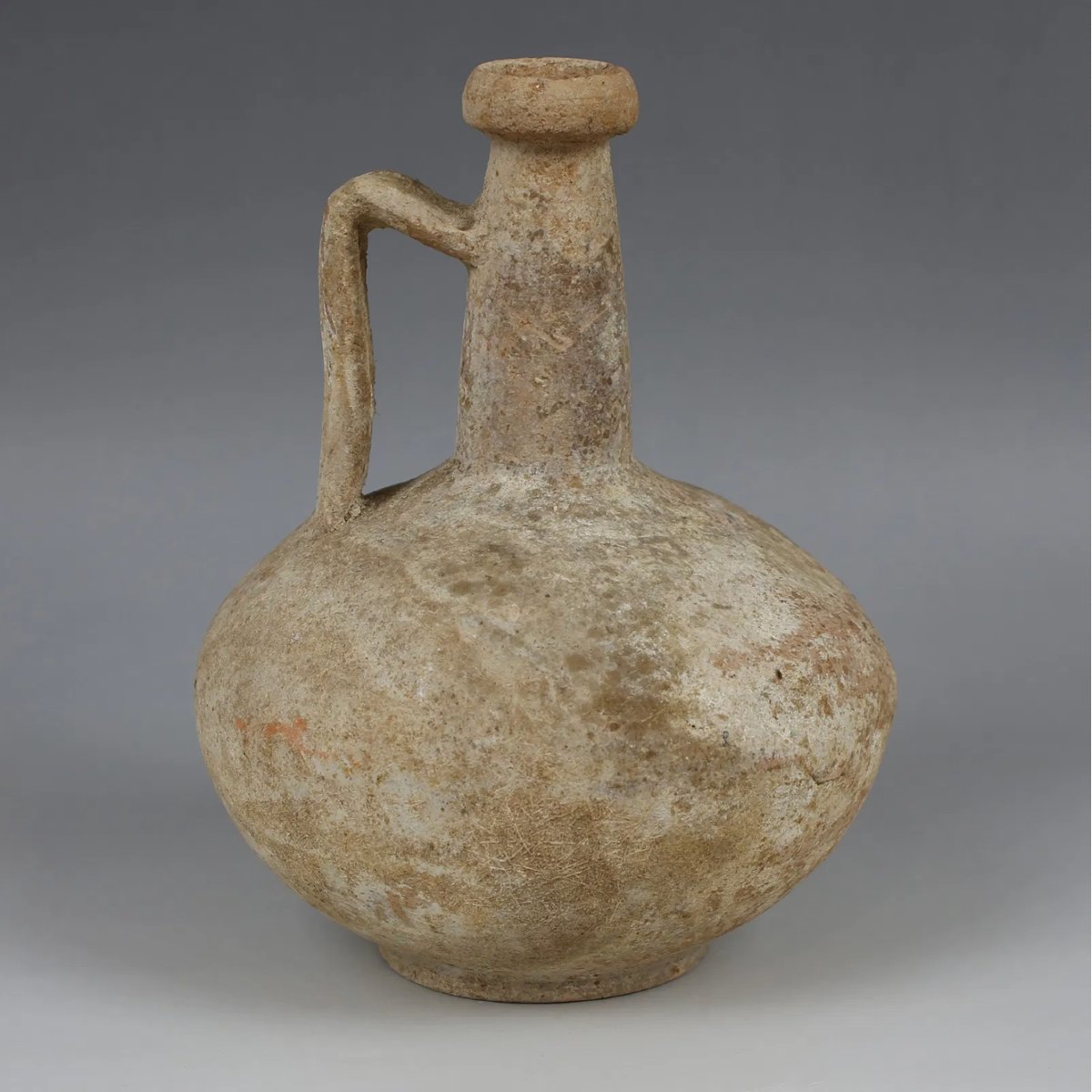
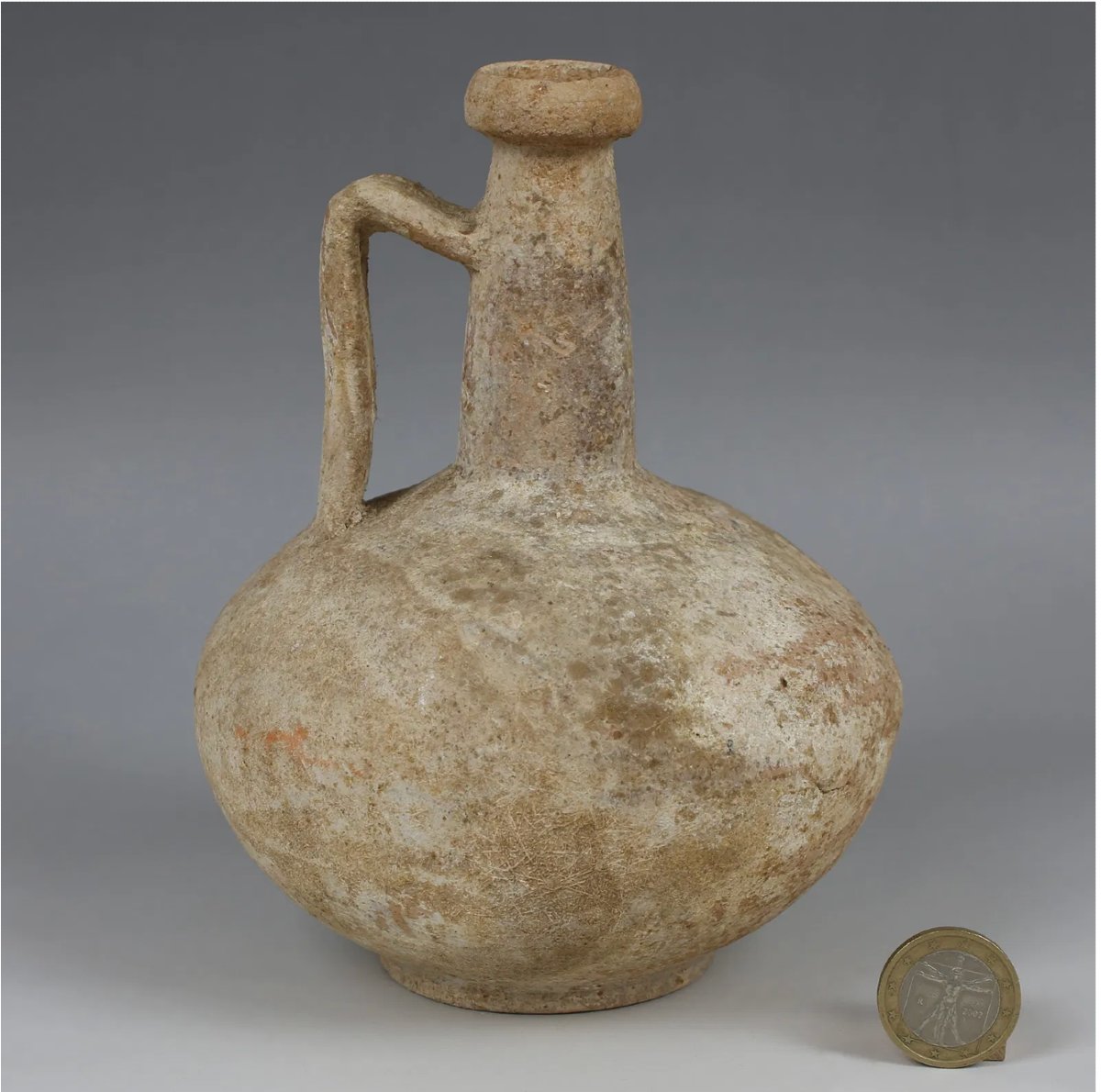
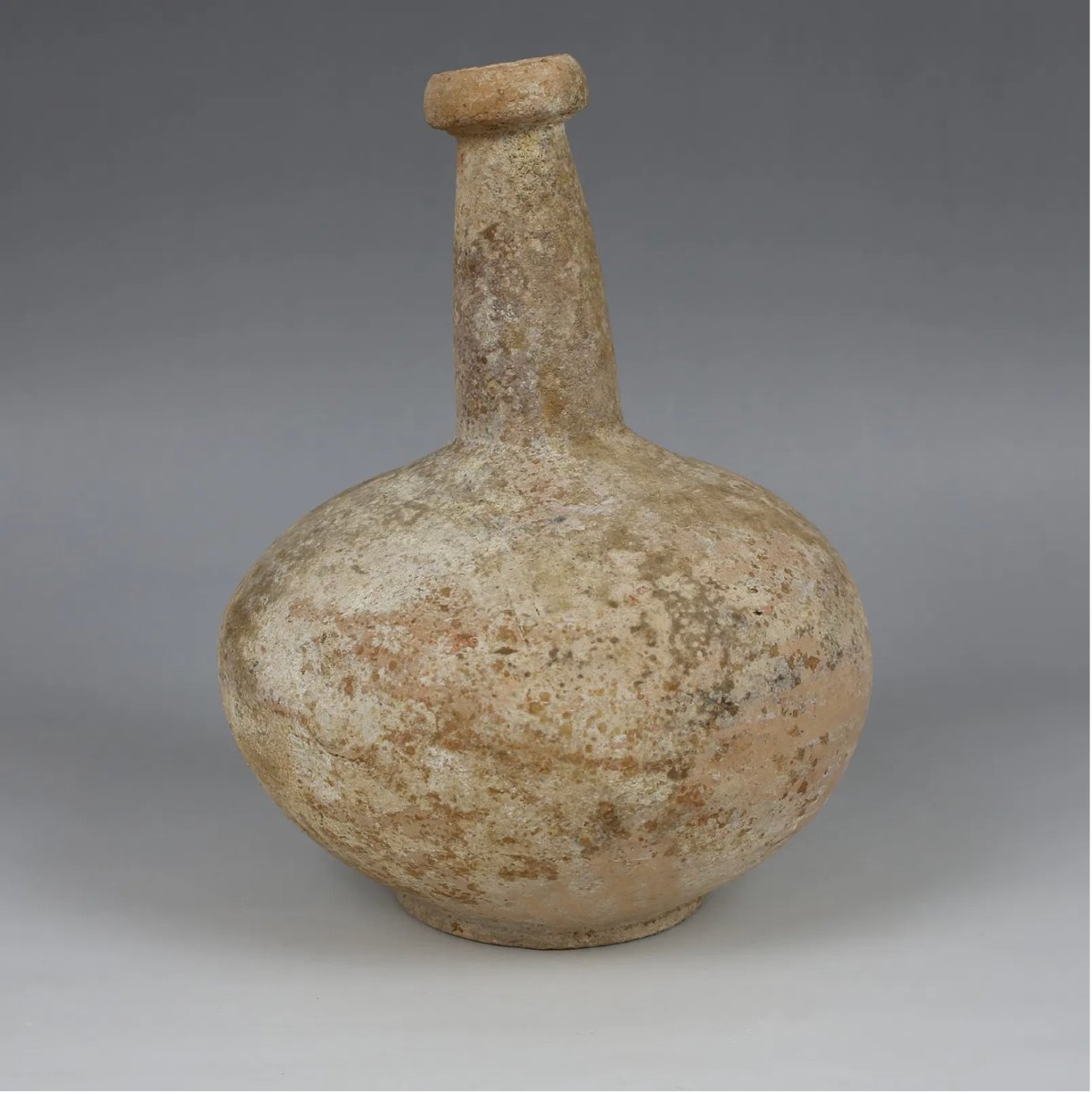
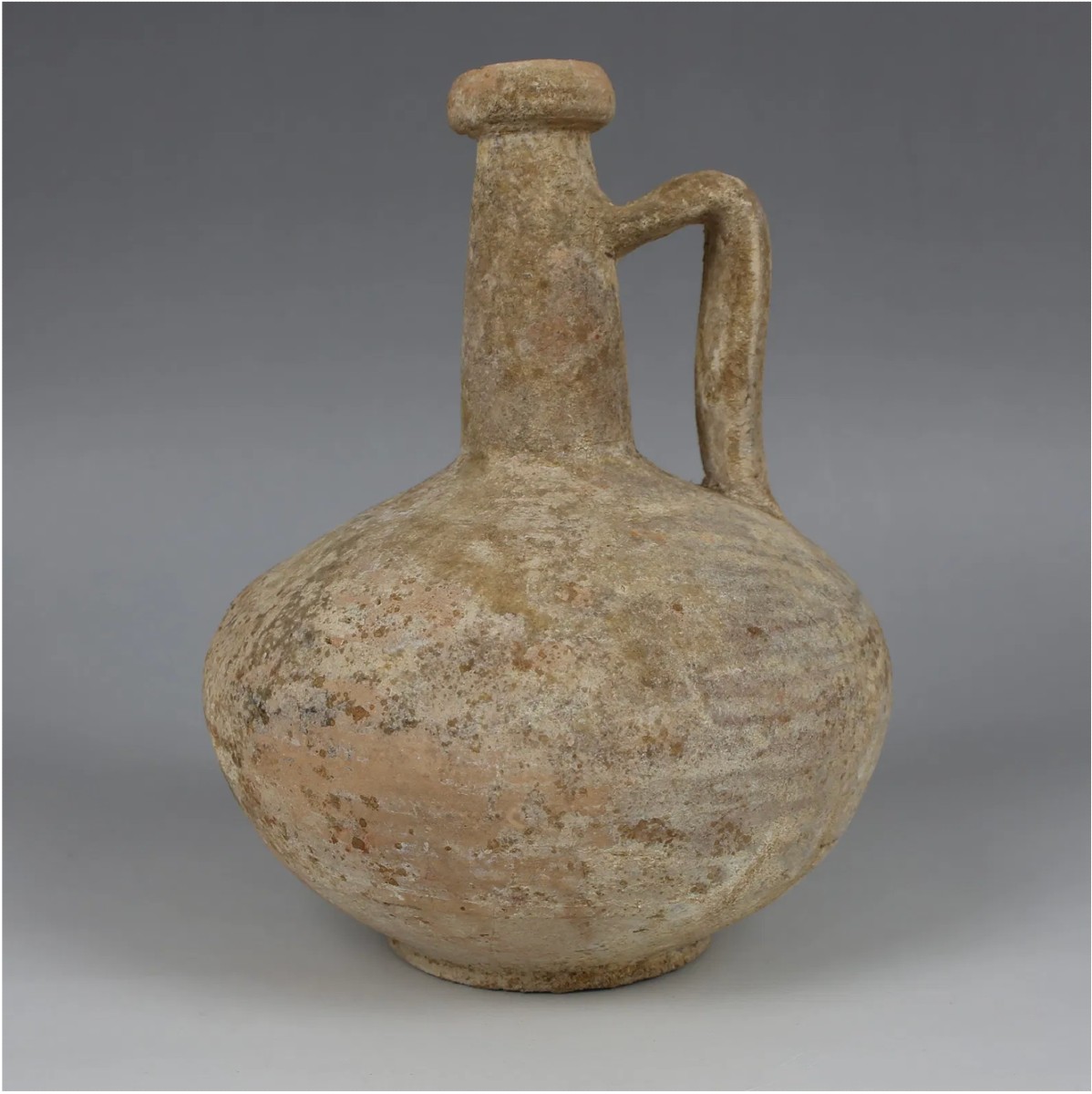


This artifact is a Roman ceramic jug featuring a globular body and a slender neck, characteristic of the common ware (coarse ware) used during the High Empire. The object is distinguished by its rigorous formal simplicity, typical of utilitarian productions designed for serving or storing liquids. Surface examination reveals a heavily patinated epidermis, scattered with mineral concretions and age-old traces of burial, attesting to prolonged preservation in a terrestrial environment without aggressive modern cleaning.
Characteristics
Object: Utility Jug (Urceus or Lagena type).
Material: Wheel-thrown pottery, pale fabric, oxidizing firing, unglazed.
Culture: Roman, provincial production.
Period: High Empire, 1st – 3rd century AD.
Dimensions: Height: approx. 160 mm | Max Width: 122 mm.
Condition: Structural integrity preserved. Homogeneous archaeological patina with calcareous encrustations.
Provenance: Ex-private American collection, acquired between 1970 and 2000.
Documentation: Sold with a Certificate of Authenticity.
Historical ContextIn Roman ceramic nomenclature, this type of vessel belongs to the category of common ware, omnipresent from Italy to the Western provinces. Unlike Terra Sigillata table services, these pieces—often produced locally—met the essential needs of the domestic economy (kitchens, pantries) and commercial establishments (taverns). They were used for decanting and serving water, wine, or oil, complementing large storage containers (dolia, amphorae). The sobriety of the craftsmanship reflects standardized mass production, prioritizing function and robustness.
Formal and Material Analysis
Typology and Shaping: The piece presents a body with a continuous profile, widening generously from a narrow, discoidal base to a maximum median diameter, ensuring optimal volume. The neck, cylindrical with a slight conical tendency, rises clearly above the shoulder, lending a slender silhouette to the whole. The mouth is emphasized by a thickened, bead-like rim ("mushroom" profile), designed to receive a perishable stopper (cork, textile) and reinforce the lip against impacts.
Technique: Faint horizontal striae, perceptible on the body and neck, confirm rapid wheel-throwing followed by partial smoothing. The single handle, oval in section, was modeled by hand and applied by luting: its elbow-shaped tracing, connecting the high shoulder to the top of the neck, offers an ergonomic grip point (thumb-rest).
Material and Surface Condition: The fabric, visible in worn areas, is fine and of a beige-pinkish hue. The unglazed surface presents a matte, chalky patina, nuanced with grays and beiges. It is marked by whitish calcareous concretions and localized ferruginous oxidations, forming a coherent network of aging. The absence of artificially smooth zones or breaks in the patina at junctions (handle/neck) supports the homogeneity of the piece.
Cultural and Decorative ValueBeyond its utilitarian function, this jug possesses a documentary aesthetic quality. It does not seek to seduce through applied decoration, but through the balance of its proportions and the richness of its archaeological patina. For the collector, it constitutes a tangible witness, in "unrestored" condition, of daily Roman life. Its surface, textured by time, offers an interesting material contrast within a collection of antiquities, opposing the polished surfaces of marbles or the sheen of modern varnishes.
Expertise ReportStylistic and technical analysis confirms attribution to the Imperial Roman period (1st–3rd c. AD). The indicators of antiquity are compelling:
Typological Consistency: The morphology corresponds to standard provincial water/wine jugs.
Condition: Wear patterns (slight polishing of the base, micro-chips on the rim) are consistent with functional use.
Patina: Concretions and micro-crazing are distributed randomly and naturally, with no trace of recent cosmetic alteration.No structural restoration or major re-gluing is detectable upon visual examination. An authentic, sound piece, preserved in its state of discovery.
Explore similar pieces and discover your ideal find:
archeology