THIS OBJECT WAS SOLD
Etruscan Bucchero Olpe (rasmussen 1b) – Certificate Of Authenticity
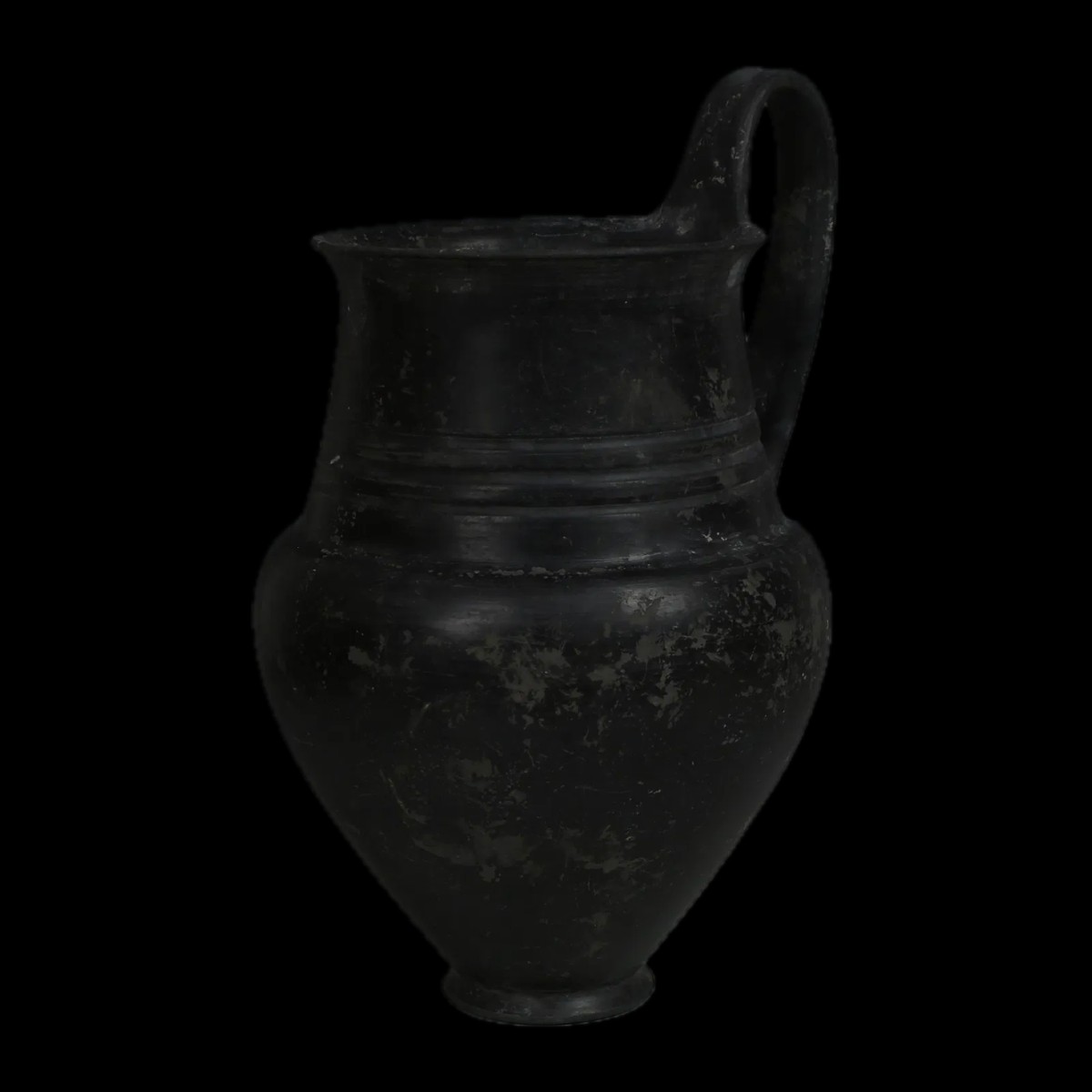
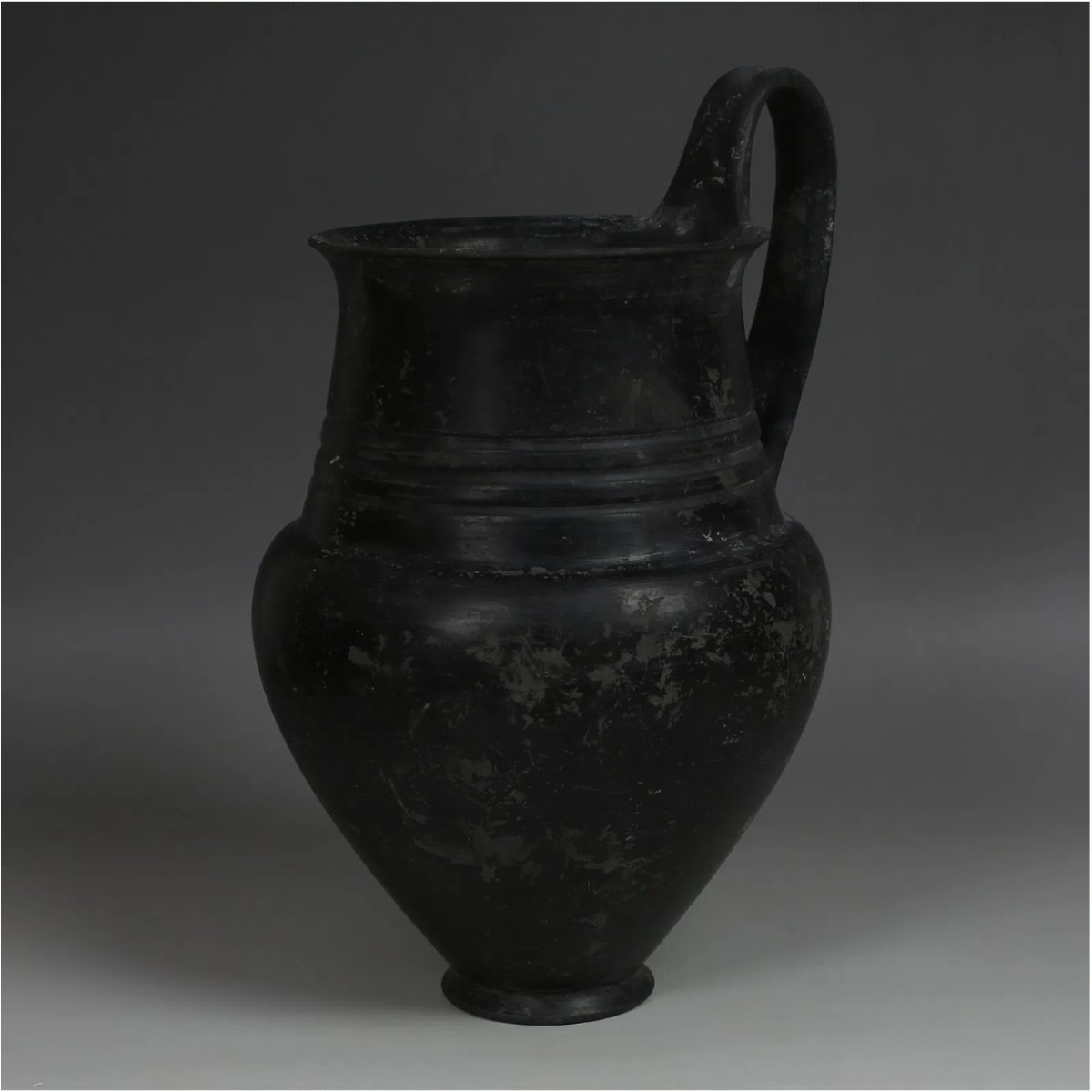
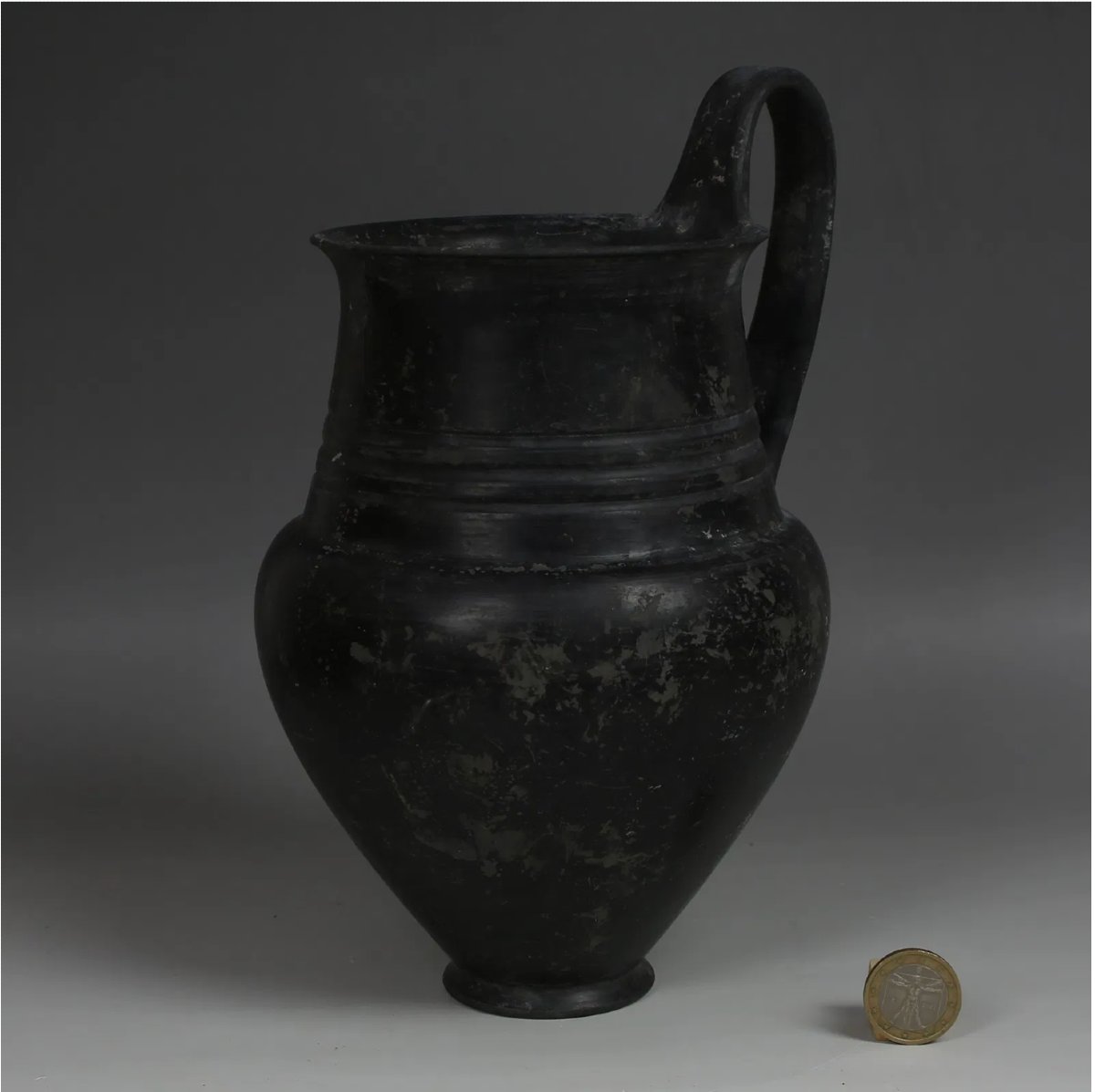
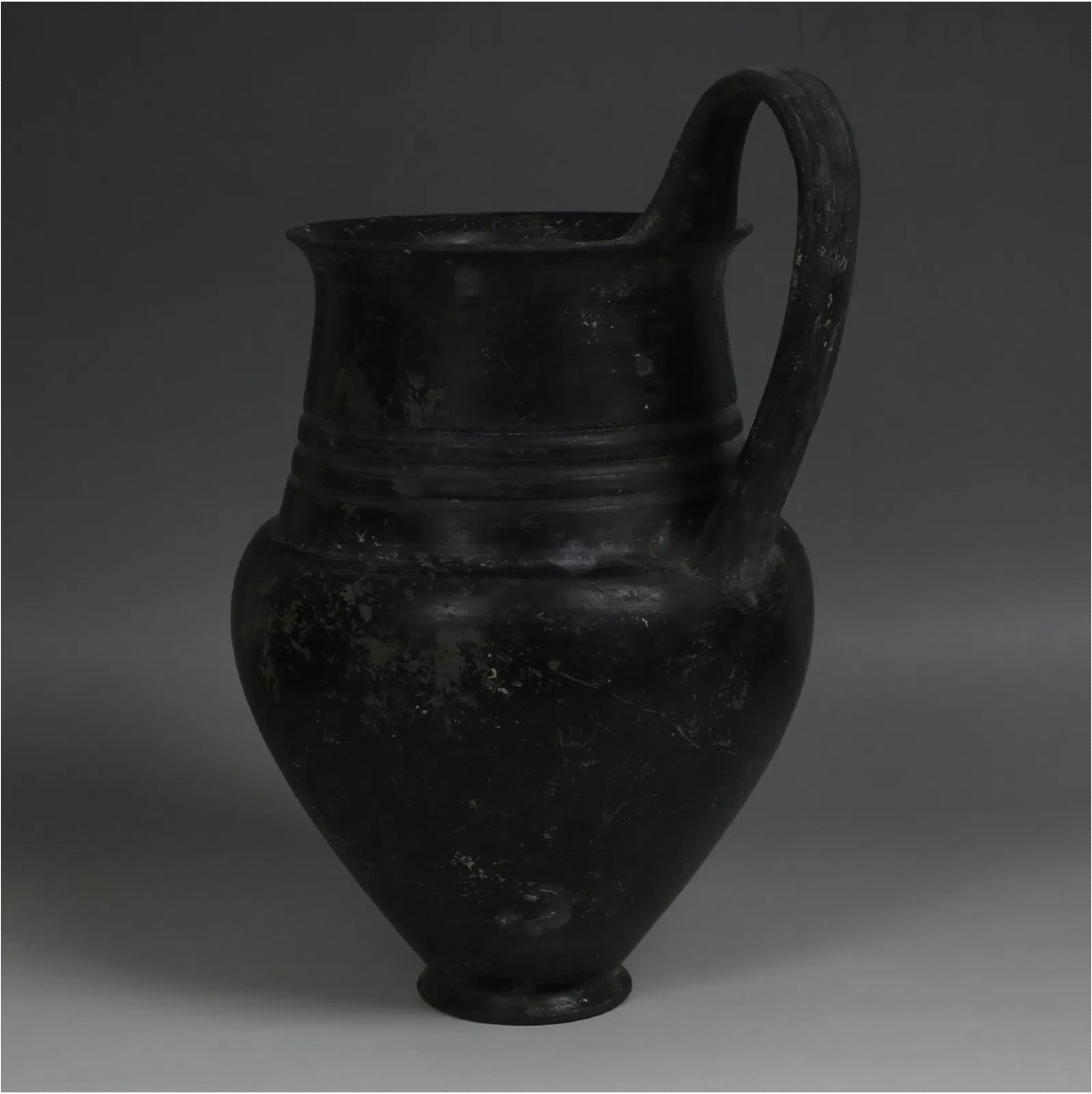
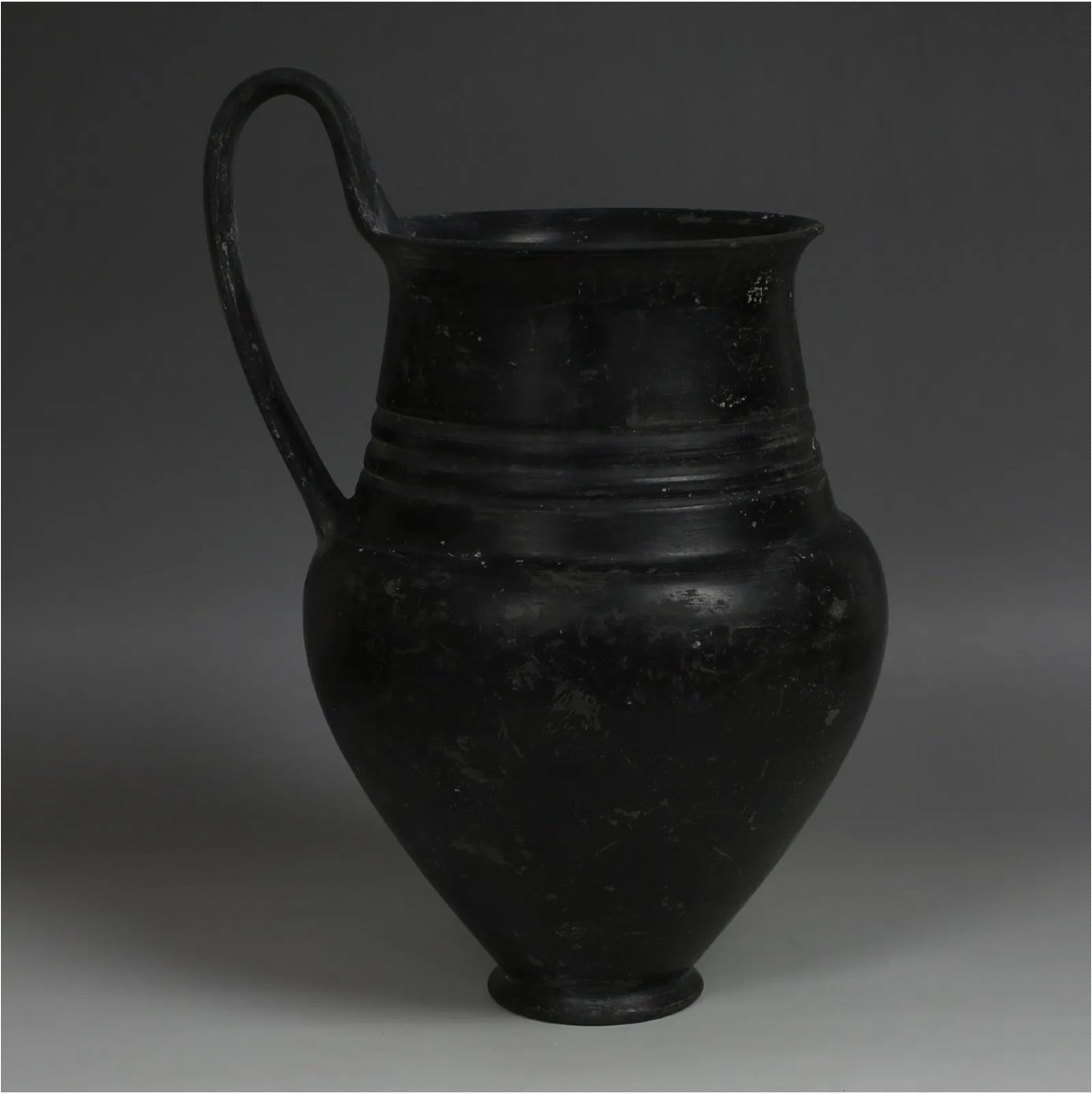



This monumental bucchero nero Olpe constitutes a reference document for Etruscan ceramics of the Orientalizing period. Identified as Type 1b in Tom B. Rasmussen's canonical classification, it stands out with a vigorous architecture imitating luxury metalware. The piece features a powerful ovoid body surmounted by a neck with a projecting ridge, dominated by a ribbon handle rising majestically above the mouth. Material expertise reveals a surface of great archaeological integrity: the deep black, obtained by reduction firing, is largely veiled by grayish calcareous concretions. These mineral deposits, encrusted in the pores of the clay and the fine incisions of the decor, constitute a protective "skin" and irrefutable proof of the object's antiquity, guaranteeing its integrity against abusive modern restorations.
Characteristics
Object: Olpe (High-handled Wine Jug).
Culture: Etruscan (Southern Etruria).
Period: 7th – 6th century BC (Orientalizing - Archaic Period).
Material: Bucchero nero ceramic (reduction firing).
Dimensions: Height: 228 mm | Width: 160 mm | Depth: 140 mm.
Condition: Good state of conservation; surface presenting a rich excavation patina and calcareous sediments.
Provenance: Ex-European private collection; ex-Lakythos SARL (1987); ex-Hydra Gallery, Geneva (1984).
Bibliography: Type described by T. B. Rasmussen, Bucchero pottery from Southern Etruria, 1979, pl. 23, no. 100 (Type 1b).
Museum Parallel: Musée Saint-Remi, Reims (Inv. 2019.1.37).
Documentation: Sold with Certificate of Authenticity.
Historical Context Bucchero, a major technical innovation of Etruscan potters, aimed to reproduce the sheen of silver or blackened bronze vessels used by the aristocracy. This type of Olpe (Rasmussen 1b) characterizes the transition phase between bucchero sottile (thin-walled) and the beginning of bucchero pesante (heavy-walled). It bears witness to the apogee of Etruscan princely culture, where these prestige vessels served in the wine ritual during the symposion or accompanied the deceased in the tomb as a marker of social status.
Formal and Material Analysis
Architecture and Tectonics: The form is dictated by the search for stability and elegance. The relief ring (rib) separating the neck from the shoulder imitates the welds of hammered metal vessels. The vertical strap handle, broad and solid, ensures a firm grip.
Incised Decor: The shoulder is adorned with a frieze of open fan motifs (radiating palmettes), executed using the dotted technique (a puntino). This incised decor, typical of the late 7th century BC, contrasts subtly with the smooth surface of the body.
Material and Patina: Surface analysis is paramount. The black hue is not a slip but the color of the paste itself, chemically transformed by the lack of oxygen. The massive presence of calcareous concretions (white/gray areas) attests to long burial in a sedimentary environment. The network of fine crazing and superficial wear maps the millennial history of the object.
Cultural and Decorative Value This Olpe is a "referenced" collector's piece. Its value rests on the convergence of three factors: a typology identified in scientific literature (Rasmussen), an existing museum parallel (Musée Saint-Remi), and traceability established for 40 years (Hydra Gallery, 1984). Aesthetically, it offers the austere and mineral beauty of authentic archaeology, prioritizing the truth of the patina over aestheticizing restoration.
Expertise Report Authenticity is confirmed by the following elements:
Typology: Exact correspondence with Rasmussen Type 1b.
Surface Condition: Calcareous concretions are encrusted inside the decor incisions, proving the engraving is contemporary with manufacture and not a modern addition.
Traceability: Documented history dating back to 1984 secures the provenance.
Explore similar pieces and discover your ideal find:
archeology