THIS OBJECT WAS SOLD
Roman Utility Jug (2nd–3rd C. Ad) With Certificate Of Authenticity
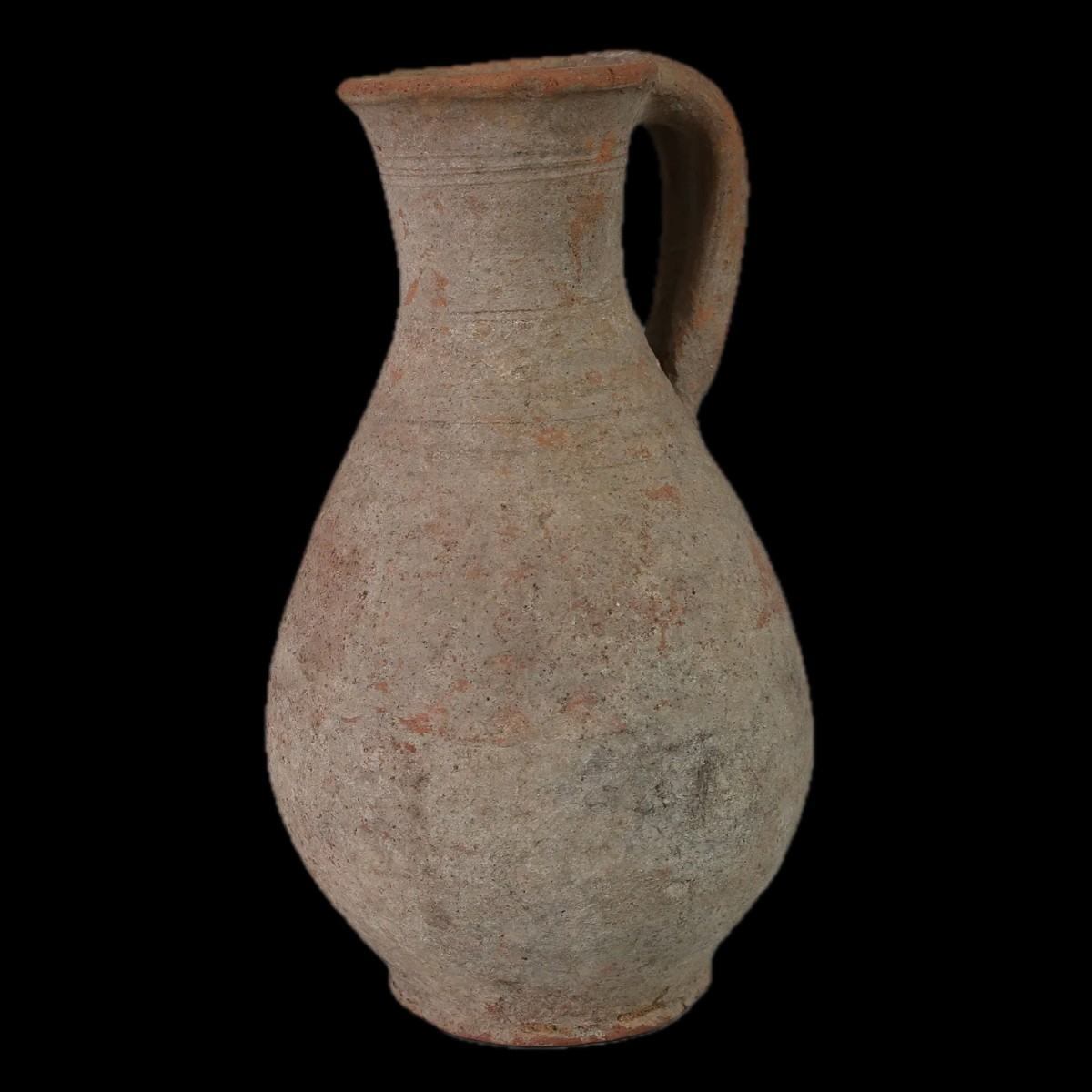
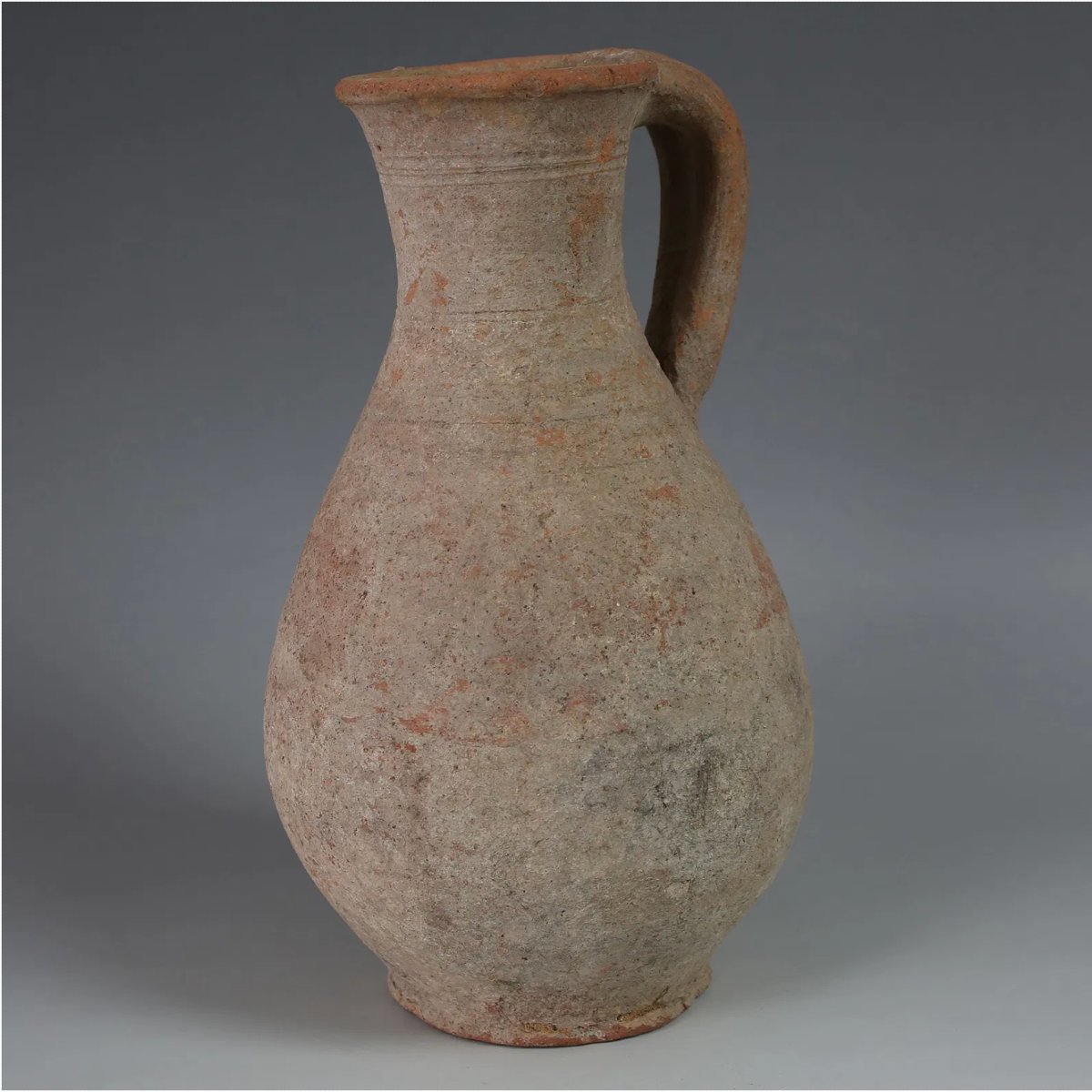
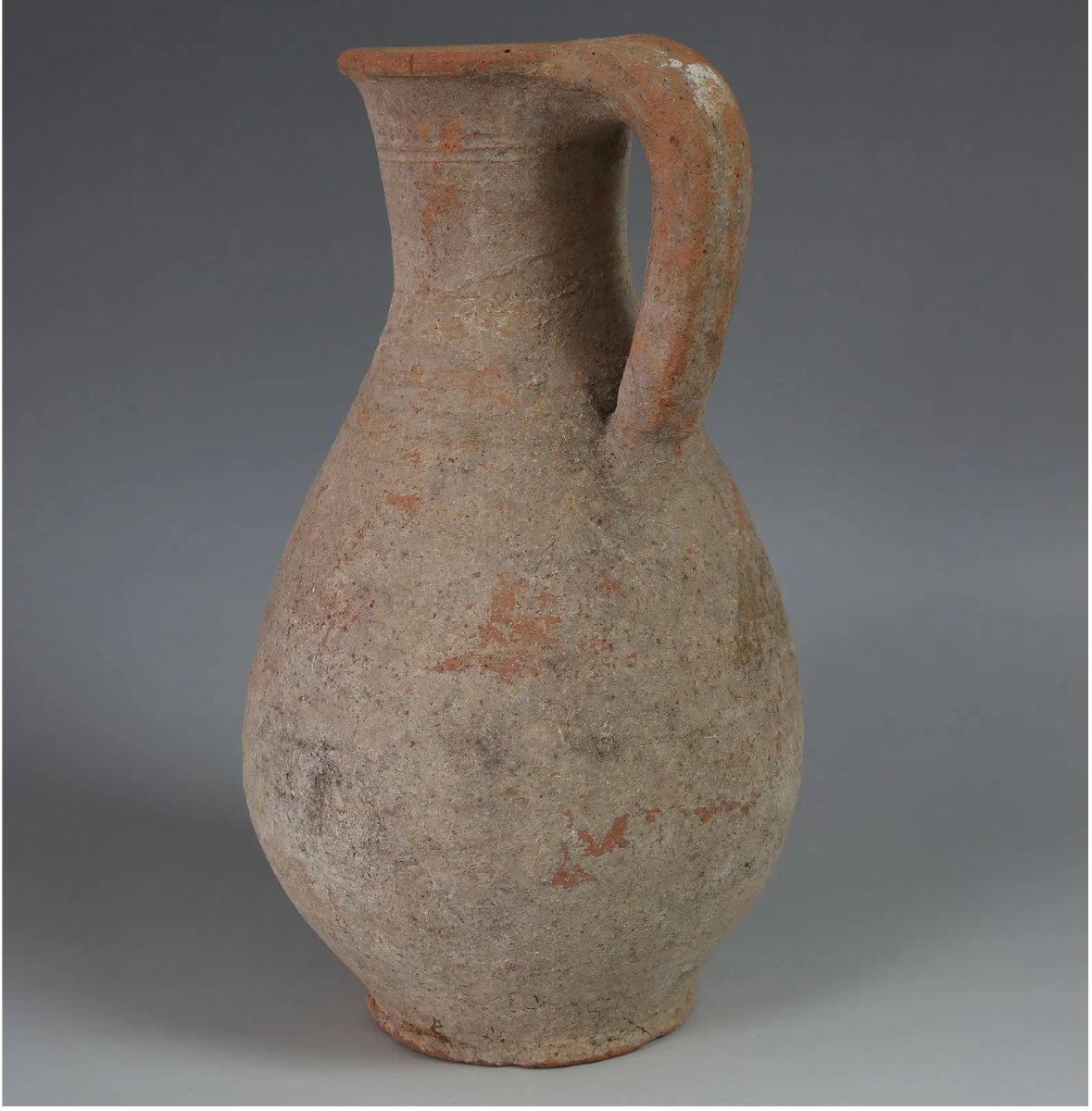
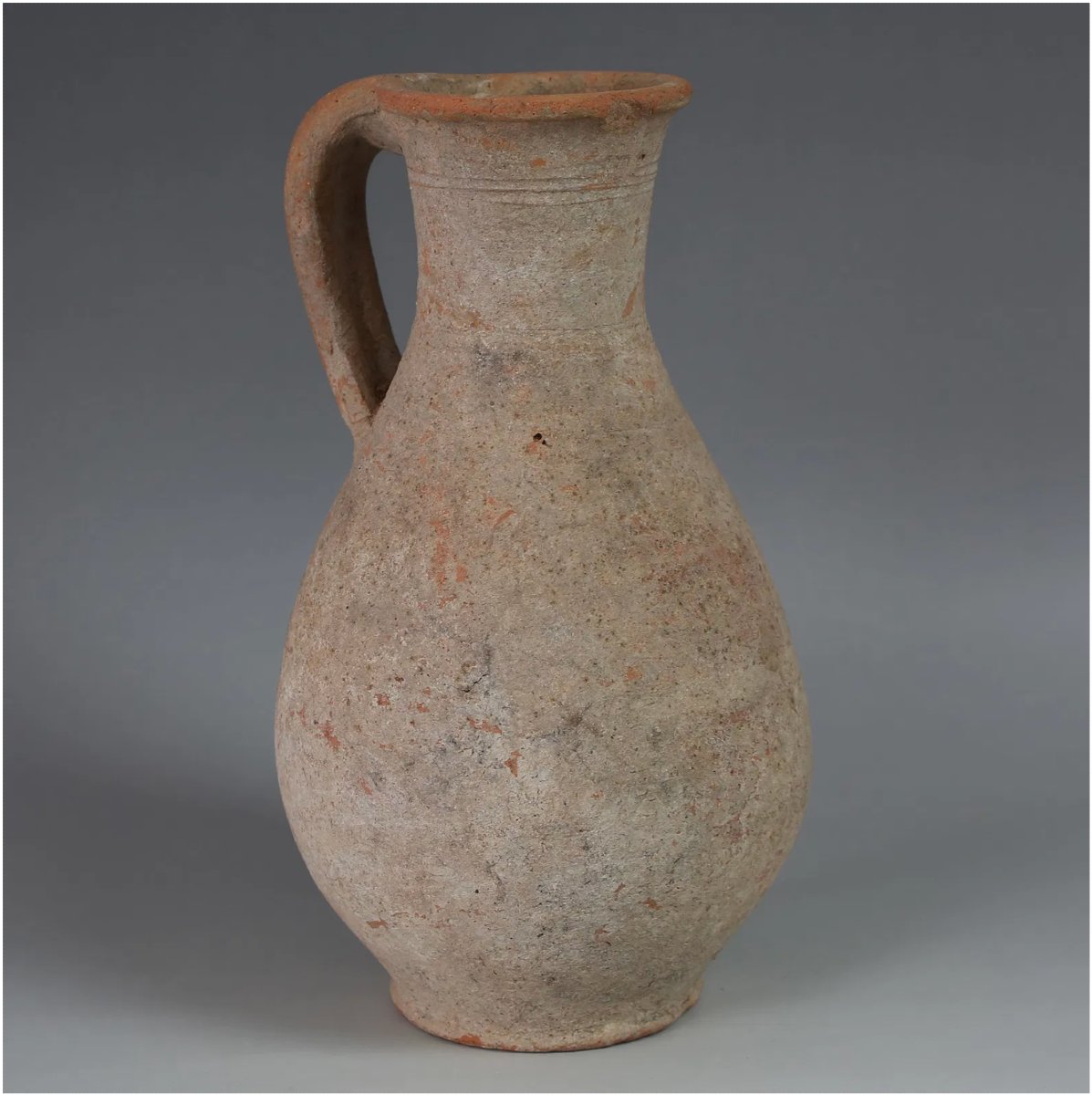


This Roman jug embodies the tangible reality of daily life under the Empire during the 2nd and 3rd centuries AD. The object is distinguished by robust craftsmanship, characteristic of coarse ware intended for domestic use. The primary interest of this piece lies in its intact epidermis: the warm orange terracotta is adorned with a rich covering of calcareous concretions and whitish earthen sediments. This irregular and dense mineral "skin" is not an alteration but the indelible signature of its underground history, guaranteeing that the object has been preserved from any abusive modern chemical cleaning.
Characteristics
Object: Handled Jug, utilitarian ceramic.
Culture: Roman (Provincial production).
Period: 2nd – 3rd century AD (High Empire).
Material: Terracotta, orange-red fabric with inclusions.
Dimensions: Height: 200 mm | Width: 105 mm.
Condition: Good state of conservation; structural integrity preserved; significant excavation patina (calcareous concretions).
Provenance: Ex-private French collection, formed between 1970 and 1990.
Documentation: Sold with Certificate of Authenticity.
Historical Context While fine wares like Terra Sigillata were the privilege of wealthy tables, coarse ware constituted the logistical backbone of the Roman Empire. These jugs, produced locally in the provinces, were used for transporting and serving water, diluted wine, or posca. They testify to the standardization of Roman forms and the efficiency of potters who prioritized function and durability. Often deposited as offerings in modest burials, they accompanied the deceased, filled with symbolic provisions for the afterlife.
Formal and Material Analysis
Morphology: The piece presents a slender yet stable profile. The ovoid body rises gently toward a wide, slightly flared neck, facilitating filling and pouring. The handle, a thick ribbon connecting the lip to the shoulder, is shaped for a firm grip, underscoring the strictly functional vocation of the object.
Material and Texture: The ceramic fabric, visible in places beneath the patina, reveals a granular texture rich in inclusions (sand or grog), a technique used to increase resistance to thermal and mechanical shock.
Patina and Sedimentation: Visual analysis highlights a natural crystallization of calcareous salts on the surface. These white deposits, encrusted in the pores of the terracotta, form a geological landscape on the vessel's surface. This heterogeneous sedimentation, impossible to reproduce artificially with such fidelity, validates the millennial age of the piece and its extraction from a dry archaeological environment.
Cultural and Aesthetic Value This jug possesses the austere beauty of objects of truth. Far from the pomp of prestige pieces, it connects us directly to the intimacy of the average Roman citizen. Its value lies in its "fresh from excavation" authenticity: it is an artifact that has not been cosmetically enhanced, offering the collector the intact emotion of archaeological discovery.
Expertise Report The attribution and authenticity are based on the following elements:
Typology: Standardized form of High Empire coarse ware.
Surface Condition: The presence of hard, adherent calcareous concretions confirms the antiquity of the burial.
Traceability: The French collection history (1970s–1990s) ensures an established provenance.
Explore similar pieces and discover your ideal find:
archeology