

Caracalla Denarius “fides Militvm” — Certificate Of Authenticity
With a particularly convincing balance between portrait power, epigraphic legibility, and symbolic force, this silver denarius of Caracalla, struck at Rome in 215, presents one of the most sought-after formulas of the prince’s late titulature—ANTONINVS PIVS AVG GERM—paired with a reverse of Fides holding two standards, a motif explicitly referenced in the major corpora (BMC, Cohen, RIC) and highly appreciated by collectors for the clarity of its military and institutional message.
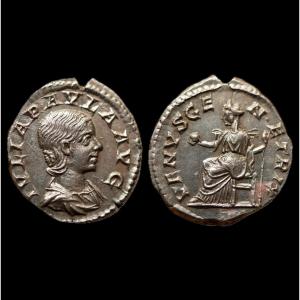
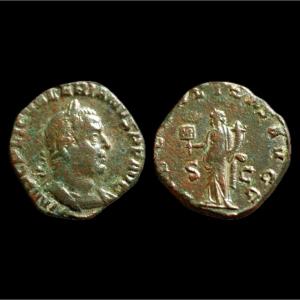
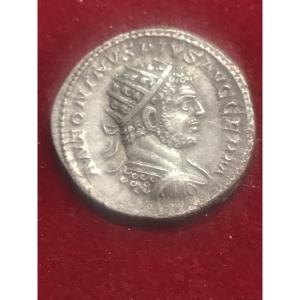
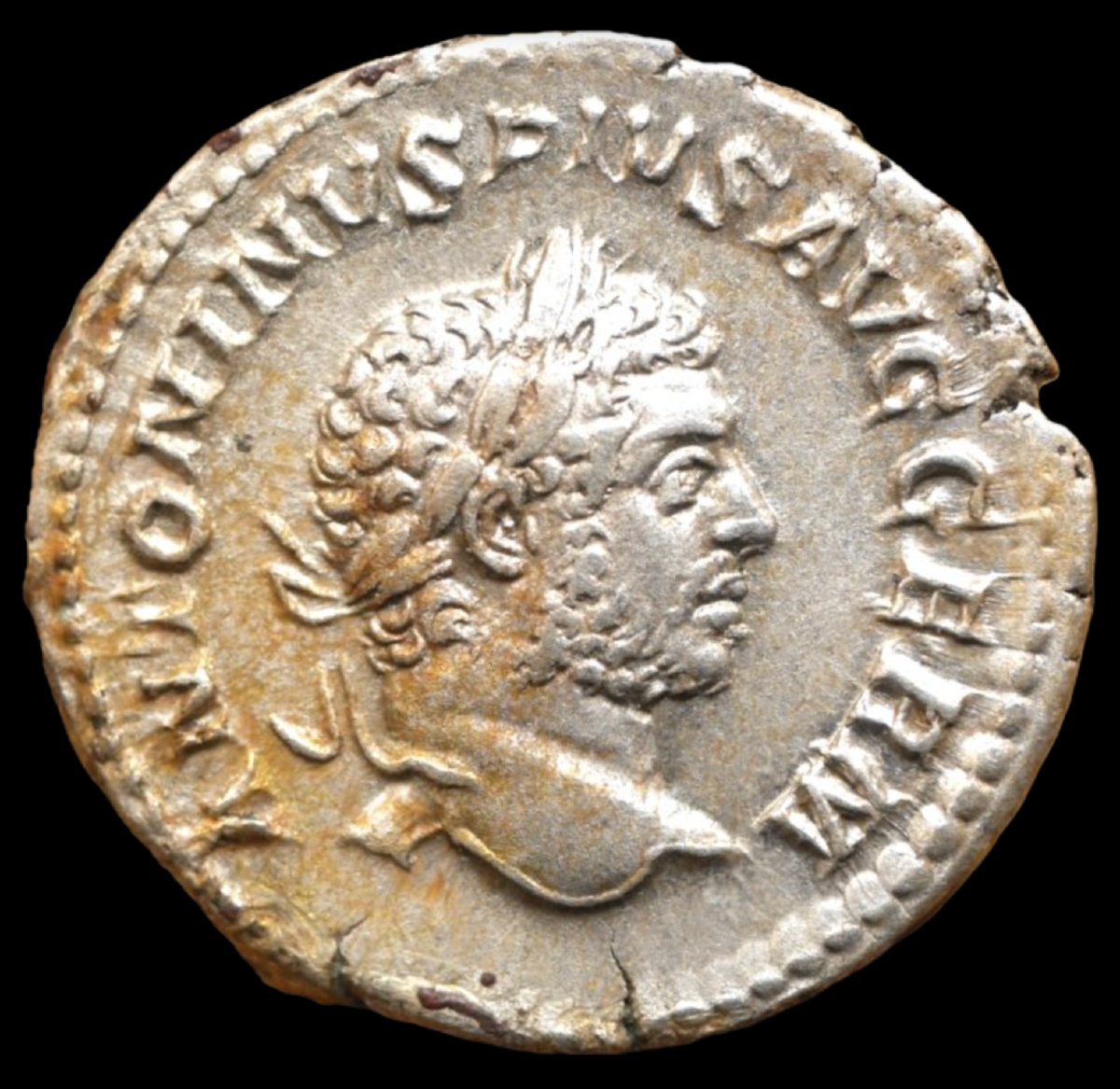
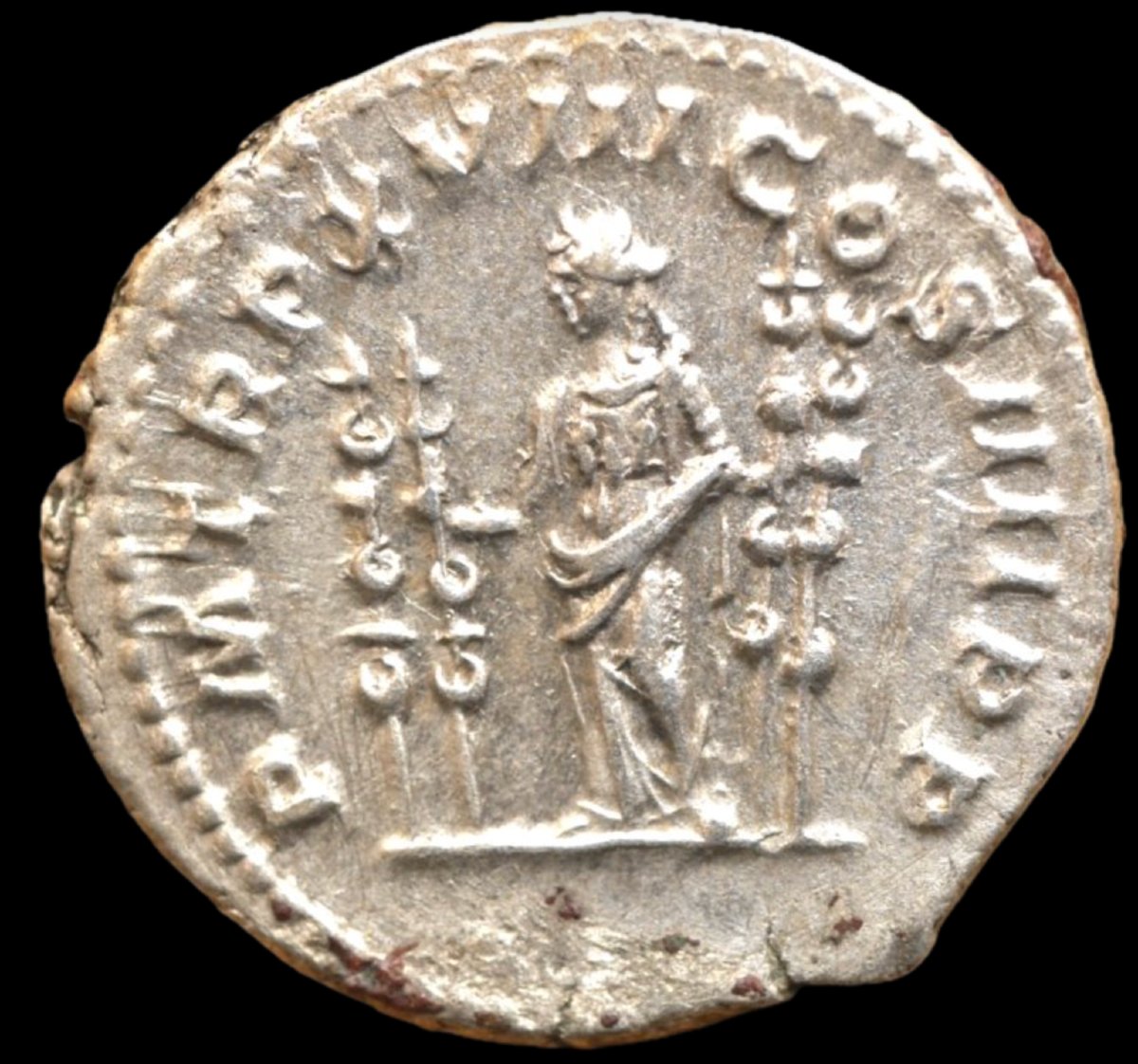
Careful observation under ×10 magnification and raking light: the close examination of the photographs, conducted according to a methodical reading (rim → fields → reliefs → legends → flan edge → surface singularities), reveals a hammer-struck issue with crisp modeling, with reliefs still well structured on the portrait and on the reverse attributes, a gray silver patina nuanced by slightly warmer reflections in certain peripheral areas, and an edge showing old irregularities consistent with an ancient flan—among which one can notably distinguish a flan crack visible at about 6 o’clock, as well as a small metal loss on the upper edge—features frequently encountered on denarii that have had a long material life, without impairing identification of the type.
Obverse (portrait, titulature, style)Type: laurelled head of Caracalla right, with a sharp profile, a laurel wreath legible in its volumes, and hair rendered in short, dense locks; the eye, the line of the nose, and the mouth retain a clear reading, which raking light emphasizes through edges still present on the forehead and cheek.
Legend: ANTONINVS PIVS AVG GERM, visible over a large portion of the circumference, with letters sometimes slightly softened yet preserving a secure reading of the titulature, consistent with published specimens under the corresponding RIC reference.
Flan / edge: rim regular in places, a “living” edge, with a flan crack toward the lower area and an irregularity in the upper part, characteristics observable without going beyond what the photograph establishes.
Reverse (Fides, standards, reading)Type: Fides standing, facing, head turned left, holding two standards arranged vertically, whose tips and circular ornaments remain perceptible; the composition fills the field with good balance, resting on a clear ground line.
Legend: P M TR P XVIII COS IIII P P, placed around the periphery, with overall satisfactory legibility, firmly anchoring the issue in the indicated tribunician year, and therefore in the traditional dating around 215 for this type.
Surface: fields of a homogeneous silver-gray, with fine contact micro-marks compatible with circulation and without visible artificial smoothing on the photograph, raking light bringing out the natural continuity of the surfaces.
Characteristics (attribution, metrology, references)Authority: Caracalla, 198–217.
Mint: Rome.
Denomination / metal: Denarius, silver.
Date: 215 (based on the tribunician titulature on the reverse, TR P XVIII).
Obverse: ANTONINVS PIVS AVG GERM, laurelled head right.
Reverse: P M TR P XVIII COS IIII P P, Fides holding two standards.
References: BMC 143 ; Cohen 315 ; RIC 266.
Specimen data: 19 mm ; 3.44 g.
Historical context (military loyalty and the language of power)In the final years of Caracalla’s reign, silver coinage serves as a condensed proclamation, in which the titulature stresses victories and titles, while the reverse, by choosing Fides holding two standards, stages the loyalty of the troops and the solidity of the military order—a central theme at a time when imperial legitimacy is nourished by discipline and the army’s adherence, as confirmed by the frequency and stability of this type in the reference catalogues.
Cultural value (collecting, typology, legibility)This denarius brings together qualities highly valued in collections: an energetic, well-set laurelled portrait; an obverse legend that is immediately identifiable (PIVS / AVG / GERM); and a Fides reverse whose standards, even with normal wear, remain legible and “speaking,” offering a piece that is easy to place within a Severan ensemble while remaining strictly tied to published references that secure identification and comparison.
Traceability & guaranteesIn accordance with our practices, each specimen is examined, described, and accompanied by a certificate of authenticity consistent with the standards of the art and heritage market; the study is conducted with careful observation under ×10 magnification and raking light, and set against typological references (BMC, Cohen, RIC); provenance is European, from an established numismatic dealer; and the acquisition stems from a specialized international transaction carried out within a recognized numismatic network and validated by reference experts, according to the highest standards of the art and heritage market.
Secure shippingShipping is carried out according to a protection protocol adapted to ancient silver coins (rigid packaging, shock-resistant cushioning, separation preventing any rubbing, tracking), in order to preserve reliefs, fields, and surfaces, and to ensure that the condition observed during the expertise is the condition received by the collector.
Payment terms (on request, depending on the delivery address)In order to establish the conditions best suited to your situation and to guarantee shipment compliant with insurance and signature requirements, we invite you to send us a message specifying your location as well as the exact delivery address, after which we will immediately confirm the corresponding payment and shipping procedure.
France: Colissimo shipment, with signature and insurance, at a rate of 20 euros.
Abroad: UPS shipment, with signature and insurance, at a rate of 35 euros.
We accept:
Cheque (shipment is made after effective receipt of funds).
Bank transfer (simply request our bank details).
Bank link (card payment accepted: CB, Visa, Mastercard, American Express, Apple Pay).
In accordance with a compliance policy and a management of logistical, documentary, and insurance risk applicable to certain destinations, we do not sell to the United States; this limitation is motivated by the potential complexity of import requirements, controls, and liabilities associated with the international transport of heritage objects, which leads us to favor shipping channels offering fully controlled legal and operational security.
Period: Before 16th century
Style: Rome and Antic Greece
Condition: Good condition
Reference (ID): 1715713
Availability: In stock