THIS OBJECT WAS SOLD
Egyptian Statuette Of Nephthys In Mourning — Certificate Of Authenticity
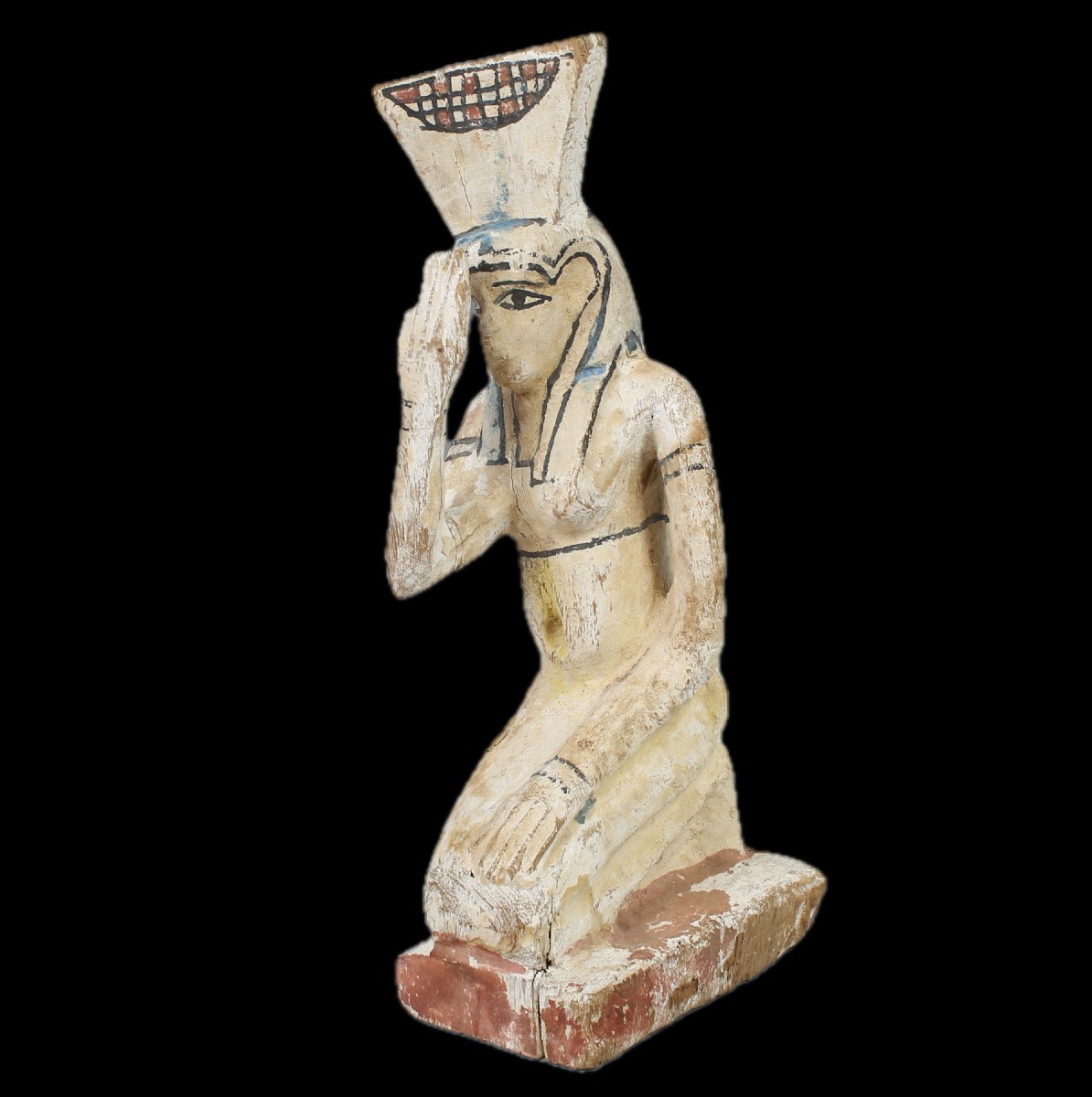

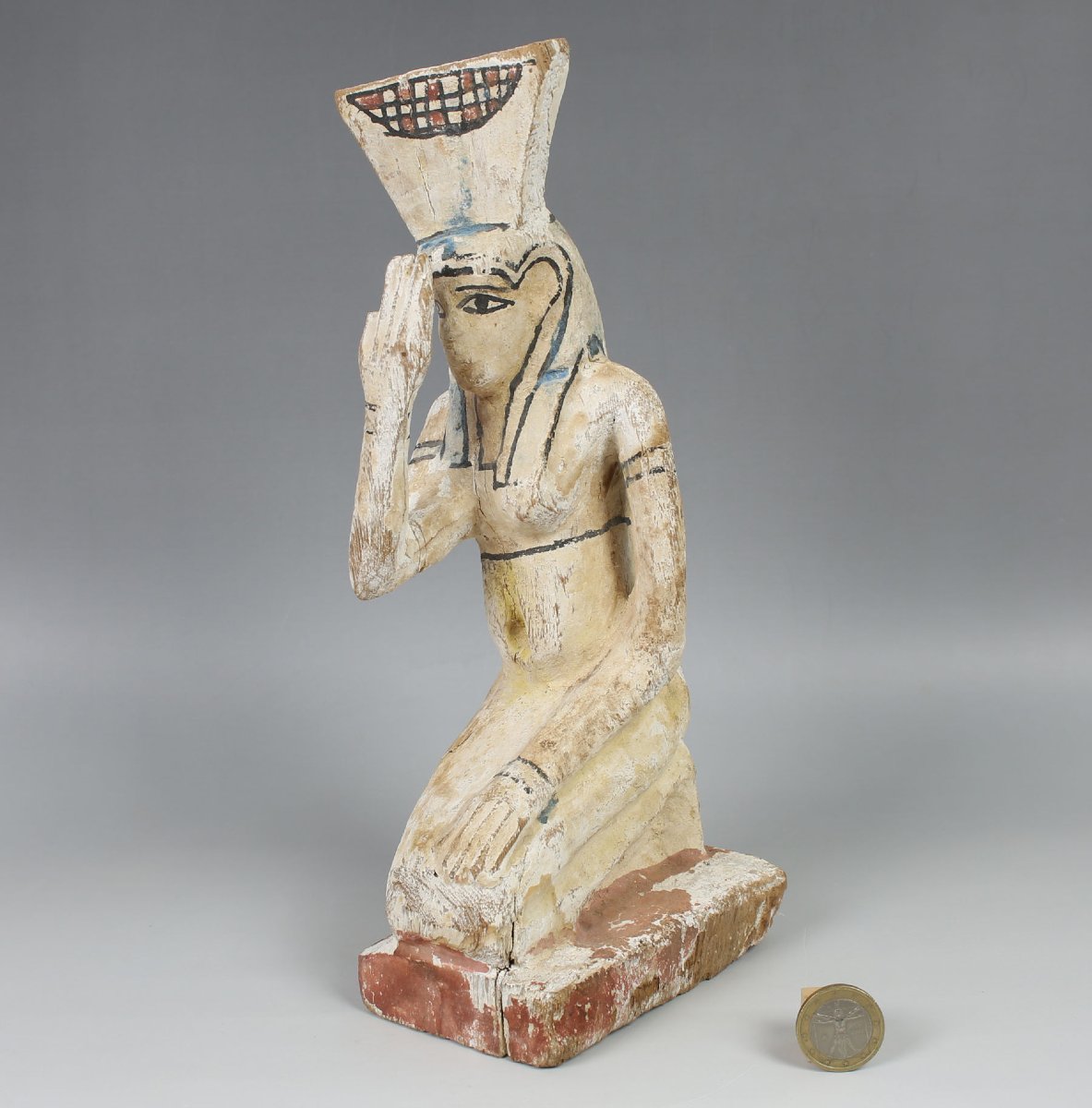

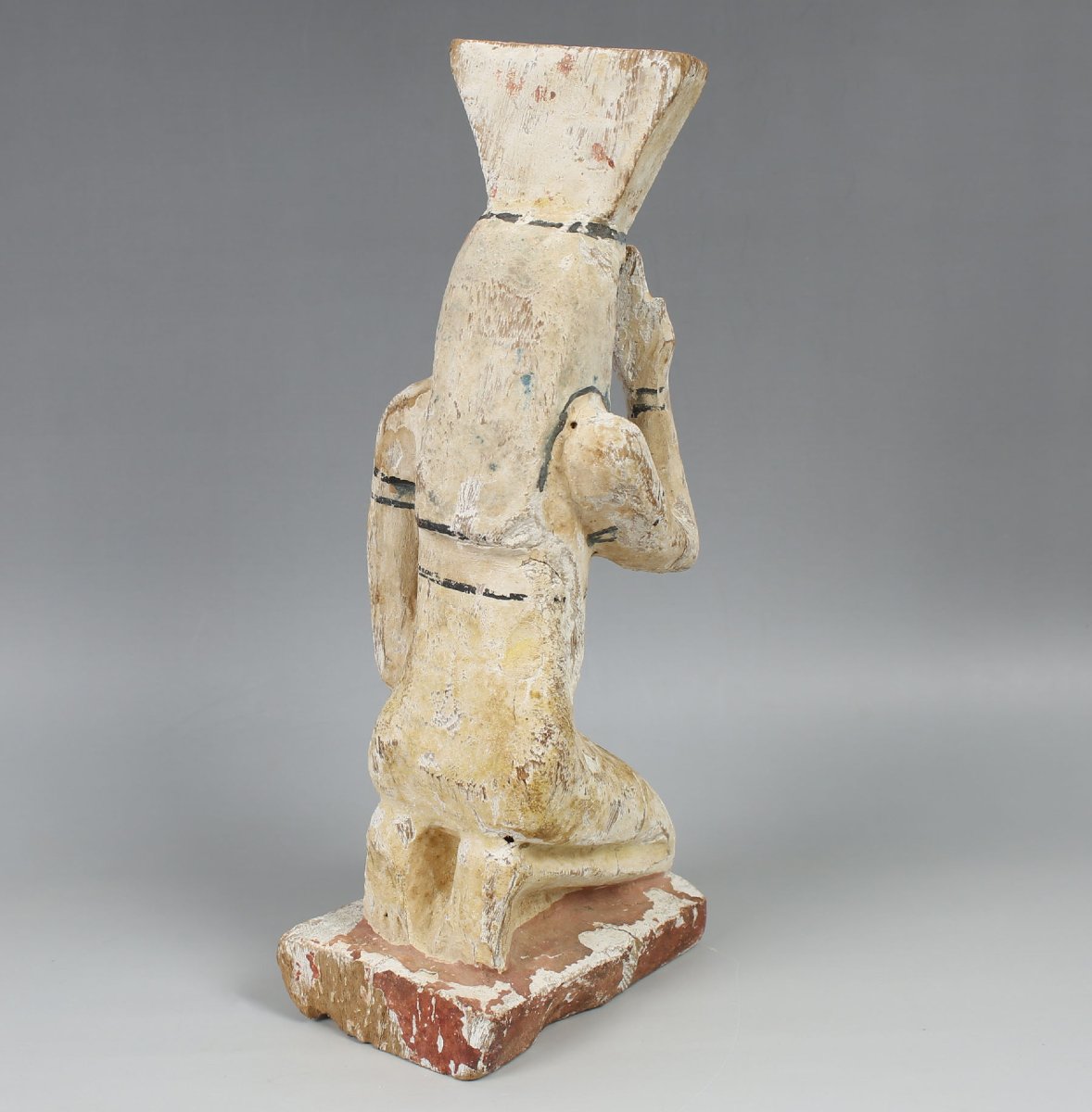
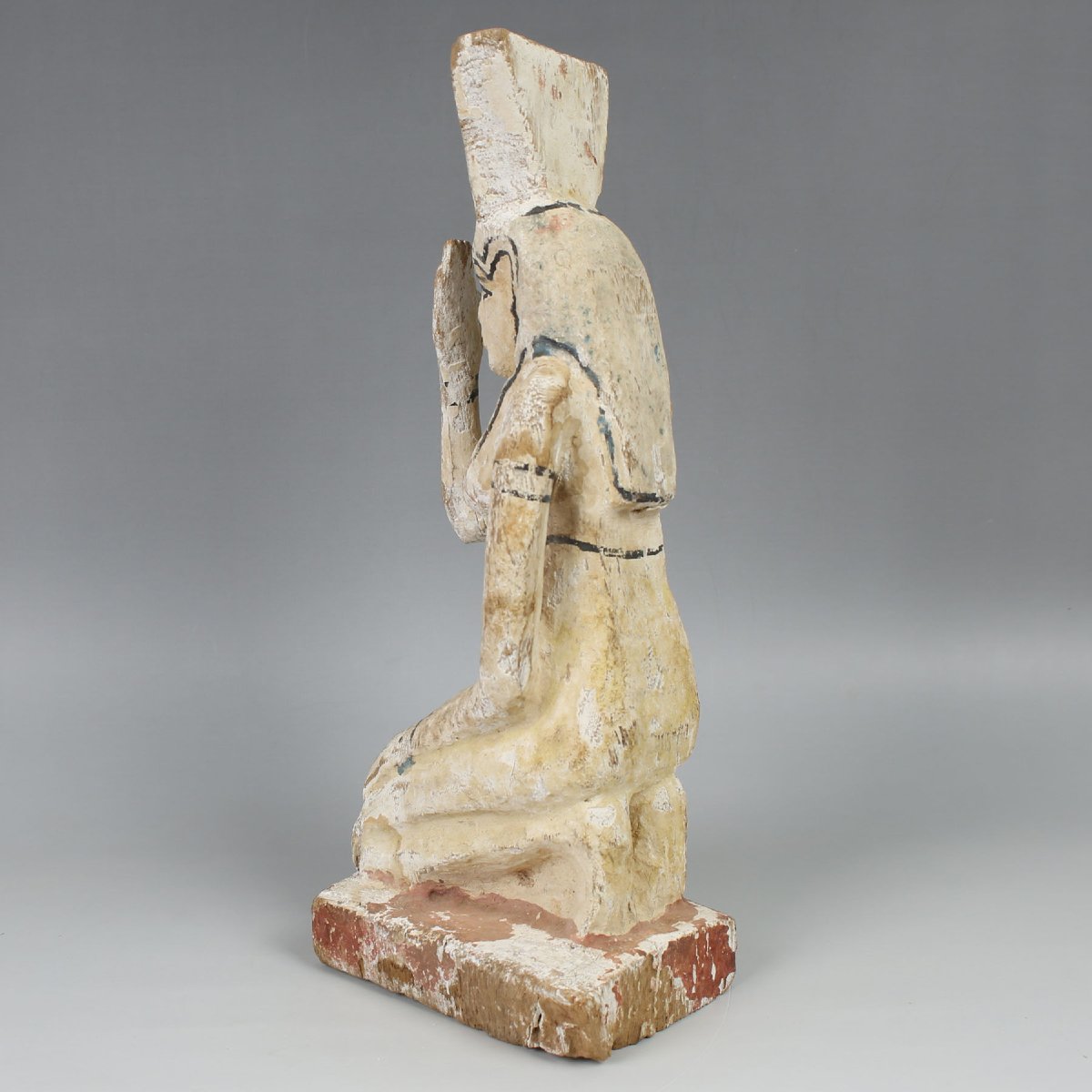


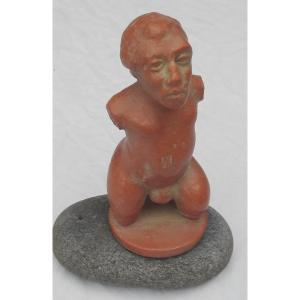
Moving stuccoed wooden statuette depicting Nephthys in mourning, dating from the Ptolemaic period (4th–1st century BC). Executed using the traditional techniques of funerary workshops, it embodies the spiritual intensity and hieratic grace of the goddess who guards the dead. The slightly inclined posture, the restrained modeling, and the silent dignity of the figure express the solemn gravity of the Egyptian funerary ritual.
The wood covered with ancient gesso, now gently craquelured, retains a uniform natural patina and harmonious traces of age. These marks of time, far from diminishing the work, instead attest to its authenticity and its original cultic function. The small losses in the gesso reveal the wood beneath, recalling both the hand of the craftsman and the votive purpose of the object.
Technical characteristicsCulture: Egyptian
Period: Ptolemaic, 4th–1st century BC
Material: Carved wood coated with gesso
Dimensions: H. 270 mm × W. 90 mm × D. 105 mm
Condition: Good state of preservation; stable patina, light surface cracking and erosion consistent with age and material
Provenance: Former Dutch private collection (JD), acquired in the 2020s from a Dutch antiquities dealer
Authenticity: Certificate of authenticity included
During the Ptolemaic dynasty, Nephthys (Nebet-Het), sister of Isis and Osiris, personified divine compassion and protection of the deceased in their passage to the afterlife. Descendants of over fifteen centuries of religious tradition, the sculptors of this era continued to represent the goddess in an attitude of lamentation, with hands raised or placed upon the head, a gesture symbolizing both sacred mourning and regeneration.
In funerary processions, Nephthys was placed at the head of the bier, facing Isis, who stood at the feet of the deceased. Together, they formed the dual guardianship of Osirian rebirth, protectresses of the body and soul. This figure, both solemn and profoundly human, remains one of the most evocative archetypes of late Egyptian religiosity.
Morphology: Hieratic, vertical silhouette typical of late Ptolemaic funerary sculpture; balance between ritual rigidity and softness of line.
Material: Dense hand-carved wood, with fine chisel marks visible on the arms and headdress.
Surface: Ancient gesso coating, lightly fissured, preserving faint traces of original ochre or bluish polychromy.
Style: Close parallels with late depictions of Nephthys preserved in the Metropolitan Museum of Art (inv. 12.182.23a) and the British Museum.
Condition: Stable structure; inactive micro-fissures; no evidence of modern restoration.
This statuette of Nephthys in mourning powerfully embodies the funerary piety and spiritual refinement of Pharaonic Egypt in its final centuries. Both a devotional object and a contemplative work of art, it testifies to a millennia-old faith in which death was understood as a transition toward renewal.
Its balanced proportions, the nobility of its material, and the depth of its patina confer upon it a spiritual presence of great intensity, worthy of inclusion in the finest collections of ancient Egyptian art.
Documented provenance: Former Dutch private collection (JD), acquired from a specialized antiquities dealer in the 2020s.
Authenticity: Certificate guaranteeing lawful origin and compliance with international cultural property regulations.
Expertise: Stylistic and material analysis confirming attribution to late Ptolemaic funerary statuary.
A work of museum-grade integrity, reflecting the spiritual and artistic genius of ancient Egypt.
Explore similar pieces and discover your ideal find:
archeology