THIS OBJECT WAS SOLD
Roman Terracotta One-handled Cup (1st–3rd C. Ad) – Certificate Of Authenticity
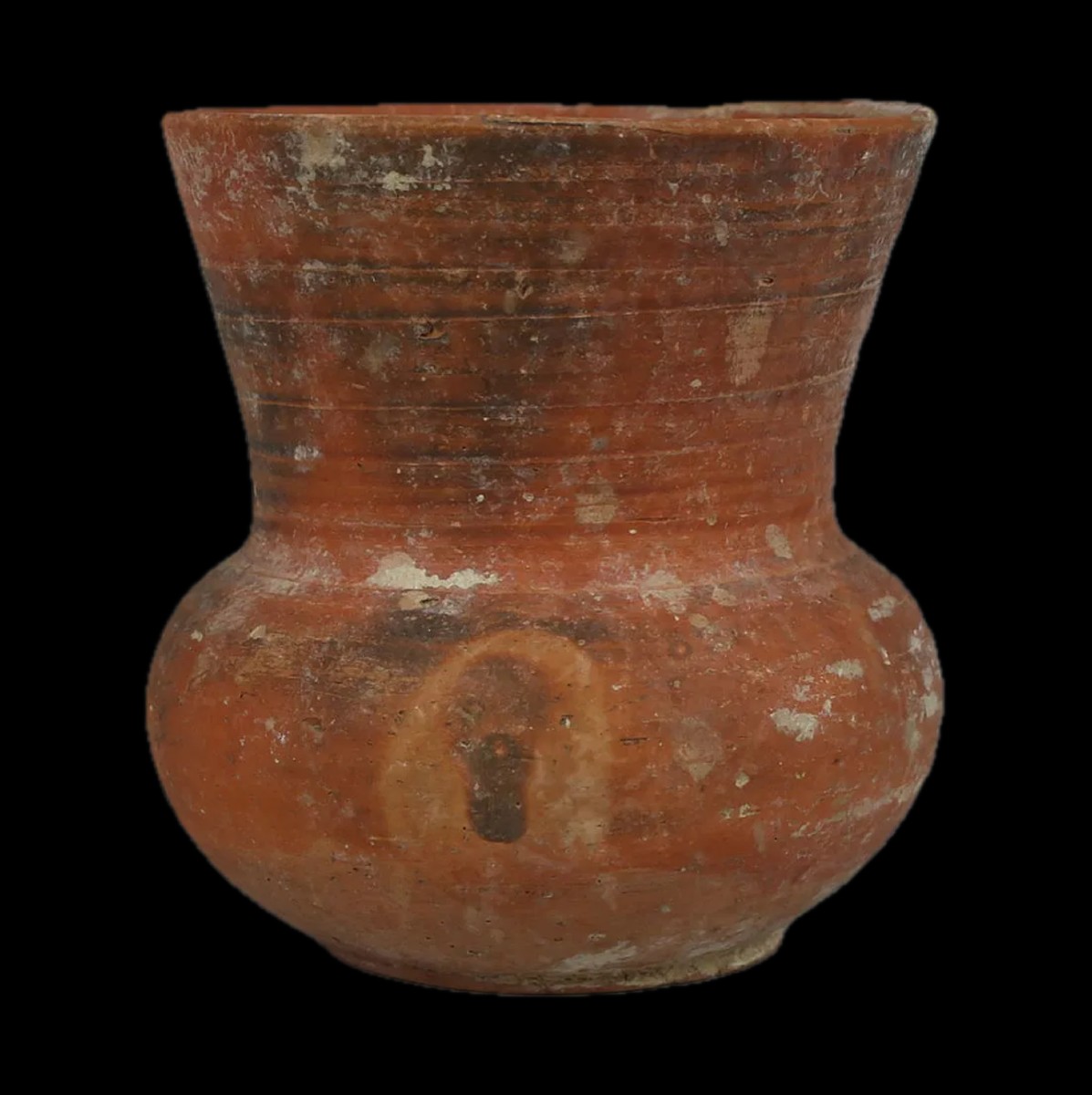

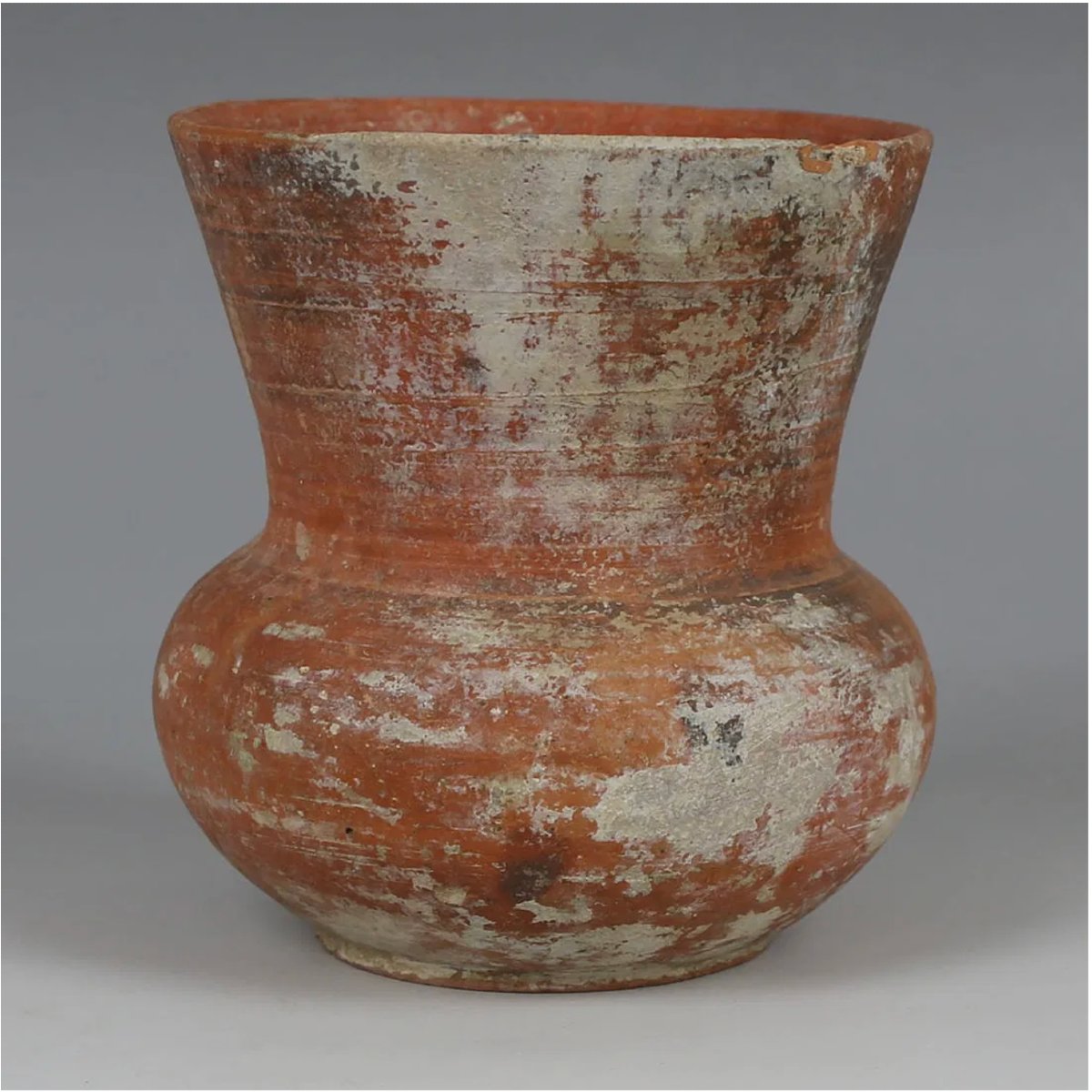
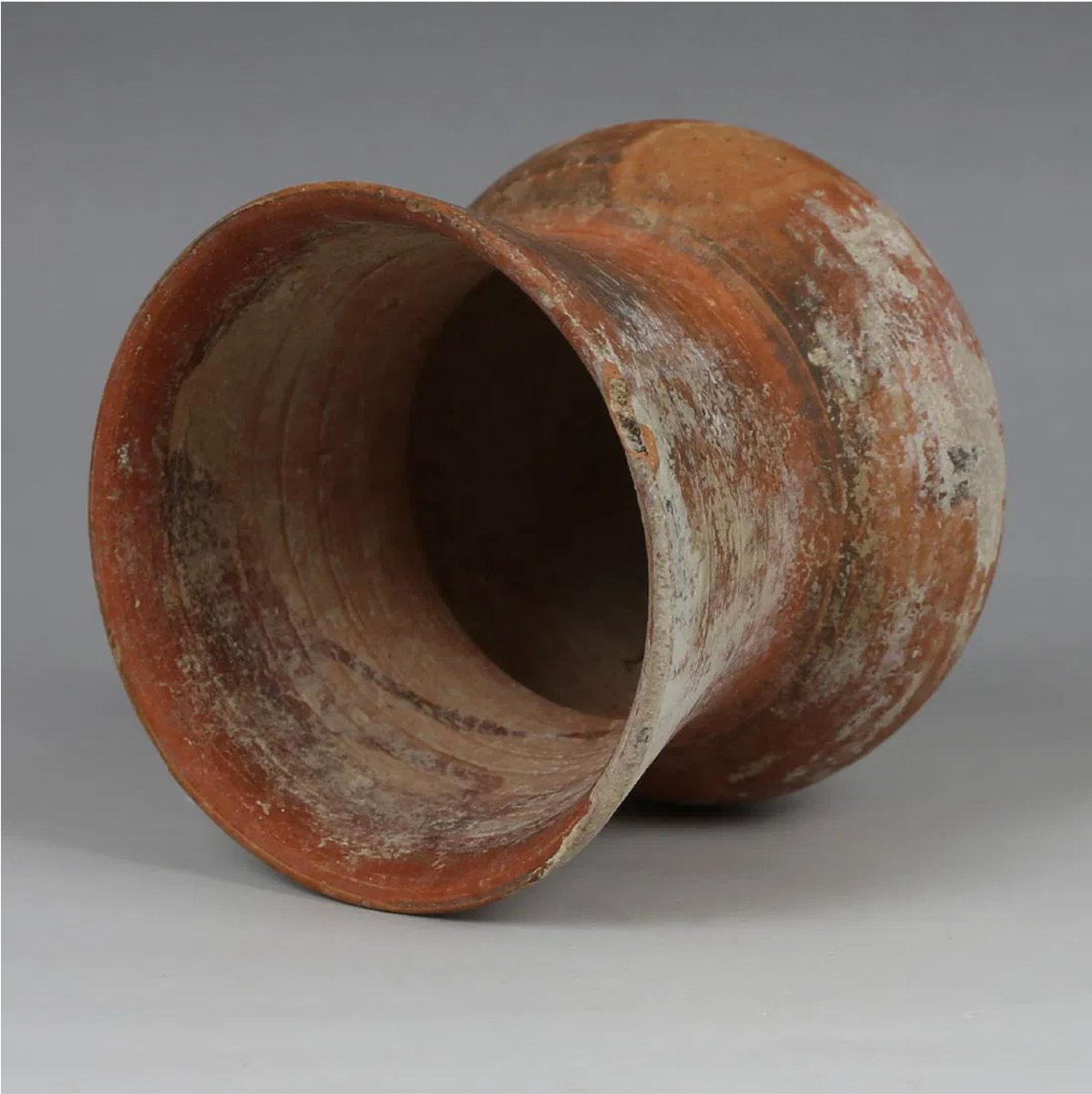


This handled cup, or modiolus, offers a direct immersion into the material reality of the Roman High Empire. Far from standardized luxury productions, this object is distinguished by its artisanal craftsmanship and its strictly utilitarian vocation. Fashioned from brick-red clay rich in inclusions, it presents a textured, vibrant, and tactile surface. The object has reached us in a state of remarkable integrity, preserving its original form without invasive restoration. Its epidermis is marked by slight erosion and whitish calcareous concretions, indubitable witnesses to its long archaeological stay, guaranteeing its authenticity and the absence of artificial modern polishing.
Characteristics
Object: Handled Cup / Small Table Jug (Modiolus).
Culture: Roman.
Period: 1st – 3rd century AD (High Empire).
Material: Common pottery (Coarse ware), red fabric with visible inclusions.
Dimensions: Height: 89 mm | Width: 81 mm.
Condition: Good state of conservation; intact; granular surface with natural sedimentary deposits.
Provenance: Ex-private American collection, formed between 1970 and 2000.
Documentation: Sold with Certificate of Authenticity.
Historical ContextWhile Terra Sigillata dominated elite tables, common ware constituted the bulk of tableware for the legions and modest Roman households. This type of robust cup, produced locally using regional clays, was used for the daily consumption of water, diluted wine, or posca (a mixture of water and vinegar). Through their functional simplicity, these vessels connect us to the intimate life of the Roman plebs, testifying to the local economy within the provinces of the Empire.
Formal and Material Analysis
Morphology: The piece presents a globular body ensuring good capacity and stability on the table, surmounted by a wide, cylindrical neck. The handle, a thick vertical ring, is securely attached between the lip and the shoulder, dimensioned for a firm grip.
Material and Texture: Analysis of the fabric reveals unrefined ceramic: the clay contains visible mineral inclusions (quartz or limestone grains) serving as temper to prevent cracking during firing. The surface presents a granular appearance and micro-vacuoles, characteristics of artisanal firing.
Patina: The orange-red color is nuanced by paler areas due to excavation concretions. These calcareous deposits, encrusted in the asperities of the ceramic, form a natural patina that attests to antiquity and protects the original surface.
Cultural and Aesthetic ValueThis cup possesses the beauty of antique utility. It is an artifact of social history, documenting vernacular pottery techniques. Its value for the collector lies in its raw authenticity: it is an object that has served its purpose and presents itself without cosmetic artifice. Its robustness and state of conservation make it a tangible witness to ancient domestic life.
Expertise ReportTechnical examination confirms the authenticity of the piece:
Typology: The shape of the simple handled cup is a standard of High Empire common tableware.
Surface Condition: The presence of adherent calcareous concretions and the natural erosion of surface grains validate the antiquity and archaeological origin.
Traceability: The provenance (USA collection, 1970–2000) complies with art market standards.
Explore similar pieces and discover your ideal find:
archeology