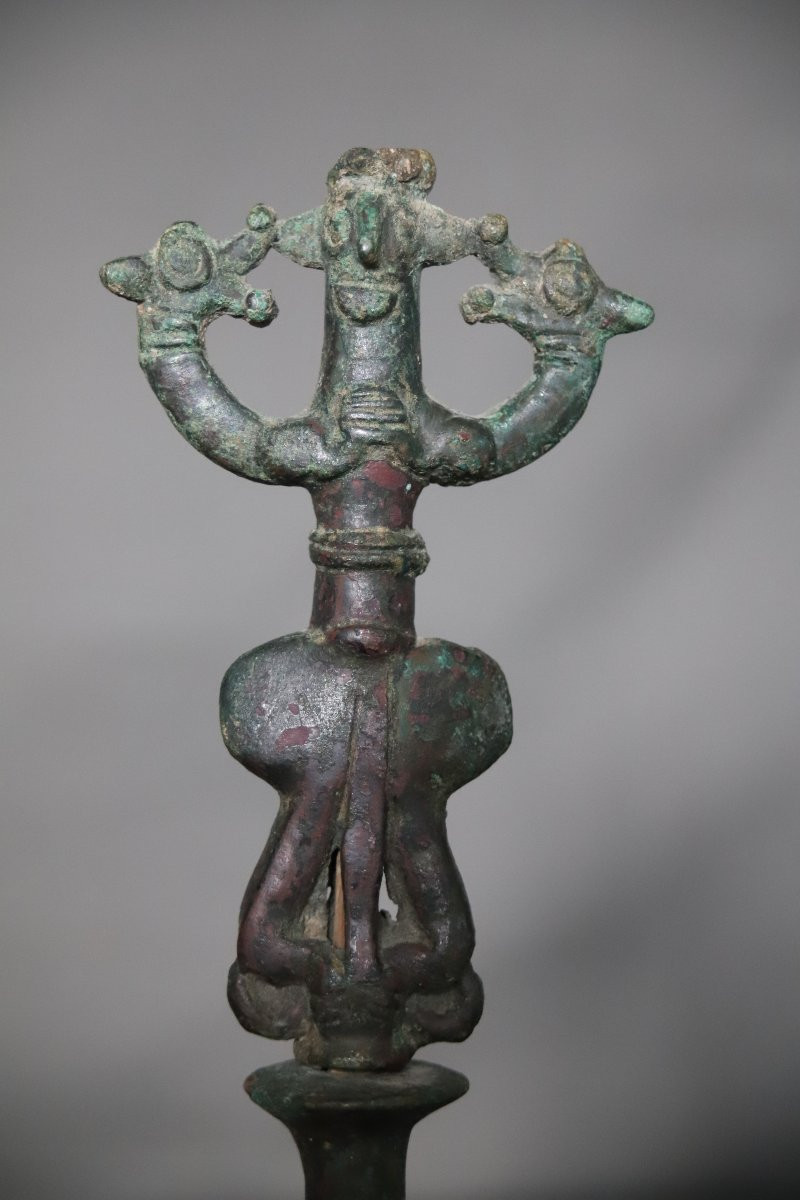
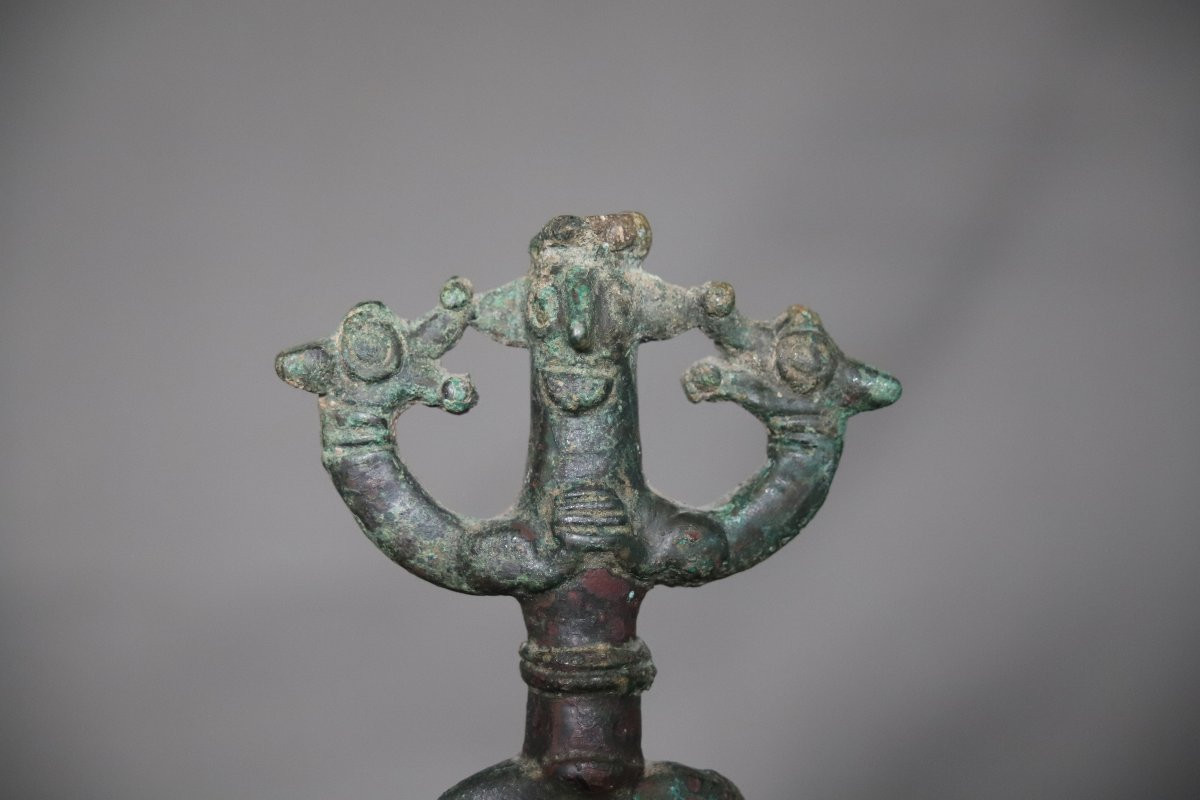




Janiform Funerary Idol Known As The "master Of Animals" - Luristan (luristan), 1100-700 Bc
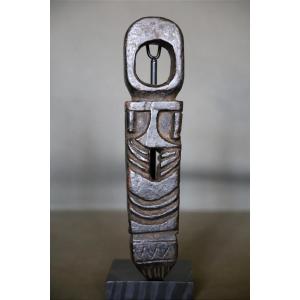
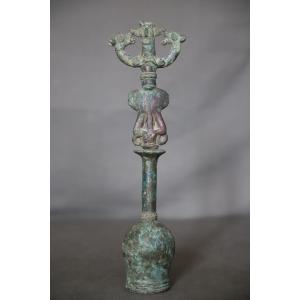
Janiform funerary idol known as the "master of animals" - Luristan (Louristan), 1100-700 BC
André Godard proposed an interpretation as being the representation of Gilgamesh or Enkidu.
Mounted on a tubular base with a bell-shaped head.
The bronze pin that served to hold the two elements together has disappeared.
Weight: 417gr
Height: 24.5cm
Bibliography:
- Bronzes of Luristan, enigmas of Ancient Iran 3rd-1st millennium BC (pages 187 to 196, number 185 to 198). Cernushi Museum, Paris.
- Ars Asiatica XVII, Bronzes of Luriastan by André Godard, 1931. Pages 82 to 85), plates LI and LII, number 193, 194, 195, 195bis, 196 and 196 bis.
André Godard proposed an interpretation as being the representation of Gilgamesh or Enkidu.
Mounted on a tubular base with a bell-shaped head.
The bronze pin that served to hold the two elements together has disappeared.
Weight: 417gr
Height: 24.5cm
Bibliography:
- Bronzes of Luristan, enigmas of Ancient Iran 3rd-1st millennium BC (pages 187 to 196, number 185 to 198). Cernushi Museum, Paris.
- Ars Asiatica XVII, Bronzes of Luriastan by André Godard, 1931. Pages 82 to 85), plates LI and LII, number 193, 194, 195, 195bis, 196 and 196 bis.
1 400 €
Period: Before 16th century
Style: Asian art
Condition: Condition of use
Material: Bronze
Reference (ID): 1528101
Availability: In stock
Print