THIS OBJECT WAS SOLD
Roman Carinated Jug (1st–3rd C. Ad) With Certificate Of Authenticity

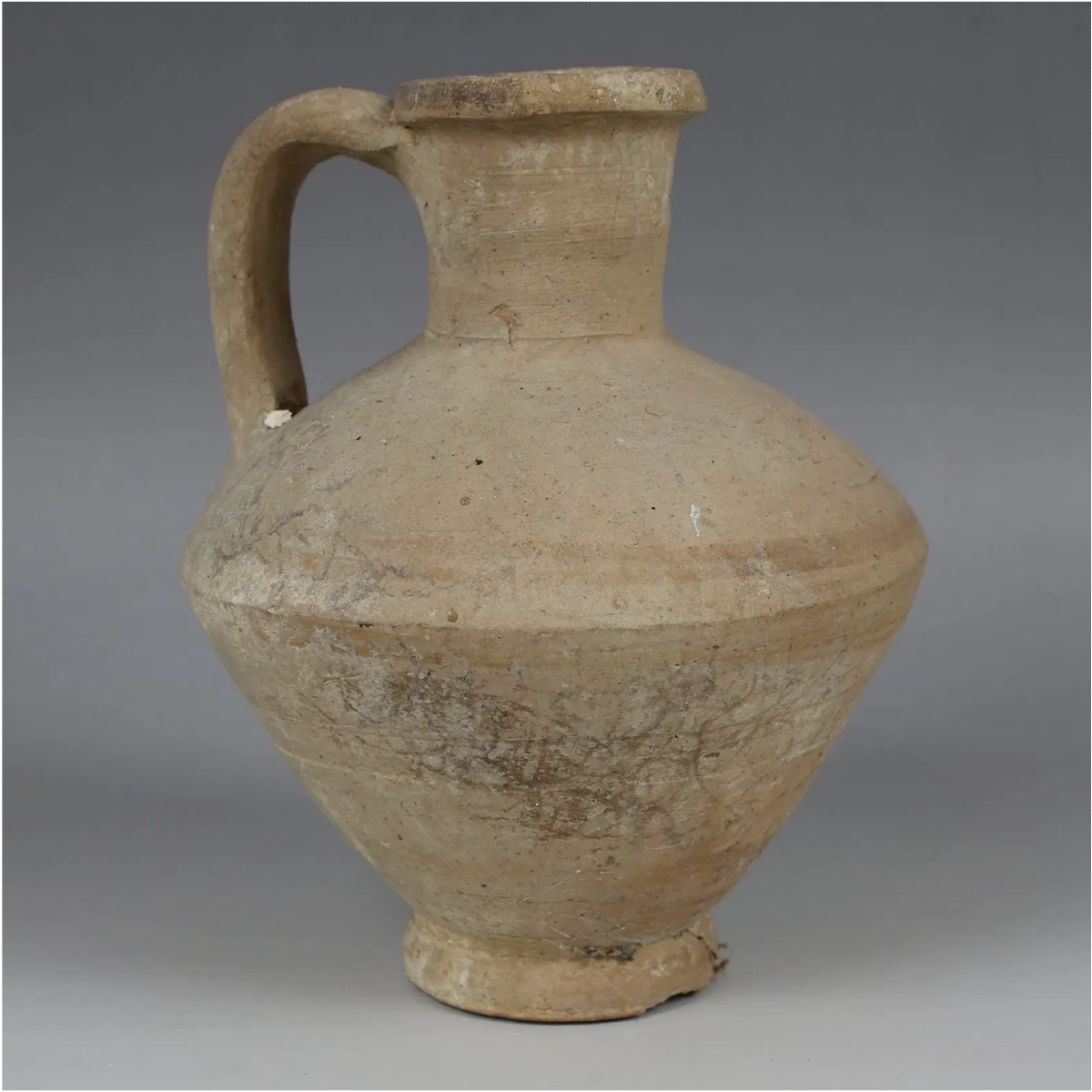
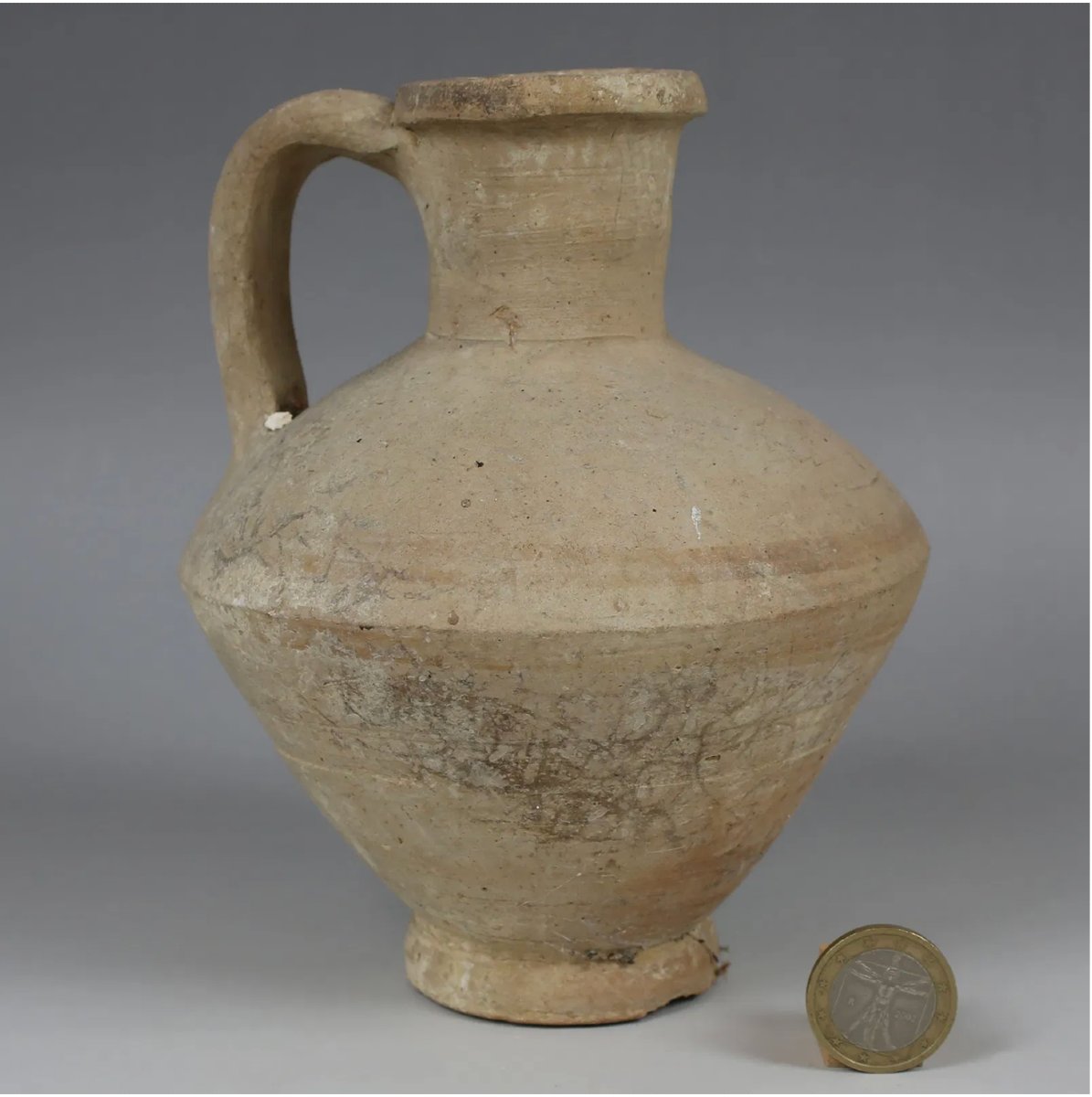

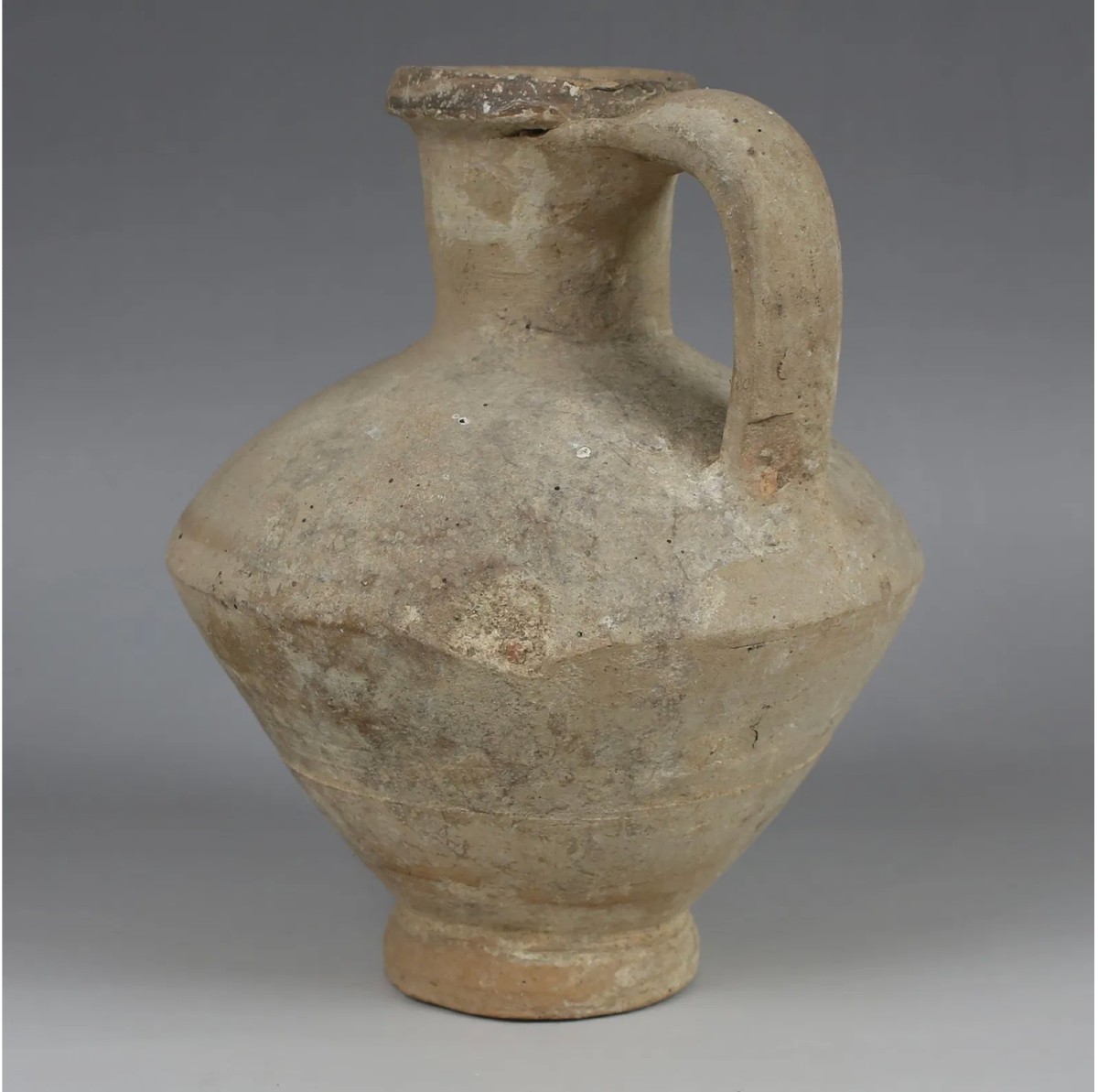


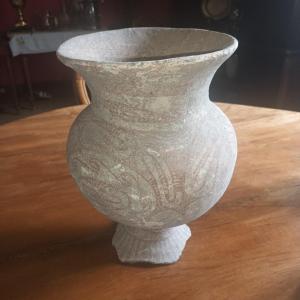
This jug is a representative example of Roman common ware (coarse ware) from the High Empire. It is distinguished by its strictly functional aesthetic and a marked architectural profile, defined by a pronounced carina (angular ridge). This ridge divides the body into two distinct volumes: an upper rounded section and a lower cone. Fashioned from an ochre-sand fabric typical of provincial utilitarian production, the piece reveals its history. An ancient, stabilized fracture line is visible on the lower body, serving as direct attestation of the material's integrity and its archaeological journey, validating that the object is composed of its re-assembled original fragments.
CharacteristicsObject: Carinated Jug (angular pouring vessel).
Culture: Roman (High Empire).
Period: 1st – 3rd century AD.
Material: Common ware ceramic, beige-sand fabric.
Dimensions: Height: 150 mm | Maximum Diameter: 115 mm.
Condition: Good state of preservation. Notable presence of an ancient restoration (re-gluing) on the lower body, visible and stabilized. Surface shows sedimentary deposits.
Provenance: Former private American collection, acquired between 1970 and 2000.
Documentation: Supplied with Certificate of Authenticity.
Belonging to the vast category of Roman utilitarian pottery, this jug was an essential everyday tool, used for serving liquids at private tables and in taverns. Although less luxurious than Terra Sigillata, this ceramic is fundamental to the study of domestic life and local trade networks in the Roman provinces. The carinated (angular) and geometric form is not coincidental: it reflects a search for stability and a stylistic influence that favors geometry over organicity, mirroring the Roman taste for order and proportion.
Formal and Material Analysis of the SpecimenArchitecture and Volumetrics: The salient carina is the dominant stylistic feature, lending the jug a sharp biconical silhouette. The neck is slender, the lip simple, and the annular base ensures a solid footing. The handle, a simple, thick strap, is proportioned to the vessel and functionally attached to the lip and shoulder.
Shaping and Patina: The object was wheel-thrown, the striae being partially masked by erosion. The pale fabric is typical of firing in an oxidizing atmosphere. The surface presents a slight whitish calcareous veil and localized erosion, indicative of a long stay in a terrestrial context.
Archaeological Trace (Restoration): The visible line on the lower conical section represents the ancient point of re-gluing. The fact that the object was carefully restored and is presented with this visible historical trace confers material honesty, which adds to its documentary value, illustrating the effort to preserve the archaeological object.
This jug is a direct and tangible testimony to the practical organization of Roman life. Its carinated shape makes it a clear stylistic marker of the High Empire. Its humble status as a utilitarian ceramic confers an intimate authenticity and historical contrast with prestige pieces, while demonstrating the ubiquity, design clarity, and efficiency of Roman provincial production.
Expertise ReportThe analysis confirms the cultural and chronological attribution of the piece:
Typology: The carinated form and biconical profile are perfectly compatible with common ware jugs of the High Empire (1st–3rd century AD).
Materiality: The pale fabric, wheel-throwing marks, and sedimentary deposits are consistent with an antique archaeological origin.
Integrity: The restoration is visible but stabilized, and the object is presented with a transparency that ensures the comprehension of its material history.
This object is an authentic carinated Roman jug, in good historical conservation status.
Explore similar pieces and discover your ideal find:
archeology