

Sestertius Of Trajan — Museum-grade Piece, Exceptional Strike
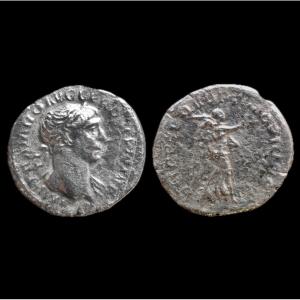
Magnificent sestertius in orichalcum, struck under the reign of Trajan between A.D. 103 and 111, measuring 36 mm in diameter and weighing 23.54 g.
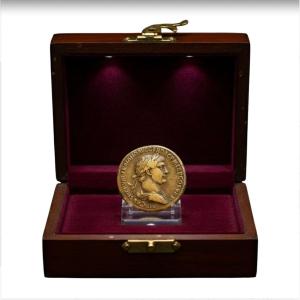
The obverse bears a laureate, draped, and cuirassed portrait of the emperor facing right, accompanied by the complete and perfectly legible legend: IMP CAES NERVAE TRAIANO AVG GER DAC P M TR P COS V P P.
The reverse, of remarkable craftsmanship, depicts a monumental triumphal arch rendered with great architectural precision: central arch flanked by columns, decorated side panels with registers of horses, weapons, and figures, winged Victories beneath the pediment, and a six-horse quadriga surmounting the structure, standing above a frieze inscribed I • O • M (Iovi Optimo Maximo). The scene embodies a powerful statement of imperial propaganda and artistic mastery.
The olive-brown patina with golden highlights, continuous and natural, confirms authentic ancient preservation, while the sharp reliefs and subtle wear on high points testify to genuine ancient circulation.
All legends are complete, the strike is perfectly centered, and the overall composition corresponds precisely to the standards of the Roman mint during Trajan’s reign.
Emperor: Trajan (Marcus Ulpius Traianus, A.D. 98–117)
Mint: Rome, struck between A.D. 103–111
Denomination: Sestertius (Æ)
Metal: Orichalcum (copper–zinc alloy)
Weight / Diameter: 23.54 g – 36 mm
Condition: Exceptional preservation for the type; stable patina; sharp reliefs; gentle ancient wear enhancing the portrait’s depth
References: RIC 573; BMC 845; CBN 219; Cohen 547; Woytek 187f
Provenance: Private collection, accompanied by certificate of authenticity
Authenticity: Certificate and expert report included
Sale: Internationally supervised transaction within a recognized numismatic network, validated by leading experts under museum-level standards
Trajan, honored with the title Optimus Princeps, represents the zenith of the Roman Empire — conqueror of Dacia, builder of monumental works such as his Forum and Column, and the embodiment of imperial virtue.
Large-module sestertii such as this one were not mere currency but portable instruments of imperial propaganda, circulating across the provinces to proclaim the emperor’s piety, triumphs, and architectural grandeur.
The triumphal arch shown here encapsulates Rome’s ideology: a fusion of military power, divine sanction, and urban magnificence, offering a unique historical record of imperial architecture and state symbolism.
Portrait: Expressive and vigorous, typical of Trajan’s official style, with clearly defined curls and laurel wreath.
Architecture: Highly detailed and complete depiction; Victories, horses, and quadriga distinctly visible.
Flan: Even and well-preserved edges, no cracks or distortions, perfectly centered strike.
Surface: Stable natural patina with light burial deposits; no signs of cleaning or reworking.
Consistency: Weight, style, and titulature align precisely with official Roman mint standards.
All diagnostic features confirm an unquestionable authenticity and a museum-level state of preservation.
Cultural and Collectible ValueThis sestertius transcends numismatics: it is a work of imperial art, a document of history, and a symbol of Roman ideology. Its expressive portrait, monumental reverse, and exceptional state of preservation make it equally appealing to numismatists, historians, and art collectors.
By its aesthetic and historical depth, it is suitable for both private collections and museum displays devoted to Roman imperial art.
EXCEPTIONAL MODULE: 36 MM — PRECISE WEIGHT: 23.54 G
A RARE QUALITY on the international market, combining stylistic precision, architectural balance, and symbolic grandeur.
Comparable to the reference specimen (lot no. 821, NAC 150, December 2024, sold for 30,000 CHF ≈ €31,000), this coin stands among the finest and most complete representations of Trajanic coinage in private hands.
Note: The stands, frames, and display elements visible in the photographs are intended solely for presentation purposes and are not included in the sale.
Period: Before 16th century
Style: Rome and Antic Greece
Condition: Excellent condition
Reference (ID): 1644875
Availability: In stock