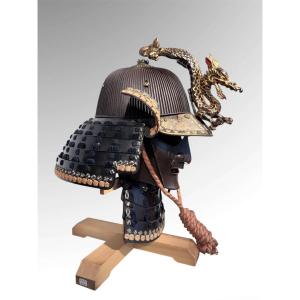
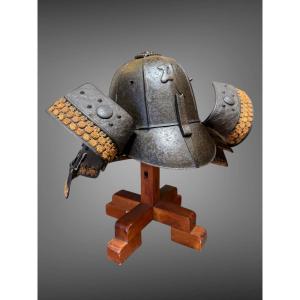
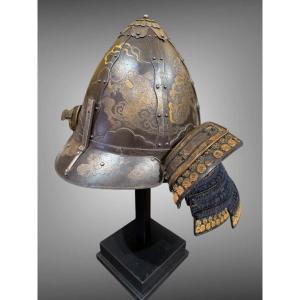
Kabuto suji-bachi with 120 plates and menpo ryubu, Japan, Edo period (1600-1868). Signed: Myochin Kaga Daijo Munesada (helmet) and Yoshimichi (menpo, gilt label). Red iron helmet with 120 plates, fini[...]
A Filipino mandeo saber with its damaged bamboo and rattan scabbard, a partially rusted steel blade, a carved bone and horsehair grip, and brass inlays. It's in its original condition, which is part o[...]
This sword is a Dao, the traditional Vietnamese sword, although it is also used in southern China. It can be dated to the 19th century. This type of sword is often presented as an execution sword, but[...]
A jingasa with dragons in clouds on either side of a gilded crest. The highly detailed dragons, with their finely executed golden scales and flames, are in relief, crafted in maki-e style. The jingasa[...]
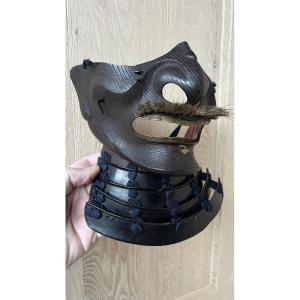
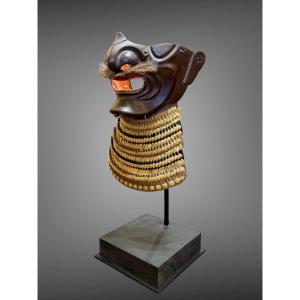
Very beautiful hand forged iron mask with a typical expression; yasurime parallel lines across the entire mask, typical work of the Iwai school, 17th century, black lacquered plates and navy blue suga[...]
JAPAN - Edo period (1603-1868). Wrought iron tsuba nagamaru-gata, chased in hira bori and gilded, decorated with a child riding a buffalo in front of a bridge on one side and a waterfall on the other,[...]
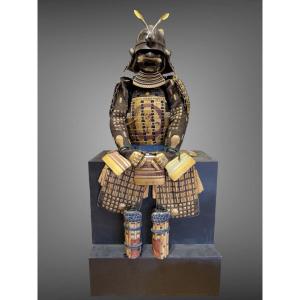
JAPAN - Edo period (1603 - 1868). Complete samurai armor. KABUTO (helmet) in black lacquered wrought iron with ten slats. THEHEN NO ANA (opening at the top) in gilded copper with four tiers of chased,[...]
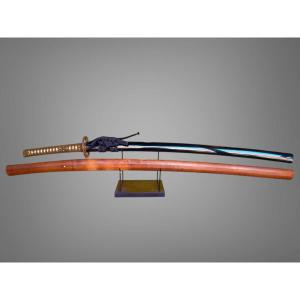
JAPAN - Keisho Era (1596-1615). Samurai katana mounted in shirasaya style. KASHIRA in chased, patinated, and gilded copper depicting stylized plant motifs. FUSHI in finely chased copper with a shakudo[...]
JAPAN - Edo period (1603-1868). Wrought iron tsuba mokko-gata, openwork, chased in hira bori and inlaid in iroe hira zogan of copper, gilt copper and silver with a scene of samurai engaged in a naval [...]
JAPAN - Edo Period (1603-1868). Half-mask of a samurai known as a "Mempo," made of wrought iron with a brown lacquer finish (very minor losses). Features a pronounced chin, a movable nose, white horse[...]
JAPAN - Edo period (1603-1868). KABUTO composed of eight wrought iron plates, the front plate decorated with a Chinese character. THEHEN NO ANA (opening at the top) in copper and copper with three de[...]
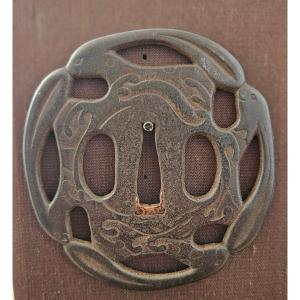
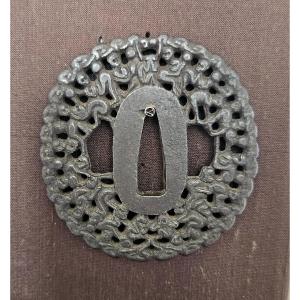
JAPAN - Edo period (1603-1868). Tsuba maru-gata in suaka carved with radiating motifs, kogai-hitsu hana, encircled by a mimi in shakudo. Very slight wear and oxidation. Diameter: 7.2 cm.
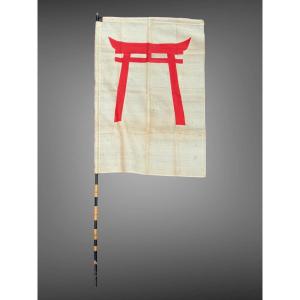
JAPAN - Edo Period (1603-1868). Shashimono, a white silk battle standard stamped on both sides with a bright red Torii gate design, is sewn with gussets onto a bamboo pole punctuated with black lacque[...]
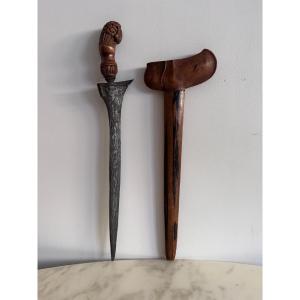
This Indonesian kris boasts a beautiful blade, crafted using a forging technique with various metals to create a lovely decorative effect. The sheath is made of wood, and the handle is carved wood. It[...]
KNIFE called Aikushi, signed Kadomatsu saku koreJapan - Edo period (1603-1868)Steel, wood, lacquer, silverNagasa : 14,7; Nakago : 6 cm(Previously restored) Kata kiri ha blade, mune hikushi, ito suguha[...]
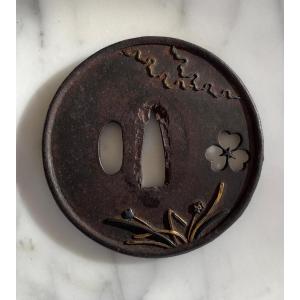
JAPAN - Hammered iron tsuba maru gata, Edo period, with inlaid decoration of flowers in their branches in the form of a zogan in gold. Unsigned. Diameter: 8 cm
JAPAN - Edo Period (early 19th century). Samurai wakizashi in shirasaya style. Zoomorphic kashira in chased copper, patinated black and gold, depicting a shishi (a type of fish). Fushi in finely chase[...]
JAPAN - Sengoku Period (11450-1600). Bear Armor. KABUTO (helmet) of wrought iron entirely covered in bear hair, centered with the gilded metal mon of the Shuhama clan and adorned with WAKIDATE depicti[...]
JAPAN - Early Edo Period (early 17th century). TOPPAI KABUTO (cone-shaped helmet) composed of six wrought iron plates joined by riveted iron bands, the whole very finely inlaid with damascened (nunome[...]
JAPAN - Edo Period (1603-1868). Samurai Tanto. FUSHI and KASHIRA in a set of chased, patinated, and gilded copper decorated with horses and flowers on a nanako background (very slight oxidation). TSUK[...]
JAPAN - Edo Period (1603-1868). Samurai sahai. Command staff made of lacquered wood, leather, and paper, with gilded copper finials decorated with hearts (shaped like a boar's pupil, a symbol of coura[...]
JAPAN - Edo Period (1603-1868). Samurai Katana. FUSHI and KASHIRA in a set in silvered copper depicting stylized geese flying in clouds. TSUKA in wood covered with ray skin and black silk braid. MENUK[...]
JAPAN - Edo Period (1603-1868). Half-mask of a samurai known as a "Mempo," made of brown lacquered wrought iron. Features a pronounced chin, a movable nose, light white horsehair mustache, pierced nos[...]
JAPAN - Edo Period (1603-1868). Samurai Katana. Black patinated copper kashira. Chiseled, patinated, and gilded copper fushi depicting a bamboo forest. Wooden tsuka covered with red-dyed stingray skin[...]
JAPAN - Edo Period (1603-1868). Samurai sahai. Command staff made of lacquered wood (minor losses) and paper, with silver tips decorated with hearts (shaped like a boar's pupil, a symbol of courage). [...]
JAPAN - Shōwa Era (1926-1989). Samurai half-mask known as a "Mempo," made of stamped metal with a glossy black lacquer finish. Features a pronounced chin, movable nose, visible teeth, a red-rimmed upp[...]
SABRE known as Wakizashi, signed Hizen no Kuni jū TadayoshiJapan - Edo period (1603-1868)Steel, wood, lacquer, copper, shagreen, iron, gold, hornNagasa: 39.5; Nakago: 11.6 cmSori: 1.2 cm Kata shinogi [...]
Carved bone kris (dagger) handle depicting a demon - Indonesia, 19th century. A very fine and expressive sculpture. The demon is depicted with a protruding belly and genitals. The face has a grotesque[...]
KUWAGATA – SAMURAI HELMET ORNAMENT “MAEDATE”Japan, Edo period (1603–1868)H: 29.8 cm – W: 18.4 cmGilded bronzeMaedate Kuwagata in cut and gilded bronze, pierced with an inone symbol of Marishiten, godd[...]
Himalayan saddle - Himalayas, Tibet or Nepal, early 20th century or earlier. Small saddle, typical of Himalayan saddles, particularly suited to small native horses. Composed of 6 assembled wooden elem[...]
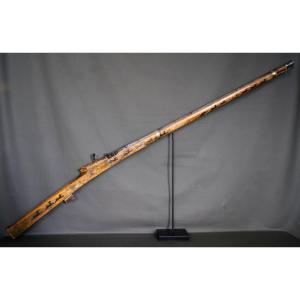
An Indian matchlock rifle known as a toradar (torador) - North India, probably Rajasthan, 19th century. The stock is made of lacquered wood painted with hunting scenes. These scenes depict hunters and[...]
This kris has a lovely patina and a finely crafted, wavy blade. The piece is in generally good condition, with some small cracks in the wood and typical signs of wear consistent with use. Our photos a[...]
Polychrome battle shield, red and gold, engraved with floral and warrior motifs, Mughal Empire, 1526-1857 (Southern Deccan Afghanistan). The grip is made of silky cotton and secured with four cabochon[...]
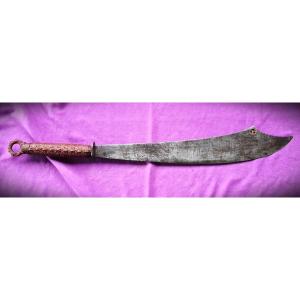
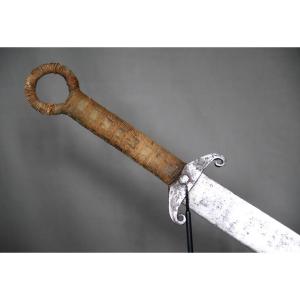
Chinese Saber - China, late 19th/early 20th century. This rustic saber is notable for retaining its original, traditional lacing around the handle. It has a slightly curved, single-edged blade and a r[...]
Muromachi period tachi with a mumei shirasaya blade attributed to Fuyuhiro. The blade has a Hozon certificate and is from the Soshu school. Its nagassa is 67 cm long. The hada is made of itame and the[...]
A very fine wakizashi by Hisamichi with a Tokubetsu certificate. Muromachi period. It has a 56 cm nagasa (stem). It retains its 19th-century polish and is extremely well preserved. It features a very [...]
Exceptional katana signed Echizen Kuni Junin Kanenori. This swordsmith worked during the Tensho period (1573-1592). The blade has a 73 cm nagasa (fuller). The temper is Notare Gonome with a kissaki (h[...]
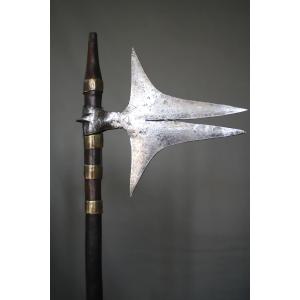
This large war halberd originates from Indochina. It was collected in the 19th century by a French Officer. The shaft has been shortened for an exhibition, but since the cut is at an angle, it would b[...]
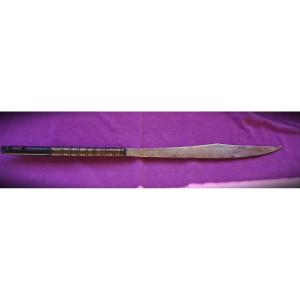
This beautiful spear from the H'mong ethnic group comes from the highlands of Northern Vietnam. It was collected in the 19th century by a French officer. Its authenticity and age are indisputable. Mor[...]
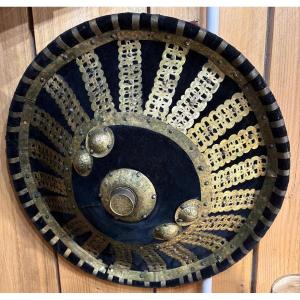
Hindu defensive shield, late 19th century, probably from the Rajasthan region. It is mounted on a wrought iron frame, reinforced with deer hide and cloth. It is decorated with copper and brass.
Iron tsuba naga-maru gata decorated with horses by a river. Each horse is made of a different alloy: shakudo, shibuichi, and suaka. The foliage is inlaid with gold. For a katana. Japan, Edo period. Di[...]
Iron tsuba in the maru-gata shape. Decorated with radish motifs inlaid with gold and brass. For a katana.Edo period. Dimensions: 7.15 x 6.8 x 0.2 cm. Fairly good condition. Signs of wear and a touch o[...]
India, early 20th century – Maratha dagger known as a "Bich'hwa." Double-curved blade adorned with gold damascened scrolls. Lapis lazuli handle, a rare and highly symbolic stone traditionally reserved[...]
Here is a traditional Indonesian kris, complete with its sheath. The guard has the typical curved shape, while the finely carved handle depicts a stylized figure of mythological inspiration. This kris[...]
Indian bulova axe - Northeast India, 19th century. The bulova axe is a rustic weapon of the indigenous peoples of Northeast India. The axe head is usually crescent-shaped. This one has a much rarer fo[...]
Era: Mid-19th century, Rattanakosin period (around 1860), reign of King Mongkut (Rama IV), era represented in the film "Anna and the King". Origin: Siam (now Thailand) Materials: Silver damask steel b[...]
TSUBA Shin No Maru GataJapanEdo period (1603–1868)Iron, shakudo, gold, copper, silverH: 8.5 cm; W: 8.1 cm; Thickness: 3 mm H. Nakago Hitsu Ana: 2.7 cmIron tsuba covered with shakudo, chiselled with a [...]
Daisho (dagger) with two wakizashi (swords), the blade of the larger one certainly not being the original. This may have been done for ceremonial purposes or for a merchant who was not allowed to carr[...]
Katana from the late Edo to Meiji period. Blade: Otoshi-zukuri (V-shaped cross-section with two faces) blade, Iori-mune (two-sided) blade spine. O-kissaki (long) points. Shinoji (11 mm) (face 1). Jiga[...]
SAMURAI FACE PROTECTION, known as HAMBOJapan, Edo period (1603–1868)Wrought iron, lacquer, fibersH.: 18cm with yodare kakeHambo consisting of a half mask made of natural iron covered with black lacque[...]
Ancient ritual keris – Indonesia (Java or Bali), pre-Islamic period
Fully forged from a single piece of iron, length: 17.5 cm
Rare ancient keris, entirely forged from one single piece of iron, inclu[...]
Proantic uses a cookie to analyze traffic and improve its service by using Google Analytics. Data sent to Google Analytics (frequency of visits to the site and pages visited) are anonymous. No other cookie tracks your activity, your personal data is not collected. Thank you for helping us to have better understanding how Proantic is used.






























 Le Magazine de PROANTIC
 TRÉSORS Magazine
 Rivista Artiquariato