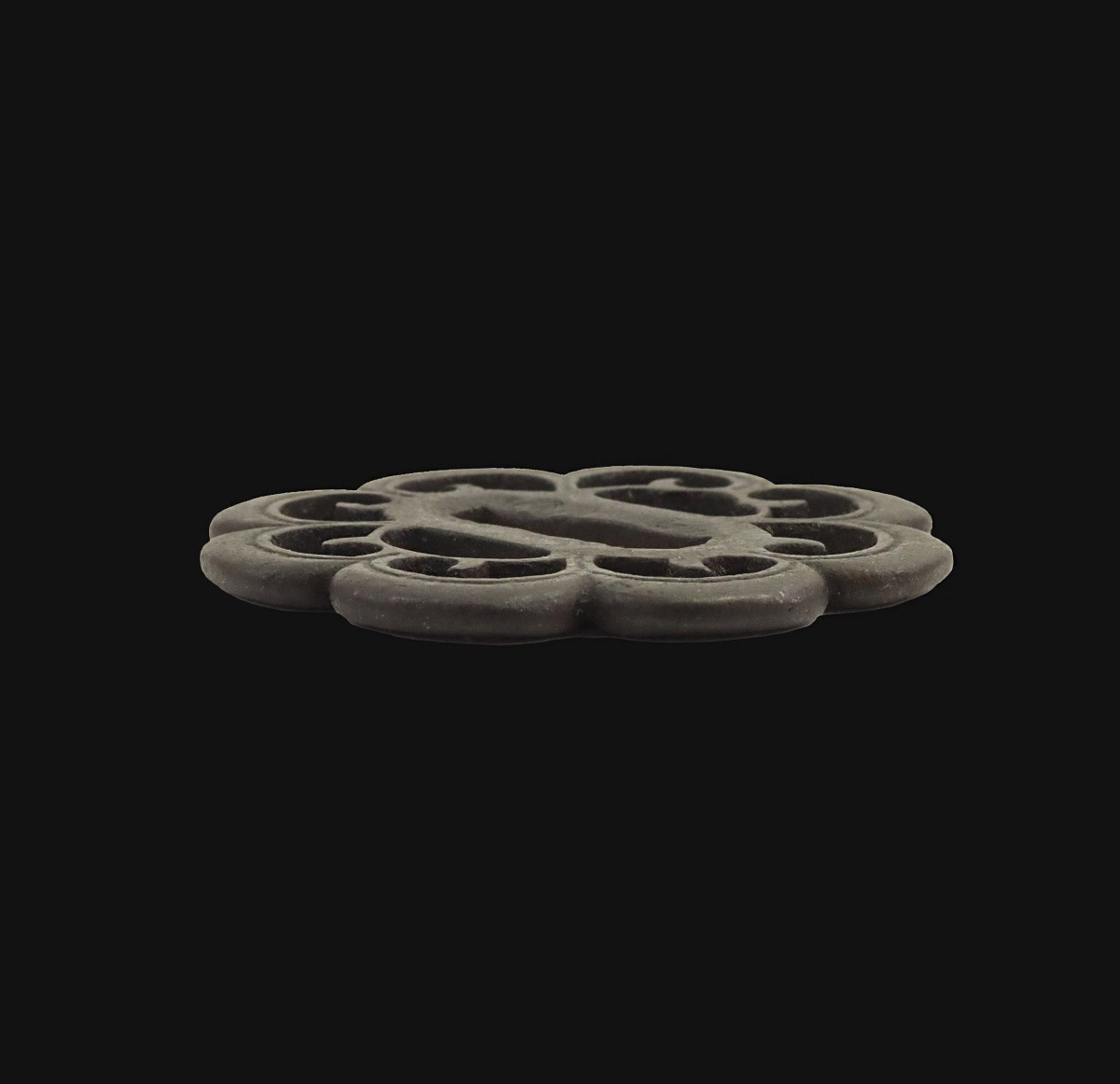
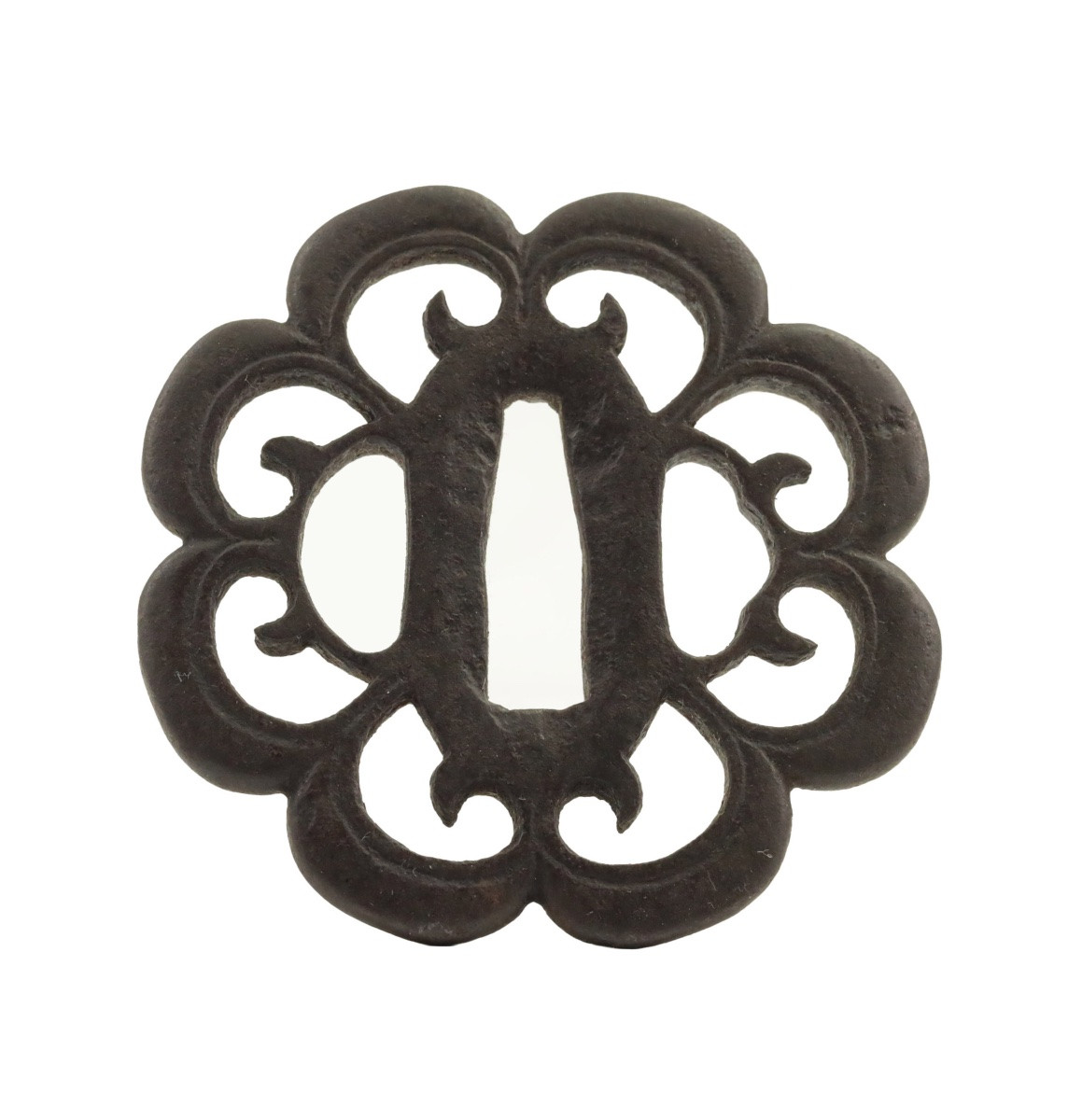


Hoan Style Chrysanthemum Tsuba
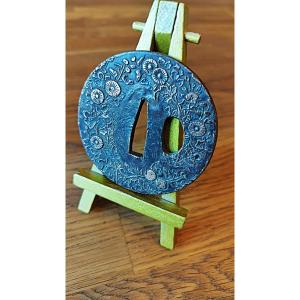
Forged from iron and shaped into the form of a "Hachi Mokko Gata" using the "sukashi" (openwork) technique, the negative space is an integral part of the design, as is the solid form representing a chrysanthemum or "kiku," an important symbol in Japanese tradition. The "kiku" is often found on clan "mon," and even imperial "mon," due to its iconographic significance of nobility. The openwork pattern of the tsuba features a classical design, with the "Nakago Ana," "Kozuka hitsu Ana," and "Kogai Hitsu Ana," interacting harmoniously with the contours surrounding the eight openings.
While Hoan school tsuba were originally made in Owari Province during the Muromachi period, between 1500 and 1600 AD, Dating from the 15th century BC, this tsuba appears to have been made in the Edo period, probably in the 17th or 18th century. However, the tsuba follows a strict Hoan school design with its engraved surface.
While Hoan school tsuba were originally made in Owari Province during the Muromachi period, between 1500 and 1600 AD, Dating from the 15th century BC, this tsuba appears to have been made in the Edo period, probably in the 17th or 18th century. However, the tsuba follows a strict Hoan school design with its engraved surface.
450 €
Period: 17th century
Style: Asian art
Condition: Good condition
Material: Metal
Width: 6.7cm
Height: 6.9cm
Reference (ID): 1567746
Availability: In stock
Print