



Hellenistic Terracotta Protome Of Artemis Of Ephesus On A Base
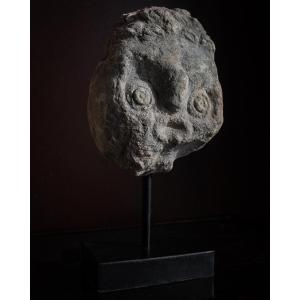
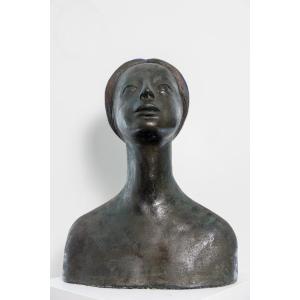
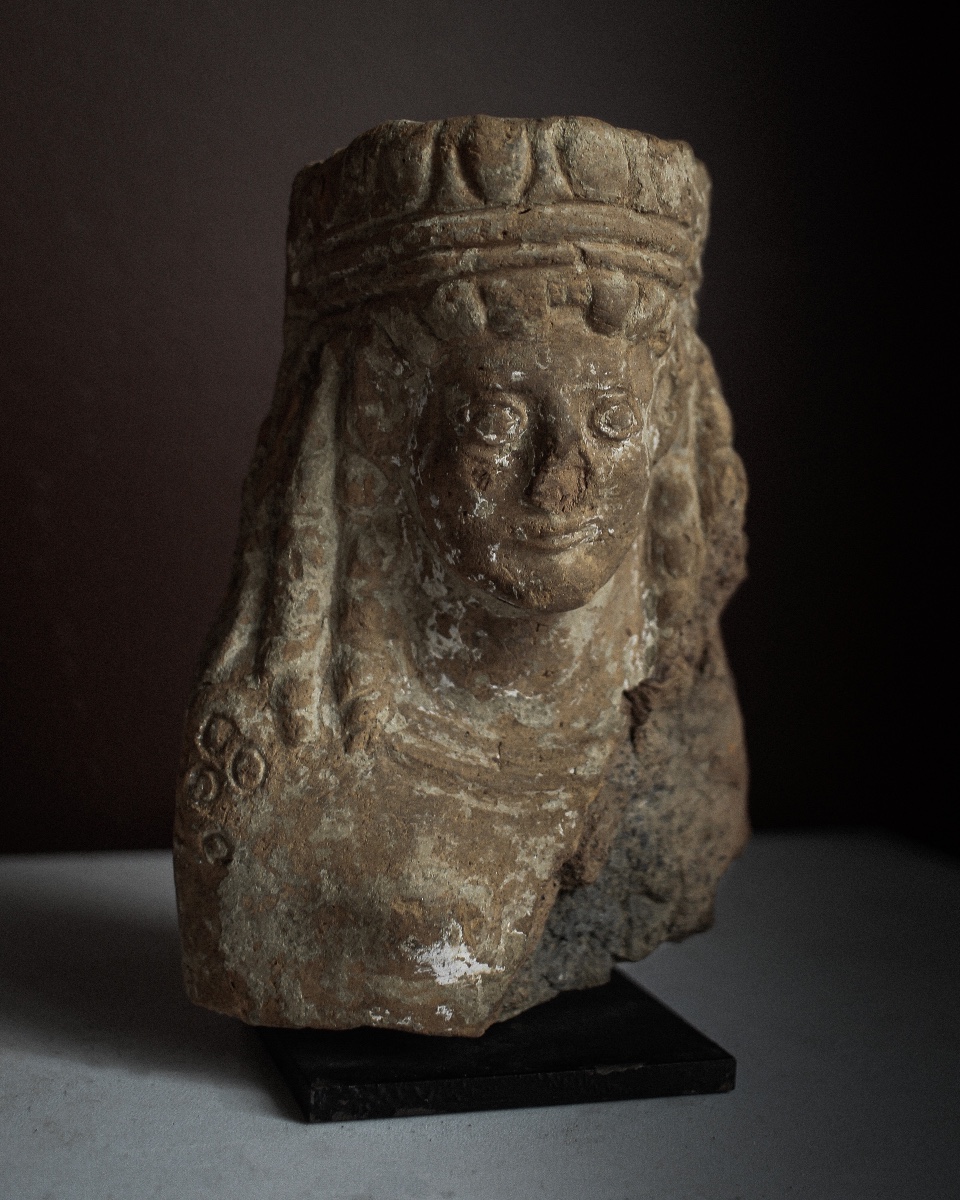
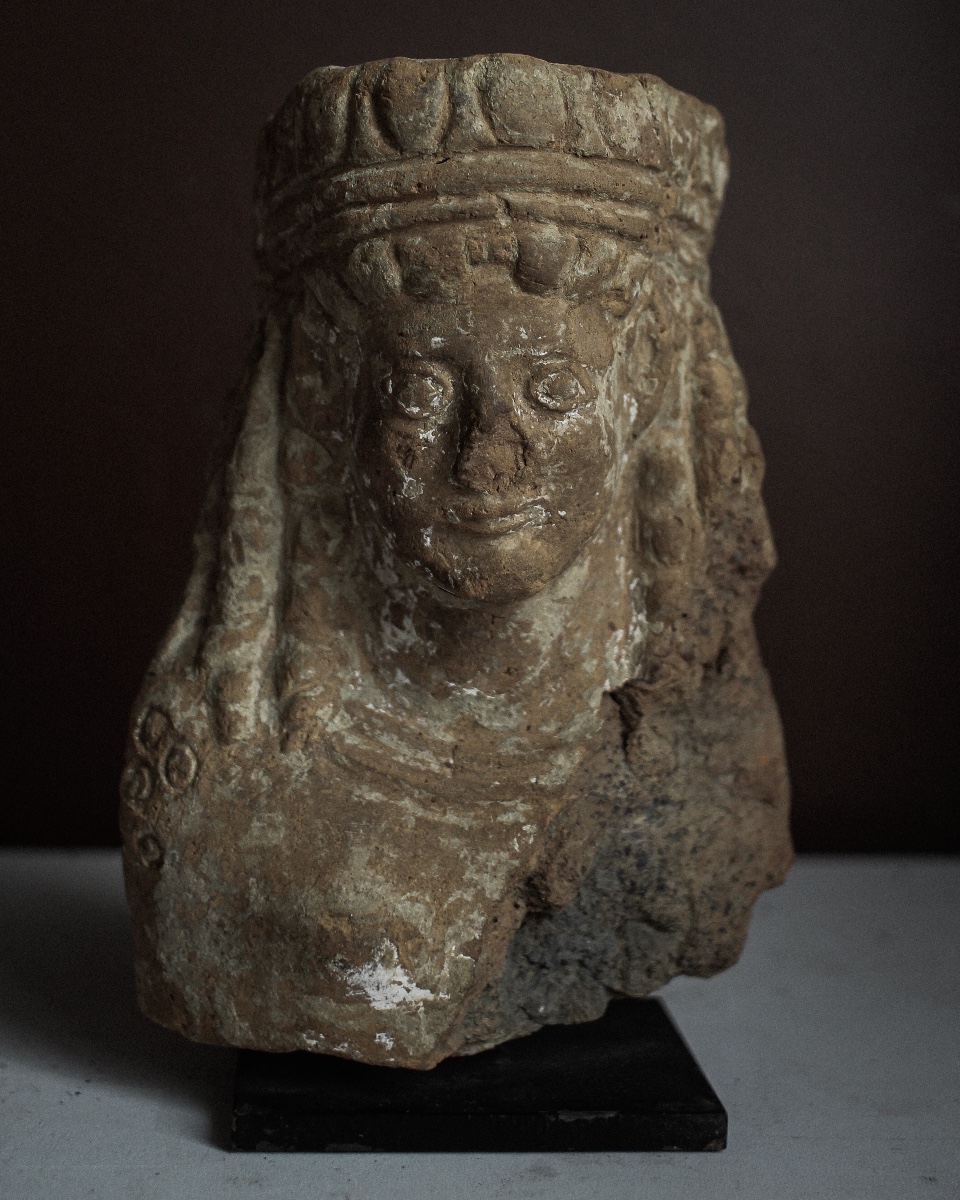
A magnificent Hellenistic terracotta protome depicting Artemis of Ephesus on its base, dating from the 3rd century BCE. A superb representation with meticulous detail: crown, facial features, hair, and necklace cascading down the chest. The solid terracotta boasts beautiful shading, despite some losses to the nose and lower chest. A truly exceptional example.
Artemis of Ephesus was a distinct and revered mother goddess, a symbol of fertility and abundance, of Anatolian-Greek origin, and quite different from the Greek mythological figure of the same name. A hybrid deity, she blended attributes of ancient Anatolian goddesses with Greek art. A goddess of nature and guardian of childbirth, she was known as a midwife for both humans and animals. Her cult was likely influenced by Cybele, the Anatolian mother goddess. The significance of this work, depicting Artemis of Ephesus, lies in its probable place of discovery: present-day Turkey, where the Temple of Aphrodite is located.
It comes from the collection of Iris Love, the archaeologist famous for discovering and excavating the Temple of Aphrodite at Knidos, Turkey. Provenance: Collection of the eminent American archaeologist Iris Cornelia Love (1933–2020). Love is best known for the discovery and excavation of the Temple of Aphrodite at Knidos, a Greek city in ancient Caria (present-day Turkey), among many other remarkable finds.
It was exhibited at the Brooklyn Museum of Art (1968–2000s) and at the Duke University Art Department Gallery (1965).
Artemis of Ephesus was a distinct and revered mother goddess, a symbol of fertility and abundance, of Anatolian-Greek origin, and quite different from the Greek mythological figure of the same name. A hybrid deity, she blended attributes of ancient Anatolian goddesses with Greek art. A goddess of nature and guardian of childbirth, she was known as a midwife for both humans and animals. Her cult was likely influenced by Cybele, the Anatolian mother goddess. The significance of this work, depicting Artemis of Ephesus, lies in its probable place of discovery: present-day Turkey, where the Temple of Aphrodite is located.
It comes from the collection of Iris Love, the archaeologist famous for discovering and excavating the Temple of Aphrodite at Knidos, Turkey. Provenance: Collection of the eminent American archaeologist Iris Cornelia Love (1933–2020). Love is best known for the discovery and excavation of the Temple of Aphrodite at Knidos, a Greek city in ancient Caria (present-day Turkey), among many other remarkable finds.
It was exhibited at the Brooklyn Museum of Art (1968–2000s) and at the Duke University Art Department Gallery (1965).
765 €
Period: Before 16th century
Style: Other Style
Condition: En l'etat
Material: Terracotta
Width: 12
Height: 17
Depth: 6
Reference (ID): 1727965
Availability: In stock
Print